Wasp nest removal is the process of eliminating active wasp colonies using species specific methods such as aerosol sprays, insecticidal dust or professional wasp nest removal in Toronto depending on nest type, location and risk level.
Identify Your Wasp Species Before Touching Anything
Most homeowners grab a can of spray before knowing what they’re dealing with. That single mistake turns a manageable nest into a dangerous situation fast. Yellow jackets, bald faced hornet, paper wasp and mud daubers each behave differently. That behavior decides your removal risk, not their appearance and here is the guide of the identification of different types of wasp species.
If you’re unsure whether your situation requires professional help or a DIY approach, understanding the real cost and risk factors is important this guide on wasp removal cost in Toronto (DIY vs professional pricing breakdown) explains exactly when it makes sense to call an expert versus handling it yourself
Yellow Jackets
Yellow and black stripes look harmless on a sunny afternoon. By August, a Vespula colony hits 2,000 workers, and late summer aggression peaks hard. These Vespula species nest inside abandoned rodent burrows, chipmunk burrows, wall voids, attic spaces, tree hollows and soil cavities. You step near a ground nest in a Toronto backyard and trigger a full defensive response within seconds.
Bald Faced Hornets
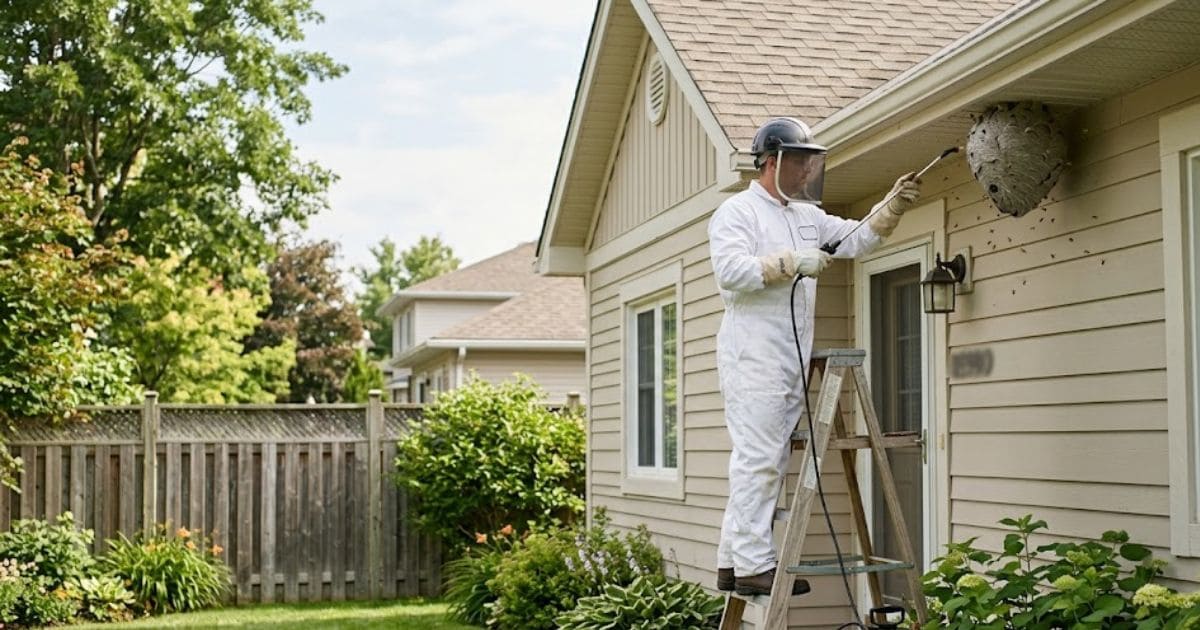
Bald faced hornets belong to Dolichovespula maculata and construct a large paper nest with a thick paper envelope. That paper like envelope wraps around a teardrop shaped nest hanging from trees, shrubs, eaves, sheds, garages, or attics. Standard aerosol spray bounces off the paper envelope and never reaches the Wasps colony inside. Their 3 metre defence radius activates instantly, and their powerful stings hit fast from a territorial colony protecting every inch.
Paper Wasps
Paper wasps, specifically Polistes fuscatus and Polistes dominula, build an open comb nest with no papier mâché envelope around it. Brood cells stay fully exposed on fence posts, tree branches, twigs, eaves, door frames and window frames. A jet spray application at 15 to 20 foot range reaches the nest safely.
Mud Daubers and Solitary Wasps
Mud daubers and other solitary wasps, including the sand wasp, live alone and never form a colony. They construct mud constructed nests on walls, building structures, and sheltered sites purely for egg laying. These non colonial, non aggressive species pose almost zero threat in a low traffic area. An inactive nest from a solitary lifestyle warrants a simple leave alone recommendation in most Toronto properties.
Assess Nest Location and Access Risk
Visible Nests on Eaves, Branches, and Fences
Exposed aerial nests on tree branches, fences and eaves give you one real advantage distance. A jet spray formulation with a 15 to 20 foot range lets you saturate the nest entrance without standing close. Apply the aerosol wasp spray as a concentrated stream directly onto the exposed comb at night. Wait the full 24 hours, then remove using double bag disposal and drop it into an outdoor bin. In suburban areas such as Brampton ground wasp nest removal, underground nests are especially common in lawns and garden beds, making professional treatment the safest option
Yellow Jacket Ground Nests Punish Daytime Mistakes
Yellow jacket ground nests sit inside underground burrows, flower bed soil, lawn patches and abandoned rodent holes. Pre-dawn treatment works best because workers stay inside and sluggish in the cold. Pour deltamethrin dust or carbaryl dust through a bulb duster directly into the nest entrance. Place a disposable paper cup loosely over the hole post application so wasps still carry insecticidal dust back inside, triggering colony contamination within 24 to 48 hours. Run a follow up inspection and apply a second application if activity continues.
Wall Voids and Attic Spaces Are the Hardest DIY Scenario
Wall void nests and attic nesting inside structural cavities create the most dangerous DIY situation we see across Toronto properties. Aerosol spray never reaches the colony core in a concealed nest buried inside interior nesting spaces. Blocking the entrance pushes wasps to chew inward, creating a secondary interior entry straight into your living space. Ontario Regulation 63/09 governs which PMRA registered interior products carry a valid building label requirement for this work. Homeowners facing hidden infestations in surrounding areas like Markham wasp nest removal specialists and Vaughan wasp nest removal service often require urgent professional intervention because DIY methods rarely reach the colony core
Nests Near Play Areas and Entry Points Escalate Risk Immediately
A nest near home entryways, HVAC units, HVAC intake vents, or pathways stops being a nuisance and becomes a medical risk. Children exposure and pet exposure near high traffic zones puts allergy susceptible individuals one sting away from anaphylaxis risk. Pestiseed Toronto handles emergency wasp nest removal Toronto with same day response for exactly these situations. Skip the trial and error and request an immediate professional referral before anyone gets hurt near a playground or doorway and here is the guide how to rid get wasp nest safely. In nearby areas like Etobicoke wasp nest removal service, rapid intervention is equally important to prevent stings and escalation.
What the Generic Guides Get Wrong
Optimal Treatment Windows in Toronto’s Climate
Generic guides say treat at dusk. Late evening still leaves thousands of foragers returning to the nest after you spray. The real window sits between 4am to 6am, when temperature below 10 Celsius makes sluggish wasps unable to fly fast. At that hour, 90 percent of workers stay inside with a reduced flight response. The pre-dawn window in late August and September hits the maximum colony size during the highest aggression period without triggering a full defensive launch. Skip treatment after rain too. Wet dust inefficacy ruins deltamethrin applications, and an agitated colony after rain responds harder than normal. The end of season window in Southern Ontario closes fast once October arrives.
Required Protective Equipment
Most people grab gardening gloves and a flashlight. Thin latex gloves let stings pass straight through fabric, and a white flashlight triggers a colony alarm response instantly. Use thick leather gloves over nitrile gloves for layered hand protection. Wear long sleeves, long pants, sealed wrists, and sealed ankles with tape sealing at every gap. Carry a red filtered flashlight so wasps ignore the beam entirely. Plan a clear escape route with an obstacle free path before you move anywhere near the nest. Standing with your back to wall cuts off your only retreat. Keep an antihistamine and EpiPen within reach if any allergy awareness concern exists in your household.
For homeowners considering handling the removal themselves, it is critical to understand the full step-by-step process and safety risks involved this DIY wasp nest removal step by step safety guide for Ontario homeowners breaks down exactly what can go wrong and when DIY becomes dangerous
DIY Removal Methods by Situation
Paper Wasp and Small Aerial Nests
Grab a commercial wasp spray with a jet spray formulation that reaches 15 to 20 foot range. Point the high pressure spray directly at the spray nest entrance and saturate the exposed comb cells for 5 to 10 seconds without stopping mid application. No mid application stop matters here because breaking the stream gives workers time to launch. Retreat immediately after the full saturation, then wait a 24 hour minimum. Complete nest knock down follows with sealed bag removal, double bag disposal, and drop into an outdoor bin.
Yellow Jacket Ground Nests
Yellow jacket specific ground treatment needs insecticidal dust, not spray. Pick up deltamethrin or carbaryl dust from Canadian hardware retailers and load it into a bulb duster. Apply dust directly into the nest entrance but do not insert the duster tip deeply into the nest opening. Keep the entrance open after application so returning wasps circulate dust back through the colony.
Emergency Small Nest Treatment
A soapy water solution made from 2 tablespoons per litre of dish soap mixed with hot water in a pump sprayer handles one scenario only. Target a very small nest with an exposed paper wasp nest holding fewer than 20 cells. Soap blocks respiratory spiracles, which are the breathing pores wasps use to survive. The suffocation mechanism kills on contact but only works on open nests. This solution does not penetrate a nest envelope and stays completely ineffective on ground nests.
Wasp Traps Population Reduction, Nest Elimination
Wasp traps handle population reduction around outdoor dining areas but never address the source. The queen stays active and the colony keeps producing workers no matter how full your trap gets. Use orange juice bait or any fruit based bait as a sugary liquid attractant through summer. Switch away from protein bait once late summer arrives because workers shift preference toward sweets. Refresh bait every 48 to 72 hours for consistent trap effectiveness. Think of traps as a post treatment deterrent after nest elimination, not a standalone fix. Correct installation at trap height and away from seating keeps forager reduction working without attracting wasps toward people.
Recognizing When DIY Has Failed
DIY Wasp Removal Not Working?
If wasps remain active after treatment or are entering through a wall or attic, professional wasp removal can help address the nest. Contact Pestiseed for assistance across Toronto and the GTA.
Signs That Treatment Did Not Work
Wasp activity 48 hours post treatment confirms treatment ineffectiveness right away. Watch for nest entrance activity at the original spot or a different opening entry nearby. Wasps appearing through a different opening signal a wall void indication, meaning the colony survival pushed deeper inside. Wasps appearing inside home after exterior treatment confirms interior colony breakthrough and exterior treatment failure together. Increased aggression in the surrounding area means the colony is stressed, not dead. Both situations need professional assessment and immediate follow up without another DIY attempt.
What to Do If You Are Swarmed
Run in a straight line and retreat away from the nest distance without stopping. Do not swat at wasps during movement because quick movement and swatting both trigger an aggressive swarm response. Head toward an enclosed shelter, a vehicle shelter, or any building shelter with a closable door. Do not jump in water thinking it helps. Wasps will wait above the surface until you surface. Before entering any enclosed space, remove wasps from clothing completely. Panic avoidance and a calm retreat in one direction save you faster than anything else.
Anaphylaxis Recognition and Emergency Response
A normal sting causes redness and sting site swelling that clears within hours to days. Anaphylaxis looks completely different. Throat swelling, facial swelling, mouth swelling, hives, widespread itching, rapid heartbeat, breathing difficulty, and blood pressure drop all signal anaphylactic shock in a wasp venom allergy reaction. Loss of consciousness follows fast in allergic individuals without treatment. A severe allergic reaction to wasp venom carries fatal reaction risk without medical attention immediately.
Post Removal Preventing Re-Colonisation at the Same Site
Wasps Return to the Same Location
New queens never reuse an old nest. They scout favorable nesting sites every spring and rebuild from scratch at the exact same spot. Old nest pheromones leave a pheromone residue that signals the same location re-selection to every spring queen scouting your property. Rodent burrows, chipmunk burrows, and underground burrow persistence keep ground sites active for year after year recolonization. Wall void re-entry happens through the same gap the previous colony used. Site conditions unchanged after removal means new nest construction starts at the same site before June arrives. Homeowners in regions like Milton wasp nest prevention service and Scarborough wasp nest removal experts often deal with repeat nesting in the same structural gaps, which is why sealing and inspection are critical after removal.
Site Specific Sealing Methods
Run an annual March inspection across your full building facade before queen emergence begins. Caulk gaps and seal any holes and cracks wider than 6mm using exterior grade fillers. Cover all open vents with mesh over vents and add vent screening, chimney cap, and chimney entry point covers. Apply weather stripping to door seals and window seals, and check window screens for tears. Eaves sealing and wall void sealing remove the two most common entry point exclusion failures we find during spring property checks. Fill ground burrows with compacted soil and apply a gravel top dress layer to stop re-excavation. Sand deck sanding and fence sanding surfaces before repainting surfaces to eliminate pheromone residue left from the previous colony.
Structural Damage Assessment After Wall Void Nests
A large colony running multi-season inside a wall creates chewed drywall, chewed insulation, insulation damage, and drywall damage behind the surface. Moisture retention inside that cavity drives mold growth within weeks. Check roofing damage and siding damage around the former nest zone immediately after removal. Electrical wiring risk near active colonies creates electrical circuit interference and raises potential fire risk in older Toronto homes. Arrange Pestiseed inspection coordination for a proper post removal assessment before sealing anything. Keep full structural intrusion documentation ready for insurance documentation and property management documentation if a building professional consultation confirms remediation required.
Evidence Based Prevention Measures
False nests and decoy nests work as a paper wasp nest removal deterrent through territorial behavior when you place them in early spring. Hang them before queens begin scouting because placement timing decides effectiveness. Foliage management means bushes trimming, trees trimming, and shrubs trimming to increase structure clearance and eliminate nesting site cover. Seal your compost bin, move recycling bins to indoor storage, and clean all juice and soda residue to stop sugar buildup. Remove fallen fruit from the ground daily. Fix any leaks and clear stagnant water drainage to eliminate every moisture source. Use garbage tight fitting lids, store food in airtight food containers, keep all outdoor food covered, clean every spill, pull pet dishes inside overnight, and practice consistent overnight food avoidance. Place wasp traps around the property perimeter as a supplementary layer alongside any natural repellents you use near entry zones.
Why Choose Homeowner Pestiseed for Wasp Removal Toronto
Most pest companies send a generalist with a can of spray and call it done. Pestiseed operates differently across Toronto and nearby areas by matching every job to the exact species and risk level present on your property. Our fully licensed exterminators use species specific treatment protocols built around what we find, not a one size fits all product list. We identify structural entry points, deliver sealing advice after every job, and provide a full upfront assessment with transparent pricing and no hidden fees before we touch anything. Every product we select stays safe for children and safe for pets without cutting corners on effectiveness. Our team stays 24/7 available for emergency wasp removal with a same day response when a nest sits near a doorway, play area, or HVAC intake and cannot wait until Monday.
FAQs
Can I remove a wasp nest myself in Ontario?
Yes, Ontario homeowners can handle DIY removal legally. The Ontario Cosmetic Pesticides Ban Act includes a pest control purpose exemption. Use only PMRA registered products and verify the PMRA registration number before purchase. Small nests with outdoor pesticide use qualify fully.
How long does a wasp nest treatment take to work?
Insecticidal dust drives colony mortality within 24 to 48 hours. Aerosol spray works in 24 hours on exposed nests. Run a 48 hour activity check after every treatment. Book a follow up inspection if activity continues and apply a second application immediately.
Which is the best time to remove wasp nests ?
The best time to remove a wasp nest is at night or in the early morning (around sunrise). During these times, wasps are inside the nest and less active, making the removal process safer and more effective.
Do wasps come back to the same spot after removal?
Yes. Wasps return because the favorable site stays attractive, not because the old nest pulls them back. Spring queen scouting targets the same location through pheromone attraction. Site sealing, prevention measures and decoy nests stop new nest construction before it starts.
Is it safe to remove a wasp nest yourself?
Removing a wasp nest yourself is generally unsafe and not recommended. While small, newly formed nests (about the size of a golf ball) may be manageable with extreme caution, larger or established nests pose severe physical and safety risks.
How to Remove a Wasp Nest Step by Step?
Remove a wasp nest by first identifying the type, then treating it at pre-dawn when wasps are least active. Wear protective gear and apply spray for exposed nests or insecticidal dust for ground nests in one continuous application. Move away immediately, wait 24-48 hours, then safely remove and dispose of the nest.
What attracts wasps to my property in the first place?
Wasps target protein rich foods, decaying meats, sugary drinks, fruit juices and exposed food near trash cans. Juice residue, soda residue, uncovered garbage and recycling bins outdoors pull foragers fast. Standing water and stagnant water add extra attraction. Remove every food waste source immediately.
Get Your Free Wasp Pest Control Quote Today
A wasp nest can double in size within weeks. Pestiseed delivers same day assessment across Toronto so you know exactly what you’re dealing with before it escalates. Our licensed exterminators use safe effective techniques that give you a genuine sting free solution without guesswork. Call now and get your free home estimate with full 24/7 availability and emergency response ready the moment you reach us. Whether you are dealing with an active infestation or need preventive support, our Burlington wasp nest removal service and Markham wasp exterminator near me teams are available for fast inspection and safe removal across the Greater Toronto Area.
Still Dealing With a Wasp Nest?Let Pestiseed Help You Address It
From exposed nests to wasps hidden in walls, professional removal can help address the problem and reduce the risks of another DIY attempt. Contact Pestiseed for wasp removal services in Toronto and surrounding GTA areas.