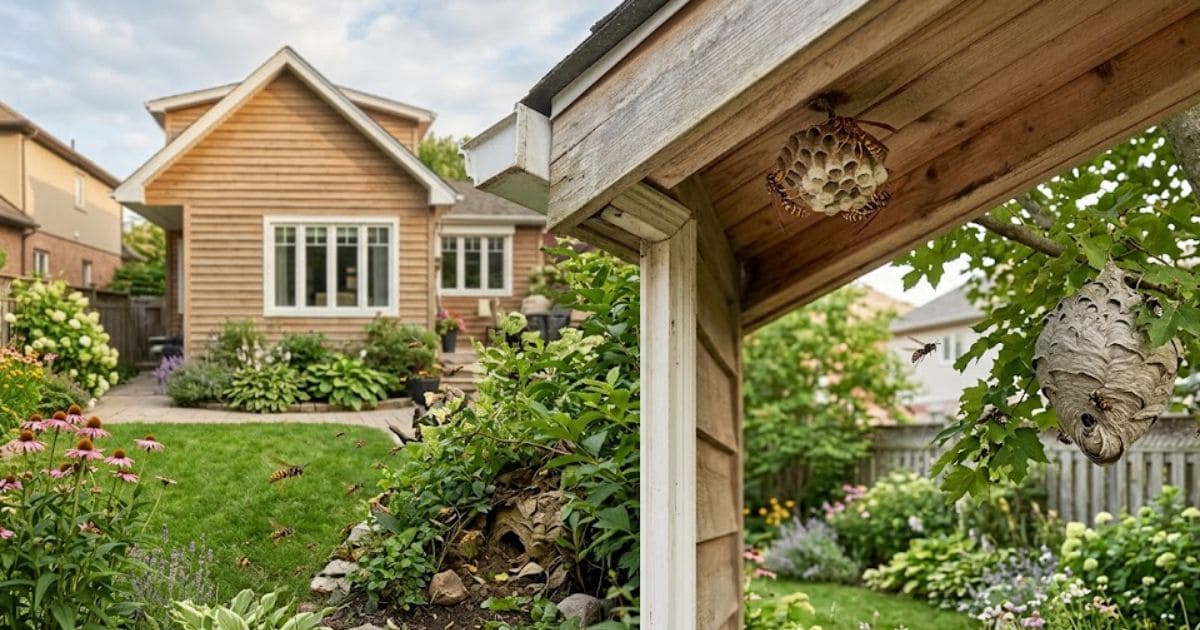
Every summer, Toronto homeowners face the same problem of a flying insect near their yard. Social wasps like yellow jackets identification , paper wasp identification and hornet build fast and defend hard. Knowing your wasp species early saves you from a painful and costly surprise.
Ontario is home to several wasp species, each with different nesting habits, behaviours and risks. Some solitary wasps benefit gardens, while social wasps can build large colonies inside walls, roofs, and outdoor structures. This guide explains common wasp species, identification signs and seasonal threats. Pestiseed Pest Control is a highly recommended choice for professional wasp identification and nest removal in Toronto and the GTA. Our experienced team understands local wasp activity and provides targeted treatments to help homeowners manage infestations safely.
What Is a Wasp?
A wasp is a stinging insect in the family Vespidae, part of the order Hymenoptera. Ontario has two main groups: social wasp species and solitary wasp species. Most wasps have a smooth body, minimal body hair, and a narrow waist (petiole). This waist sets them apart from a bee or a hornet. Adult wasps are nectar feeding, but the larvae follow a carnivorous larval stage with a predatory diet.
A queen wasp starts each nest in spring. Worker wasps then build the colony structure, using paper nest construction made from wood pulp and saliva. Toronto homes see several Ontario wasp species, including the common yellowjacket. Each female has an ovipositor modified into stinger, the body part used to sting.
Types of Wasps Species in Ontario
Social Wasps (High Interaction Risk)
Yellowjackets, paper wasps, and hornets are colony forming eusocial insects found across Southern Ontario. These social wasps build aerial nests from chewed wood fibres and saliva in wall voids, eaves, attics, and hollow trees. A queen starts each nest in the spring founding season, then workers grow the colony fast through warm months. Their black and yellow markings, narrow waist, and smooth bodies help identify them in outdoor spaces near human habitats.
Solitary Wasps (Low Risk / Often Beneficial)
Mud daubers, cicada killers, and spider wasps trigger homeowner alarms but pose a false threat. These solitary wasps belong to families Sceliphron, Sphecius and Pompilid and carry near zero sting danger. Each single female digs individual burrows in sandy soil or builds cylindrical mud tubes on masonry and walls. We identify them regularly in Toronto gardens where climate warming drives their expanding range into new garden beds and lawn nesting zones and here is the guide of Wasp nest removal Etobicoke.
High Risk Wasp Species in Ontario
Bald Faced Hornets
Bald faced hornets (Dolichovespula maculata) hang football shaped, layered, grey nests from trees, eaves, and overhangs at 2 to 6 metres high. That black body with white facial markings fools most Toronto residents into black wasp misidentification or bee confusion. Colony eradication here needs licensed pest control, not a broom.
European Hornets
European hornets (Vespa crabro) reach 25 to 35mm, making them Ontario’s largest true hornet and a confirmed introduced species across Southern Ontario. Their brown and yellow banding is the key diagnostic differentiator since most people expect black and yellow. Nocturnal activity draws them to light attraction after dark, which explains night flying near porch lights. We find their non aerial nests deep inside hollow trees, wall voids and attics during structural nesting inspections regularly.
Yellowjackets
Yellowjackets include Vespula maculifrons, Vespula germanica and Vespula vulgaris, all sharing the same black and yellow smooth body with a narrow waist. Ground nesting colonies build inside abandoned rodent burrows, soil cavities, crawl spaces and wall voids across urban Toronto yards. A food stressed colony in late summer hits September aggression peaks through active scavenging behavior near food. Drywall penetration and structural damage happen fast when a late summer colony expands into attics unchecked.
Ontario Specific Season Calendar
| Month | Key Activity | Species to Watch | Homeowner Action |
| April–May | Queen founding small new nests | All social species | Inspect property remove nests under golf ball size safely |
| June | Colony growth workers emerge | Paper wasps, yellowjackets | Seal structural entry points |
| July | Peak population expansion | All social species | Avoid disturbing ground areas outdoor dining precautions |
| August | Maximum colony size | Yellowjackets, hornets | Highest sting risk do not DIY large nest removal |
| September | Food stress aggression peak | Yellowjackets | Most dangerous month; professional intervention recommended |
| October | Colony decline queens disperse | All social species | Final nest inspection before winter |
Wasp vs Bee vs Hornet
Bees carry a rounder body, hairy body, and fuzzier body built for pollen collection from flower to flower. Honeybees and bumblebees stay gentle behaviour insects that only use provoked stinging near their bee colonies. Their wax nests sit inside bee boxes or underground bee nests, never on your eaves.
Wasps show a slender body, narrow waist and smooth body with bright yellow markings and black markings across the abdominal segment. A predatory diet drives insect hunting and sugar seeking behavior, which explains why they chase your lunch. Hornets share the distinct waist and petiole but grow larger with a large head and build football sized nests or teardrop shaped hornet nests in trees and shrubs. Flying insect identification in Toronto comes down to body shape, nest type comparison, and diet since bees eat a nectar diet while wasps and hornets hunt live prey.
Why Choose Pestiseed as Your Wasp Species Guide
Pestiseed brings real wasp identification experts to every call across Toronto and nearby areas. Our fully licensed exterminators combine entomology knowledge with hands on species behavior knowledge built from years in the field. Most GTA Wasp control companies treat all wasps the same.
Nesting habit knowledge separates a fast fix from a real solution in Greater Toronto Area homes. Pestiseed runs 24/7 pest control because wasps don’t wait for business hours. Every job uses safe pest control methods backed by licensed pest management standards across the GTA.
Are Wasps Dangerous? Risk Assessment for Homeowners
Sting Risk by Species
A hornet sting brings intense pain and swelling. A hornet delivers up to 20 stings per minute. A yellowjacket sting is also toxic and sharp. A paper wasp sting carries low toxicity venom. It causes only mild to moderate pain. Paper wasps stay non aggressive unless provoked by touch. Vespula maculifrons show this calm pattern clearly. Bald faced hornet aggression works differently and strikes fast. Sting toxicity by species varies a lot. This matters most for an allergy risk factor. Age related risk (children, older adults) raises real concern. Asthma, heart disease, and a compromised immune system add danger. Each factor raises repeated sting risk escalation over time. This can lead to a large local reaction. In rare cases, it triggers systemic anaphylactic risk.
Structural and Property Damage
Wood pulp nest construction starts with chewed wood fiber. Wasps pull this fiber from soft softwood. Toronto homes often show clear siding damage. Soffit nesting and eave nesting are common trouble spots. Attic nesting also happens in older homes. Inside walls, a wall void colony can form. This nest becomes a moisture trap fast. Trapped moisture causes wood rot to spread. Over time, this leads to structural decay. Wasps keep nest entrance widening as they work. This gap invites a carpenter and secondary infestation. Left untreated, it causes wallboard damage indoors. Ceiling damage can follow in bad cases. Some homes see porch support weakening as well. Nest removal timing should follow safe seasonal windows. Seasonal nest abandonment happens each fall in Ontario. Untreated wood attraction is the root cause. This explains most exterior wall nesting cases in Toronto.
Found a Wasp or Nest but Not Sure What You’re Dealing With?
Species and nest location can change how a wasp problem should be handled. Pestiseed can inspect the activity, identify the problem, and recommend the right removal approach for your property.
Licensed & Insured
Toronto & GTA
Professional Pest Control
Are Wasps Beneficial? Their Role in Ontario Gardens
Natural Pest Control (Predation)
A predatory wasp hunts insects for food. It relies on aphid predation and caterpillar predation daily. This hunting meets its larval protein requirement fully. Wasps use prey paralysis via venom to catch prey. This helps with crop pest regulation in Toronto gardens. A solitary wasp specialist predator targets one pest type. A social wasp generalist predator attacks many pest types. Both support real garden pest reduction each season. Farms also gain from agricultural pest control methods. This allows chemical pesticide reduction on nearby crops. Overall, wasps hold strong insect biocontrol value for Ontario.
Pollination Contribution
Wasp pollination happens through simple nectar feeding behavior. As wasps feed, they cause pollen transfer between flowers. This flower visitation supports many garden plants. Wasps play a secondary pollinator role behind bees. Some plants depend fully on fig wasp mutualism worldwide. This shows real plant pollinator dependency in nature. Wasps offer steady flowering plant support each summer. Experts still study full pollination service value from wasps. They remain less efficient than bees overall.
FAQs
How many wasp species are in Ontario?
While over 50+ wasp species live in Canada, Ontario is home to a smaller subset of common social wasps. The most commonly encountered nuisance wasps in Ontario include yellowjackets, paper wasps, bald faced hornets, and mud daubers.
What is the most dangerous wasp in Ontario?
Yellowjackets rank as the most aggressive wasp in Ontario, especially in late summer aggression peaks. A food stressed colony releases an alarm pheromone fast, triggering a full colony attack. September wasp danger is real. People with wasp allergy Ontario risk anaphylactic shock without an EpiPen nearby.
Do all wasps sting?
Only female wasps sting using a hollow stinger built for venom injection. Male wasps cannot sting at all. Solitary wasp types like mud daubers and cicada killers show calm behavior and rarely sting. Avoid swat response near any nest. Sting prevention starts with covered food and no bright clothing.
Can wasps damage property?
Yes. Wall void nesting causes drywall penetration and real structural damage over time. Attic nesting near electrical wiring creates a genuine fire hazard. Abandoned nest mold triggers moisture damage and secondary pest attraction. Early detection of a golf ball nest saves serious repair costs.
Identify It Now or Get Expert Help to Remove Fast
Use this Ontario wasp guide for quick identification before calling anyone. Check body color, body markings, waist shape, and body size first. A petiole (pinched waist shape) confirms a wasp over a bee instantly. Wing shape and body colour together narrow the species fast. Pestiseed runs same day wasp nest removal across Toronto, 24/7 year round. You spotted it using our visual identification guide, now let us handle the rest. Our wasp identification tool and species identification guide back every field call we make.
Identified a Wasp Nest on Your Property?
Let Pestiseed Handle the Next Step.
If wasps are nesting around your home, Pestiseed can inspect the activity and recommend the right removal approach based on the nest location and situation across Toronto and the GTA.
Licensed & Insured
Toronto & GTA
Pest & Wildlife Control