A small wasp nest spotted in spring can become a colony of hundreds or even thousands of stinging insects by late summer. Many Ontario homeowners first notice wasps flying around an eave, soffit, wall cavity, tree, shed or underground opening without understanding how the nest formed or how large it may become. Most wasp nests are built from chewed wood fibres and saliva, allowing colonies to expand quickly once worker wasps take over construction.
Knowing what a wasp nest is made of, how different species build their colonies, and where they commonly nest helps you identify potential problems early and take action before the colony reaches peak activity. This guide covers the complete wasp nest life cycle, nesting materials, species specific nest types, common Ontario nesting locations, and the safest next steps after finding a nest on your property.
What Are Wasp Nests Made Of and How Do Wasps Build Them?
Why Wasps Use Wood Fibres and Saliva as Building Materials
Worker wasps scrape wood fibres and mix them with saliva to create paper like nesting material, according to the University of Kentucky Entomology. Social wasps build large seasonal colonies that depend on fast nest expansion throughout spring and summer. Wood fibres produce a lighter, stronger and expandable structure than mud.
Cellulose pulp stays pliable when wet and rigid after drying. Enzymatic saliva breaks down the wood fibre bonds during chewing. Wood fibres allow faster colony expansion than mud based structures. Wood based paper nests can be enlarged rapidly throughout the colony growth cycle.
How the Chewed Wood Becomes a Papery Nest Structure
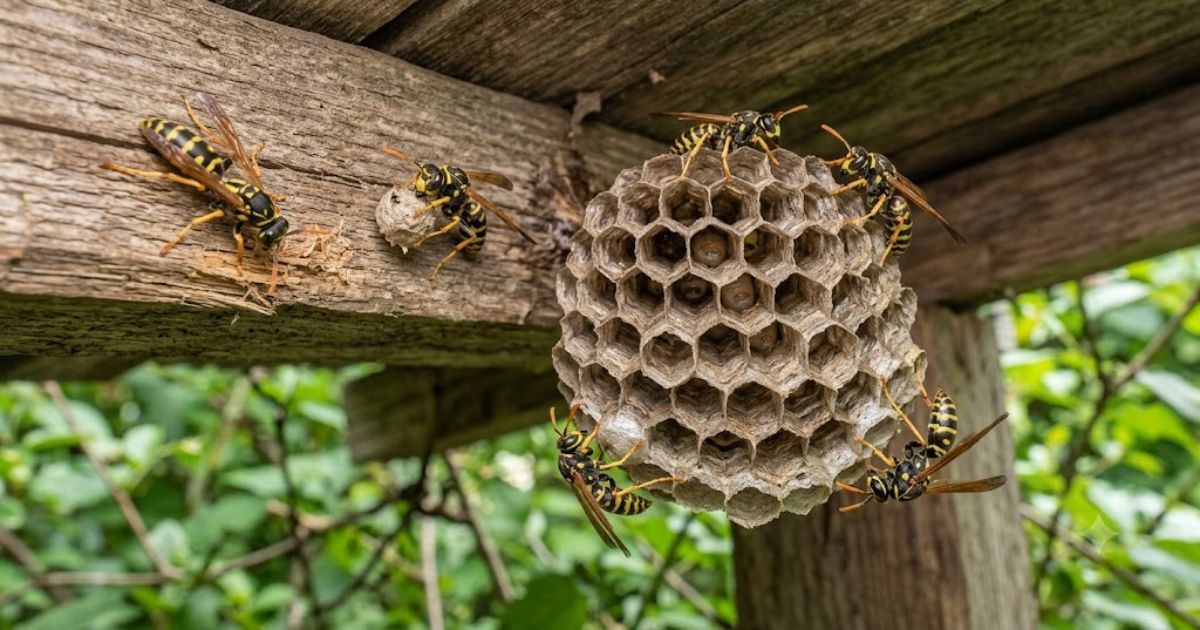
2 distinct paper construction types exist across Ontario wasp species. Yellow jacket and hornet nests use multi layer paper envelopes. Paper wasp nests use a single exposed layer with no outer casing. Wet pulp dries faster in warm, dry Ontario summers.
Within hours of application, wet cellulose sheets harden into papery grey panels. Some species deposit a waxy outer coating on the finished surface. The calcium, silicon and magnesium minerals in wood contribute to that rigid finish. Layered construction gives yellow jacket nests stronger weather resistance than single layer paper wasp nests.
How Wasps Build a Nest Step by Step
How the Queen Wasp Starts the First Cells in Spring
When Ontario temperatures stay consistently above freezing in late March or April, overwintered queen wasps exit hibernation. Each queen finds a dry, sheltered, wind protected surface. She builds the petiole first, then adds hexagonal brood cells open end facing down. One egg enters each cell.
How Worker Wasps Take Over and Expand the Colony Structure
Do wasps hibernate are non reproductive females responsible for foraging, nest construction, and brood care. Once the first brood hatches, they take over foraging, wood pulp processing, and nest expansion. The queen shifts to full time egg laying. The nest expands outward and downward through summer.
Types of Wasp Nests Found in Ontario
Yellow Jacket Nests and Where They Build in Ontario Homes
Yellow jacket nests carry a fully enclosed papery outer casing with one entrance hole at the base. By August, a single nest held up to 3,500 wasps, confirmed by Orkin Canada. The German yellow jacket, an invasive Ontario species, nests inside wall voids, attics, and underground burrows. Ground nesting colonies hide under concrete slabs and lawn soil.
Bald Faced Hornet Nests and Their Aerial Construction
Dolichovespula maculata belongs to the yellowjacket group and builds large enclosed aerial nests across Ontario. Nests grow into large, football shaped aerial structures attached to tree branches, eaves, and utility poles across the GTA. One alarm pheromone release mobilisers the entire colony instantly.
Paper Wasp Nests and Mud Dauber Nests on Ontario Properties
Polistes fuscous Ontario’s northern paper wasp builds colonies. The nest is an open, umbrella shaped comb held by a single petiole stalk under deck railings or soffits. Mud dauber nests are hard, tubular mud structures on garage walls and brick faces. Mud daubers are solitary and pose minimal sting risk to Ontario homeowners.
Where Wasps Choose to Build Nests Around Ontario Properties
Indoor Nesting Locations Homeowners Miss Until the Colony Is Large
Wasps enter wall voids through damaged mortar, pipe gaps and cracked brickwork. A buzzing sound from inside a wall confirms an active wall cavity nest. Disturbing an indoor nest is dangerous wasps turn inward into the living space. Attic and soffit nests in Ontario’s older housing stock stay hidden until late summer wasp sting treatment traffic becomes visible.
Outdoor Nesting Locations Common Across Toronto and the GTA
Across Toronto and the GTA, wasps attach nests to eave soffits, deck under framing and garden shed roof vents. Underground lawn nests are identifiable by one small hole with steady wasp traffic all day. Abandoned birdhouses and tree hollows host full yellow jacket colonies by midsummer. Window frame lips hold paper wasp nests that most homeowners mistake for mud.
When Wasps Build Nests in Ontario Throughout the Year
Spring Nest Founding and the Queen’s Role Climate
When Ontario temperatures stay consistently above freezing in late March or April, overwintered queens leave hibernation sites in hollow trees, soil crevices and building gaps. Each queen forages for nectar from early flowering plants before locating a nest site. No workers exist yet colony failure follows if this single queen dies. She builds the petiole, lays the first eggs and waits alone.
Why Wasp Nests Become Dangerous by Late August
Late August marks peak colony size and peak sting risk across Ontario properties. Worker wasps exhaust the colony’s larval food supply and shift to foraging for sugars near bins, drinks and outdoor food. Orkin Canada confirms yellow jacket colonies reach several thousand workers by this stage. New queens and males appear in August solely for mating before winter. Wasp colonies continue expanding through summer before producing reproductive males and queens in late season, according to University of Minnesota Extension.
How Large a Wasp Nest Can Grow and Why Nest Size Matters
Colony Size by Species and What That Means for Removal Risk
Nest size varies by species, but larger colonies increase sting risk and make removal more difficult. Inside Ontario wall voids, yellow jacket colonies can reach up to 3,500 workers by late August. Paper wasp nests typically contain up to 300 workers and remain visible throughout development. Bald faced hornet colonies often exceed 1,000 workers and can respond aggressively when alarm pheromones are released. The same nest in May contains only a fraction of its late summer population, making early intervention significantly safer.
Why Wasps Never Reuse an Old Nest the Following Season
Wasps abandon their nests permanently after winter and build new ones each spring. Government of Canada wasp information sustained frost kills the colony, leaving only mated queens alive. In spring, those queens establish entirely new nests rather than returning to the previous structure. Although abandoned nests pose no active threat, the same sheltered location can attract a new queen the following season.
Signs a Wasp Nest Is Active on Your Ontario Property
What Active Wasp Traffic Looks Like Near a Nest Entrance
From mid morning to mid afternoon on warm Ontario days, active nests show a steady stream of workers entering and exiting one fixed point. Returning foragers carry wood pulp or food material visibly on their bodies. Departing workers exit singly and fly directly toward foraging areas. Rapid, agitated circling near the nest entrance signals the colony has been disturbed.
How to Tell a New Nest from an Abandoned One
A fresh spring nest is pale grey white, golf ball sized and may show the queen working on the surface. An established summer nest darkens to grey brown from weathering and holds constant worker traffic. Abandoned autumn nests show zero movement on warm days and display softening, deteriorating paper surfaces. Any Ontario nest with no activity in October is almost certainly abandoned but never touch it to confirm.
What Ontario Homeowners Should Do After Finding a Wasp Nest
Why Disturbing an Active Nest Without Protection Is Dangerous
Wasps do not lose their stinger each worker stings repeatedly without dying. One crushed wasp releases an alarm pheromone that recruits hundreds of nearby colony members to attack simultaneously. A disturbed yellow jacket colony of 3,000 workers inside a wall void delivers a far greater sting load than any homeowner can safely absorb. Anaphylaxis throat closure, chest tightness, and breathing failure can follow within minutes in allergic individuals.
Found an Active Wasp Nest Around Your Home?
Avoid disturbing an active nest, especially if wasps are entering a wall, roof space, or underground opening. Pestiseed can help identify the nesting location and recommend a suitable wasp removal solution across Toronto and the GTA.
Licensed & Insured
Toronto & GTA
Professional Pest Control
FAQs
Do wasps make their nests from mud or wood?
Most Ontario wasps, yellow jackets, bald faced hornets and paper wasps build nests from chewed wood fibres and saliva. Mud daubers are the only exception. They use mud and are solitary, posing minimal sting risk.
How long does it take wasps to build a nest in Ontario?
Ontario wasp colonies build actively from late March through October. A queen founds the first cells in April. Worker emergence begins 3 to 4 weeks later. A full basketball sized enclosed nest develops by late August.
Do wasps come back to the same nest every year in Canada?
Wasps never reuse an old nest in Canada. Over wintered queens build entirely new structures each spring. The same sheltered location may attract a different queen the following year making entry point sealing after professional treatment essential.
Get Same Day Wasp Nest Identification
Found a wasp nest in or around your home? Pestiseed provides professional wasp nest inspections across Toronto and the GTA. Our technicians identify the species, locate hidden nesting areas and recommend the safest treatment option based on the colony’s size and location.
Worried About a Wasp Nest on Your Property?
Let Pestiseed Help You Find the Right Solution.
Whether the nest is hanging under your eaves, hidden inside a wall, or located underground, Pestiseed provides professional wasp nest assessment and removal services across Toronto and the GTA.
Licensed & Insured
Toronto & GTA
Pest & Wildlife Control