Wasp nest removal in Ontario follows 3 decisions identify the nest type, match the right treatment method, and confirm die off before sealing. Bald faced hornets build aerial nests on trees, shrubs, and eaves. Yellow jackets nest in ground burrows and wall voids. Aerosol spray handles small exposed nests. Insecticidal dust treats ground entrances and interior voids through the entrance contamination method. Late summer mature nests, confined spaces, and households with a known sting allergy or anaphylaxis history require a licensed exterminator holding a structural Pest control Etobicoke licence under Ontario’s Pesticides Act.
Identify the Type of Wasp Nest You Are Dealing With
Bald Faced Hornet Nests Versus Yellow Jacket Nests
The bald faced hornet (Dolichovespula maculata) builds basketball shaped nests in trees, shrubs, and building eaves across Ontario. Despite its name, it’s technically a yellowjacket species, not a true hornet. Yellow jackets (Vespula) nest underground or inside wall voids. Worker bald faced hornets typically measure 12–15 mm, while queens can reach 18–20 mm in length.
Paper Wasp Nests and How They Differ
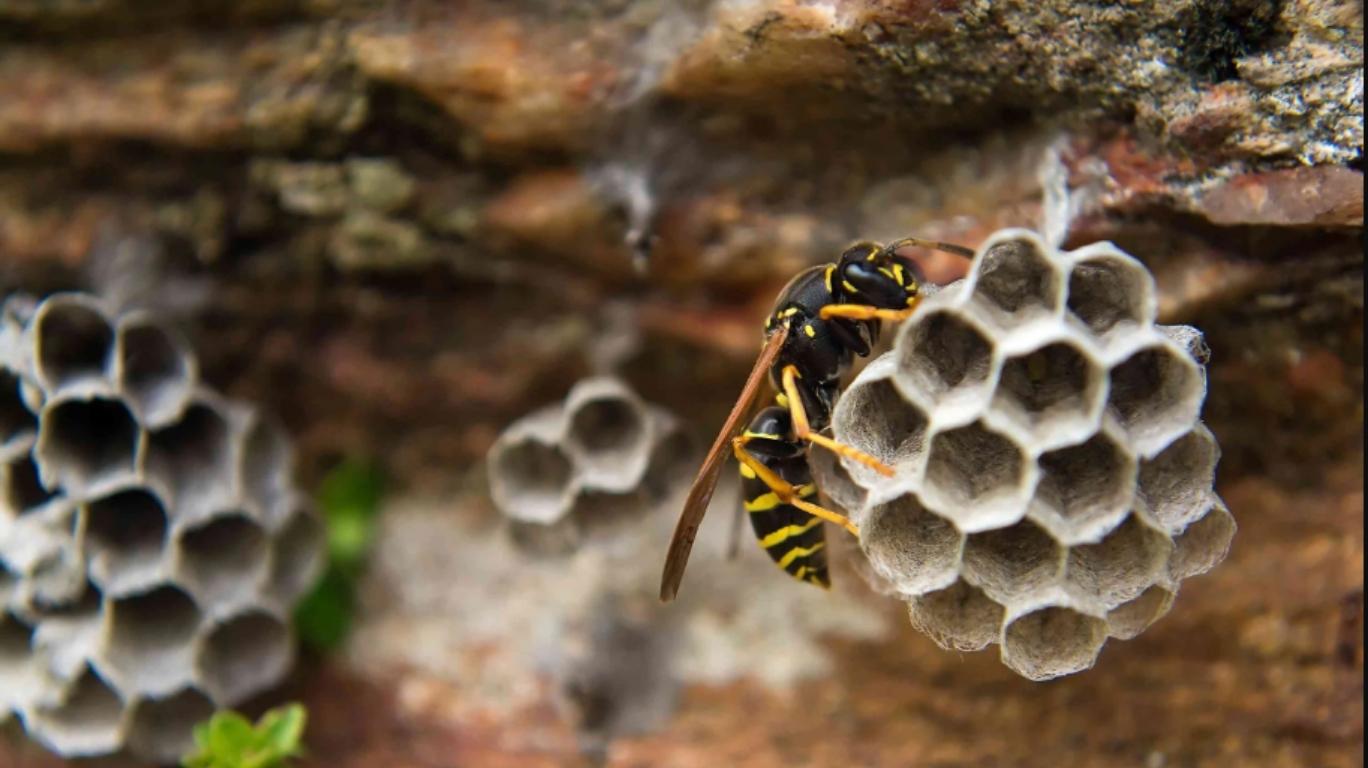
Paper wasps (Polistes fuscatus, Polistes dominula) build open comb nests with no outer paper envelope. The brood cells stay fully exposed unlike yellow jacket or bald faced hornet nests. Colonies stay small, producing only a few dozen workers according to Michigan State University Extension. Umbrella shaped combs appear on eaves, door handles, and small sheltered structures.
Where Wasp Nests Are Commonly Found Around Ontario Homes
Exposed Aerial Nests on Trees, Eaves, and Shrubs
Aerial nests attach to tree branches, shrubs, and building eaves across Ontario. They start golf ball sized in early spring. Late season bald faced hornet nests can reach approximately 58 centimetres and contain 400 to 700 workers according to Michigan State University Extension. The outer envelope and nest stem expand through the full season.
Ground Nests in Lawns and Garden Beds
Michigan State University Extension notes that yellow jackets commonly occupy abandoned rodent burrows rather than excavating their own nests. Queens choose these spots because they don’t dig their own holes. The entrance hole looks like a small, dirt covered opening in soil per MSU. Most homeowners find ground nests while mowing or weeding.
Hidden Nests Inside Soffits, Walls, and Attic Voids
Interior nests form when wasps enter gaps larger than 1/4 inch. Common entry points include soffit edges, brick mortar gaps and utility penetrations. Southwest facing walls in Ontario attract the most activity and brick retains warmth there. Wall void and attic void nests stay hidden until the colony grows large.
How to Remove an Exposed Wasp Nest Safely
What to Wear and When to Do It
Treat the nest at dusk or night scout wasps return to the nest by then. Activity drops to its lowest point in that window. Rentokil recommends wearing full protective clothing, gloves, eye protection, and a dust mask when treating active wasp nests. Low light and full gear together cut your sting risk sharply.
Step by Step Removal Process for Hanging Nests
Spray aerosol wasp spray directly into the natural nest opening from up to 20 feet away. Wait a minimum of 24 hours before touching the nest. Knock it down with a long tool, then seal it in two layers of plastic bags. Run a second pass check for live wasps before binning it sealed outdoors.
How to Remove a Ground Nest Without Getting Stung
Treating the Entrance With Dust or Soap Solution
Apply insecticidal dust through a disposable paper cup or bulb duster directly into the entrance hole. Foraging wasps carry the dust inside, this is the entrance contamination method. The colony dies off within one to two days. Treat in the early morning when wasp activity sits at its lowest point.
Why Flooding or Burning a Ground Nest Is Dangerous
Flooding a ground nest does not eliminate the colony. Water triggers an immediate defensive response and wasps swarm anything nearby. Burning or pouring gasoline into the entrance creates a fire spread risk. In one documented Ontario case, a gasoline based attempt spread fire directly to the homeowner’s house.
How to Remove a Wasp Nest Inside a Wall, Soffit, or Attic
Why You Should Never Seal the Entry Hole First
Never block the entry hole of an interior nest before treatment. Sealing with steel wool, silicone, or spray foam traps the colony inside the void. Wasps then chew through walls and enter your living space directly. A blocked hole also prevents powdered insecticide from reaching the nest.
Correct Treatment Sequence for Interior Nests
Pump powdered insecticide into the void through the entry hole using a powder applicator. Worker wasps carry the powder inside on their bodies. The powder reaches the queen and remaining colony within 24 hours to 10 days. Larger nests take closer to 10 days to show full die off.
When to Seal the Entry Point After Treatment
Watch the entry hole for three to five consecutive days with zero wasps entering or exiting. This is the confirmed die off window before any sealing begins. Use steel wool for irregular gaps larger than 1/4 inch. Follow with caulking for a permanent, weather tight seal on Ontario home exteriors.
Is a Wasp Nest Too Large or Difficult to Reach?
Large colonies, nests inside walls or soffits, and known sting allergies can make DIY removal especially risky. Contact Pestiseed to discuss professional wasp nest removal options in Toronto and the GTA.
Licensed & Insured
Toronto & GTA
Professional Pest Control
Signs the Nest Is Too Large or Too Dangerous for DIY
A mature nest found in late summer holds thousands of individual wasps. Consumer aerosol sprays are not formulated to treat colonies at that scale. Anyone in the household with a known sting allergy or history of anaphylaxis faces a medical emergency risk. These 3 conditions cross the DIY risk threshold and require a licensed exterminator.
DIY risk threshold checklist:
- Nest size trigger: late summer mature nest with thousands of individuals
- Medical trigger: known sting allergy or prior anaphylaxis episode
- Location trigger: confined space such as a wall cavity or structural void
A certified technician treats the colony directly and offers a return visit when the first treatment needs a follow up. Professional treatment covers confined or hard to reach spaces that no consumer product safely reaches in the GTA or across Ontario.
How to Prevent Wasp Nests From Returning to Your Property
Sealing Entry Points the Right Way
Seal every gap larger than 1/4 inch before wasps scout for spring nesting sites. Use steel wool for irregular openings and caulking or silicone for smooth, permanent seals. Line birdhouse roofs with aluminum foil one application protects the full Ontario season. Spray foam fills deeper soffit joints where caulk won’t reach.
Reducing Food and Nesting Attractants in Your Yard
Secure outdoor bins with tight fitting lids and position them away from doors and seating areas. Remove pet food bowls and sugary drink spills the same day wasps revisit a former food source for several consecutive days due to the imprint effect. Plant spearmint, thyme, and eucalyptus near outdoor seating in your GTA yard. These aromatic herbs act as natural scent deterrents without chemicals.
FAQs
How Long Does It Take for a Wasp Nest to Die After Treatment?
Aerosol treatment kills a nest within 24 hours. Ground entrance dust takes 1 to 2 days. Interior void powder needs 24 hours to 10 days depending on colony size.
Do Wasps Reuse the Same Nest the Following Year?
Wasps never reuse the same physical nest. The old nest stays permanently abandoned. A new queen may build a fresh nest in the same soffit gap or leave the following spring.
Is It Safe to Remove a Wasp Nest Yourself if You Are Allergic?
Never attempt DIY removal with a known sting allergy. Multiple stings during removal raise the risk of anaphylaxis severely. Schedule a licensed Ontario wasp nest inspection if the colony is hidden inside a wall, attic, soffit, or other confined space.
What Is the Best Time of Day to Remove a Wasp Nest?
Treat at dusk or night when scout wasps have returned to the nest. Colony activity sits at its lowest in that window. Nighttime removal cuts your sting risk significantly.
Need Professional Wasp Nest Removal in Ontario?
Large colonies, concealed nests, and properties with allergy concerns often require professional treatment. Licensed exterminators can treat aerial nests, ground nests, and wall void infestations throughout Toronto, Mississauga, Brampton, Vaughan, Markham, Hamilton, and surrounding Ontario communities. Book a wasp nest inspection to determine the most effective treatment method for your situation.
Found a Wasp Nest on Your Property?
Get Professional Wasp Removal Help From Pestiseed
Whether the nest is in a tree, underground, or hidden inside a wall or soffit, Pestiseed can help you explore appropriate treatment options. Contact us for wasp nest removal assistance in Toronto and surrounding GTA communities.
Licensed & Insured
Toronto & GTA
Pest & Wildlife Control