Wasp season in Toronto follows a clear pattern most people miss. The overwintering queen wakes up in April and starts building alone. May wasp activity stays low because the nest is still small. June colony growth and July colony growth run quietly inside walls or underground. Most Toronto homeowners notice nothing until it’s too late.
August peak aggression and September peak aggression mark the worst time for DIY. The October colony maximum means thousands of wasps protecting one nest. The spring prevention window is the smart move. Early season deterrence in April and May works because the colony is tiny. November frost kill and natural die off end the season, but the seasonal timing of your remedy decides everything. The late season danger is real, and we see the worst stings happen in September every year and here is the ulimate guide of wasp prevention methods.
Natural Remedies That Have Legitimate Evidence
Peppermint Oil Deterrent Only Not Elimination
Peppermint oil works through olfactory navigation disruption, not direct killing. Mix 10 to 15 drops per 250ml of water in a spray bottle application. Treat entry points, window frames, and eaves with this diluted peppermint solution every few days. This essential oil acts as a wasp repellent spray with one hard limit no colony abandonment happens, and active nest limitation is zero.
Dish Soap and Water Legitimate Kill Method for Small Nests
Dish soap blocks the breathing pores of wasps on direct contact. Spray it straight onto a small nest at night when wasps stay still. This method kills what you hit but does not reach wasps inside the structure.
Fake Decoy Nests Work Selectively Not Universally
A decoy nest tricks wasps through territorial instinct during the queen scouting phase. Hang a paper lantern style or brown paper bag fake before the May long weekend for best results. April deterrence, May deterrence, and June deterrence work for paper wasp and yellowjacket deterrence only. A bald faced hornet finds a false wasp nest completely ineffective.
Wasp Repellent Plants Prevention Layer Not a Remedy
Wasp repellent plants release volatile organic compounds that cause foraging orientation disruption. Plant spearmint, lemongrass, wormwood, thyme, basil, marigolds, geranium, pennyroyal, or citronella in your garden planting zone. A peppermint plant and mint near entry zones reduce foraging pressure on the property. This companion planting layer is not nesting prevention it only lowers how often wasps visit.
Natural Remedies That Don’t Work
The vinegar trap is the most common DIY failure we see in Toronto. It pulls wasps in through attraction without elimination. The worker replacement rate inside a colony is fast. Colony replenishment fills the gap before the trap makes any real difference.
Cinnamon powder has no evidence behind it beyond anecdotal only posts online. Scatter it all you want, wasps ignore it fully. Cucumber peels carry zero repellent compounds despite being a persistent internet myth. These ineffective wasp remedies and wasp myths waste your time during the worst weeks of the season.
Nest Location Changes Everything Matching the Remedy
Aerial Nests on Eaves Tree Branches and Overhangs
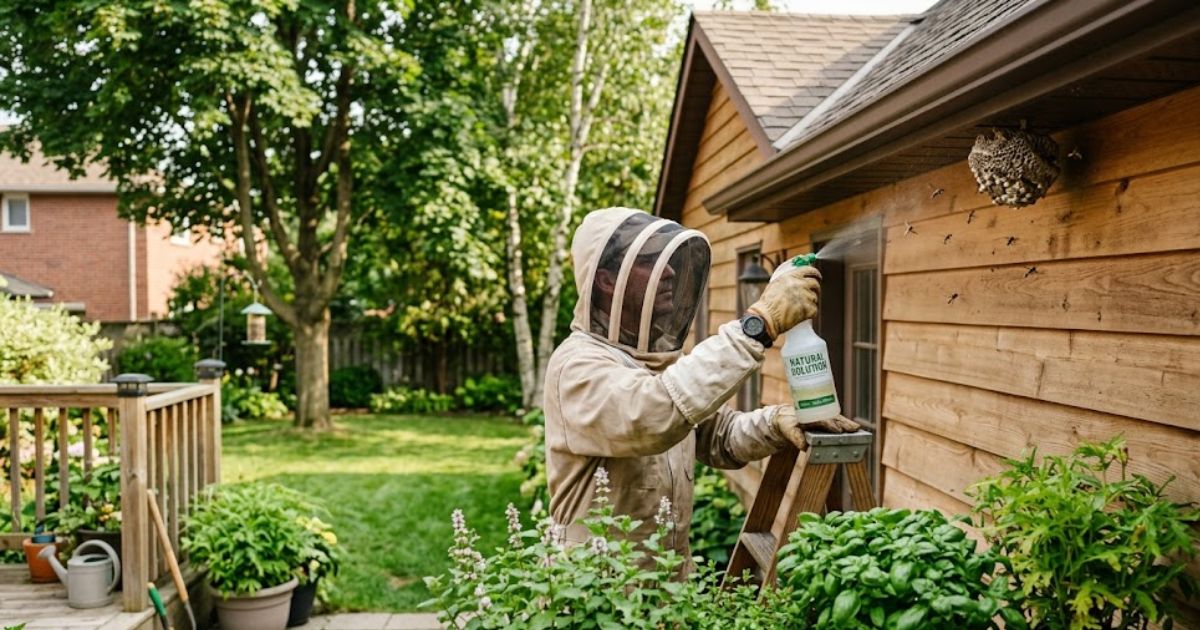
A small accessible nest with exposed comb on an eaves nest or overhang nest suits the bag and submerge method. Slide a cloth bag over the nest, seal it, then drop it into a pail of water submersion held down with a rock weight. Wear tight fitting clothing before you start. The soap and water method also works on a small accessible nest under tree branches.
Underground and Lawn Nests Are the Highest Risk
A yellowjacket underground colony holds tens of thousands of wasps across multiple exit tunnels. The boiling water method is both boiling water ineffective and a high injury risk on a deep ground nest. An August colony or September colony reaches full colony depth by late summer. DIY almost always fails here this is the highest risk DIY situation a Toronto homeowner faces.
Wall Voids and Structural Cavities Need Professionals
A wall void nest or hidden colony inside a structural cavity creates a trap. Entry point blocking pushes trapped wasps into chewing through drywall, causing interior damage. A wall void yellowjacket or interior wall colony gives you no DIY option. Professional removal only applies here cavity access requires proper tools and training.
Found a Wasp Nest Inside Your Walls?
Hidden wasp nests can be difficult to reach, and blocking their entry points may push wasps into your home. Pestiseed can help with professional wasp nest removal in Toronto and the GTA.
Licensed & Insured
Toronto & GTA
Pest & Wildlife Control
Attic and Roof Space Nests Go Beyond DIY
Heat amplification inside an attic nest or roof space nest drives increased aggression heat responses fast. An abandoned comb left behind causes honey fermentation, leading to fermentation damage and ceiling damage over time. Structural contamination spreads if the nest stays too long. Attic wasp removal in Toronto sits firmly in professional scope only with no DIY exception.
Safety Protocol Before Any DIY Attempt The Canadian Context
Anaphylaxis risk stops many Toronto DIY attempts before they start. Health Canada data confirms 3 percent of the Canadian population carries a wasp venom allergy serious enough to trigger a systemic allergic reaction. Get physician consultation first if you have any reaction history. Keep an epinephrine auto injector or EpiPen within reach before approaching any nest.
Full coverage protection is non negotiable on the body. Wear a head net, thick gloves, sealed long sleeves, sealed trousers, and closed toe shoes every time. Tight fitting clothing blocks wasps from crawling under loose fabric gaps. One open cuff turns a simple job into an emergency room visit fast.
Preventing Wasps From Returning Next Season The Toronto Homeowner
Before April preparation starts with sealing every structural entry point on the home. Fix fascia gap sealing, weep hole sealing, and roof vent sealing before snow melt triggers queen activity. Clear overwintering harborage by removing wood pile stacks and doing full debris clearing across the property perimeter. A queen without a sheltered spot moves to the next available yard.
Food odour management cuts foraging pressure all season long. Use a lidded composter, clean BBQ grates after every use, and keep sealed outdoor bins tight at all times. This annual prevention strategy removes the attractants that pull scouts in first. Long term wasp control in Toronto runs on structure and habit, not just one time fixed and here is the guide about wasp nests species.
FAQs
Do natural wasp remedies work?
Yes, natural wasp remedies can work effectively, particularly for repelling them or dealing with small, individual nests. These methods are generally safe for humans and pets, utilizing scents that disrupt a wasp’s scent receptors or soap mixtures that disrupt their exoskeleton.
What smell do wasps hate the most?
Wasps hate peppermint the most. Spearmint, clove, lemongrass and citronella also trigger olfactory repellent responses. These volatile organic compounds disrupt foraging orientation. Burning coffee grounds creates coffee smoke that wasps avoid. Wormwood ranks strong too.
Is vinegar effective for wasps?
Vinegar attracts wasps but does not kill the colony. The vinegar trap pulls workers in without stopping colony replenishment. The worker replacement rate is too fast. This DIY trap limitation makes it an ineffective home remedy for real nest problems.
What kills wasps instantly naturally?
The most effective, instant, and natural way to does WD-40 kill wasps is a mixture of dish soap and water. This mixture kills wasps instantly by coating their bodies, breaking down their exoskeleton and suffocating them by clogging their spiracles (breathing pores).
Are natural methods safe for pets and children?
Peppermint oil needs dilution before use near pets. Dish soap and plant based remedies are generally family safe. Avoid direct essential oil contact on animals. We recommend food grade ingredients and chemical free options near play areas.
Safe Product Guide Wasp Removal
Eco Smart organic spray is one of the few natural wasp spray options carrying a Health Canada PCP registration number for Ontario use. A peppermint oil spray product works as a food grade wasp killer on direct contact with small exposed nests. For harder to reach spots, a high pressure aerosol or commercial wasp spray reaches nests under eaves without getting too close. We also see good results with a homemade lemon extract spray using a simple lemon extract formula mixed with water for fresh entry point treatment. Any registered pest product Ontario label gives you the safety confirmation you need before applying near family spaces. When safe wasp products run out of range, Pestiseed steps in with organic wasp killer solutions that go further than any store shelf option and here is the ultimate guide about wasp nest removal.
Still Dealing With a Wasp Nest?
Let Pestiseed Help You Remove It.
Natural repellents can help discourage wasps, but hidden, underground, and established nests may need professional attention. Contact Pestiseed for wasp removal services in Toronto and the surrounding GTA.
Licensed & Insured
Toronto & GTA
Pest & Wildlife Control