Skunks in Etobicoke yards cause real alarm but most residents cannot tell a rabid skunk from a distemper case or a nursing mother. Misreading the signs leads to either panic or dangerous underreaction. This guide covers every behavioral indicator, Ontario rabies data, and the exact steps to take after any skunk contact with a person or pet.
What Signs Suggest a Skunk May Have Rabies
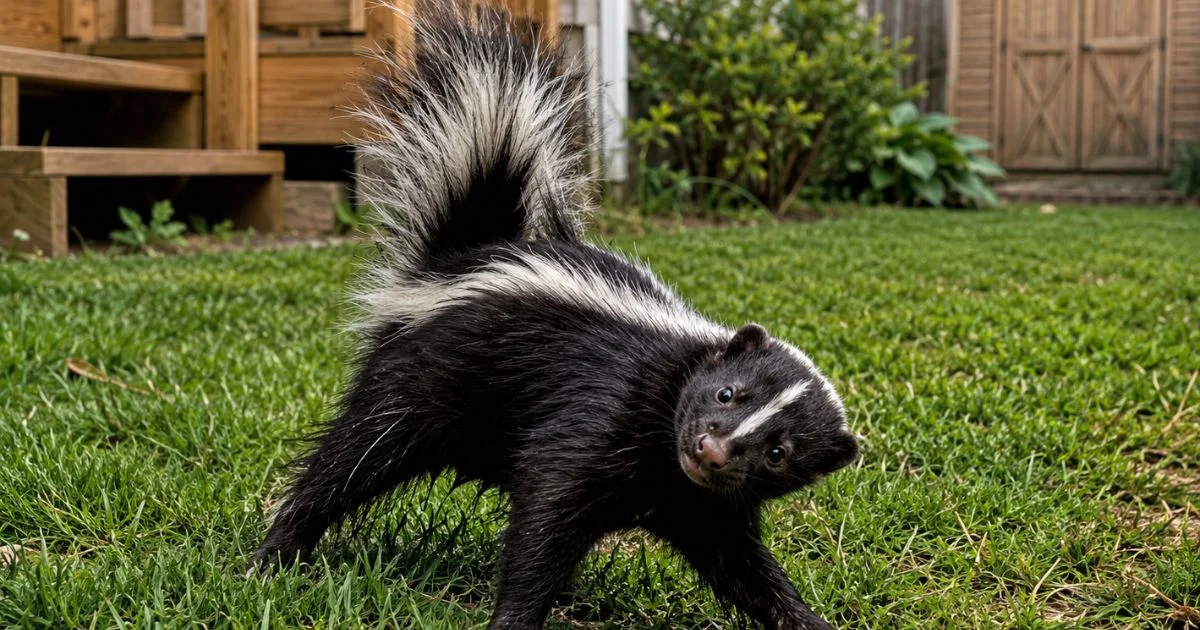
The striped skunk, known scientifically as Mephitis mephitis, is a confirmed rabies vector species in Ontario. Urban wildlife in Etobicoke includes skunks regularly. A skunk on property during daylight is a primary disease indicator. The rabies virus also called RABV attacks the nervous system of any warm blooded animal.
Observable behavior tells part of the story. A nocturnal animal active at noon shows clear behavioral change. Neurological impairment produces circling, stumbling, and unprovoked aggression in this mammal. However, behavior alone cannot confirm rabies diagnostic uncertainty remains until lab testing. A combination of signs matters more than any single behavior limitation.
Behavioral and Neurological Signs to Watch For From a Distance
Loss of Normal Fear and Unprovoked Approach
Normal avoidance behavior disappears in infected skunks. Healthy skunks show reclusive behavior and retreat from humans fast. Unusual boldness and tameness near people signals a broken loss of fear response. Note that skunks with poor eyesight may approach slowly moving objects to rule out habituation versus disease before assuming rabies.
Movement Problems, Staggering, Circling and Partial Paralysis
Neurological damage shows up in the body before death. Incoordination, stumbling, and circling behavior follow motor function loss in late infection. A skunk appearing drunk or dragging limbs has lost muscle control entirely. Posterior paralysis and seizure like activity confirm advanced late stage rabies.
Excessive Salivation and Difficulty Swallowing
Hypersalivation results from throat muscle failure. Foaming at the mouth, wet muzzle, and open mouth appearance are visible from a safe distance. RABV in saliva makes any contact a transmission risk. Dysphagia difficulty swallowing produces the mucous discharge visible around the jaw.
Aggression That Comes Without Provocation
Skunks are normally defensive, not offensive animals. Furious form of rabies changes that completely. Charging behavior, lunging and unprovoked biting replace normal retreat patterns. A skunk attacking dogs, attacking small animals, or attacking people without a territorial trigger requires an immediate call to Toronto Animal Services.
Whether Daytime Activity Means a Skunk Is Rabid
Normal Reasons a Healthy Skunk Is Out During Daylight
A nursing female skunk needs more food than usual. Skunk kit season pushes mothers out at all hours. February mating season and March mating activity drive males across large distances. Poor eyesight causes daytime movement too skunks follow scent trails, not light cycles.
When Daytime Activity Becomes a Genuine Concern
Daytime activity combined with neurological signs changes the risk level entirely. Watch for daytime plus disorientation, daytime plus staggering, or daytime plus loss of fear together. One sign alone stays below the genuine alarm threshold. A concerning combination of multiple signs together demands immediate distance and a call to Toronto Animal Services.
Normal Skunk Behavior Compared With Concerning Behavior
Defensive Warning Behavior That Is Completely Normal
Foot stamping comes first in the warning sequence steps. A skunk raises its tail, hissing and growling before any spray occurs. Anal scent glands release only as a last resort never as a first response. Skunks are non aggressive by default and prefer retreating behaviour and avoiding confrontation over engagement.
The Behaviour Combinations That Warrant Caution
Multiple simultaneous signs separate normal defence from rabies risk. Unprovoked plus disoriented, staggering plus fearless, and salivating plus circling are the three most urgent co-occurring symptoms. A sustained abnormal behaviour pattern matters more than a momentary reaction. Reaching the elevated caution threshold means keeping distance and contacting Toronto Animal Services immediately.
Noticed a Skunk Acting Unusually on Your Property?
Keep your distance and keep children and pets away from a skunk showing unusual behaviour. Report suspected rabies to Toronto Animal Services, and contact Pestiseed to discuss appropriate wildlife assistance for your Toronto or GTA property.
Licensed & Insured
Toronto & GTA
Pest & Wildlife Control
Noticed a Skunk Acting Unusually on Your Property?
Keep your distance and keep children and pets away from a skunk showing unusual behaviour. Report suspected rabies to Toronto Animal Services, and contact Pestiseed to discuss appropriate wildlife assistance for your Toronto or GTA property.
Licensed & Insured
Toronto & GTA
Pest & Wildlife Control
How Common Rabies Is in Skunks Across Ontario
The Canadian Food Inspection Agency tracks Ontario rabies surveillance data annually through the open data catalogue Ontario. 2025 Ontario rabies cases show 116 bat strain rabies Ontario cases concentrated in known endemic zones. The 5 Arctic fox variant cases appeared along the James Bay coast and Hudson Bay coast far from southern Ontario. Skunks remain an Ontario vector species but current annual case data shows low terrestrial activity near Etobicoke.
The raccoon rabies outbreak 2015 centred on the Hamilton outbreak before the MNRF wildlife rabies program intervened. Oral rabies vaccine bait dropped through the vaccine baiting program eliminated raccoon strain across southern Ontario. Zero raccoon variant 2024 and zero raccoon variant 2025 confirm that success. Toronto Public Health classifies terrestrial rabies very low risk in Toronto today but flags bat exposure high risk regardless of location province wide.
Canine Distemper in Etobicoke Skunks
Canine distemper virus called CDV affects skunks and raccoons across Etobicoke regularly. The Toronto Wildlife Centre confirms distemper is more common than rabies in GTA wildlife populations. Distemper versus rabies presents a genuine differential diagnosis challenge because both produce the same visible signs. Aimless wandering, circling in distemper, and approaching people without aggression are classic neurological stage distemper signs and are often mistaken for rabies.
Early stage symptoms include fever in distemper, vomiting, diarrhoea and hiding when unwell. Late stage distemper produces seizures in skunks, appearing drunk, and green discharge from eyes with heavy nasal discharge. Distemper is not transmissible to humans zero human health risk from distemper exists. However, unvaccinated dog risk is real distemper contagion to dogs spreads through direct contact with infected fluids. The dog distemper vaccine is a core vaccination every Etobicoke pet owner needs. Distemper is almost always fatal in wild skunks Toronto Animal Services and any licensed wildlife rehabilitator recommend humane euthanasia for confirmed late stage cases.
What to Do If a Skunk Bit or Scratched a Person
Immediate wound care starts at the injury site not at the hospital. Wash any bite wound, scratch wound, or saliva contact area with soap and water for a full 15 minutes. Apply antiseptic application directly after washing.
Rabies PEP post exposure prophylaxis remains highly effective when started promptly. A bite on face or bite on neck carries higher risk due to nerve density risk factor and shorter distance to central nervous system. Share your immunization record and any pre-exposure prophylaxis history at your first visit. PEP timing urgency determines treatment outcome delay reduces treatment effectiveness significantly. After hours reporting routes through Toronto Public Health directly.
What to Do If Your Dog or Cat Had Contact With a Skunk
Dog skunk contact and cat skunk contact require a structured pet exposure assessment within the hour. Part of the coat’s carefully matted fur hides hidden puncture wounds easily. A wound check under the coat covers the neck, face and legs first. Confirm your pet vaccination status and locate the vaccination certificate before calling your veterinarian.
Skunk spray is not a transmission route, only saliva carries RABV into a new host. Under Health Protection and Promotion Act Regulation 567, dogs and cats ferrets must be vaccinated in Ontario with no exceptions. Your veterinarian duty to report any suspected exposure applies immediately. An unvaccinated pet higher risk protocol triggers a longer observation window than a vaccinated pet lower but not zero risk case. Keep the pet confined at home during observation period arrangement for the full 10 day observation period. Report any behavior change during observation to Toronto Public Health immediately, do not wait for the next scheduled check.
What Not to Do Around a Skunk That Appears Sick
Approaching, Cornering or Attempting to Capture the Animal
Cornering outcome is always a provoked defensive bite. A cornered skunk response escalates when escape blocked bite risk spikes immediately. Observation not capture is the only safe action from a distance. Never treat the approach as exposure risk lightly one bite starts the full PEP protocol.
Trapping and Relocation Limits Under Ontario Law
The Fish and Wildlife Conservation Act 1997 governs all wildlife trapping in Ontario. A trapping licence and species licence are required legal constraint on DIY trapping is firm. The one kilometre relocation limit under the Ontario relocation rule means why relocation fails becomes obvious fast the animal returns. Trapping by owner or occupant of land carries specific permit for trapping requirements. Always confirm firearms restriction municipal check before any removal attempt in Etobicoke.
Keeping Children and Pets Away From the Area
Children away from sick wildlife means fully indoors, not just supervised outside. Pets indoors and yard access restrictions apply until Pestiseed completes the site assessment. Use temporary fencing or enforce a pet leash requirement during any outdoor access. Reporting before returning to the yard prevents secondary exposure for the entire household.
FAQs
Can a Skunk Have Rabies Without Acting Aggressive?
Yes. Paralytic form of rabies called dumb rabies produces passive behaviour instead of aggression. Early stage rabies and the incubation period allow apparently healthy infected animals to shed RABV before signs appear.
Can You Tell If a Skunk Has Rabies Just by Looking at It?
No. Visual diagnosis is impossible. Only the direct fluorescent antibody test on brain tissue confirms infection. Skunks are contagious before signs appear. The symptom free infectious period makes visual assessment completely unreliable.
Can a Skunk Transmit Rabies to a Dog Through Spray?
No. Spray is not saliva. Skunk spray contains thiols, a chemical irritant, not an infectious fluid. Rabies transmits only through saliva, blood and neural tissue. Spray causes temporary blindness and nasal passage irritation only.
How Long Does It Take for a Rabid Skunk to Show Signs?
Rabies incubation runs 21 to 117 days according to Velasco Villa 2023. Bite location affects incubation wounds closer to the brain shorten the timeline. RABV begins shedding in saliva 6 days before observable signs appear.
Should I Report a Skunk That Seems Sick If Nobody Was Bitten?
Yes. Call 311 Toronto or Toronto Animal Services immediately. Abnormal wildlife behaviour reporting supports outbreak surveillance across Etobicoke. No exposure still warrants a report community reporting helps Toronto Wildlife Centre monitor active transmission zones.
Concerned About a Skunk Near Your Home?
Contact Pestiseed for Wildlife Assistance
If a skunk is repeatedly entering your property or creating a wildlife concern, contact Pestiseed to discuss appropriate removal options in Toronto and surrounding GTA areas. If you suspect rabies, keep your distance and report the animal to Toronto Animal Services.
Licensed & Insured
Toronto & GTA
Pest & Wildlife Control