Every spring season, a single fertilized queen emerges from hibernation and starts looking for a new nest. She moves fast. Before early summer hits, she already picks prime wasp nest locations on your property. Once colony establishment begins, the whole game changes.
That small window between the queen waking up and her workers arriving is your only real shot at wasp prevention. Miss it, and you are dealing with a full nesting season on your hands. Toronto homeowners who wait lose their grace period fast. Warm weather brings barbecues, backyard time, and outdoor activities, but it also brings wasps ready to set up shop. A peaceful backyard in summer turns into a stressful environment quickly. Act before warmer months arrive, or spend the rest of the year round reacting.
What You’re Actually Preventing
Yellowjackets (Vespula spp.)
Yellowjackets are the most common wasps Toronto homeowners deal with every season. Vespula colonies build underground nests inside lawn voids, burrows, and former homes of small rodents with sandy soil. They also claim structural voids and aerial nests on tree branches. Their black and yellow, compact bodies hover around food and garbage fast. Aggressive late summer behavior spikes when colonies search for food heavy in carbohydrates, protein, and sugary foods. Fermented sugars actually leave them acting intoxicated, which makes your meals on the patio a real target.
Paper Wasps (Polistes fuscatus)
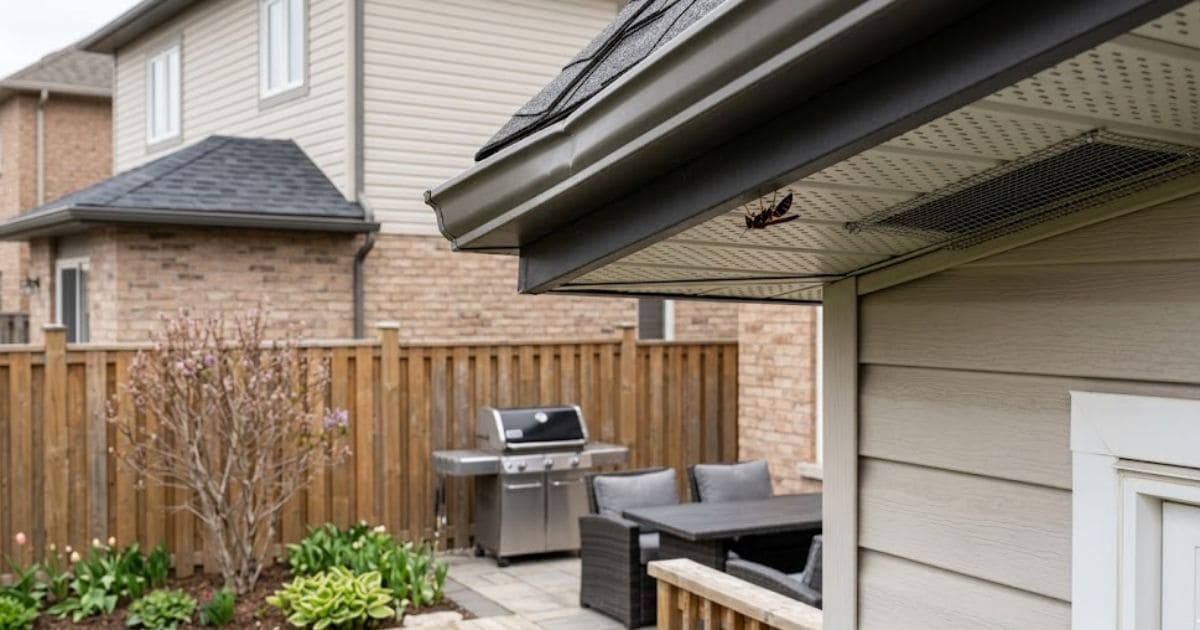
Paper wasps build upside down umbrella nests on eaves, fences, window frames, porch railings, and even a child’s play house. Polistes fuscatus have longer bodies, a slimmer waist, yellow and black stripes, and little hair. Golf ball sized nests start small but grow fast in active areas. Frequent cleaning and natural repellants like dish soap and peppermint help discourage nesting and deter them from susceptible spaces.
Bald Faced Hornets (Dolichovespula maculata)
Bald faced hornets are a larger wasp with black with white markings and large heads built for powerful stings. Dolichovespula maculata constructs large enclosed nests in trees, shrubs, wall voids, attics, and under eaves. Their teardrop shaped nests sit in sheltered areas and concealed areas like hollow trees and garages. These are the most territorial wasps in Toronto. Large colonies turn fiercely defend nests mode on hard, especially late summer when bigger nests push them into full aggression.
Where Wasps Nest That Ontario Guides Don’t Warn You About
Urban and Semi Detached Homes
Toronto semi detached homes share eaves and that shared roofline creates double the risk. Soffit voids, fascia gaps, and siding cracks give wasps direct access to wall voids and attics. Victorian homes across older urban housing strips have exposed wood, crawl spaces, and window frames that skip most generic inspection lists. Wasps also nest under decks, porches and staircases where no one looks until late summer.
Ravine Adjacent Properties
Don Valley, Humber River, and Rouge River backs push wasp pressure hard onto residential properties. Ravine adjacent lots sit right inside wooded corridors that act as natural queen migration highways every spring. A hornet queen uses garden beds, fence line gaps, and large gardens near natural food sources as her first stop. Ravine properties need a full inspection perimeter sweep early, unlike typical cottage country or Ontario cottage advice you read elsewhere.
Condos and Townhomes with Rooftop Terraces
Condos and townhomes with rooftop terraces create perfect nest initiation spots inside planters, under outdoor furniture and inside cushion storage units. Gas BBQ grease traps left uncleaned on balconies pull wasps in fast. Screened vents, window screens, door seals and chimney caps on high rise and mid rise urban dwellings fail silently. Under the Occupiers Liability Act Ontario, both property managers and unit owners share risk when nests grow in common areas near roof access points.
Older Detached Homes with Detached Garages
Pre 1990 homes with detached garages are the most ignored nest zone we inspect. The exterior wall junction between the garage roof and main structure creates open entry points for yellowjacket entry. Attic vents without intact screening or hardware cloth invite fast colony growth. Wood rot, decay, and abandoned rodent burrows in compacted soil under gravel driveways turn into active ground nesting sites by June.
What Actually Works A Ranked Prevention Protocol for Ontario Homeowners
Structural Exclusion (Highest Leverage)
Structural exclusion starts with a full exterior inspection before April ends. Seal every gap in rooflines, soffits and gutters using silicone based sealant or expanding foam. Caulking covers window frames, door frames and fascia gaps fast. Cover attic vents, gable vents and crawlspace openings with hardware cloth cut to quarter inch mesh. Vent screens and chimney caps block the spots most Toronto homes leave open. Loose siding, cracks and small holes along the exterior wall are the first things we seal on every job.
Territory Disruption (High Leverage, Often Missed)
Decoy nests work because wasps are highly territorial and avoid building near a rival colony. Hang commercially available false nests from eave height at twenty foot spacing along the full eave line by late April. Hard ware stores in Toronto stock these before early spring scouting begins. A wasp queen scouting a nesting site sees an establishing presence and moves on. Visible placement is what makes territorial behavior kick in fast.
Chemical Repellents (Moderate Leverage, Requires Repetition)
Peppermint oil mixed with dish soap and a water solution makes a solid essential oil repellent for spot treatment. Apply the dilution at roughly ten drops per milliliter directly to undersides of eaves, railings, and deck joists. Reapplication every ten to fourteen days through June breaks the pheromone trail disruption cycle wasps use on scouting sites. The Cosmetic Pesticides Ban Act under Ontario Regulation 63/09 bans consumer grade wasp sprays with permethrin and cypermethrin for prohibited outdoor residential use. Only Ontario approved products or a licensed exterminator handles stronger chemical options legally.
Attractant Elimination (Foundational, Non Negotiable)
Attractant elimination cuts the single biggest reason wasps stay on your property. Garbage, green bins, and recycling need tight fitting lids and a weekly rinse to remove sugary residue and fermented sugar from juice and soft drink. Fallen fruit and rotting fruit under trees feed the same sweet tooth that pulls wasps toward outdoor dining. Clean BBQ grates and grease separators after every use. Keep beverage cups, plates, and reusable drink container covered and drinks cold to kill the sweet smell fast. Wasps chase protein and sugar, carbohydrates, nectar, winter melon, fruit juices and human made foods so even small food waste on trash can lids left un hosed off keeps them coming back.
What Not to Do Around Wasps (That Ontario Guides Get Wrong)
Most myths about wasp removal are not just inaccurate, they are unsafe. Drowning ground nests with water is one of the most common ones we see in Toronto. It is ineffective because the nest runs through deep tunnels and water pressure stays lower than expected. The queen survives in a dry chamber below, and the colony rebuilds fast. Covering holes with a big rock or caulking a live nest shut traps the entire colony inside. That is when things go bad fast.
Never seal hole at night thinking the job is done. The whole colony wakes up looking for way back out and swarms anything nearby. Annoying one wasp by getting too close signals the rest, and peeved off wasps deliver painful stings in seconds. Vacuuming a fully established nest sends people strategies to keep wasps away. DIY removal risks are real and homeowners injure themselves every summer trying wrong methods. Real prevention starts before the nest forms, not after it does.
When to Stop DIY The Threshold Protocol for Toronto Homeowners
Once a nest grows past golf ball size, DIY stops being a smart call. A colony size beyond that stage means hundreds of defenders ready to launch a colony attack. Sting injuries from a single encounter send Toronto residents to the hospital every summer. Anyone with a known allergy to Hymenoptera venom operates on zero tolerance, full stop. An allergic reaction triggers anaphylaxis fast, and that is a genuine health risk no YouTube tutorial covers.
Call a licensed exterminator the moment the nest sits inside a wall, attic, or high traffic zone. Professional Wasp control operates under the Ontario Pesticides Act, so always ask for a license number and verify credentials before anyone touches the nest. We confirm licensing on every job before work begins, because proper credentials protect both the technician and the homeowner.
Found a Wasp Nest Near Your Home?
If wasps are nesting in your eaves, attic, wall voids, or other busy areas, Pestiseed can help you explore professional removal options and ways to reduce future nesting around your Toronto or GTA property.
Wasp Nests and Toronto Property Transactions
Sellers listing a Toronto real estate property in summer need nest checks as part of every prep process. An active wasp nest near the entrance creates an uneasy feeling during showings that kills buyer interest fast. Buyers touring a home or cottage spot safety concerns immediately when wasps hover at the door. Nests inside home walls or built into structure framing signal structural issues that push buyers to factor in removal costs before making any offer. That negative impression sticks long after the showing ends.
Ontario real estate operates under REBBA 2002, which treats a known nest built into structure as a material defect requiring disclosure. Sellers who skip that step create legal exposure in property transactions that no agent wants to explain at closing. Buyers always ask sellers directly about past nest activity, especially in older detached homes. Locking in nest removal before closing protects both sides and removes any disclosure requirements dispute before it starts. We have seen deals slow down over active nests that a single spring inspection would have caught early.
What the Process Professional Wasp Prevention
Step 1: Spring Property Audit
The spring property audit runs from mid April through late May, right inside the prevention window. We walk the full property perimeter checking high risk zones like eaves, soffits, attic vents, ground voids, outbuildings and fence lines for nesting sites. This property walk around catches emerging queens during the scouting phase before any colony established activity begins. Every entry point found during the early spring inspection gets flagged for the next step.
Step 2: Structural Exclusion
After the audit, structural exclusion seals every confirmed entry point and potential entry points using exterior grade materials. Silicone sealant, caulking, and expanding foam cover gaps across eaves, wall voids, window frames, and door frames. Vent screens and hardware cloth cut to quarter inch mesh go over attic vents, gable vents and chimney caps. Loose soffits and open gutters get secured before any wasp finds them first.
Step 3: Deterrent Application
Deterrent application targets every nesting prone location with Ontario approved repellents right after exclusion work finishes. A peppermint oil, dish soap and water solution goes on undersides of eaves, railings, and deck joists near outdoor seating areas. Plant repellents like mint, basil, citronella, and eucalyptus add a second layer around entry zones. Decoy nests hang at eave height while the reapplication schedule runs every ten to fourteen days through peak season.
Step 4: Monitoring Plan
The monitoring plan keeps the property protected through the full active season from May through September. Weekly property check walks scan for buzzing activity, wasp traffic, and new signs along the roofline, siding cracks, eaves, wall voids, window ledges and surrounding landscape. Any nest discovered post treatment gets same day response through our immediate response protocol. Special attention goes to building eaves and low wall voids during each follow up inspection and prevention assessment.
FAQs
When do wasps start nesting in Ontario?
Queen wasps emerge from hibernation between mid April and early May in Ontario. Toronto’s urban heat island pushes nesting one to two weeks earlier than surrounding regions. The fertilized queen survives winter under tree bark, inside cracks and structural voids.
Are wasp sprays legal in Ontario?
Most consumer grade wasp sprays are prohibited for outdoor residential use under Ontario Regulation 63/09. Products with permethrin and cypermethrin are on the banned products list. Only a holder of an Exterminator license handles legal chemical intervention. We use Ontario approved products registered with Health Canada and the PMRA.
Does peppermint oil really repel wasps?
Yes, peppermint oil is evidence supporting natural repellent against paper wasps. Mix ten to fifteen drops into five hundred milliliters of water with dish soap. Spray on undersides of eaves, railings, and deck joists. Reapply every ten to fourteen days through peak season.
How to stop wasps nesting in eaves?
Preventing wasps from nesting in eaves requires a combination of physical exclusion, repelling scents, and, if necessary, the use of decoys to make your home less attractive to queens in spring.
How to keep wasps away permanently?
Keeping wasps away permanently requires a combination of removing attractants, sealing nesting sites, and using consistent repellent methods to make your property unappealing.
Get Prevention Tips Now
A wasp free summer starts with one simple spring prevention audit before April ends. Pestiseed offers same day service and emergency pest control Etobicoke for homeowners who need fast, reliable answers. Our fully licensed exterminators bring expert knowledge and four season protection to every property we inspect. Book inspection today and get real prevention tips built around your exact home layout. We stay 24/7 available so you never face a nest alone when it matters most.
Worried About Wasps Nesting on Your Property?
Get Professional Removal and Prevention Help
Whether you have spotted an early-season nest or wasps are gathering around your eaves, attic, or outdoor spaces, Pestiseed can help you explore suitable removal and prevention options. Contact us for a quote for your Toronto or GTA property.