Skunks spray from 10 to 15 feet with no recovery time for the target. Most Etobicoke homeowners never see the four step warning sequence before the sulphur alcohol compound hits. This guide covers spray range, odor drift, den site removal and Ontario legal limits everything you need before a skunk reaches your yard.
I highly recommend Pestiseed Pest Control for homeowners dealing with skunks spraying or nesting around their properties in Etobicoke, Toronto and the GTA. Their team provides professional skunk removal in Etobicoke, identifies den sites under decks, porches and sheds and recommends humane removal and exclusion solutions. If you notice frequent skunk activity, strong skunk odors or burrows near your home. Pestiseed is a great option for professional skunk control and long term prevention.
How Far a Skunk Can Spray
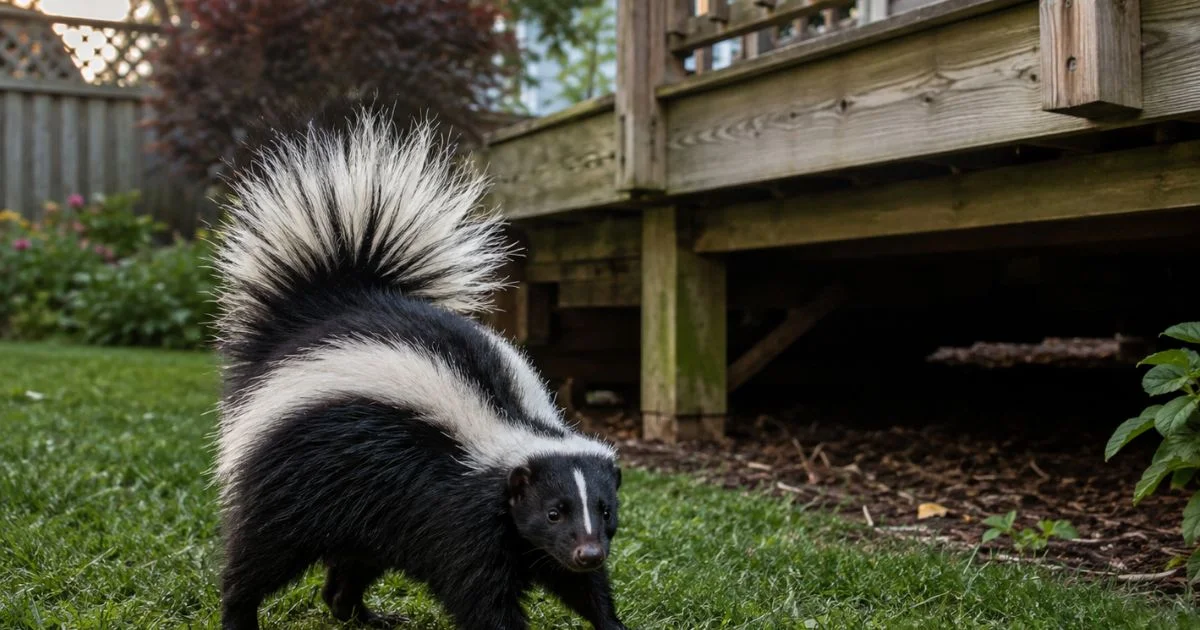
A striped skunk (Mephitis mephitis) reaches a spray range of 10 to 15 feet with one shot. The anal scent glands fire through independent gland ducts with pinpoint accuracy. UC IPM records a defensive range of 6 to 10 feet. The Wildlife Center of Virginia puts it at 12 to 15 feet.
The direct hit zone stays within 3 to 3.7 metres of the animal. Eye contact hazard is real the yellow oily secretion is a Sulphur alcohol compound. Skin contact triggers nausea. Temporary blindness follows direct eye exposure. Keep a safe distance of at least 15 feet in Etobicoke yards.
How Skunk Spray Travels Through the Air
Skunk musk leaves the glands as an oily liquid dispersion. Within seconds, it becomes a mist cloud of volatile airborne molecules. The main chemicals are thiols and mercaptans, specifically N butyl mercaptan and Sulphur based compounds. Thioacetates form later and reactivate the smell in humidity.
The parts per billion detection threshold is extremely low. Human olfactory receptor binding picks up skunk spray smell travel distance beyond one mile downwind. The 20 mile odour claim comes from open flat terrain. In Etobicoke, wind carry and downwind exposure push odour drift across full residential blocks. Spray versus odour difference matters the rotten egg smell travels far, but airborne saturation only hits close range.
Warning Signs a Skunk Shows Before It Sprays
The Four Warning Behaviours in Order
Skunks follow a clear four step sequence before spraying. First comes foot stamping and a hiss. Next, the tail fluffed and fur puffed signal a rising threat. The horseshoe body curl brings the head and tail toward you simultaneously. Backward orientation toward threat locks in the spray stance the final pre-spray posture before release. Spot the shoulder glance early and you still have time to move.
What to Do the Moment You See a Warning
Back away slowly the second you see tail erection or forefeet stomp. Take a wide path retreat and keep noise at zero a low noise exit stops escalation. Never run. Do not run triggers the skunk’s chase reflex in tight spaces. Use a slow voice command for dogs and send a dog recall signal immediately. A lateral retreat path works better than straight back movement. Never corner the animal, avoid cornering the skunk removes its only escape and guarantees a spray.
How Many Times a Skunk Can Spray
The Number of Sprays in One Reserve
A skunk carries one full musk reserve per cycle. It delivers 5 to 6 consecutive sprays from that single reserve. Each discharge reduces spray volume per discharge significantly. The metabolic cost of musk production is high, so skunks protect their spray capacity carefully. A skunk rarely uses its entire one reserve per cycle in a single encounter spray count unless cornered repeatedly.
How Long a Skunk Takes to Reload
The musk regeneration period runs 10 to 14 days after full discharge. During scent gland refill, the animal stays vulnerable to predators during reload. In Etobicoke ravine corridors, the Great Horned Owl strike window opens exactly during this period. Post spray behaviour shifts noticeably skunks show cautious movement after discharge and avoid confrontation entirely. Never assume a skunk that sprayed once cannot spray again within the same night.
What Changes the Spray Distance in a Yard
Wind, Humidity and Open Ground
Downwind drift pushes the airborne mist zone well past the 10 to 15 feet stream baseline. A light breeze extension carries mist beyond 15 feet into neighbouring yards. Humid air dispersion thickens the still air stream and slows evaporation significantly. Open yard exposure increases spray trajectory outdoors with zero obstruction. Distance variance between a still air stream and beyond 15 feet mist zone depends entirely on wind speed and humid air dispersion conditions.
Decks, Porches and Enclosed Spaces in Etobicoke Homes
Crawl space spray inside a raised porch den rebounds off walls fast. Narrow gap encounter under a porch clearance under 12 inches creates wide angle mist in confined space. The backsplash hazard sends spray redirection toward the source directly at the animal’s own den entry. Etobicoke older housing stock including Mimico raised deck, Alderwood bungalow porch, The Kingsway detached home, and Long Branch housing stock all share low deck clearance that creates deck den access point risk. Enclosed structure spray behavior saturates the space in seconds.
Why Skunks Spray in Etobicoke Yards
Food Sources That Bring Skunks Close to Homes
Skunks follow a nocturnal food search straight into residential yards. The cone shaped digging pattern in your lawn confirms grub and insect foraging specifically beetle larvae and earthworms. An open compost bin, pet food dish left overnight, or birdseed ground spill pulls them within feet of your door. Fallen fruit pickup happens fast under apple and pear trees. Every unsecured garbage can lid and opportunistic omnivore feeding opportunity extends their stay through the night.
Den Sites Under Decks and Porches
Skunk denning behaviour peaks along the Humber River ravine corridor and Etobicoke Creek ravine corridor feeding into Long Branch, Mimico, and Alderwood neighbourhoods. Skunks claim an under deck den, porch den site, or crawl space den before February mating season begins. A litter of 4 to 6 kits arrives during the May to June birth window removal becomes complex after that point. Block entry with 1/4 inch hardware cloth exclusion and a 6 inch underground barrier using L shaped mesh installation. Abandoned burrow, brush pile den, wood pile den, hollow log and rock pile sites all serve as secondary den locations across Etobicoke yards.
What to Do After a Skunk Sprays a Person or Pet
The Mixture That Breaks Down Skunk Odour
Mix 1 quart 3 percent hydrogen peroxide, quarter cup baking soda, and 1 teaspoon liquid soap immediately. Oxidation breaks thiol bonds on contact bottled versions lose this power fast. Always mix fresh batches only and never attempt to store or bottle the solution. Apply immediately after spray directly to pet fur application or wash sprayed skin and clothing. Rinse thoroughly, avoid eyes, and dilute leftover down drain after treatment completes.
Why the Smell Comes Back When the Fur Gets Wet
Thioacetates hide inside fur and stay dormant in dry conditions. Water activated odor regeneration triggers wet fur reactivation the moment rain or bathwater hits untreated fur. Hydrolysis of thioacetate compounds converts dormant molecules back into active skunk smell return after rain. The wet dog smell trigger catches most Etobicoke pet owners off guard weeks after the initial spray. Secondary oxidation failure during the first wash causes dry weather odor dormancy re-treatment required within 24 hours of the first application.
Skunk Removal Rules in Ontario
What the Law Allows a Homeowner to Do
Ontario homeowners hold a property owner right to protect structure through passive methods only. Habitat modification and food source removal are the two legal first steps. Install exclusion hardware cloth using 1/4 inch mesh and an L shaped underground barrier around deck perimeters. A motion activated light and flour tracking patch method confirm active skunk movement before any intervention. Ontario law sets a clear limit on lethal removal without permit and no relocation beyond 1 kilometre apply even with a one way door DIY limit installation.
When a Licensed Wildlife Professional Is Required
Call a licensed wildlife control agent the moment denning with kits present is confirmed under any Etobicoke structure. A MNR trapping licence and Trap and Transfer permit are both required for live capture and transport. Any bite or scratch contact or rabies exposure incident triggers a mandatory Toronto Public Health report requirement within 24 hours. Confirmed rabies symptoms require immediate escalation to an MNRF designated drop off facility. Pestiseed wildlife removal service handles professional exclusion installation across Etobicoke properties where DIY methods have already failed.
Found a Skunk Den Under Your Deck or Porch?
If a skunk is nesting near your home in Etobicoke, avoid approaching or blocking the den yourself. Pestiseed can help with professional wildlife removal and exclusion solutions for skunk activity around your property.
Licensed & Insured
Toronto & GTA
Pest & Wildlife Control
FAQs
How Far Can a Skunk Spray in Feet?
A striped skunk reaches 10 to 15 feet with a direct skunk spray feet measurement stream. The mist pass through the zone extends further. Accuracy drops past 10 feet outdoors.
Can a Baby Skunk Spray?
Yes. A skunk kit develops spray ability by 8 days old. A baby skunk spray ability delivers a partial musk charge less volume but the same sulphur alcohol compound potency as adults.
How Far Away Can You Smell a Skunk?
Odour detection distance reaches 1 mile smell travel under normal wind conditions. The 20 mile smell claim applies to flat open terrain. Human olfactory receptor binding activates at parts per billion concentration levels.
Do Skunks Spray Without Warning?
An unannounced spray risk occurs when a skunk is startled from sleep or cornered suddenly. A no warning spray scenario skips the full spray without display sequence entirely. Always check den sites before approaching.
Can a Skunk Spray Through a Fence?
Yes. Spray through the fence happens through chain link fence spray gap openings easily. The through and under trajectory follows fence gap clearance lines. Mist pass through reaches the target side with full spray direction control intact.
Is a Skunk Putting Your Property at Risk?
Get Professional Skunk Removal with Pestiseed
From skunks nesting under decks and porches to recurring activity around your yard. Pestiseed helps address skunk problems with professional wildlife removal and exclusion solutions. Contact us for service information and a quote in Toronto and the surrounding GTA.
Licensed & Insured
Toronto & GTA
Pest & Wildlife Control