Mice control in the GTA means sealing entry points, removing food sources, setting traps, and acting fast once signs appear. Toronto ranks as Canada’s rattiest city, and mice reproduce quickly indoors. Early action, proper exclusion, and Professional mice Control help when needed to stop infestations before they spread.
Toronto Is Canada’s Rattiest City What the City’s Own Data Shows
What the City of Toronto’s Rat Response Plan Actually Tracks
The City of Toronto Rat Control page runs a real Rat Response Plan. It uses Integrated Pest Management and sends targeted inspections to high activity areas. The plan covers property standards bylaw rules and the 311 complaint process. It does not state any yearly increase. A mouse leaves droppings about 6mm long. An adult mouse weighs close to 15 grams.
Structural Damage and Health Risk From an Untreated Infestation
An untreated infestation causes real harm fast. Mice chew wires, raising fire hazard risk inside walls. They damage insulation and weaken wood over time. Their droppings and urine bring disease transmission risk into the home. Mice also breed at a fast population growth rate. One pair can lead to dozens within weeks.
How to Know If You Have Mice Early Warning Signs
What 5 Physical Clues Actually Tell You
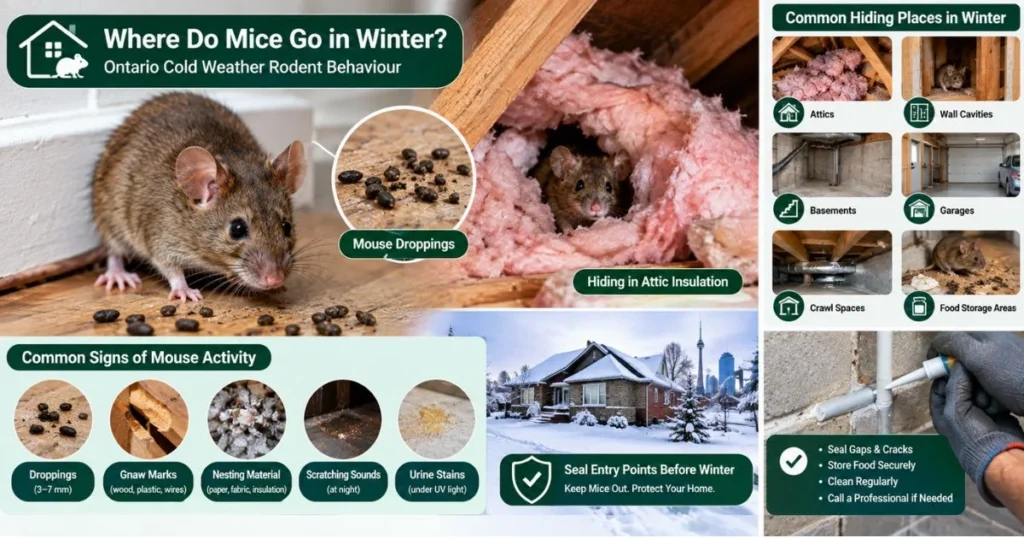
Mice leave five clear signs behind. Look for droppings, small and rod shaped, about 6mm long. One mouse drops 50 to 80 droppings per day. Check for gnaw marks from constantly growing teeth. Listen for scratching and scurrying sounds, peaking after midnight. A nest with pups means breeding is active. Grease and rub marks show fur oil residue along baseboard pathways.
Mouse Species Found in the GTA
Three mouse types live across the GTA. Species identification starts with fur color and tail shape. The House Mouse shows grey brown fur with a white belly. The Deer Mouse has a clear bi-coloured tail and is a known hantavirus carrier. Field Mouse numbers grow in agricultural area distribution zones. Rural and urban properties face different species risks.
House Mouse (Mus musculus)
Mus musculus is Ontario’s most common house pest. Adults reach 3 to 4 inches in body length. Fur stays grey brown with a lighter belly underneath. Large ears help it sense nearby danger fast. It prefers indoor kitchen habitat space near food sources. Wall void habitat and utility room habitat offer safe, warm shelter.
Deer Mouse (Peromyscus maniculatus)
Peromyscus maniculatus carries real health risk for cleanup crews. Its bi-coloured fur shows a brown back and white feet. The tail stays dark topped, white underneath, unlike other species. This mouse is a confirmed hantavirus carrier in Canada. Wear N95 mask precaution gear before any cleanup begins. It favors wooded lot habitat near Manitoba, Saskatchewan, BC regions.
Field Mouse
A Field Mouse grows larger than a typical house mouse. Larger ears suit its open environment adaptation needs outdoors. It thrives across Atlantic Canada distribution and farm regions nearby. Agricultural area habitat zones see frequent crop damage reports. Rural property distribution stays higher than dense city blocks. Fewer sightings happen inside typical Toronto homes.
Why Entry Points Differ by GTA Neighbourhood and Home Age
Older Housing Stock Entry Patterns (Foundation and Brick Gaps)
Older Toronto housing stock gives mice easy access points. A foundation crack or brick and mortar gap opens wider over time. An aging building envelope loses its tight seal with age. Century home vulnerability often starts at the settling foundation line. Masonry deterioration creates real gaps near pre-war construction joints. Toronto homes built decades ago show this pattern often.
Newer Build Vulnerabilities (Roofline, Soffit, Utility Lines)
A newer GTA build still faces real entry risk. A roofline gap or soffit vent gap can open fast. Utility line penetration points often lack a tight seal. Watch for a garage foundation gap near fresh concrete work. Modern construction settling creates small shifts within the first years. A vinyl siding gap or HVAC line entry invites mice in.
Condo and Multi Unit Transfer Through Shared Walls
Shared wall transfer makes a multi unit building harder to protect. One unit’s condominium infestation can spread through garbage chute access fast. Elevator shaft access and a shared utility chase carry mice between floors. This often forces a full building wide treatment requirement for everyone. RentSafeTO places a clear landlord pest obligation on property owners. Toronto condo buildings face this risk year round.
Most Common Mouse Entry Points in GTA Homes
Where Mice Get In From Outside
A foundation to siding gap gives mice an easy way inside. Check every utility pipe gap near the back wall. The laundry vent and air conditioning line often sit unsealed. A deck and porch gap or pavement crack works just as well. Seal gaps with steel wool, copper mesh, or exterior caulk. Add a door sweep, weather stripping, and tight window screens too.
Reading the Clues Mice Leave Inside
Indoor signs point straight to the path mice use. A wall void grease trail often runs along the sill plate. Start your furnace room inspection and laundry room inspection there first. Check for attic insulation damage during a full crawl space inspection. Follow any dropping pathway toward a hidden pantry nesting zone. A scent marking trail often leads right back to the entry point.
How to Inspect Entry Points Step by Step
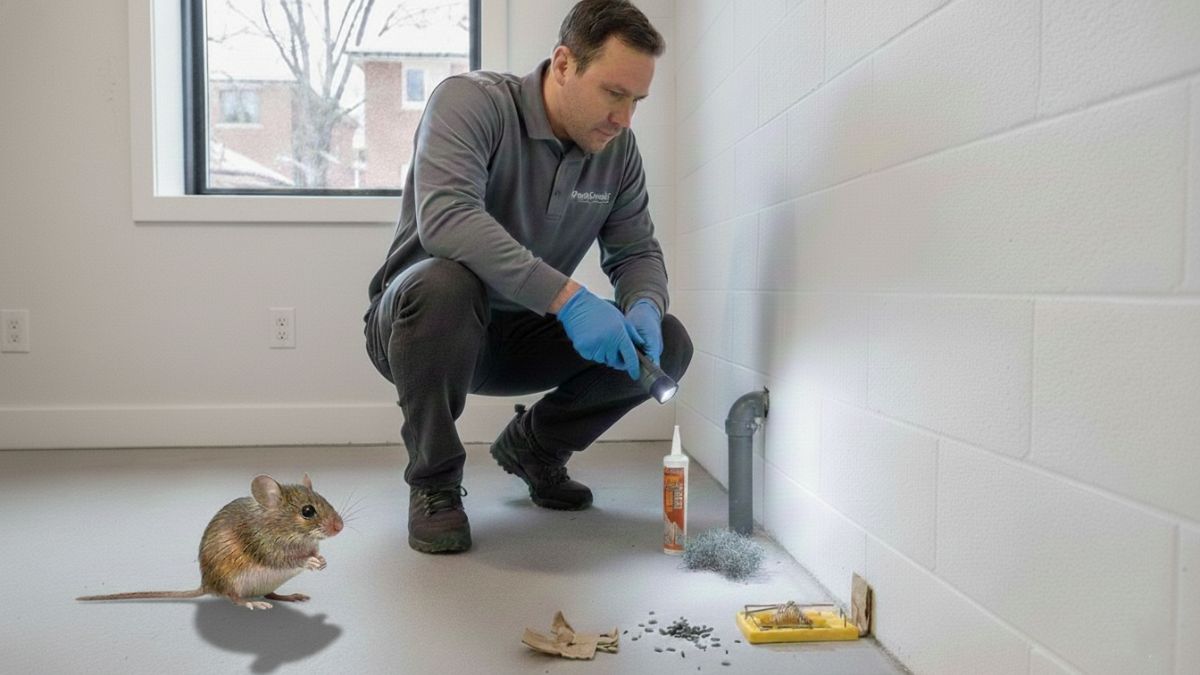
Start at the laundry vent inspection start point near the foundation wall. Do a full foundation perimeter walk around the entire Toronto property. Use the knee pad inspection method to check low, hidden corners. Run an air conditioning line check and a deck and porch check too. Seal gaps with copper wire mesh application and exterior grade caulk. Repeat this as a seasonal inspection, especially before each freeze thaw crack season.
Mouse Proofing Your Toronto Home Prevention That Works
Sealing Entry Points Materials and Methods
Use steel wool or copper mesh to pack every gap. Copper mesh works well because of its bitter component deterrent. Cover larger openings with hardware cloth 6mm before sealing further. Finish the seal with exterior grade caulk over the top. Add a door sweep, weather stripping, and a tight garage door seal. Don’t forget a chimney flue cover and an attic vent cover too.
Stop Feeding Them Without Knowing It
Store dry food inside an airtight glass container or sealed metal canister. A hard plastic storage bin works well for pantry backups too. Keep pet food on a scheduled pet feeding routine, not left out. Run a full evening kitchen cleanup before bed every single night. This kind of food supply elimination cuts off what mice need most. Mice can starve within a short 2 to 4 day window.
Yard and Property Management Built for GTA Conditions
Keep plants back using a 3 foot foundation clearance around your Toronto home. Swap mulch for a gravel mulch barrier near the foundation line. Follow safe firewood storage distance rules, keeping wood off the ground. Complete a bird feeder removal step each fall before mice arrive. Plant lavender deterrent, mint deterrent, or marigold deterrent along the yard edge. Run fall winterization work early, before the first frost hits.
Best Traps for Mouse Control in Toronto Homes
Snap Traps, Electronic Traps, Live Traps, Bait Stations
A wooden snap trap or plastic snap trap works fast with peanut butter bait. Use wall flush trap placement since mice travel along walls. An electronic trap gives a clean battery powered kill mechanism instead. A Havahart live trap allows humane release, following the Fish and Wildlife Conservation Act Ontario. A tamper proof bait station holds Health Canada registered rodenticide safely away from pets.
Where to Place Traps in Your GTA Home
Place traps along the furnace room sill plate first. Check the laundry room washer dryer gap and under sink placement spots too. The kitchen fridge stove gap sees heavy mouse activity often. Cover the attic perimeter wall and full basement exterior wall line next. Mice stay close to a fixed mouse travel path near walls. Run a daily trap check across your Toronto home.
Mice Reproduction Problem
A mouse has a 19 to 21 day gestation period before birth. Each litter brings 6 to 8 pups, with 5 to 10 litters per year. Sexual maturity at 6 weeks means numbers grow fast. Pups stay blind at birth and gain fur by day 6. Their eyes open by day 13, and they’re weaned at 21 days. This drives exponential reproduction across a full cooperative nesting family group.
Health Risks Diseases Mice Carry in Ontario
Mice spread disease through droppings and urine exposure, not bites. Disease transmission happens when dust from old droppings becomes airborne indoors. Known risks include Salmonella, Hantavirus Pulmonary Syndrome, Leptospirosis, Lymphocytic Choriomeningitis, Tularemia, Rickettsialpox, and Bubonic Plague.
CDC guidance and local public health authority sources confirm these transmission paths. Cleanup needs real care, not guesswork. Wear an N95 mask and nitrile gloves before touching anything. Follow a safe cleanup protocol using bleach solution cleanup at a 10 percent bleach dilution. Finish every job with post cleanup handwashing, since disease transmission risk level stays highest right after exposure.
DIY vs. Professional Mice Control
Signs You Need a Professional
Some signs mean it’s time to call for help. More than 5 mice caught per week signals a bigger problem. A daytime sighting or multiple active nests means overcrowding indoors. Watch for a chewed electrical wire fire hazard or damaged insulation nearby. Two weeks of consistent trapping with no results points to recurring infestation. A failed natural deterrent calls for a CPMA certified technician instead.
What Pestiseed’s Professional Mouse Control Service Includes
Pestiseed starts every Toronto job with a full thermal imaging inspection. Technicians use track powder to build a customized treatment plan fast. Each plan applies a commercial grade control product through a proven integrated pest management method. Service includes a tamper resistant bait station and industrial strength sealant for gaps. A 2 week follow up visit and 24/7 availability back to every job, under full CPMA standard compliance.
GTA Seasonal Guide: When to Act Each Month
Fall (September–November): Peak Risk Season
Outdoor food scarcity pushes mice toward Toronto homes fast. This is the season for intensive inspection and maximum trap deployment work. Complete full fall winterization before the first cold snap hits. Book an exterior power spray targeting Asian lady beetle and boxelder bug activity. Watch for stink bug pressure alongside rising hornet and wasp fall activity. Fall sets the tone for the months ahead.
Winter (December–February): Active Indoor Season
Winter brings peak indoor population pressure into every room. Mice cause real wall chewing damage once they settle inside. Watch for rising indoor droppings concentration near warm, quiet areas. Run a daily trap check through every stretch of deep cold. Start spring prevention planning now, before new gaps can form. Indoor activity stays high until warmer weather returns.
Spring (March–May): Repair and Reset
Spring opens a new freeze thaw entry point in older walls. Begin entry point repair work as soon as frost clears. Book a spring exterior power spray for early pest pressure. This season targets paper wasp, spider, centipede, and millipede activity too. Watch for the pavement ant and any surviving overwintering population nearby. Spring repair work prevents a repeat fall problem.
Summer (June–August): Monitor and Maintain
Summer brings its own risks through construction disturbance and landscaping disturbance. Run a routine foundation perimeter walk around the full property. Pair this with a steady interior inspection through the warmer months. Check food storage integrity often, since mice stay active outdoors too. Book a summer foundational treatment to close gaps before fall returns. Steady summer checks keep fall risk low.
Mouse Control Myths
Many Toronto homeowners believe a common mouse myth without question. The cheese bait myth is wrong, since mice prefer peanut butter instead. An ultrasonic device myth claims sound alone drives mice away. That almost never works once mice settle indoors. The cat predation myth also overstates how much cats actually help.
A clean home myth suggests tidy houses stay mouse free, which isn’t true. Mice still enter clean homes seeking warmth and shelter. The peppermint oil myth treats scent as a real solution, though it isn’t one. This happens because of social mouse behaviour, since one mouse rarely travels alone.
Legal and Ethical Mice Control in Toronto
City of Toronto Property Standards falls under Municipal Code Chapter 629, which sets clear rules. Any product used must follow the Ontario Pest Control Products Act closely. Only a Health Canada registered rodenticide meets legal use standards here. Some methods face real limits under Ontario wildlife legislation too.
The Criminal Code of Canada animal cruelty provision bans inhumane killing outright. Many areas also enforce a glue trap municipal restriction for this reason. Always choose a humane killing method that follows these rules. The RentSafeTO program places a direct landlord pest obligation on owners, requiring full multi-unit building compliance across every unit.
FAQs
How much does professional mice control cost in Toronto?
Mice control cost in Toronto depends on property size cost factor and infestation severity cost factor. Pricing covers inspection cost and exclusion service cost separately. Most companies offer a free quote with a same day estimate available.
How long does it take to get rid of mice?
Mice removal follows a 1 to 2 week minor infestation timeline for small problems. Larger cases need a 3 to 4 week larger infestation timeline instead. Exclusion service timeline matters most, since skipping it raises re-infestation risk without exclusion.
Are mice dangerous to my family’s health?
Mice carry Hantavirus, Salmonella, and Leptospirosis through a droppings and urine transmission route. Health risk stays manageable with prompt elimination and proper cleanup. Acting fast lowers exposure significantly for every household member involved.
Can mice come back after treatment?
Mice return through an unsealed entry point left behind after treatment. A full exclusion service closes every gap completely. Most companies back this with a service warranty covering re-infestation prevention for a set period.
Do I need a licensed exterminator for mice in Toronto?
DIY works below the minor infestation DIY threshold, but not beyond it. Call a professional past the 5 or more mice caught threshold or any structural damage threshold. A recurring problem threshold or rental property bylaw requirement also applies.
What time of year are mice worst in the GTA?
Mice activity peaks during fall peak season September to November, driven by winter shelter seeking behaviour. The August to September prevention window is the best time to act before pressure builds.
How do mice get into apartments and condos in Toronto?
Mice use shared wall entry, utility chase entry, and elevator shaft entry to move between units. A garbage chute entry point also creates real building wide treatment needs for the property.
Book a Mice Inspection in Toronto
Pestiseed offers trusted mice control Toronto homeowners can count on fast. Start with a free quote and a same day estimate available now. Mice inspection booking takes just minutes to complete online or by phone. Every job covers your local service area directly, with no delay.