3 mouse species enter Vaughan homes every fall. Most homeowners never identify which one lives inside their walls. Mus musculus, Peromyscus maniculatus, and Peromyscus leucopus each carry different diseases. Each needs a different trap, bait station, and exclusion method. Toronto and York Region homeowners can also review this complete mice control guide for GTA homeowners for broader seasonal prevention strategies.
Boyd Conservation Area and Kortright Centre sit within 50 meters of residential streets in Vaughan, Ontario. Outdoor temperatures below 5°C push field mice off open conservation land toward heated homes. York Region Public Health confirms mice stay active between 10pm and 4am so entry signs go undetected for weeks. By the time droppings appear behind the refrigerator, the infestation is already 2 to 4 weeks old.
Why Vaughan Houses Attract Mice Every Fall and Winter
Mus musculus (the house mouse) and Peromyscus leucopus (the white footed mouse) enter homes when outdoor temps drop below 5°C. York Region Public Health confirms mice stay active at night so entry signs go undetected for weeks. Two species share the same wall gaps and foundation cracks in Vaughan homes near conservation land.
Mouse migration from Boyd Conservation Area peaks between late September and early November. Meadow voles and Peromyscus maniculatus leave open fields as food sources dry up. Urban expansion in York Region pushes conservation edges closer to driveways each fall season. Most homeowners spot droppings only after the infestation is already weeks old.
The 3 Mouse Species Vaughan Homeowners Find Inside Their Walls
House Mouse vs Deer Mouse vs White Footed Mouse in Vaughan Homes
Mus musculus, the house mouse, has grey brown fur, large ears, and weighs 15 to 20g. It nests in shredded insulation and dryer lint near heat sources. Peromyscus maniculatus, the deer mouse, has a white belly, large dark eyes, and weighs 20 to 30g. It carries hantavirus and enters from conservation land borders. Peromyscus leucopus, the white footed mouse, shares similar markings but spreads LCMV (lymphocytic choriomeningitis virus) through pantry contamination.
Why Species Identification Changes Your Control Method
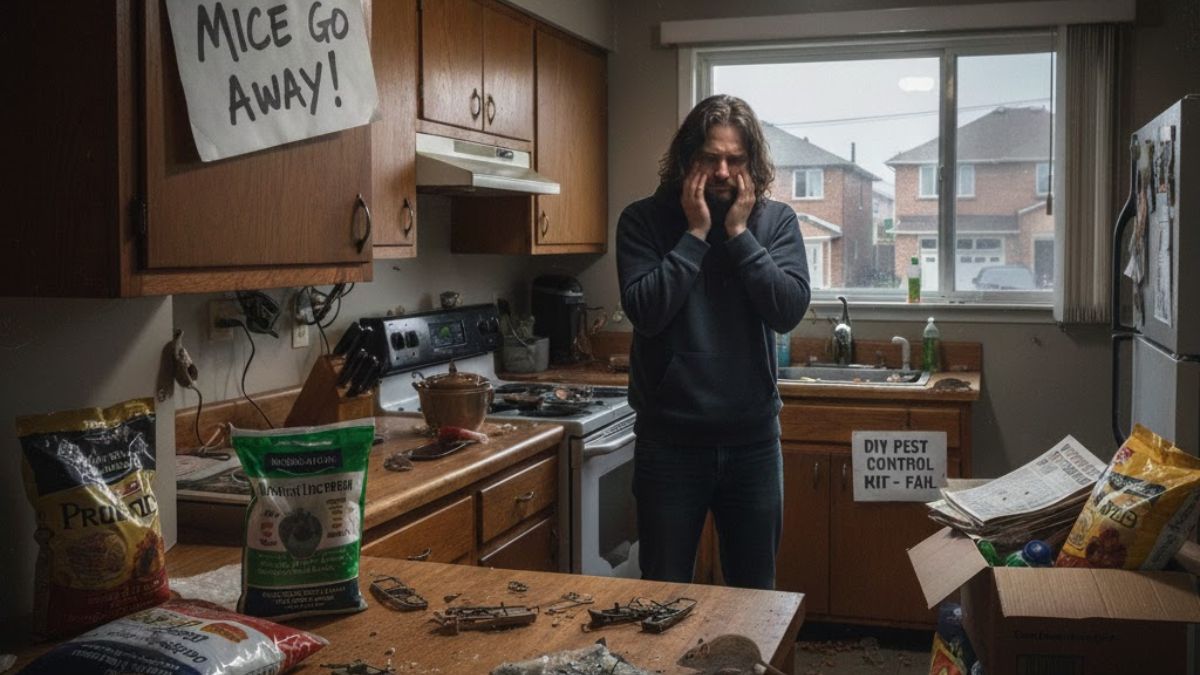
A rat trap does not kill a mouse. The trigger pressure requires a heavier body and a 15g house mouse walks across it safely. Snap traps sized for Mus musculus weigh the trigger at 5 to 8 grams. York Region Public Health confirms the most effective long term solution is an Integrated Pest Management (IPM) program not single method trapping.
How to Read the Signs of Mice Before the Colony Grows
Physical Evidence in the Kitchen, Garage, and Wall Cavities
Rice grain sized droppings along baseboards and behind the refrigerator confirm active Mus musculus movement. Public Health Sudbury and Districts confirms a pair of mice leave approximately 36,000 droppings per year and contaminate 10 times more food than they eat. Grease marks appear as dark smears on baseboards mice press their bodies along the same path every night. Gnaw marks on food boxes, plastic water lines, and electrical wires signal structural damage and a real fire hazard inside wall cavities.
The Sounds and Smells That Confirm Active Mouse Activity at Night
Scurrying sounds between 10pm and 4am mean mice move fast through wall cavities and ceiling voids. Scratching sounds mean a mouse digs or climbs likely building a nest in attic insulation or shredded dryer lint. Gnawing sounds mean active tooth filing on wood, wire, or plastic the colony has a permanent chew site. Squeaking is colony communication multiple mice signal an established population, not a single stray. York Region Public Health confirms mice are most active at night, making visual detection difficult. An ammonia odour near kitchen cabinets or garage corners confirms urine pooling a sign the nest sits within 2 meters of that smell.
A Seasonal Mouse Prevention Plan for Vaughan Homes
What to Seal and Inspect Before September in Vaughan
Many of the same easy ways to get rid of mice in your home begin with exclusion and food source removal. Weepholes in brick exteriors need weephole covers installed before September Mus musculus fits through a 6mm gap. Stuff steel wool plus spray foam into any gap around the furnace exhaust pipe where it enters the exterior wall. Health Canada confirms steel wool goes around pipes before caulking, and soffit screens plus dryer exhaust caps need fine mesh metal screening on every opening. Cover garage door weather stripping along the full bottom seal a warped strip leaves a 10mm gap that field mice enter through every fall in Vaughan.
What Professional Exterminators Do That Homeowners Cannot Replicate
A thermal imaging camera finds active mouse nests in wall insulation without cutting drywall homeowners cannot buy or operate this tool. Tracking powder placed along confirmed runways shows colony size and movement direction within 48 hours. York Region Public Health confirms homeowners should contact a licensed Mice control service for rodent infestations, and that Ontario landlords carry legal responsibility for pest free properties. Ontario’s Ministry of Environment licence confirms a company that meets provincial standards always checks for this before hiring any exterminator in York Region. Licensed companies carry $2 million liability insurance and offer 3 to 12 month warranties DIY snap traps carry zero warranty and miss the colony source entirely.
FAQs
How do mice get into Vaughan houses in winter?
Mice enter Vaughan houses through gaps as small as 6mm. Common entry points include weep holes in brick veneer, soffit gaps, dryer vents, and furnace exhaust pipes. Older Maple and Woodbridge homes face extra risk through fieldstone foundation cracks.
What diseases do mice carry in Ontario?
Mice in Ontario carry hantavirus, Salmonella, and lymphocytic choriomeningitis virus (LCMV). Health Canada confirms Peromyscus maniculatus, the deer mouse, is the primary hantavirus carrier. Children under 10 and elderly residents face the greatest health risk from droppings and urine exposure.
Does Vaughan have a rodent control bylaw homeowners must follow?
York Region enforces rodent control under the Ontario Residential Tenancies Act and Ontario Food Premises Regulation. Vaughan homeowners must maintain properties to prevent harbourage conditions. York Region Public Health investigates rodent complaints at food premises, schools, and care facilities directly.
When should a Vaughan homeowner call a licensed exterminator instead of using traps?
Call a licensed exterminator when droppings appear in multiple rooms. Two weeks of snap traps with no results confirms a deeper problem. Scratching sounds persisting overnight in wall cavities mean an active colony needs full exclusion method sealing not traps alone.