
Our city keeps expanding every single year. We’re watching neighborhoods transform incredibly quickly. Statistics predict 6.47 million residents by 2025. That means thousands arrive here monthly! We see building projects everywhere nowadays. Construction crews work on multiple sites daily. These activities basically invite rodents inside, unfortunately. We know digging destroys their underground homes. So they’re driving into our homes, restaurants, and businesses. The construction boom also means more food waste everywhere. Those new buildings offer perfect shelter opportunities for these hairy freeloaders.
The Eglinton Crosstown LRT and Ontario Line projects displaced thousands of rodents from underground tunnels. Those mice moved straight into nearby homes. Warmer winters now mean fewer die offs, so the urban rodent population keeps growing year round.
What the City’s Own Complaint Data Tells Us
Yes, Toronto homeowners dealing with recurring infestations should review this complete mice control guide for GTA homeowners. Rodent complaints in the city more than doubled, from 1,165 in 2015 to 2,523 in 2024. The City of Toronto tracks these numbers through its Rat Response Plan, backed by the Property Standards Bylaw Municipal Code Chapter 629. Councillor Alejandra Bravo pushed Toronto City Council to act faster after complaints kept rising. The Orkin Canada Rattiest Cities list also ranked Toronto among Canada’s worst, which matched exactly what we see on the ground during inspections.
What Mice Actually Do to a Toronto Home
Mus musculus contaminates food fast. A single mouse leaves behind up to 70 droppings daily near nesting materials like shredded paper tucked behind appliances. Food contamination happens silently inside pantries, drawers, and cabinets before you spot a single gnaw mark. In older Toronto homes, mice chewing wires through wall cavities also creates a direct electrical fire risk that runs parallel to the sanitation risk most families never connect to rodents.
Health Risks That Toronto Homeowners Need to Know About
Mouse droppings and mouse urine dry out and break into fine particles in the air. Children breathe these particles in, which directly triggers asthma attacks and allergy reactions. Mice Control allergen children are exposed to comes from aerosol transmission inside poorly ventilated Toronto homes. Public Health Ontario confirms that rodent borne illness risk rises sharply in homes with active infestations near living spaces.
Why Mice Infestations Escalate So Quickly in Toronto Homes
One pair of house mice produces a colony size of 60 or more within six months indoors. The Mus musculus reproductive cycle runs fast, with a gestation period of just 19 to 21 days. Each female delivers 3 to 14 pups per litter across 5 to 10 litters per year. Pups hit sexual maturity at just 5 to 6 weeks, then start breeding immediately.
Nocturnal foraging keeps the growing colony hidden inside hidden nesting sites behind walls and under floors. DIY mouse control fails because they only catch individuals, not the breeding cycle itself. SPMAO certified technicians use bait stations, multi catch traps, and a full exclusion protocol under the Health Canada Pest Control Products Act to target the whole colony. That regulated approach is the only method that stops mice breeding indoors before the timeline runs out of control.
What Toronto Homeowners Can Do First
Exclusion and Sanitation Steps Before a Professional Arrives
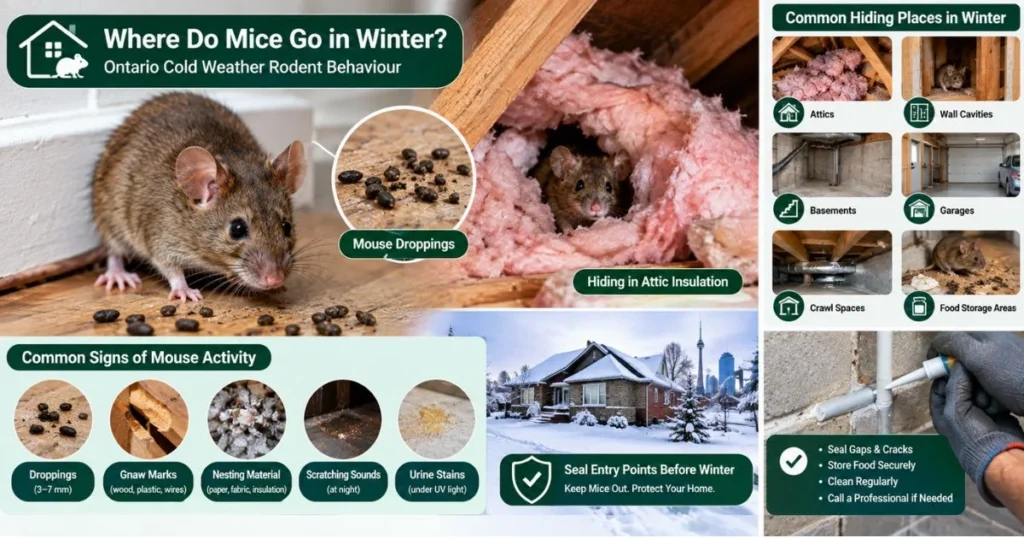
These easy ways to get rid of mice in your home help reduce reinfestation risk before winter arrives. Pack ¼ inch hardware cloth over vents and utility line openings along your foundation. Snap traps placed flush against walls outperform live traps in active mice in kitchen Toronto situations. Book a professional inspection with a licensed exterminator from Pestiseed Pest Control Etobicoke, serving the Toronto and GTA service area with 24/7 availability for confirmed infestations.
Signs That Indicate a Colony Has Already Established Itself
Mouse droppings identification starts near food sources, drawers, and along baseboards. Scratching sounds walls Toronto homeowners hear at night confirm nocturnal foraging inside wall cavities. Greasy rub marks along baseboards show a regular travel path the colony uses daily. Chewed food packaging, gnaw marks on wood trim, and a sharp ammonia smell from mouse urine all point to an active colony, not a single stray mouse.
Finding Mouse Droppings or Hearing Scratching in Your Walls?
If you’re noticing signs of an active mouse infestation, Pestiseed can assess the problem and discuss suitable mice-control and entry-point exclusion options for your Toronto or GTA home.
FAQs
Are mice a public health risk in Toronto?
Yes, mice are a direct public health risk in Toronto. Toronto Public Health links rodents to serious diseases. Mouse droppings and mouse urine spread harmful bacteria indoors. Families with children face the highest exposure risk.
How do I know if I have mice or rats in my Toronto home?
Mice vs rats Toronto home differences are easy to spot. Mouse droppings are small, dark, and pointed at both ends. Rat droppings are larger and rounded. Mice leave thin grease trails along baseboards. Rats damage larger structural areas faster.
Does Toronto city help with mouse infestations on private property?
No, the City of Toronto does not treat private property infestations. Their official Rodent Control guidance on Toronto confirms this clearly. Residents must hire a private pest control company like Pestiseed.
How quickly can one mouse become an infestation?
One mouse becomes a full mouse infestation very fast. Indoor heat speeds up mice breeding indoors through winter. Pestiseed covers the full Toronto and GTA service area with 24/7 availability to stop colonies early.
Mice Keep Showing Up in Your Home?
Get Help With Professional Mice Control
Mouse droppings, scratching sounds, and chewed materials can indicate an active infestation. Contact Pestiseed to discuss mice inspection, control, and entry-point exclusion options for your home in Toronto or the surrounding GTA.