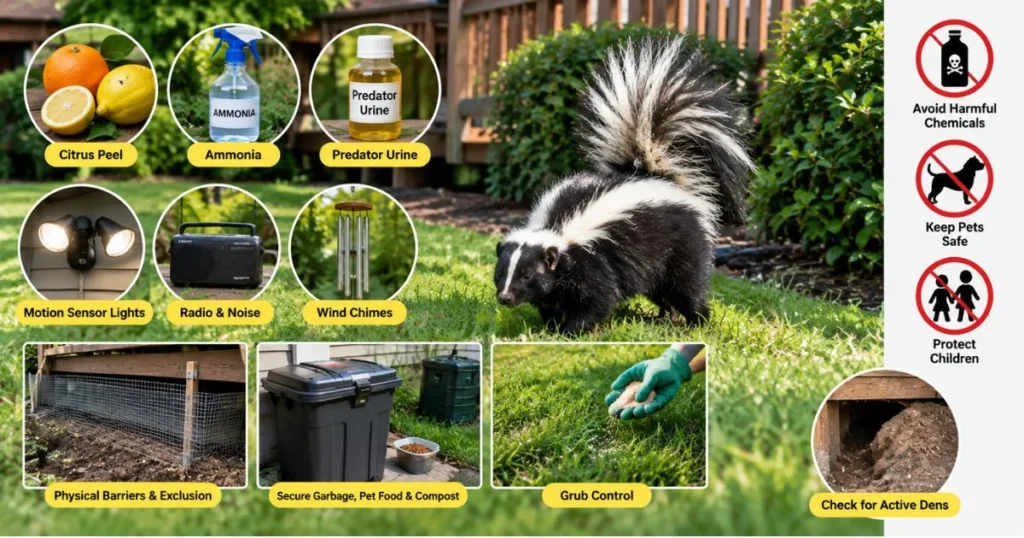
Etobicoke homeowners face skunk risks from February through September. Skunks typically mate in late winter, with breeding activity occurring mainly in February and March. During mating season, male skunks may travel farther than usual while searching for females. Spray risk during male rivalry rises near homes and yards.
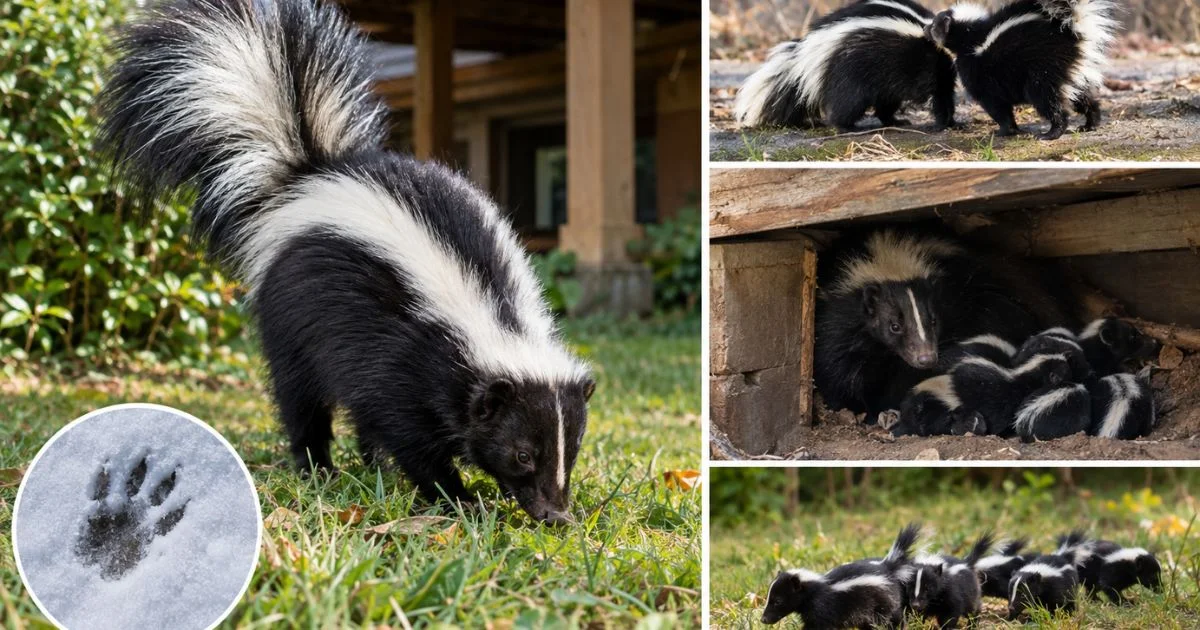
Delayed implantation can extend the period between mating and birth to about 10 to 12 weeks. Skunks typically give birth to litters of several kits, which are born blind and dependent on their mother. Deck underside dens and crawlspace denning stay active through August dispersal onset. If you find an active skunk den under a deck, porch or other structure, avoid blocking the entrance until you know whether young are present. A qualified wildlife professional can assess the den and recommend an appropriate exclusion approach.
When Is Skunk Mating Season in Ontario?
Why February and March Mark Mating Season
Toronto area climate data confirms February temperature range drives winter emergence timing across Etobicoke. Ontario climate conditions shift enough to end the semi hibernation pattern skunks hold through January. Winter conditions stay harsh until mid February, then late winter skunk activity spikes fast.
How Male Skunks Behave During Breeding Season
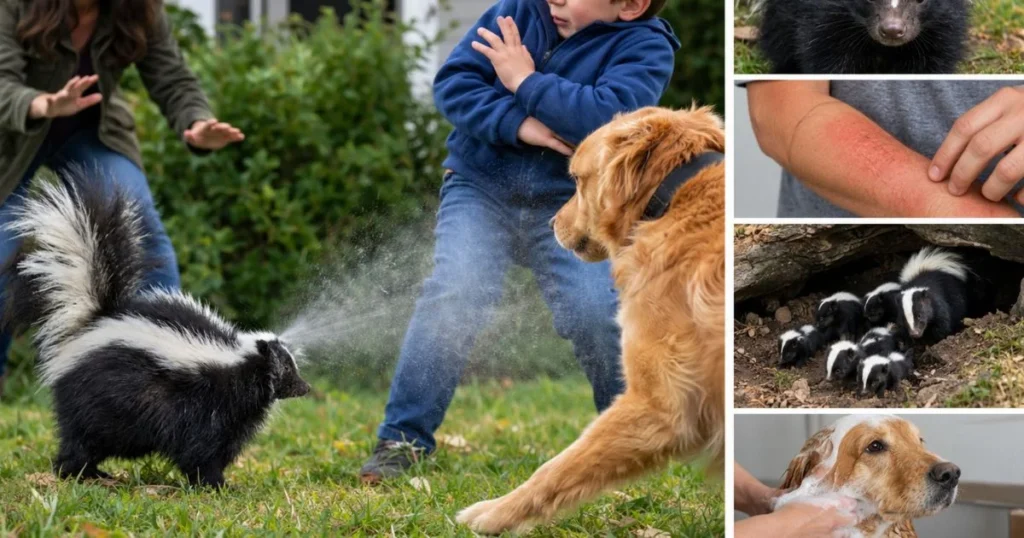
Male skunks may travel farther during mating season as they search for females and encounter competing males. Polygamous mating drives multiple female pursuits across Etobicoke street crossings at dawn and dusk peak activity. Territorial patrol expansion, vocalisation during courtship, foot stomping warning display, and tail raising defensive signal all rise during male competition encounters. Spray risk during male rivalry and nocturnal foraging increase during breeding make road crossing frequency increase a real danger for residents.
How Skunk Reproduction Works Gestation and Delayed Implantation
Mephitis mephitis reproduction follows a unique biological process. Delayed implantation pauses the fertilised embryo before uterine wall attachment. The gestation period runs 62 to 75 days after implantation. In Ontario, the period from mating to birth can span roughly 10 to 12 weeks.
Embryonic diapause holds the embryo during harsh Etobicoke winter conditions. The estrus cycle and ovulation timing control when skunk pregnancy progression begins. Female reproductive anatomy triggers uterine wall attachment delay based on temperature and food signals. Striped skunk reproductive cycle ends with birth once the implantation to birth timeline completes.
When Do Skunks Have Babies in Etobicoke?
May and June as Etobicoke Birthing Season
In Ontario, skunks typically give birth in late spring, following the late winter breeding season. Spring temperature conditions control the wildlife birth calendar Ontario pattern each year. Local wildlife seasonal pattern data shows June peak birthing period as the dominant window across the Toronto area.
Litter Size and Newborn Kit Characteristics
Skunk litter size runs 4 to 7 kits, with an average litter of 5 to 6 kits per birth. Each newborn kit arrives blind at birth, with sealed ear canals and closed eyes at birth. Baby Skunks birth weight sits at approximately 30 to 35 grams. Fine fur at birth covers a fully helpless neonate with complete maternal care dependency through the nursing period.
When Do Baby Skunks Leave the Den?
Kit Development from Birth to First Emergence
Black and white stripe coloration shows on fur development from birth. Solid food introduction begins at 4 to 5 weeks alongside first coordination development. First mobility appears at 3 to 4 weeks as kit thermoregulation capacity strengthens. Spray capability before den emergence makes even young kits dangerous to handle.
When the Skunk Family Unit Disperses
Family unit dispersal timing follows August dispersal onset through September full independence. Male kit dispersal distance covers farther ground than female kit dispersal, which stays closer to the birth den. Sibling group breakup triggers new territory establishment and independent foraging onset. Pre-torpor foraging and fall den selection mark the end of late summer dispersal in Ontario across the Toronto area.
What Homeowners May Observe During Skunk Mating and Birthing Season
Signs of Mating Season Activity Near Your Property
Male skunk roadway crossings at night increase near unsecured compost odour attraction points. Pet food left outdoors and food waste draw skunks into yards during nocturnal foraging. Skunk tracks in snow show a five toed footprint pattern along low fence crossing routes. Odour without direct spray event and repeated yard transit without denning confirm mating season movement.
Signs of Denning and Birthing Season Activity
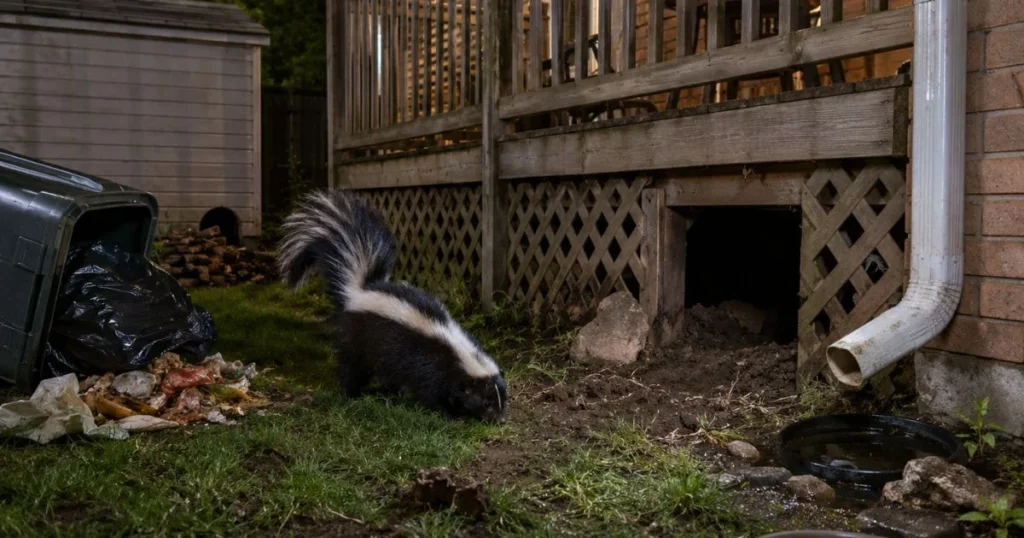
Single skunk returning to same location daily signals active deck underside den or crawlspace denning. Porch foundation gap den sites in Rexdale bungalows and Humber Valley Village shed base dens show 4 to 6 inch den entrance diameter. Loose soil disturbance near structure and fur snagged on entry point confirm deck void den occupation. Female skunk carrying nesting material at repeated dawn return behaviour confirms Alderwood porch gap denning pattern activity.
What to Do If You Suspect a Skunk Den During Birthing Season
Why Birthing Season Changes the Removal Calculus
Sealed den mortality risk traps kits without food or warmth. Trapped kit odour problem worsens when premature exclusion blocks the mother’s return. Wildlife sensitive removal window protocols follow kit independence milestones as the trigger. Late summer exclusion recommendation and birthing season delay rationale align with Ontario humane wildlife standards every year.
Observation Steps Before Contacting a Wildlife Professional
Den entrance location documentation starts with entry point measurement at 4 to 6 inch diameter. Use the flour test den activity method to confirm daily return vs occasional visit patterns. Keep a safe distance from the den and observe from a location where the skunk is not disturbed. Record when you see activity, such as during the evening, overnight, or early morning. Do not place traps and do not block entry before contacting Pestiseed for professional skunk removal services in Etobicoke. We confirm improper sealing causes loose soil disturbance and kit entrapment in residential dens.
FAQs
What month do skunks mate in Ontario?
Skunks typically breed from late winter into early spring, with mating generally occurring from February through April.
How long is a skunk pregnant?
Skunk pregnancy lasts about 62 to 75 days after implantation. Because implantation is delayed, the period from mating to birth can be longer than the gestation period itself.
Do skunks become more aggressive during mating season?
Skunks show increased boldness, not true aggression. Foot stomp warning signal and tail raise warning signal are defensive behaviour responses. Spray risk during male rivalry rises during territorial male encounters.
When is it safe to seal a skunk entry point under a deck?
The safe sealing window opens post mid August once the kit independence milestone is confirmed. Avoid all sealing during the May-June birthing season prohibition window.
Do skunks in Etobicoke hibernate in winter?
Skunks are not true hibernators. They enter semi hibernation called torpor from December through January in Etobicoke. Sustained February and March temperatures trigger torpor break and warm spell emergence early.