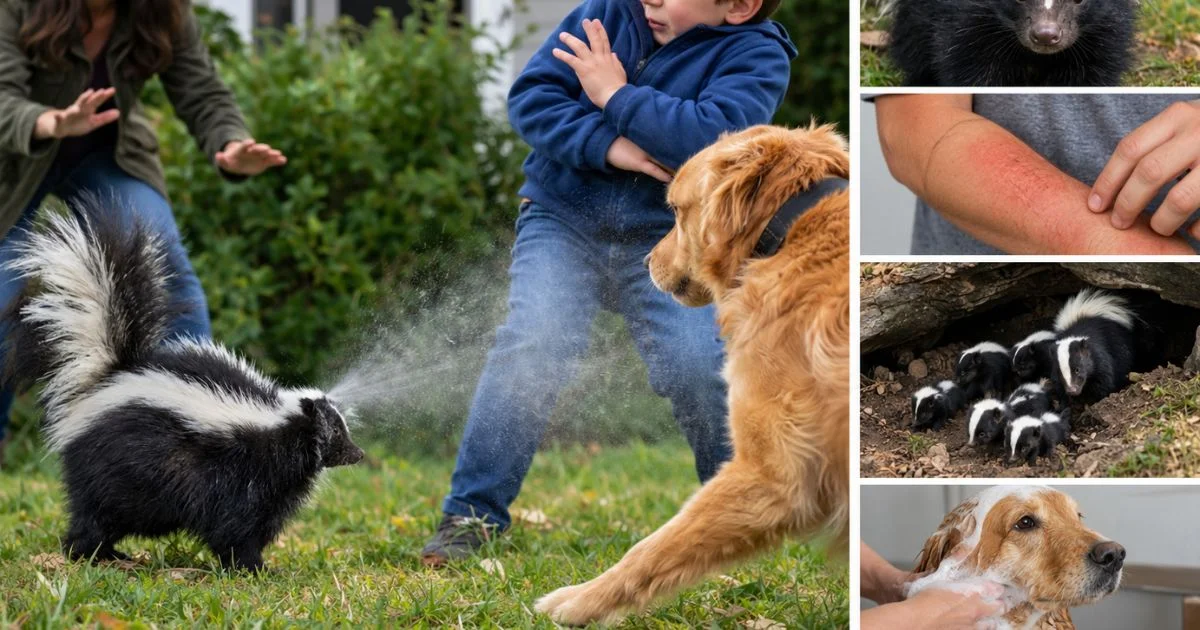
Skunks in Etobicoke can spray or bite when they feel threatened, and skunks are among the wildlife species that can carry rabies in Ontario. A skunk seen during the day can attract attention, but daytime activity alone doesn’t mean the animal is tame or sick. Children and pets should be kept away from skunks, especially when the animal shows unusual behaviour.
What Makes a Skunk Encounter Risky
Striped skunks (Mephitis mephitis) rarely spray without reason. Spray is a last resort defense, used only when escape fails. A skunk may spray or bite when it feels threatened or has no clear escape route. Give the skunk plenty of space and keep people and pets away from it.
Skunks are mainly nocturnal, but seeing one during the day does not automatically mean it is sick. Be more cautious when daytime activity is accompanied by unusual behaviour such as staggering, circling, appearing confused, or approaching people without apparent fear. Food, shelter and easy access to residential properties can bring skunks into closer contact with people and pets.
Are Skunks Dangerous to Humans
Skunk Spray Effects on the Human Body
Skunk spray can cause painful irritation, especially if it gets into the eyes, but being sprayed is not considered a rabies exposure. Rabies concerns arise from a bite or saliva entering an open wound or mucous membrane.
Bites, Scratches and Disease Transmission in Humans
Rabies is a serious public health concern in Ontario. If a person is bitten or scratched by a skunk, or saliva enters an open wound or mucous membrane, contact a healthcare provider or local public health unit promptly for an exposure assessment.
Are Skunks a Danger to Children
If a child is bitten or scratched, wash the wound with soap and water for at least 15 minutes and seek medical attention promptly. Public health officials can assess whether rabies treatment is needed.
Rabies exposure in children requires emergency medical response within hours. Any pediatric bite exposure or scratch wound triggers public health assessment for children. Teach the do not touch rule and safe distance instruction before summer play begins. Age appropriate wildlife safety education reduces unsupervised outdoor encounter risk in Etobicoke residential yards.
Are Skunks Dangerous to Dogs and Cats
Why Dogs Are Particularly Vulnerable to Skunk Contact
Dog chase behavior creates a sprint and corner encounter pattern that ends in a defensive bite by skunk. Scent driven approach and territorial investigation override recall commands at night. Dogs may chase or corner skunks, which can trigger defensive spraying or biting. Keep dogs away from wildlife and supervise them outdoors, particularly at night when skunks are most active.
Health Risks Pets Face After a Skunk Encounter
Ontario records a 9.6% canine leptospirosis test positive rate in urban dogs. Leptospira grippotyphosa and Leptospira pomona enter through open wound contact with contaminated soil. Canine morbillivirus causes neurological signs and distempered mortality in juveniles. Veterinary PCR testing confirms exposure after any post encounter symptom monitoring period.
What Diseases Do Skunks Carry in Ontario
Rabies and the Ontario Wildlife Rabies Program
Raccoon strain rabies outbreak in Ontario triggered MNRF rabies control operations across Haldimand, Halton, Hamilton and Niagara baiting zones. ONRAB oral vaccine bait received its license in 2013 and deploys through aerial bait distribution and hand baiting urban areas. Skunks and raccoons act as the primary rabies reservoir in Southern Ontario. Ontario Regulation 567/90 classifies rabies as a reportable disease requiring immediate case notification.
Leptospirosis Transmission and Risk for Pets
Leptospira bacterium spreads through urine contamination of standing water and soil contamination pathways. A cross Canada study from 2009 to 2018 by IDEXX Laboratories confirmed a 9.6% positive rate in Ontario urban dogs. Dogs under one year, toy breeds, and male dogs carry the highest infection odds. Six week urine shedding follows subclinical leptospirosis infection without visible symptoms.
Canine Distemper and Other Zoonotic Concerns
Canine morbillivirus spreads from skunks to unvaccinated dogs through direct contact and shared environment exposure. Neurological signs appear within 2 to 4 weeks of Canine distemper virus infection in juveniles. Distemper mortality in juveniles reaches high rates without early veterinary referral protocol. Vaccine gap risk leaves dogs in Etobicoke backyards exposed during every nocturnal skunk encounter.
How to Recognize a Defensive Skunk
Warning Behaviors Before a Skunk Sprays
Tail raise signals immediate danger. Foot stomping and hissing come first. A turned rear posture toward threat means spray follows in seconds. Five to six spray releases per gland charge are possible before a gland recharge period begins.
Signs That a Skunk May Be Ill Rather Than Defensive
Daytime activity in skunks is a primary rabies behavioral indicator. Circling behavior, staggering gait, and unprovoked approach to humans confirm neurological impairment signs. Never misread illness driven approachability as tameness. Contact Pestiseed immediately for any abnormal behaving wildlife sighting in Etobicoke.
What to Do During a Skunk Encounter
Safe Steps for Humans and Families
Freeze response stops escalation fast. Use slow backward retreat and avoid eye contact with skunks. Give the skunk an unobstructed exit path with no sudden movement. Bring children indoors immediately and call pets inside without delay.
What to Do If Your Pet Is Sprayed or Bitten
De-skunking formula uses one quart hydrogen peroxide, quarter cup baking soda, and one teaspoon dish soap. Apply before wetting fur for full thiol neutralization by oxidation. Never use tomato juice. Book veterinary consultation within 24 hours after any skunk bite for Ontario rabies risk assessment.
Why Are Skunks Appearing in Etobicoke Yards
Property Features That Attract Skunks
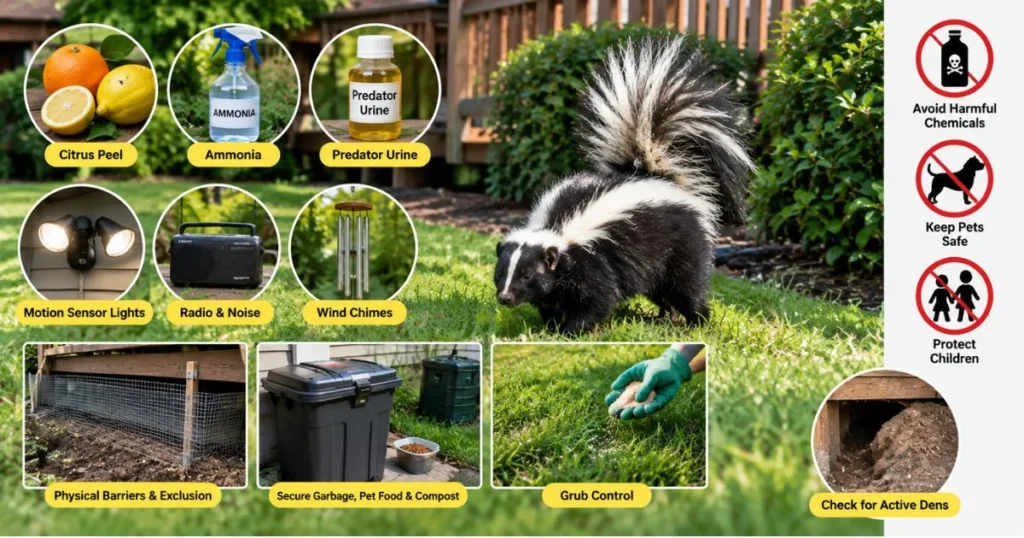
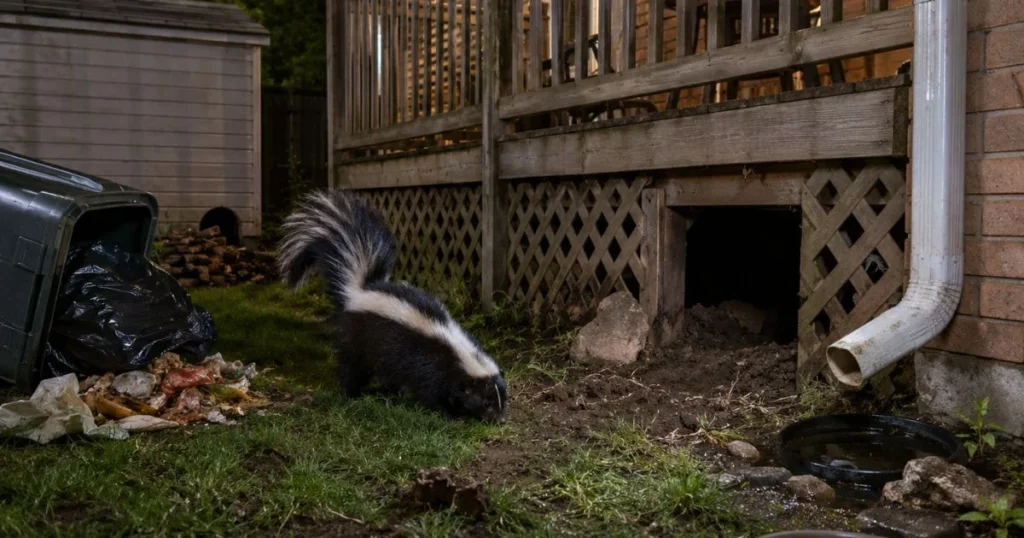
Unsecured garbage with non locking lid draws skunks nightly. Pet food bowls left outdoors overnight and accessible compost bins add easy food sources. Gaps beneath decks and crawl space entry points become active skunk denning sites. A full property audit for attractants removes all ground level entry gaps fast.
Seasonal Skunk Activity Patterns in Urban Ontario
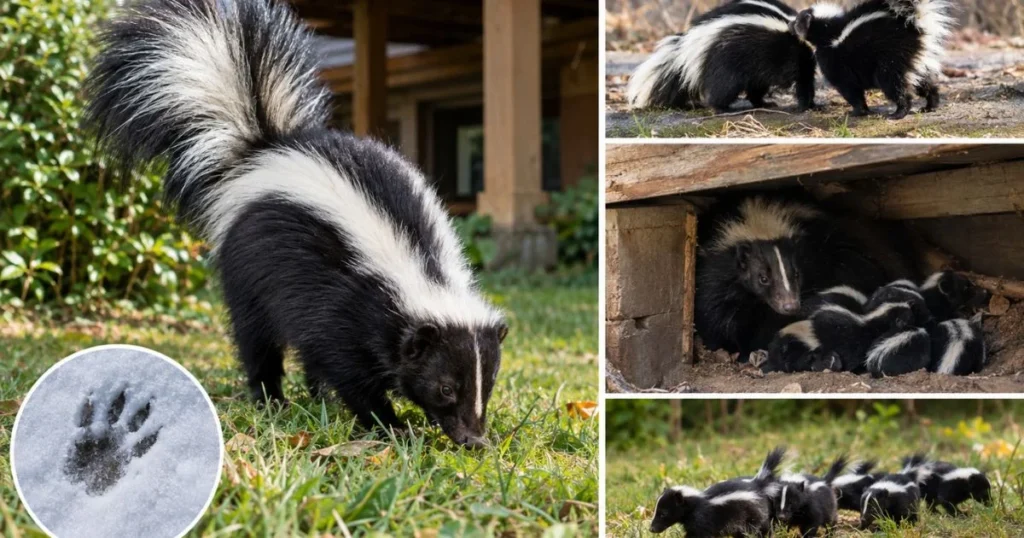
Skunk breeding season runs February to March across urban Ontario. Kit emergence from May to June brings mother skunks heightened protectiveness near the den. Juvenile skunk dispersal in late summer spikes encounter frequency across Etobicoke yards. We record peak complaints during every spring fall peak encounter period.
When Repeated Skunk Sightings Require Professional Assessment
3 sightings within one week confirm a habituation indicator. Fresh cone shaped digging near structure and persistent odor without active spray event signal den establishment. Nighttime scratching or movement sounds beneath floors confirm structural denning under deck or shed. Book a professional wildlife inspection before a kit presence near property develops.
Humane skunk exclusion uses a one way exclusion door over every entry point. Pestiseed completes structural gap sealing after confirmed burrow below porch removal. Etobicoke pest control assessment identifies all ground level entry gaps missed during self inspection. Contact Pestiseed when repeated sighting patterns cross the professional assessment threshold.
FAQs
Will a skunk attack a person unprovoked?
Unprovoked attack from a skunk is extremely rare. Skunks are non predatory animals with defensive only aggression. Only illness driven approaches signal danger. A skunk approaching without threat triggered response is an abnormal behavior indicator requiring immediate distance.
Can a skunk bite transmit rabies to my dog?
Skunk to dog rabies transmission occurs through bite wound saliva exposure. Unvaccinated dog risk is highest. Ontario mandates rabies vaccination for dogs since July 2018. Request veterinary assessment after the bite and notify your Ontario Health Unit immediately.
What should I do if my child is bitten or scratched by a skunk?
Start wound flushing with soap and water immediately. Go to an emergency medical facility without delay. Ontario public health conducts case by case PEP assessment. Never wait for symptoms before seeking pediatric rabies exposure protocol evaluation.
How far can a skunk spray?
Skunk spray accuracy reaches 10 feet with directional spray control. Spray mist reaches 20 feet. The thiol musk spray targets the face and eyes. Distance beyond 20 feet reduces spray trajectory effectiveness significantly.
Are skunks active during the day in Etobicoke?
A skunk being active during the day does not necessarily mean it is sick. Be more cautious if it also shows unusual behaviour, such as staggering or approaching people.