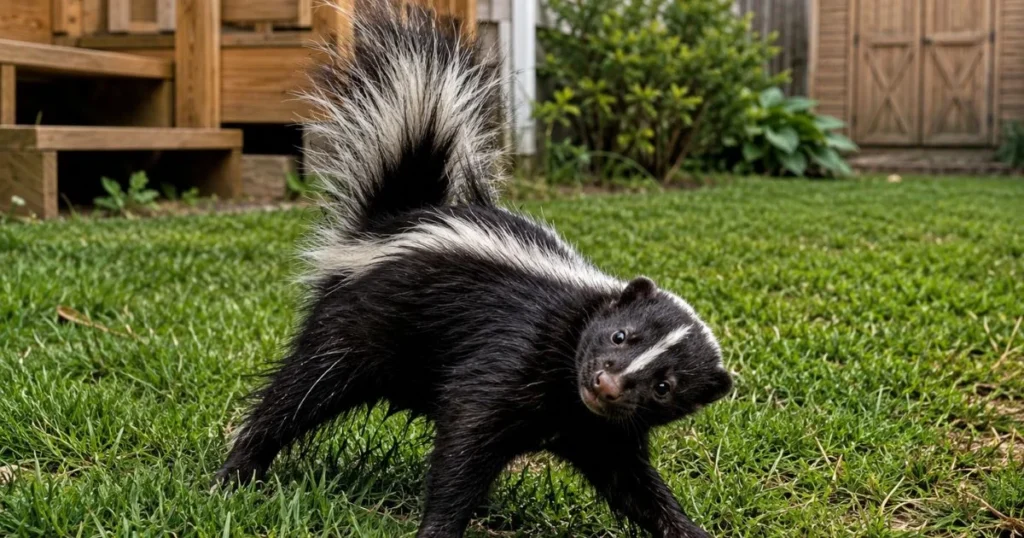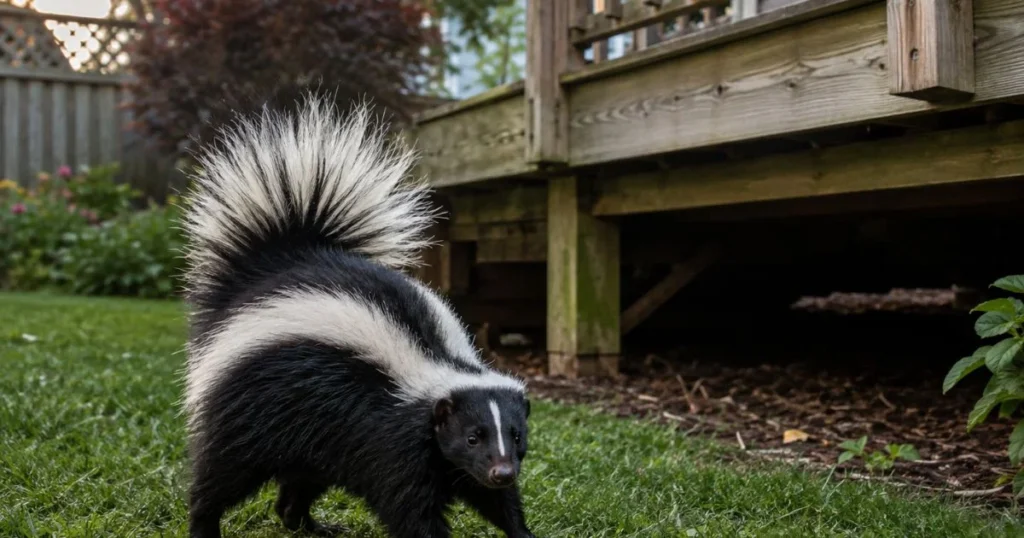
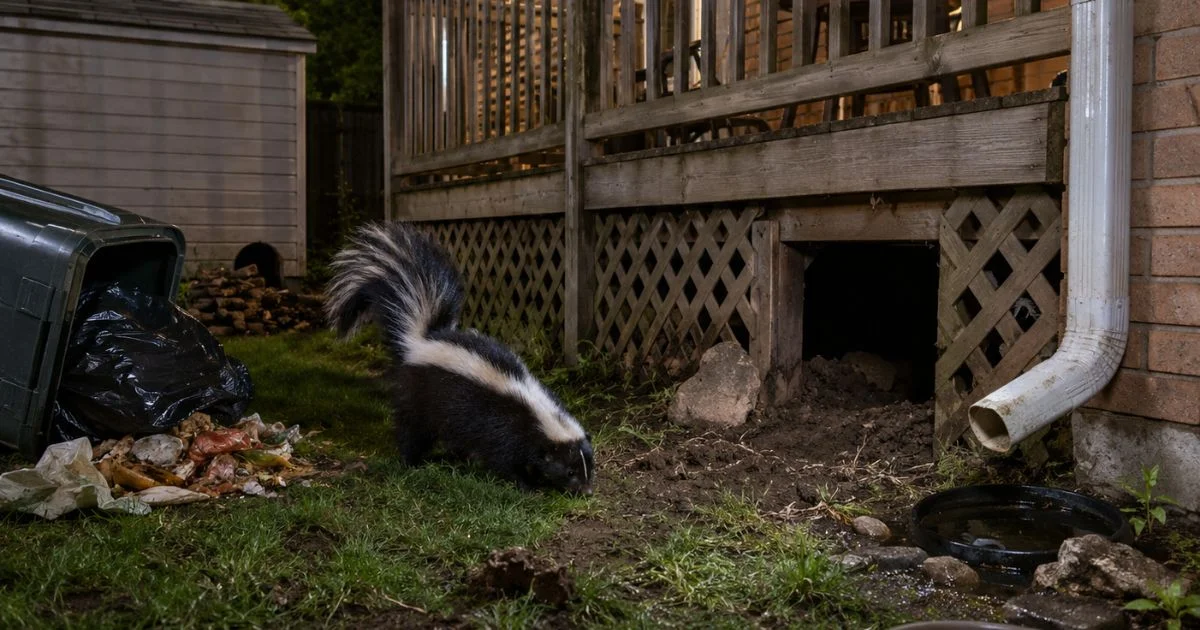
Skunks keep returning to Etobicoke properties because of leftover food, standing water and open shelter spots under decks and sheds. These attractants create a nightly pattern that turns a single sighting into a consistent visitor. Securing garbage, removing water sources, and checking for an occupied den before sealing any opening stops the cycle. When signs point to rabies concern or an active burrow near the house, calling a licensed wildlife agent keeps the removal safe and compliant with MNRF regulation.
What It Means When a Skunk Keeps Visiting Your Property
A striped skunk returning again is not a single sighting. It signals a nightly pattern. Your Etobicoke property sits inside its home range. This range often covers a few city blocks.
Mephitis mephitis follows a set foraging route each night. This route connects food spots to shelter spots. A consistent visitor is not just passing through. Urban wildlife relies on food and shelter location memory. This nocturnal habit points to a resource draw on your backyard or property.
Why Skunks Keep Coming Back to the Same Property
Food Is the Most Common Reason
Skunks eat almost anything. This opportunistic diet covers grubs, insects, small rodents, and earthworms in the soil. Wet soil conditions from an overwatered lawn make digging easy. An unsecured trash can offers a fast easy meal. Garbage, pet food left outside, fallen fruit, a compost pile and birdseed all count as an accessible food source.
Water Sources Draw Skunks Too
Skunks need water every night. A pet water bowl left outside works well for them. A leaking outdoor faucet or an irrigation system creates standing water fast. Outdoor water left overnight becomes a consistent water source skunks return to again and again.
Shelter Under Decks, Porches and Sheds
Skunks dig dens in quiet, dark spots. A deck void, porch void, or shed base gives full overhead cover. Older housing stock often has an unsealed foundation gap or a low structure with easy access. A crawl space, rock heap, or wood pile hides a protected opening. This den entrance leads to a burrow in a dark quiet space.
How to Tell Which Attractant Applies to Your Etobicoke Yard
Lawn Digging and Grub Feeding
A cone shaped hole in your lawn points to grub larvae underground. White grub species like European chafer, Japanese beetle and June beetle feed on turf root. This turf root feeding causes brown patches and loose turf you can lift by hand. An overwatered lawn raises grub density and triggers late summer digging. Ontario tracks these grubs across GTA and southern Ontario lawns.
Garbage and Pet Food Signs
A knocked over garbage can with scattered trash shows a skunk fed overnight. A chewed bag or an empty pet bowl confirms the same pattern. A secured lid or tight fitting lid blocks most access attempts. Food odour and collection day timing both raise the risk on trash night.
Repeated Entry Into the Same Structure
A same opening used again marks a consistent entry point. This spot becomes a den candidate fast. Fresh disturbed soil near a structural access point signals real digging activity. An active burrow indicator shows up after a multiple night pattern of use.
Is Nighttime Skunk Activity Normal or a Warning Sign
Nocturnal Foraging Is Expected Behaviour
A skunk is primarily nocturnal by nature. Dusk emergence starts its normal night foraging routine. This includes insect hunting and chasing small prey in the yard. Spring extended foraging happens when a mother with young foraging longer hours needs more food.
When Behaviour Crosses Into Concerning
Daytime activity alone is not always dangerous. Watch for disorientation or stumbling movement instead. An unprovoked charge, no fear response, or abnormal aggression raises real concern. A sick appearance paired with these signs suggests a rabies concern. A trapped animal may also act unusually scared or aggressive.
Is a Skunk Around the House Dangerous to People and Pets
A skunk rarely attacks first. Skunk spray is a defence mechanism, not an act of aggression. This threatened response releases a sulphur based oil through a foul smelling liquid. The spray range can reach several meters and cause temporary blindness. Eye irritation and respiratory stress often follow direct contact.
Skunk Control acts as a rabies carrier in rare cases. It may also carry a parasite like a tick, flea, or mite. This creates a health risk for both dog and cat. Pet safety and child safety depend on spotting a warning sign early. Watch for stamping front feet, raising tail, hissing, growling, or a short charge.
How to Stop a Skunk From Returning to Your Property
Remove Food and Water Attractants
Store garbage in a closed sturdy container with a tight fitting lid. A secured trash bin stops most nightly visits fast. Bring pet food brought indoors every evening without exception. A cleaned garbage can left out for collection day only removes the smell trail. Add fallen fruit removal, compost security, and bird feeder cleanup to your weekly routine.
Do Not Seal an Opening a Skunk May Still Be Using
Never seal a hole without a newspaper test first. Paper stuffed entrance left undisturbed for days can confirm vacancy before you act. This step matters most during the April to September window. A mother skunk may have orphaned young inside an occupied den. Use a temporary plug instead of a permanent seal right away. A rag soaked repellent placed near the hole encourages patience and persistence to pay off.
FAQs
Do skunks come back to the same yard every night?
Yes, skunks return nightly when your yard offers a consistent food source and consistent shelter source. Your property sits inside their home range, creating a predictable nightly return pattern each evening.
What should I check first if a skunk keeps visiting?
Check for unsecured garbage and outdoor pet food left overnight. Also inspect your lawn for a cone shaped lawn hole or grub feeding sign, plus any repeated structural entry point.
Can I relocate a skunk myself in Ontario?
No, Ontario’s Fish and Wildlife Conservation Act 1997 enforces a one kilometre relocation limit and a humane handling requirement. Hire a licensed wildlife agent under MNRF regulation to avoid DIY trapping risk.