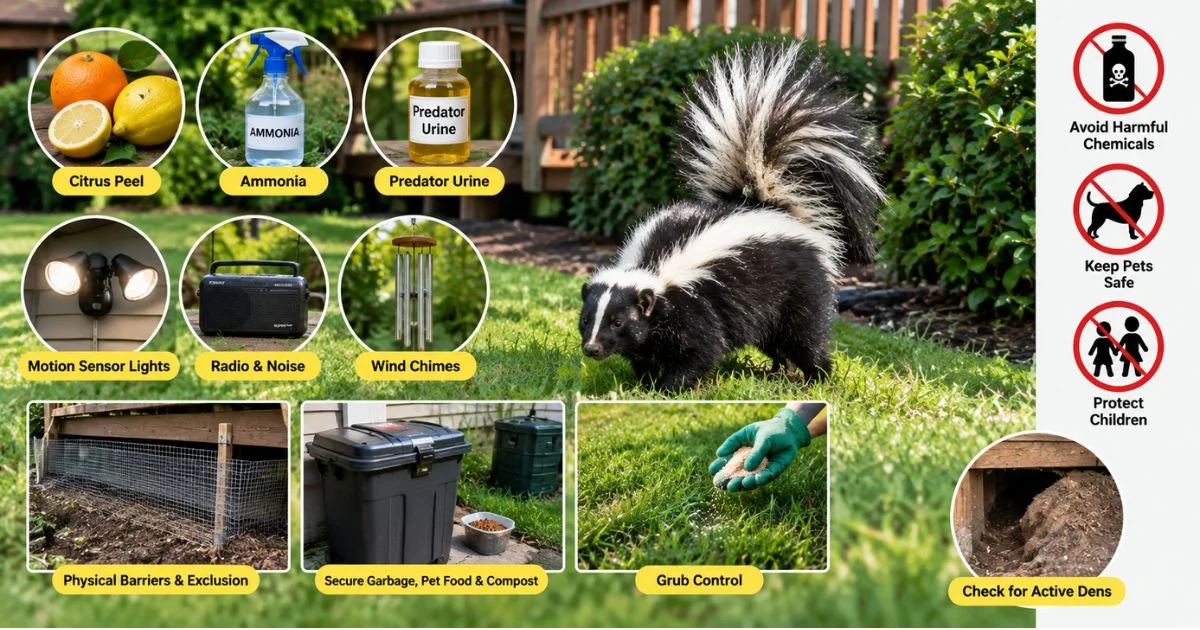
Skunk problems around Etobicoke decks and porches rarely end with scent alone. Citrus peel, ammonia, and predator urine give short term relief. Real prevention needs food source removal, shelter removal, and strong physical barriers. Skunk problems around Etobicoke decks and porches are rarely solved by scent alone. Strong odours may temporarily discourage activity, but long term prevention focuses on removing food sources and blocking access to sheltered areas. If a skunk is denning under a deck or porch, check whether the entrance is still being used and whether young are present before attempting exclusion.
What Smells Do Skunks Hate
Some strong scents are commonly suggested as temporary wildlife deterrents, but their effectiveness can vary outdoors. Scent based methods may provide short term discouragement, but they should not be relied on to keep skunks away from a property. For longer term prevention, focus on removing attractants such as accessible food and waste and blocking access to sheltered areas.
Do Skunk Repelling Smells Actually Work
Why Scent Alone Rarely Solves a Skunk Problem
A scent deterrent may discourage skunks for a short time, but it is not a reliable long term solution. Removing food sources and blocking access to sheltered areas can help reduce repeat activity. If a skunk is denning beneath a deck or porch, see our guide to skunk removal in Etobicoke for guidance on the next steps.
How Weather and Reapplication Affect Deterrent Strength
Outdoor scents can become less noticeable as they disperse, evaporate, or are affected by rain. This means a scent deterrent may need to be reapplied, but the timing depends on the product and outdoor conditions. Follow the product label for application and reapplication instructions rather than using a fixed schedule for every situation.
Ways to Deter Skunks From Your Yard
Using Motion Sensor Lights and Noise to Discourage Skunks
A motion sensor floodlight startles skunks with bright light. Use 100 watt bulbs per 15 square metres since this nocturnal animal has light sensitive eyes. Add a portable radio tuned to a talk radio station. Wind chimes create unpredictable sound, a humane deterrent through loud noise.
Physical Barriers and Exclusion Methods
Wire mesh fencing made from galvanized steel wire blocks entry points. Buried wire mesh needs a 30 centimetre geometry to prevent digging underneath. L shaped fencing stops digging under deck skirting. Pair foundation gap sealing with a motion activated sprinkler for a solid exclusion barrier.
Remove What Attracts Skunks to Your Etobicoke Property
Securing Garbage, Pet Food and Compost
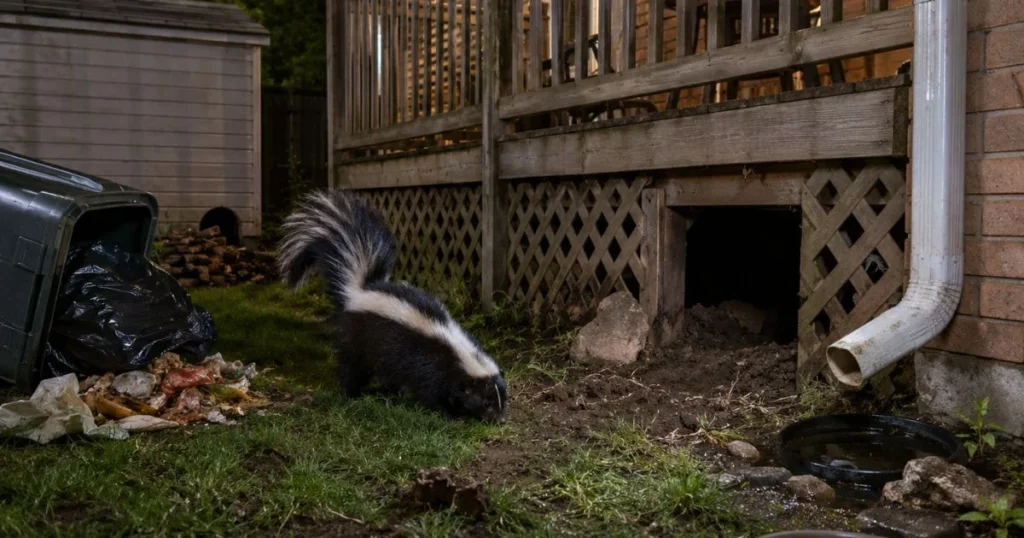
A sealed garbage bin with a locking lid stops most wildlife attractant problems. Pet food left outside and open compost draw skunks fast. Secure your compost bin, remove fallen fruit, and skip any outdoor feeding area or bird feeder. City of Toronto Animals Bylaw Chapter 349 enforces a wildlife feeding prohibition.
Controlling Grubs and Lawn Damage
Apply grub control through a natural lawn treatment like bone meal or soap flakes. Larvae near the surface trigger grub hunting behaviour and sod damage across your lawn. Apply grub control through a natural lawn treatment like bone meal or soap flakes. Property Standards Chapter 629 governs yard upkeep across Etobicoke.
How to Deter Skunks Safely Around Pets and Children
Deterrents That Can Be Harmful to Pets or Kids
Ammonia toxicity and mothball toxicity pose real risks near homes. Naphthalene causes non target wildlife harm and stays toxic to dogs and toxic to cats. Keep these products out of reach of children always. Avoid contaminated soil, contaminated water source, and plant damage from repellent use.
What to Do If a Pet Gets Sprayed
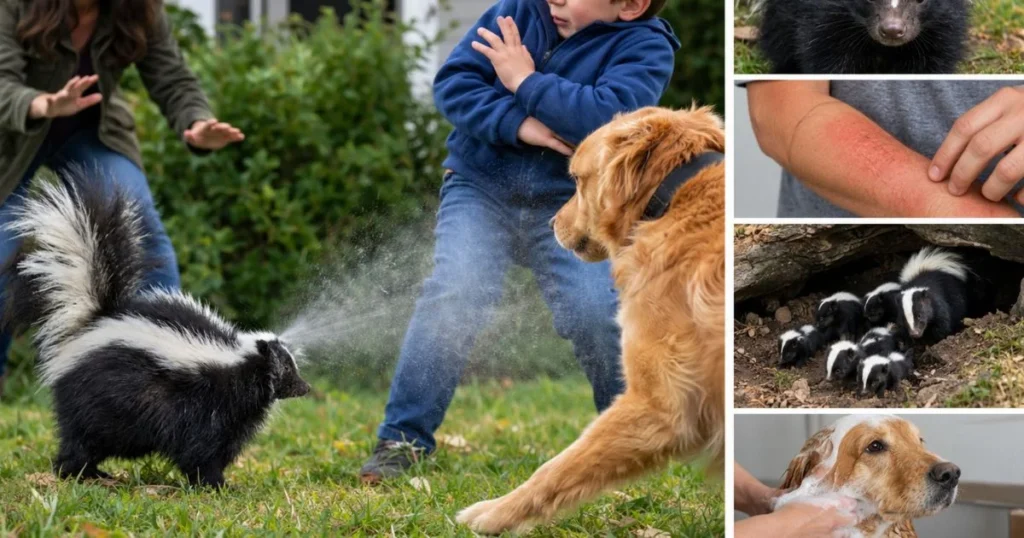
Watch for a tail raise warning sign or foot stamping warning sign first. A dog sprayed by skunk carries a thiol compound and thioacetate odor. Mix a hydrogen peroxide solution with baking soda and dish soap for a skunk odor removal formula. Seek an emergency vet visit if eyes show irritation.
How to Tell Whether a Skunk Den Is Active
Signs of Recent Activity
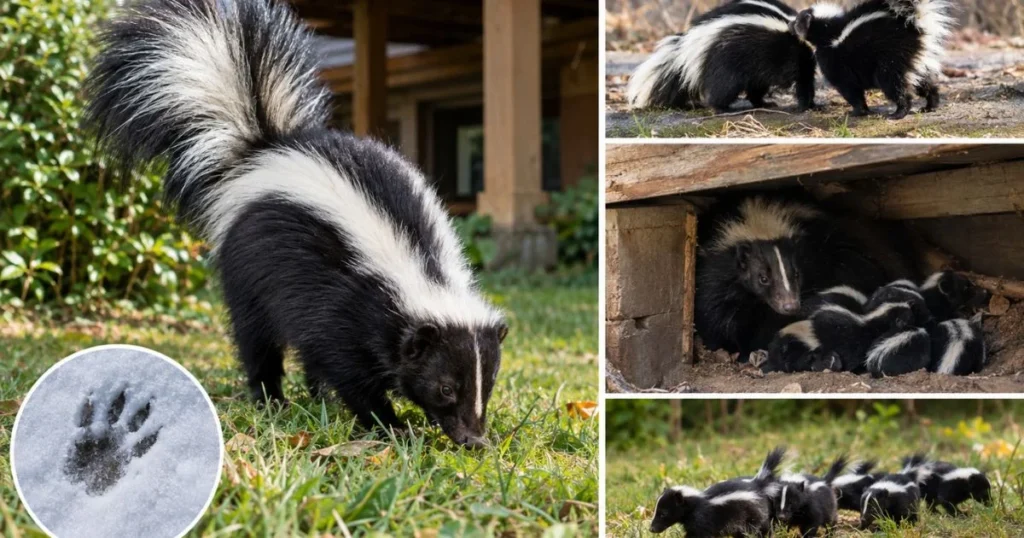
An active den shows disturbed soil at entrance near the burrow entrance. Look for cone shaped digging near the entry point and skunk tracks near the foundation daily. Recurring odour near structure and repeated nighttime activity signal a den under deck, den under shed, or den under porch.
Why Timing Matters During Denning Season
Check for young skunks before closing an active den. Do not block or seal the entrance while a skunk or its young may still be inside. If young are present, wait until they are mobile and the den is no longer being used before completing exclusion.
When DIY Skunk Deterrence Is Not Enough
A licensed wildlife control operator steps in when repeated skunk activity continues. Pestiseed follows the Fish and Wildlife Conservation Act 1997 under the Ontario Ministry of Natural Resources and Forestry. A trapping licence requirement limits relocation to a one kilometre relocation limit.
Pestiseed starts with a professional wildlife inspection for entry point identification. Technicians complete exclusion mesh installation for full humane exclusion. This wildlife control Etobicoke approach solves what DIY methods miss.
FAQs
What smell instantly repels skunks?
Ammonia and citrus peel create an effect fast. Predator urine stands as the available, forcing skunks to avoid treated areas of application.
Can I use ammonia to keep skunks away?
Yes. An ammonia soaked rag works well through den entrance placement. Follow safe handling of ammonia rules closely, since ammonia toxicity to pets remains a real risk nearby.
How do I know if a skunk is denning under my deck?
Check for disturbed entrance soil and nighttime observation of activity. The method gives active den confirmation within 24 hours if the paper moves.
Is it legal to trap a skunk myself in Ontario?
Ontario property owners may use a humane live trap for wildlife damaging private property, subject to provincial and municipal rules. In Toronto, captured wildlife must be handled humanely and released within 24 hours and within 1 kilometre of capture.