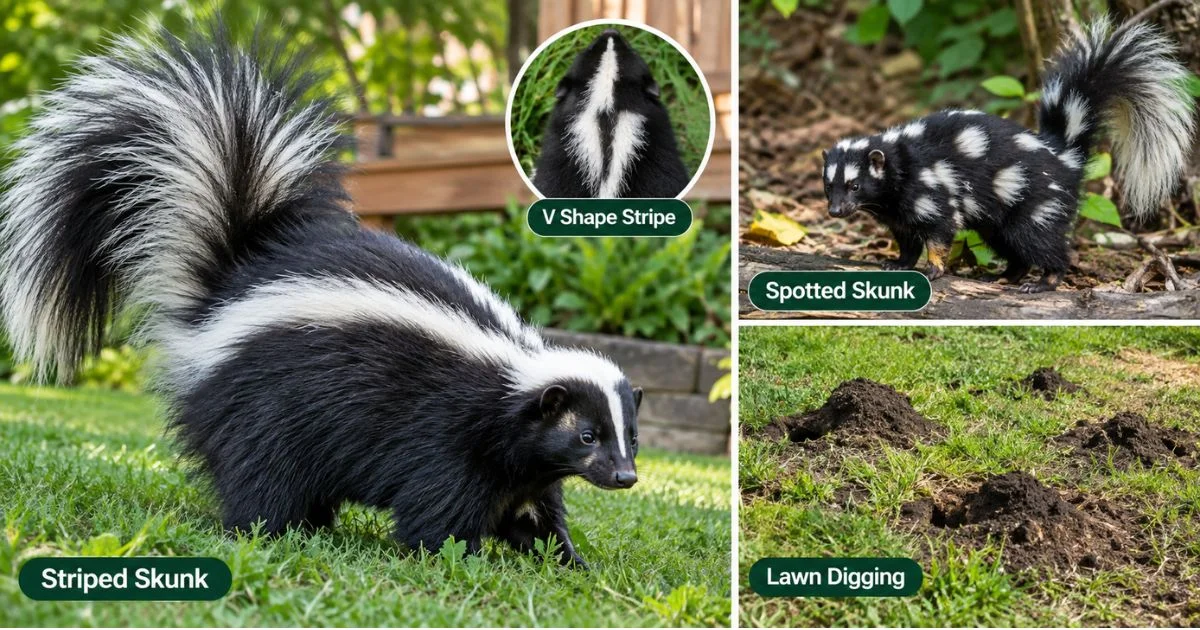
Etobicoke’s green spaces and the Humber River can attract striped skunks. One sighting does not always mean a skunk lives on your property. Repeated visits, lawn digging, bad smells, or activity near a deck, shed, or porch may show that a skunk often visits. Ontario has rules for catching and handling wildlife. Some traps and poisons are not allowed. Other traps have special rules. Release rules may also apply if a skunk causes property damage. Check Ontario’s current rules before trapping or moving a skunk. You can also contact a qualified wildlife professional. Check any Pestiseed licence or trapping credentials before making this claim.
Skunk you are most likely to see in Etobicoke
Why the Striped Skunk Is Ontario’s Urban Skunk
The striped skunk (Mephitis mephitis) is the species most relevant when identifying a skunk in an Etobicoke yard. It has a broad range across North America and can use a variety of habitats, including urban and suburban areas. Research in Scarborough has also documented striped skunks using residential and other urban habitats in Toronto. For Etobicoke homeowners, that means a skunk seen around a yard, park edge, ravine, or other urban green space is likely to be a striped skunk. Ontario lists the striped skunk as a furbearing mammal under its wildlife regulations.
What About Spotted Skunks in Ontario
Spotted skunks are smaller and more slender than striped skunks and have broken white markings rather than the two prominent white stripes seen on a striped skunk. Some spotted skunks are also capable climbers and are associated with wooded and other natural habitats.
For an Etobicoke homeowner trying to identify a skunk in a residential yard, the striped skunk is the more relevant species to consider. A distant nighttime sighting should not be identified as a spotted skunk based on habitat alone look at the animal’s size and the pattern of its white markings before drawing a conclusion.
Types of skunks
Striped Skunk
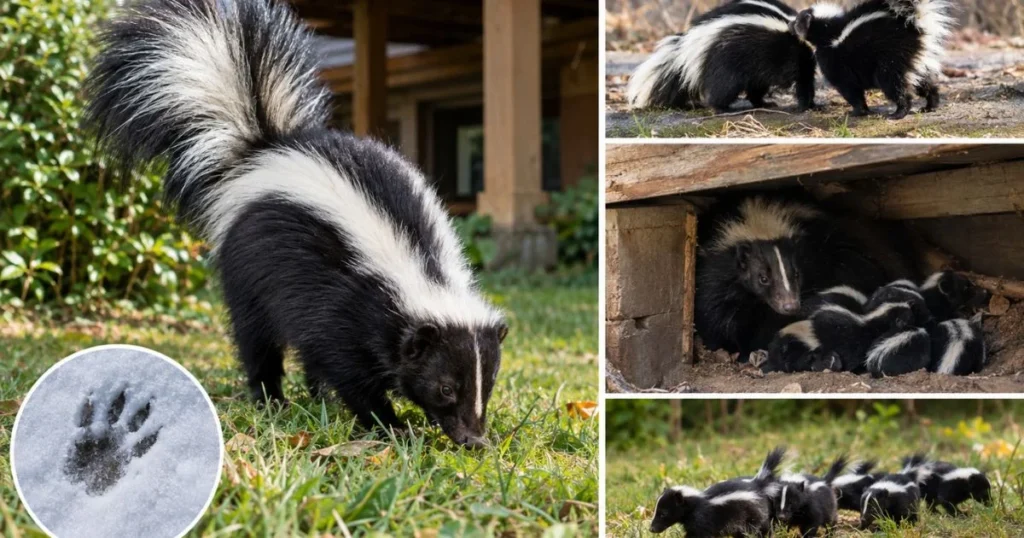
The striped skunk carries two white stripes that split into a V shape bifurcation at the neck. Its shaggy fur, fluffy tail, and flat footed walk make identification straightforward in Etobicoke yards. Body weight reaches 3 kg, with 50 to 80 cm length from snout to tail tip. Sexual dimorphism produces a 10 to 15 percent size difference between male skunk and female skunk.
Eastern Spotted Skunk
The eastern spotted skunk belongs to a group of four spotted skunk types, including the western spotted skunk. Its fingerprint like pattern gives each animal individual unique markings no two skunks share. A threatened species under Ontario threatened status, it favours wooded and forested habitat far from Etobicoke streets. Its handstand warning display and rear end spray aim make it more acrobatic than the striped skunk, with four months odor persistence after a direct hit.
How to Identify a Striped Skunk by What You Can Actually See
Body Shape, Size, and Markings
The stout body sits low on stumpy legs with a small conical head, pointed snout, rounded ears, and small black eyes. Body weight ranges from 1.4 to 6 kg, reaching pre-winter weight up to 6.3 kg before hibernation. Total length measures 54 to 77.5 cm, with a bushy tail adding 18 to 29 cm. A cat sized comparison works well for Etobicoke residents spotting one at dusk.
The Stripe Pattern and What It Signals
The V shape white stripe starts at the head and runs as a bifurcating stripe toward the tail in a clear head to tail stripe direction. Aposematic coloration makes the white cap on head and snout white stripe visible warnings to every nearby predator. Stripe width variation means some individuals show broad white markings while others display a narrow stripe variation on a mostly black individual body. Every pattern points directly toward the anal gland location, a deliberate warning signal no predator ignores twice.
Where Striped Skunks Come From in Etobicoke
Humber River Corridor and Urban Skunk Movement
The Humber River corridor functions as Etobicoke’s primary wildlife transit route for urban wildlife movement between green spaces. Field habitat drives 56 percent observations, followed by residential habitat at 23 percent observations and field industrial zones at 10 percent. Skunks cover nightly movement 0.1 to 3.0 km, peaking during October peak movement when food storage instinct peaks. Green space adjacency and the urban rural interface along Etobicoke’s western edge keep this ravine system permanently active.
Why Etobicoke Yards Attract Skunks Year Round
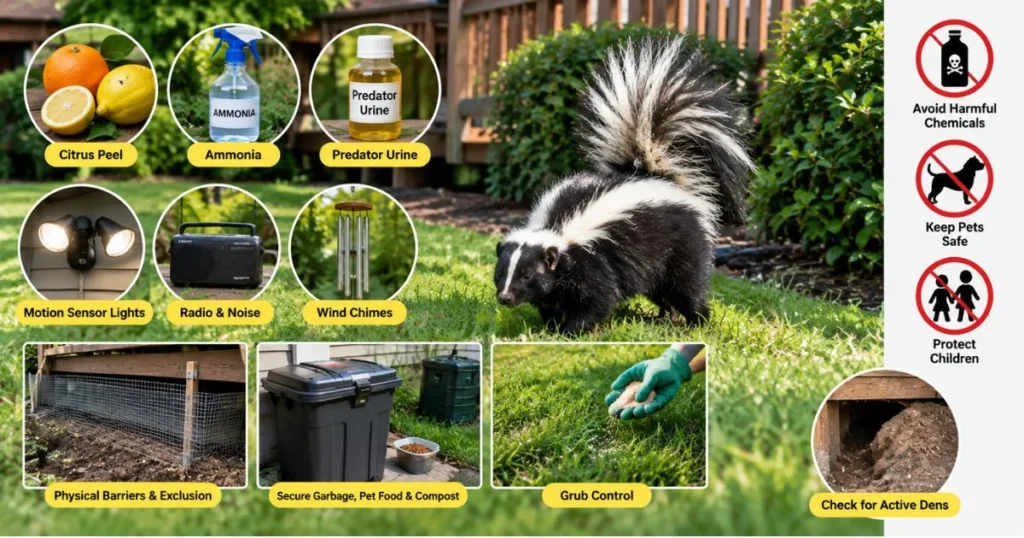
The opportunistic omnivore diet drives skunks into Etobicoke yards every season. Grubs, earthworms, fallen fruit, pet food, birdseed, and garbage create a year round food supply no skunk ignores. A compost pile, standing water source, or garden adds enough food source accessibility to turn any yard into a regular stop. Skunks den under deck, under porch, under shed, and inside any crawl space that offers shelter availability within reach of these skunk attractants.
What Skunk Behavior Tells You About the Situation in Your Yard
What Nighttime Digging and Cone Shaped Holes Mean
Cone shaped holes in Etobicoke lawns measure 7 to 10 cm diameter holes and appear in a scattered hole pattern overnight. Nocturnal foraging drives this lawn digging through olfactory food detection skunks smell grub foraging targets through several centimetres of soil. A high lawn grub population produces the densest soil disturbance and lawn insect damage patterns. Skunk claw marks along hole edges and muddy ground prints confirm the animal responsible, especially on muddy ground after rain.
When a Single Sighting Becomes a Recurring Property Issue
Recurring sightings at the same entry point signal an established den beneath a structure. A home range 0.9 km² 2 annually means one skunk covers your entire Etobicoke block nightly. Skunk under structure situations produce fixed-point odor and odor concentration that intensifies near sounds beneath deck and sounds beneath porch. Winter brings multiple skunk adults winter denning together, with up to 20 individuals communal den sharing an abandoned burrow use from a groundhog burrow, fox burrow, den under woodpile, or den under rock heap with den holes 10 to 25 cm diameter.
Skunks and Ontario Law: What Homeowners Need to Know Before Acting
The Fish and Wildlife Conservation Act known as FWCA 1997 governs every skunk removal decision in Etobicoke. Ontario MNRF classifies the striped skunk as a furbearing mammal classification, meaning specific rules apply before any homeowner acts. A wildlife trapping licence divides into trapping licence commercial and trapping licence fur harvest categories under the Ontario Trapping Regulations Summary. Only a licensed wildlife control operator legally sets traps beyond basic homeowner trapping rules on private property.
Humane removal method options available to Etobicoke homeowners include a live trap or a one way exclusion door fitted at the den entry point. The 1 km relocation rule under MNRF guidelines restricts how far any trapped skunk travels before release. Poison trap prohibition, adhesive trap prohibition, and body gripping trap prohibition apply to all residential situations without exception.
Rabies, Public Health and the Skunk in Your Yard
How Ontario Monitors Skunks as a Rabies Vector Species
Ontario’s rabies control program in the 1990s established the foundation for today’s MNRF rabies surveillance network. ONRAB bait drops through aerial baiting rural areas and hand baiting urban areas vaccinate wildlife before exposure spreads. A 50 km surveillance buffer surrounds every positive case surveillance zone, triggering striped skunk testing, fox testing, and raccoon testing across the buffer zone. Niagara region baiting 2026 and Frontenac Leeds Grenville baiting represent active programs Etobicoke residents can track through the wildlife rabies cases map published by the MNR wildlife movement research division.
What to Do If a Skunk Has Contact with a Pet
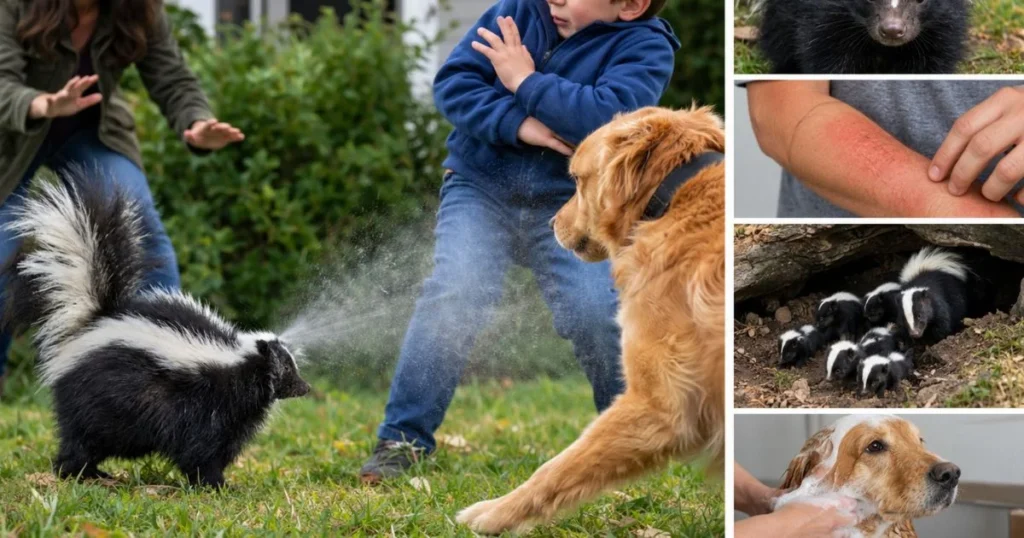
Do not handle skunks under any circumstance after a dog encounter or cat encounter in an Etobicoke yard. A skunk bite, skunk scratch, or direct saliva contact requires immediate Toronto Public Health reporting through Toronto contact channels. Veterinarian assessment determines PEP evaluation needs based on pet vaccination status and exposure type. Unvaccinated pet risk elevates the response protocol pet separation protocol isolates the animal while rabies post exposure prophylaxis eligibility is assessed under Ontario Public Health Standards.
FAQs
Are there multiple types of skunks in Etobicoke?
Skunk species Ontario includes 2 types. The striped skunk dominates Etobicoke. The eastern spotted skunk Ontario rarity means sightings are near zero. Only the striped skunk lives in urban residential areas.
Is it legal to trap a skunk yourself in Etobicoke?
Legal trapping Ontario permits basic homeowner trapping under the Fish and Wildlife Conservation Act trapping rules. The 1 km relocation rule applies. Licensed operators handle all complex removals legally.
Why is a skunk digging up my lawn at night in Etobicoke?
Grub foraging lawn behaviour drives nighttime lawn damage in Etobicoke. Skunks use scent to locate grubs underground. Cone shaped holes explain each hole marks one confirmed food detection site.
How far can a skunk spray?
2 metre accurate range covers most direct hits. 4 metre spray range reaches under normal conditions. 7 metre wind spray range applies with wind assistance. Thiol mercaptans and thioacetate compounds intensify with water spray reaction, increasing spray potency increase on contact.