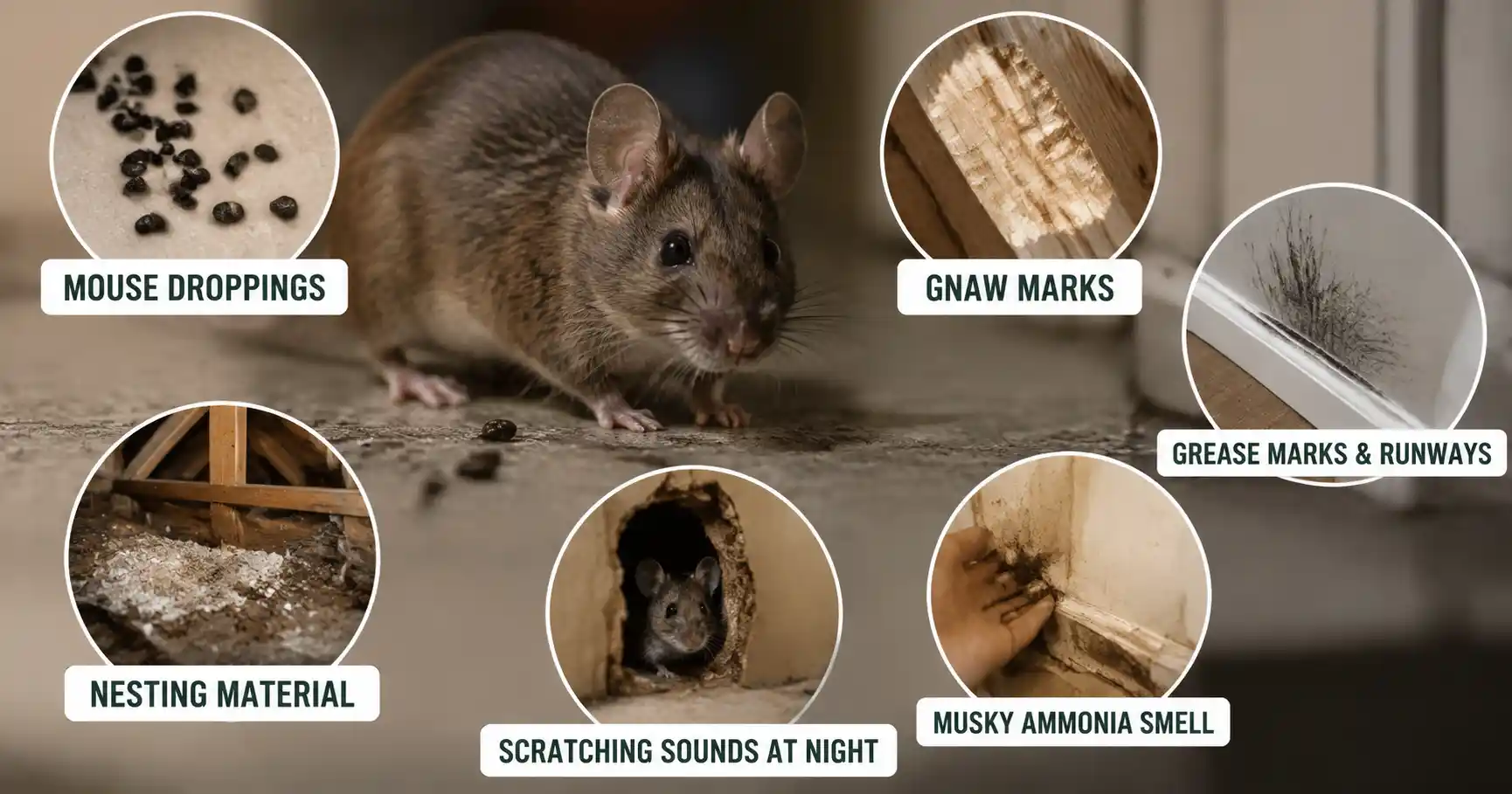
Each mouse drops 50 to 75 droppings daily marking every travel runway inside your home. Scratching sounds hit the wall cavities after midnight. Mouse urine soaks into insulation and drywall week by week building a musky ammonia smell that surface cleaning never removes. Most Ontario homeowners find these signs long after the colony fills the walls. One breeding pair squeezes through a 6 mm weep vent gap or worn garage door seal every autumn.
Postpartum estrus restarts the pregnancy cycle within 24 hours of each birth. Salmonellosis, leptospirosis, and LCMV can spread through rodent droppings and urine that contaminate food preparation surfaces. According to the Public Health Agency of Canada, proper cleanup and disinfection reduce exposure to rodent borne pathogens. Pestiseed visits Toronto and GTA homes the same day, finds every active nest, entry point and rub mark runway and ends the infestation before one pair becomes fifty.
What Mouse Droppings Look Like and Where to Find Them in Your Home
How to Tell Fresh Droppings from Old Ones
Fresh mouse droppings are dark brown to black with a moist surface. Colour shifts to grey and texture dries out within 24 to 48 hours. A dark, moist pellet confirms an active infestation right now. A grey, crumbling pellet signals past or reduced mouse activity in that spot.
Difference Between Mouse Droppings and Rat Droppings in Ontario
Mouse droppings measure 3 to 6 mm with pointed ends roughly rice grain sized. Rat droppings, from the Norway rat, measure 12 to 20 mm with blunt, rounded ends. Skedaddle confirms rat droppings are 3 times larger than mouse droppings. Size and endpoint shape confirm rodent species identification by sight alone in Ontario homes.
Sounds That Mice Make Inside Ontario Homes
What Scratching in the Walls at Night Means
A light, rapid scratching heard after midnight confirms a house mouse moving along wall framing or through a utility channel. Sound from the ceiling means mice inside the attic floor or between floor joists. Scratching signals movement gnawing sounds signal active chewing on drywall or insulation. Both confirm a live infestation in that section right now.
Why Sounds Are Louder in Older Ontario Homes
Pre-1970 Ontario homes use lath and plaster walls with hollow cavities between studs with no batt insulation to absorb sound. Balloon framing in pre-1960 homes creates open vertical channels from basement to attic. House mice travel these channels freely, and sound carries the full height of the home. Post war bungalows and semi detached houses across the GTA amplify wall scratching far more than modern drywall construction does.
Gnaw Marks and Structural Damage That Mice Leave Behind
What Materials Mice Chew Through in Canadian Homes
House mice chew through wood, soft plastic, drywall, food packaging cardboard and rubber inside Canadian homes. Electrical wiring insulation gets stripped down to the bare copper conductor inside utility chases. Expanding foam alone fails mice chew straight through it. Steel wool, copper mesh, and hardened concrete are the only materials a house mouse cannot gnaw through at wall stud entry points.
How to Tell Mouse Gnaw Marks from Other Damage
Mouse gnaw marks leave rough, irregular edges on wood and drywall with holes roughly 6 mm wide about dime sized. Fresh marks show pale, raw wood colour with wood shavings or drywall dust directly underneath. Rat gnaw marks differ, edges are smooth and beveled, holes measure 20 mm or larger closer to quarter sized. Edge texture and hole diameter together confirm which rodent species caused the damage in your Ontario home.
Grease Marks, Runways, and Rub Marks Along Your Walls
What a Mouse Runway Looks Like and Where to Find Them
A mouse runway is a fixed travel route marked by rub marks, droppings, and footprints in a line along the wall junction. Runways run behind kitchen appliances, beneath lower cabinet edges, and along plumbing pipes. Sprinkle flour along a suspected route at night to check for paw prints the next morning. Dropping clusters and rub marks at narrow points confirm the active travel path.
How Rub Marks Indicate an Established Population
Dark, continuous rub marks along a baseboard mean multiple mice have used that route for weeks. A short, light smear signals a recent or small population. A long, dark, oily smear confirms a larger, established colony behind the wall. A urine pillar at the same spot means the infestation has been active for multiple months in that zone.
Mouse Nests and Where Mice Build Them in Ontario Houses
What Materials Mice Use to Build Nests in Canadian Homes
Newspaper, tissue paper, and fabric strips from stored clothing go first mice grab whatever is softest and closest. Cardboard fibre from pantry packaging and attic insulation fibres bulk the nest out fast. Holes in upholstery and torn magazine edges are the visible proof left behind. Check storage rooms and attic floors that’s where nesting material goes missing first in Canadian homes.
Locations in Ontario Homes Where Mice Prefer to Nest
Behind the refrigerator and inside lower cabinet drawers are the two spots most Ontario homeowners never check. Blown in attic insulation in post war GTA bungalows gives mice a warm, hidden cavity across the entire ceiling. Crawlspace dirt floors in rural Ontario homes stay undisturbed for months perfect for an active nest. Dark, warm and close to food every confirmed mouse nest location in Ontario meets all 3 conditions.
The Musky Smell of a Mouse Infestation and What It Signals
Ammonia Odour from Mouse Urine Gets Stronger Over Time
Mouse urine quickly penetrates wood, drywall, and insulation surface cleaning alone never removes it. Surface cleaning rarely removes it completely as a territorial marker and pheromone signal. More urine attracts more mice and more mice deposit more urine, a reinforcing feedback loop. Each mouse leaves small amounts of urine as it travels, creating scent trails that attract other mice back to the same route. That’s why the smell often becomes stronger over time instead of fading.
Where in the Home This Smell Is Most Noticeable
Mouse urine odour concentrates in poorly ventilated zones, crawlspaces, under sink cabinets, cabinet interiors, and spaces behind kitchen appliances. Attic voids and wall cavities at the nest site hold the highest urine accumulation. In Ontario homes, summer heat intensifies ammonia volatility inside closed, warm spaces. Winter also traps odour sealed homes during Ontario’s heating season push ammonia concentration higher in enclosed zones.
Health Risks That Come With a Mouse Infestation in Ontario
House Mouse vs Deer Mouse Which Species Carries Which Disease
Toronto kitchens get the house mouse (Mus musculus). Grey brown body, uniform colour, lives inside wall voids and pantries. Salmonellosis comes from feces on food surfaces. Leptospirosis spreads through urine on floors. The deer mouse (Peromyscus maniculatus) has a brown back and white belly. It carries Sin Nombre virus, Canada’s primary hantavirus strain. Deer mice stay in Muskoka cottages and rural Ontario sheds. They rarely enter GTA homes.
What Health Canada and Public Health Ontario Say About Rodent Borne Disease Risk
168 HPS cases confirmed across Canada since 1994. The Public Health Agency of Canada recorded every one. Western provinces hold most cases. Public Health Ontario shows zero confirmed HPS in Ontario since 2001. According to the Public Health Agency of Canada CCOHS says wet the area first. Then wear an N95 respirator and rubber gloves. Seal waste in a double plastic bag before disposal.
How to Safely Handle Areas Contaminated by Mouse Droppings
Wet the droppings first. Soak with disinfectant for 5 minutes. Then wipe. Never sweep dry droppings broken particles go airborne instantly. Health Canada and CCOHS recommend wearing a NIOSH approved N95 respirator and gloves during rodent cleanup. Seal waste in a double plastic bag. Follow your local Ontario by law for disposal. Contaminated insulation needs a professional, don’t touch it yourself.
How to Tell Whether You Have One Mouse or an Active Infestation
Why Seeing One Mouse During the Day Is a Warning Sign
House mice are nocturnal, daytime foraging only happens when the nest is at capacity. The colony has grown large enough that mice compete for food during the night. Crowding forces individuals into daytime movement despite the higher risk. One daytime sighting confirms an active infestation behind your walls, not a single stray mouse.
How Fast a Mouse Population Grows Inside an Ontario Home
A female house mouse reaches breeding age at 6 weeks and delivers 5 to 8 pups after a 19 to 21 day gestation. She enters postpartum estrus within 24 hours of giving birth pregnancy restarts immediately. Each female produces 5 to 10 litters per year inside a warm Ontario home. One breeding pair entering in autumn becomes dozens of mice before the first visible signs appear.
Entry Points That Let Mice Into Ontario Homes
Common Exterior Gaps in Ontario Housing Stock That Mice Use
Weep vents and deliberate gaps left between the bottom row of exterior brick for moisture drainage are the most overlooked mouse entry point in Ontario brick clad homes. Utility pipe gaps sealed with expanding foam fail fast mice gnaw straight through. Worn garage door seals on GTA detached homes become the primary autumn entry point each year. Steel wool or copper mesh packed into these gaps stops entry where foam cannot.
How Small an Opening a Mouse Needs to Get Inside
A house mouse compresses its body through a gap as small as 6 mm roughly the diameter of a pencil. No rigid collarbone exists in a house mouse skeleton. The skull is the widest point once it clears the gap, the full body follows. Any weather stripping with visible daylight gaps is a confirmed entry point for mice in Ontario homes.
FAQs
Are mouse droppings always the first sign of an infestation?
Mouse droppings are the most common first sign each house mouse produces 50 to 75 pellets daily. Scratching sounds at night and gnaw marks on food packaging appear equally early and often go unnoticed first.
How do I know if mice are still active or if they are gone?
Fresh droppings are dark brown to black and slightly moist currently active. Grey, crumbling droppings signal past activity. No new gnaw marks and no night scratching together suggest mice have gone.
Can I have mice in my walls without seeing any droppings?
Yes. A house mouse confined to wall cavities produces scratching and gnawing sounds before droppings reach any visible area. Droppings stay inside wall voids and ceiling spaces until mice reach accessible zones.
What is the difference between a mouse infestation and a rat infestation in Ontario?
Rat infestations produce raisin sized droppings, heavy thumping sounds, and centre in basements. Mouse infestations produce rice grain droppings, light scratching, and spread through kitchens, wall voids and attic spaces across Ontario homes.
Get a Free Quote Now
Pestiseed Pest Control inspects mouse infestations across Etobicoke and Ontario same day, no waiting. Call the Pestiseed team for a free quote and stop the problem before the colony grows.