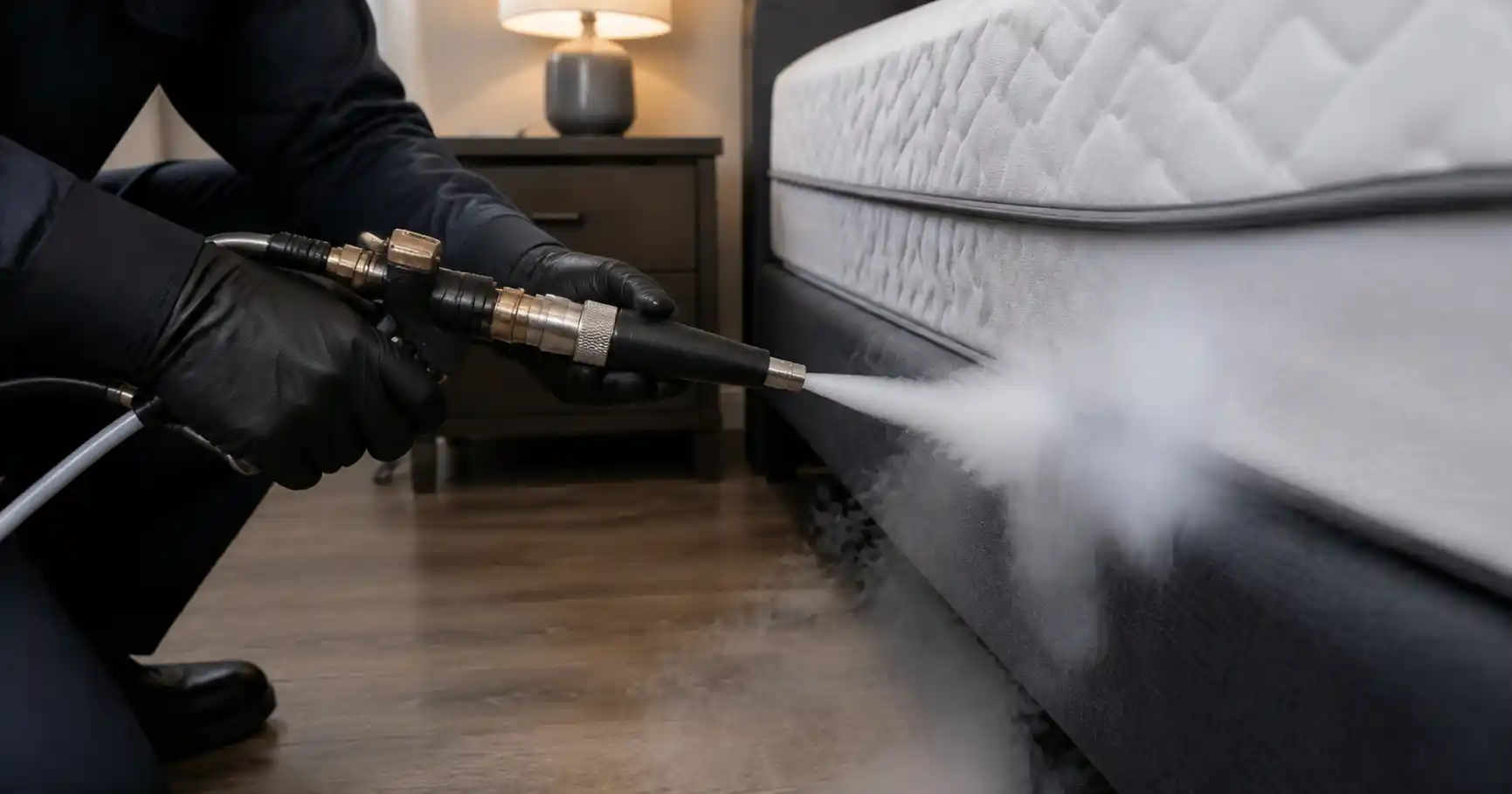
Rapid freeze bed bug treatment solves the biggest problem homeowners face: bed bugs hiding where sprays can’t reach. Instead of relying on chemicals that may repel insects deeper into walls or leave eggs untouched, the CO₂ snow freezes bed bugs on contact inside cracks, furniture joints, mattress seams, and other hidden harborage areas. When combined with vacuuming and a residual non-repellent treatment, it provides a more complete approach for controlling active infestations and reducing the risk of reinfestation.
What Is Rapid Freeze Bed Bug Treatment
How CO2 Snow Kills Bed Bugs on Contact
The Rapid Freeze device pushes liquid carbon dioxide through a patented applicator nozzle, converting it into dry ice snow on exit. That carbon dioxide snow hits the insect body and pulls heat out through evaporation in under 30 seconds. The result is rapid cellular freezing with zero residue CO2 evaporates completely and leaves the surface dry. Pestiseed technicians in Toronto handle CO2 cylinders under Ontario TSSA licensing rules, so the process stays safe and compliant. One note most competitors skip particle size matters. Large CO2 particles trap insulating air around the bug, an igloo effect letting it survive. The fine snow from a rapid freeze bed bug treatment avoids this, ensuring direct contact reaches every target.
What Temperature Kills Bed Bugs Instantly
Bed bug elimination through cold requires a temperature drop fast enough to stop the insect’s natural defence. At minus 80 degrees Celsius, that defence fails completely. Bed bugs exposed to slow freezing, like a home freezer, produce sugar, alcohol and protein compounds as natural antifreeze giving them time to adapt. At minus 80°C, the temperature drops faster than the insect can trigger that response. Eggs are actually more vulnerable to rapid freeze than adults, because their smaller mass reaches lethal temperature faster.
Why Bed Bugs Survive Conventional Spray Treatments
How Repellent Sprays Push Bed Bugs Deeper Into Walls and Furniture
Repellent sprays don’t kill a bed bug infestation, they scatter it. The chemical odor triggers bed bug avoidance behavior, specifically thigmotaxis, which is a contact seeking drive that pushes bugs into wall voids, baseboards, plug outlets and bed frames. This harborage relocation makes the infestation harder to locate and more expensive to treat. Most DIY spray products sold in Toronto use synthetic pyrethroids, a class Health Canada has flagged for resistance development in bed bug populations. Once bugs move deeper into structural voids, infestation complexity increases and professional removal takes longer.
Why Contact Only Kill Products Cannot Eliminate an Infestation
Contact kill products leave nothing active once the spray dries, zero residual insecticide effect remains on the surface. Bugs hiding inside hidden harborage zones like mattress seams and box spring interiors never get touched. Bed bug egg stage immunity adds another layer: the eggshell is chemically impermeable, so sprays don’t penetrate it regardless of concentration. Health Canada’s PMRA registration data confirms that most labeled bed bug insecticides carry explicit limitations against eggs. Pest resistance to pyrethroid class chemistry is also documented, meaning surviving adults pass genetic adaptation to offspring. Professional residual insecticide options like silica aerogel work through a different mechanism physical abrasion rather than chemical contact which is why they outperform contact kill products on insecticide adaptation populations.
How Cryonite Technology Reaches Where Sprays Cannot
How CO2 Snow Penetrates Cracks, Crevices, and Electrical Sockets
The snow vapor stream from the patented nozzle expands to fill available space liquid sprays follow gravity, CO2 vapors don’t. That physics difference is what gives Cryonite treatment access to box springs, mattress seams, furniture undersides and electrical sockets where bed bugs actually hide. In Toronto’s older row houses and condo buildings, void networks run through walls in ways that make harborage penetration with liquid sprays nearly impossible. Electrical sockets are a primary harborage in multi-unit buildings specifically because wiring generates warmth and these spots sit close to sleeping areas. The patented applicator nozzle directs the snow vapor stream into each crack and crevice and the flush effect forces hidden bugs into contactable positions for kill or vacuum removal.
Why the Particle Size of Dry Ice Snow Matters for Effective Kill
Particle size determines whether dry ice snow actually kills or just chills. Large CO2 particles, like those from a CO2 fire extinguisher, trap insulating air between the snow and the insect body. That trapped air layer blocks heat extraction. This is the igloo effect and it lets bed bugs survive the exposure. The Rapid Freeze machine engineers finer particles through nozzle design, so dry ice snow clings directly to the insect body with no insulating air layer in between. Fine particles maximize surface contact, which accelerates heat extraction and delivers the instant kill that coarse CO2 output cannot reliably produce.
Does Rapid Freeze Treatment Kill Bed Bug Eggs
At What Life Stage Does Freezing Kill Bed Bugs
Cryonite treatment kills at every stage of the bed bug life cycle egg, nymph stage and adult bed bug included. Most insecticide sprays fail at the egg kill stage because chemicals require absorption through the shell and bed bug eggshells block that absorption. The rapid freeze works differently: it extracts heat directly through the shell via cellular contact, crystallizing the water inside. Females lay 1 to 5 bed bug eggs per day and up to 500 in a lifetime, with each egg hatching in 6 to 10 days at room temperature. Missing all life stages in a single protocol means the population rebuilds fast.
How Many Treatment Sessions Are Typically Needed
No single rapid freeze bed bug treatment session guarantees full clearance on its own. Infestation severity and building type both determine the treatment protocol a detached home responds differently than a Toronto condo with shared wall voids. The most effective approach combines Cryonite freeze with a vacuuming protocol and a non repellent residual treatment combination, covering bugs missed by direct contact. Under Ontario’s Residential Tenancies Act, landlords carry pest control obligations, which means integrated pest management protocols matter legally not just practically. Follow up inspection confirms kill effectiveness and catches any reinfestation risk from neighboring units a common pattern in Toronto multi-unit buildings where bugs migrate through shared plumbing and electrical chases.
Still Dealing With Bed Bugs After Treatment?
If bed bugs keep appearing or you are concerned about missed eggs and hidden insects, Pestiseed can help you explore professional treatment options for your Toronto or GTA home.
Licensed & Insured
Toronto & GTA
Professional Pest Control
Is Rapid Freeze Treatment Safe for Homes With Children Pets and Food Surfaces
What Makes Food Grade CO2 Safe in Residential Environments
The CO2 used in rapid freeze bed bug treatment is food grade CO2 the same classification used in carbonated beverages. It leaves zero chemical residue, no odor and no contamination on any food preparation surface. No evacuation is required during or after treatment, so children and pets stay home without risk. At normal room ventilation levels, CO2 from the Cryonite device disperses instantly, never reaching concentrations harmful to fish tanks or small mammals. The CO2 is also recycled from industrial processes, so it adds zero net CO2 to the atmosphere.
Which Surfaces and Areas Can Be Treated Without Risk
Rapid freeze CO2 treatment works safely on mattresses, bedding, luggage, furniture, electronics, books, and electrical outlets. The snow is completely dry, so there’s no moisture damage, no mold risk, and no warping unlike steam treatments. CO2 is also non-conductive, which is exactly why electrical outlet treatment is possible and why bugs hiding inside sockets can be reached directly. DVD cases, papers and heat sensitive plastics all tolerate the cold without damage. Three restricted surfaces exist smoke detectors, active sprinkler heads and hot light bulbs. Listing those exclusions matters it’s the detail that separates honest technical guidance from a sales pitch.
How to Prepare Your Toronto Home for a Rapid Freeze Bed Bug Treatment
What to Do Before the Technician Arrives
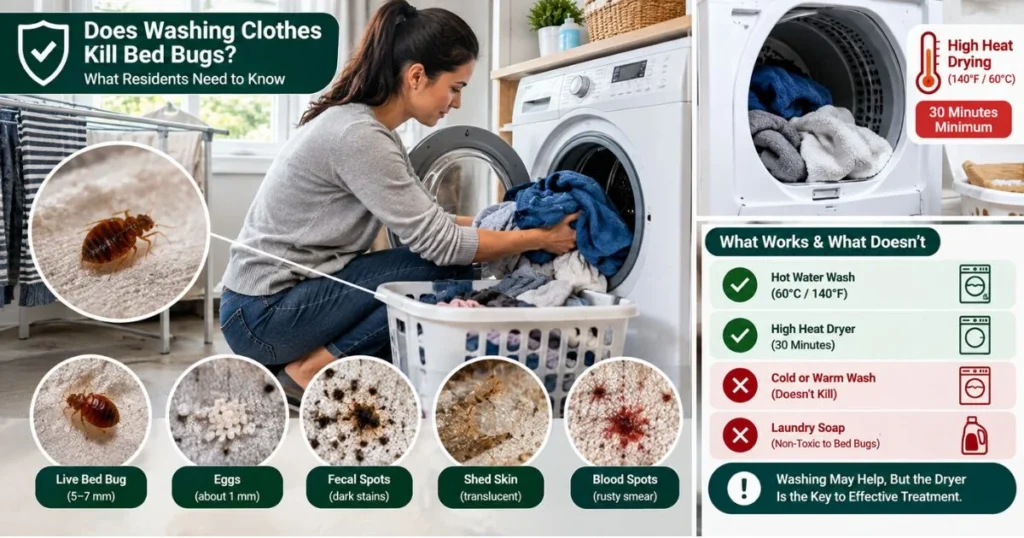
Clear access to every bed frame, baseboard, furniture underside and electrical outlet before the MECP licensed technician arrives. The Cryonite applicator nozzle needs direct line of sight to every harborage site clutter on floors blocks that access and reduces treatment effectiveness. Wash all clothing and bedding on high heat before the session. Then bag them to prevent recontamination. Install mattress encasements before treatment. They trap any surviving bugs inside the mattress and stop new harborage from forming in mattress seams after the session. Place interceptor traps under furniture legs in the days before treatment. These glue board monitors identify active harborage sites and give the technician a map of bug movement. Toronto Public Health’s bed bug reporting resource confirms that pre-treatment preparation directly affects. How thoroughly a technician can access all infestation zones in a Toronto home.
What to Expect During and After the Treatment Session
A treatment session in an average Toronto home takes 2 to 4 hours depending on infestation severity and unit size. The Pestiseed technician moves systematically through all identified harborage areas mattress seams, box springs, baseboards, and electrical outlets applying CO2 snow in a controlled pattern. Residents will see white vapor from the Cryonite applicator and may notice flushed bugs moving briefly before contact kill or vacuuming after freeze removes them. Immediate re-occupancy is standard no waiting period, no odor, no visible residue on any surface. A follow up inspection is recommended within 2 weeks to confirm elimination and catch any harborage sites the initial session missed.
Rapid Freeze vs Heat Treatment vs Steam for Bed Bugs
| Factor | Rapid Freeze (Cryonite) | Heat Treatment | Steam Treatment |
| Kill temperature | Minus 80°C at nozzle | 48°C sustained throughout room | 100°C at nozzle tip only |
| Egg kill | Yes freeze penetrates eggshell | Partial depends on heat reaching eggs | Unreliable condensation blocks penetration |
| Chemical residue | None | None | None |
| Moisture risk | Zero CO2 snow is completely dry | None | Mold risk in mattress seams and foam |
| Heat sensitive item damage | None | Vinyl windows, plastics, electronics at risk | Wooden furniture, books, electronics excluded |
| Evacuation required | No immediate re-occupancy | Yes hours of downtime | No |
| Deep crevice penetration | Yes snow vapor stream expands into voids | Partial air circulation dependent | No moisture condensation blocks depth |
| Toronto condo building suitability | High | Limited shared wall heat loss | Moderate |
FAQs
Does Freezing Kill Bed Bugs Permanently?
Rapid freeze treatment kills every bed bug and egg it directly contacts. It doesn’t prevent reintroduction from neighboring units or luggage. Encasements, interceptor traps, and follow up inspection stop reinfestation.
How Long Does a Rapid Freeze Bed Bug Treatment Take?
A standard 2 bedroom Toronto home takes 2 to 4 hours. More rooms and severe infestation sites extend the session. Each 20 pound CO2 tank covers approximately 2 average sized rooms.
Can I Stay in My Home During a Cryonite Treatment?
Yes. Cryonite treatment requires no evacuation. CO2 concentration disperses instantly at normal ventilation. Cover fish tanks during direct nozzle application localized CO2 can accumulate near the water surface.
Is Rapid Freeze Bed Bug Treatment Available in Toronto?
Yes. Pestiseed operates across Toronto and the Greater Toronto Area as an MECP licensed pest control provider. Toronto consistently ranks among North American cities with the highest bed bug reporting rates.
Ready to Address a Bed Bug Problem?
Get Professional Bed Bug Treatment With Pestiseed
From bed bugs hiding in mattress seams to activity around furniture and baseboards, Pestiseed can help you explore suitable treatment options for your home. Contact our team for a quote on bed bug treatment in Toronto and the GTA.
Licensed & Insured
Toronto & GTA
Pest & Wildlife Control