Skunks come to Etobicoke properties for 3 reasons. Unsecured garbage, grub filled lawns and dark spaces under decks pull them in. Homeowners can stop this by using animal resistant bin lids, treating grubs by June and sealing entry points with 16 gauge galvanized hardware cloth during the September to October exclusion window. Ontario’s FWCA Section 33 limits DIY trapping, and disturbing a den during kitting season risks orphaned kits. Pestiseed offers licensed skunk inspection and exclusion services across Etobicoke for cases beyond DIY prevention.
What Draws Skunks to Etobicoke Properties
Food Sources That Pull Skunks Into Etobicoke Yards
Mephitis mephitis, the striped skunk, acts as an opportunistic feeder. It digs through unsecured garbage without a tight fitting lid. Overnight pet food left outside also draws skunks in Etobicoke. So does fallen fruit and birdseed spillage near an open compost pile. Skunks forage at dusk for grubs, grasshoppers and small carrion.
Why European Chafer and Japanese Beetle Grubs Cause Skunk Digging in GTA Lawns
European Chafer and Japanese Beetle larvae live just under turf. These white grubs feed on grass root systems through summer. Skunks smell the C shaped larva and dig fast. This causes irregular dead patches and sod lifting across Etobicoke lawns. OMAFRA links peak digging to the September peak feeding period.
Shelter Attractants Under Decks, Sheds and Porches
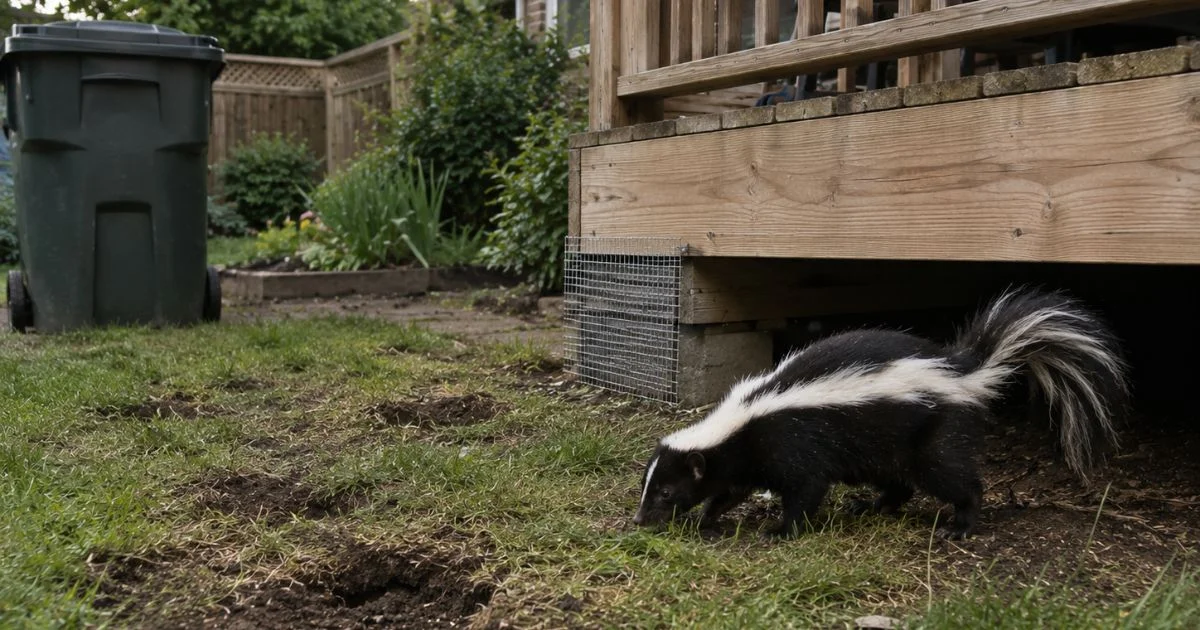
A raised wood deck creates a dark, sheltered denning site. Skunks also dig under a shed foundation gap or concrete slab opening. Wood pile and brush pile stacks offer the same cover. In Rexdale and Alderwood streets, older semi detached home foundations attract diggers. A skunk den can form fast once soil gives way.
How to Identify Skunk Activity on Your Property
Digging Patterns That Distinguish Skunks From Raccoons
A skunk digging pattern leaves a small conical hole. It measures 3 to 5 cm in diameter. This differs from raccoon turf tear damage, which shows large patch disturbance. Skunk scat also has small shallow droppings.
Skunk Warning Signs Before a Spray Incident
Skunks warn before using their musk glands. Foot stamping and a raised tail signal a threat display sequence. A short forward charge often follows hissing. Once sprayed, the thiol compound causes eye inflammation risk.
Skunk Activity Calendar for Etobicoke Homeowners
February and March Mating Season Emergence Along
Mating season starts in February to March near the Humber River. Males show male range expansion up to 8 km. This raises vehicle strike risk across Rexdale streets. Skunk spray odour increase follows soon after.
Late April to June When Dens Under Decks Go From One Skunk to Seven
Kitting season runs April to May each year. A litter averages 6 kits, ranging 3 to 9. Deck underside dens hold dependent young through June. Exclusion window between April and September when skunks are rearing young, unless the babies are mobile.
August and September Grub Digging Season on Etobicoke Lawns
European Chafer larvae peak in August. This drives lawn digging August to September damage. Sod lifting becomes visible by late summer. A grub count test works best in June.
How to repel skunks
Skunks avoid motion sensor lights and castor oil granule repellent near dens. Sealing garbage and compost bins removes food draw. Reapply repellents after rain, since rain wash off weakens their effect fast.
How to Skunk Proof Your Etobicoke Property
Remove the Food Sources First
Attractant removal priority starts with a hard sided garbage container. Use an animal resistant bin lid every night. Store pet food indoors, not as outdoor pet feeding. Switch to a closed compost bin and clear fallen fruit daily.
Seal Structural Entry Points Around Decks and Sheds
Use 16 gauge galvanized hardware cloth for sealing. Apply the L shaped footer exclusion method with a 300 mm vertical burial. Add a 150 mm horizontal foot extension outward. Run a plug test first to confirm the den is empty.
Motion Lighting and Scent Deterrents as Secondary Measures
A motion sensor light with a PIR sensor startles skunks. Castor oil granule repellent adds a scent barrier too. Reapply after rain, since rain wash off reapplication weakens it fast. These stay a secondary measure, not permanent exclusion.
DIY Method Effectiveness at a Glance
| Method | Effectiveness | Permanence | Spray Risk |
| Food source removal | High | Needs upkeep | Low |
| L footer exclusion | Highest | Permanent | Low if den checked |
| Motion lighting | Medium | Skunk habituation over time | Low |
| Castor oil spray | Low to Medium | Needs reapplication | Low |
Skunks Keep Returning to Your Yard?
Repellents and removing food sources may not resolve an active den beneath a deck or shed. Pestiseed can help assess skunk activity and discuss suitable removal and exclusion options in Etobicoke, Toronto, and the GTA.
Licensed & Insured
Toronto & GTA
Pest & Wildlife Control
Where DIY Prevention Ends in Etobicoke
Ontario Law Says About Trapping and Relocating Skunks
Ontario’s Fish and Wildlife Conservation Act 1997 limits skunk trapping. FWCA Section 33 allows some property owner trapping rights. A live cage trap needs daily inspection. Any relocation must follow the 1 km rule.
Den Removal During Kitting Season Requires a Professional
An occupied den disturbance risk rises during birthing season April to June. This can cause kit abandonment. Blind kits face 30 day kit dependency before survival odds improve. A licensed wildlife control operator should handle this instead.
Rabies Vector Status of Skunks in the Toronto Region
Mephitis mephitis counts as a rabies vector species in Ontario. Toronto’s last terrestrial wildlife rabies case dates to 1997. Bite wounds need a flush with soap and water first. Watch for rabies symptom recognition like unprovoked aggression.
FAQs
How do I know if a skunk has made a den under my deck?
Look for persistent musky smell under structure and a small conical entry hole at the deck perimeter. Scratch marks and skunk scat near the opening confirm den identification signs.
Can I use mothballs or ammonia to repel skunks?
No. Mothballs contain naphthalene, an unregistered pesticide used under Health Canada. They pose child toxicity and pet toxicity risks. Ammonia only works as a weak, temporary deterrent.
Is it legal to trap a skunk myself in Ontario?
Yes, under limits. Homeowner trapping legality allows a live trap without a licence. Southern Ontario daily trap inspection is required. Relocation stays within the 1 km relocation legal limit.
When is the safest time to seal a deck to prevent skunks from denning?
The September to October exclusion window is safest. Kits become independent by late June to July. Sealing earlier risks trapping dependent young inside the den.
Need help with a skunk under your deck?
If a skunk has made a den under your deck, shed, or porch, sealing the opening too soon can trap the animal or dependent young inside. Pestiseed provides skunk inspection and removal services in Etobicoke, including exclusion work to help prevent re-entry.
Book a skunk inspection in Etobicoke
Skunks Keep Returning to Your Yard?
Repellents and removing food sources may not resolve an active den beneath a deck or shed. Pestiseed can help assess skunk activity and discuss suitable removal and exclusion options in Etobicoke, Toronto, and the GTA.
Licensed & Insured
Toronto & GTA
Pest & Wildlife Control