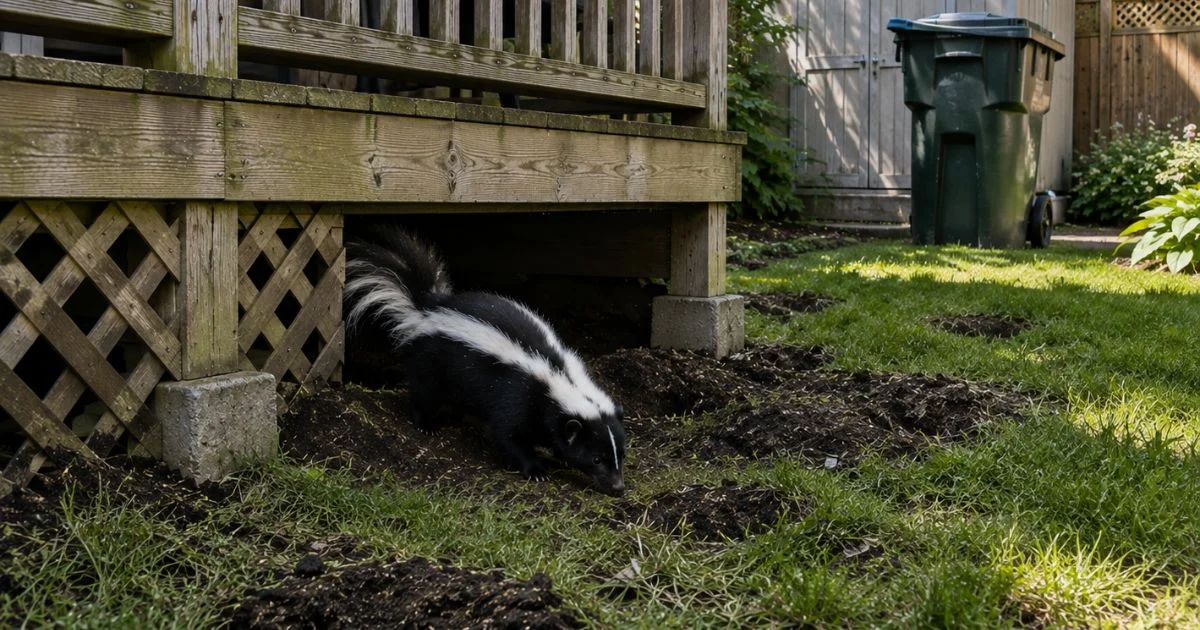
A skunk under a deck in Etobicoke is not a random event. Soft clay loam soil, active grub populations, and older wooden decks with 8 to 18 inch ground clearances create exact den conditions skunks need. The Humber River corridor moves wildlife directly into residential yards from Long Branch to Rexdale. Sealing the entrance without confirming vacancy, or removing the adult between April and June without locating kits, turns a manageable situation into a costlier one. A licensed wildlife technician with an MNRF fur bearer permit inspects the den, times the removal correctly and installs a permanent L trench barrier so the space stays closed. Ontario’s guidance specifically discusses avoiding wildlife attractants and eliminating access to places wildlife may use for dens, including openings under decks.
What a Skunk Looks for in a Den Site
Darkness and Enclosed Space as Primary Requirements
Skunks need near total darkness inside a den. The Ontario MNRF wildlife biology notes confirm striped skunks are nocturnal with poor vision in bright light. A shed underside or deck platform blocks daylight on 3 or more sides. Den entrances measure as narrow as 3 inches wide, cutting light further.
Ground Level Access and Soft Soil
Front claws drive skunk burrowing through soft, moist ground. Etobicoke’s clay loam soil stays wet longer after rain, making foundation perimeters easy to excavate. Skedaddle documents construction backfill as a top attractor for den sites. Skunks move large amounts of soil in a single evening.
Protection from Predators and Weather
Deck and shed structures block coyote access to den entrances directly. The Humber River valley in Etobicoke is an active coyote corridor, per the City of Toronto urban coyote program. Toronto Wildlife Centre confirms enclosed dens protect kits from raptors and summer heat spikes. Overhead cover cuts 2 threats at once.
What Makes Your Etobicoke Property Attractive to Skunks
Food Sources in Residential Yards
White grubs beneath lawn grass are the top food target for skunks removal in Etobicoke. OMAFRA tracks both Japanese beetle and European chafer larva cycles across southwestern Ontario lawns. Cone shaped digging patches appear overnight where grub populations run dense. Improperly secured green bins add a second food pull alongside the grub foraging.
The Humber River Corridor and Wildlife Movement
The Humber River valley runs through central Etobicoke from Islington south to Lake Ontario. The TRCA Humber River Watershed Plan identifies this ravine system as an active wildlife dispersal route. Skunks following the corridor encounter residential sheds and decks before reaching open habitat. Properties near James Gardens ravine and West Deane Park face the highest wildlife pressure.
Older Housing Stock and Wide Deck Clearances
Etobicoke carries a large share of homes built between 1950 and 1975. Many have elevated wooden decks with 8 to 18 inches of ground clearance. Lattice skirting on these structures deteriorates over decades, opening entry gaps. Long Branch, Mimico, Alderwood and Rexdale properties show the highest den access rates reported by wildlife technicians.
Signs That a Skunk Is Using the Space Under Your Shed or Deck
Burrow Entrance and Displaced Soil
Skunk burrow entrances measure 3 to 4 inches in diameter with smooth edged tunnel walls. The USDA Wildlife Services damage management fact sheet confirms fresh soil mounds sit directly adjacent to the foundation edge. Etobicoke’s clay loam subsoil appears pale at fresh dig sites, standing out clearly from dark surface topsoil. Check the shed base and deck skirt gap first.
Odor, Tracks and Droppings
Skunk spray contains thiol compounds that produce a sulfurous odor intensifying with water contact. Tracks show 5 toes with long non-retracting claw marks and heel pads roughly 2 inches long. The Canadian Wildlife Health Cooperative confirms droppings measure 1 to 2 inches long, tubular with rounded ends. Etobicoke’s spring clay loam mud from April through May leaves the clearest track impressions in garden beds.
Nighttime Activity and Pet Reactions
Dogs alerting at the back fence after dark signal active skunk movement nearby. Skunks move from dusk until around 2 AM, per Ontario SPCA wildlife interaction guidance. Cats avoid the yard entirely when a skunk den is active beneath a deck.
What Risks Come With a Skunk Under Your Deck
Spray Risk and When Skunks Spray
Skunks spray only after 3 visible warning displays: front foot stomping, tail raising, and a handstand posture. The Canadian Wildlife Health Cooperative confirms spray accuracy reaches up to 10 feet, with thiol compounds causing temporary blindness at close range. In Etobicoke’s older fenced yards, most spray events happen when a homeowner enters at dusk near an active shed entrance. Water contact amplifies thiol odor significantly.
Structural Damage and Lawn Digging
Cone shaped lawn holes measuring 3 to 4 inches across confirm active skunk grub foraging. OMAFRA tracks white grub infestations across southern Ontario turf as the primary driver of this digging pattern. Older Etobicoke homes built before 1980 often have deck posts sitting in shallow concrete pads or directly in soil. Prolonged burrowing alongside these footings causes post shifting over time.
Pets, Children and Disease Considerations
Skunks are a primary rabies vector species in Ontario. Toronto Public Health rabies data confirms cases in the Greater Toronto Area, with urban Etobicoke carrying lower but real risk. Any skunk moving during daylight hours or approaching humans without provocation needs reporting to Toronto Public Health directly. Secondary flea transmission from active dens creates a pest risk for pets and children near the deck entrance.
Baby Skunk Season and Why Timing Matters in Etobicoke
When Skunks Give Birth and How Long Kits Stay
Skunk kits are born blind and deaf in early May across the Toronto region. The Toronto Wildlife Centre confirms litter sizes run 4 to 6 kits per den. Eyes open at 3 weeks, but full mobility doesn’t arrive until August. Grub availability in Etobicoke lawns peaks during the nursing period, pulling the mother out to forage nightly while kits stay in the den.
Why Removal Is More Complicated Between April and June
One way doors installed between April and June orphan kits still inside the den. Toronto Wildlife Centre receives hundreds of orphaned baby skunk calls each year from Etobicoke, North York, and Scarborough. The Ontario Fish and Wildlife Conservation Act restricts relocation to within 1 kilometer only. Toronto Wildlife Centre guidance identifies September through December as the safe exclusion window after kits reach full mobility.
Why Blocking the Entrance Yourself Often Makes the Problem Worse
The Risk of Trapping Animals Inside
Blocking the entrance before confirming an empty den forces a trapped skunk to spray inside the enclosed deck space. Toronto Wildlife Centre’s paper test method confirms vacancy: stuff newspaper in the entrance, wait 3 full days and nights and check for disturbance. Etobicoke’s older wooden deck boards absorb thiol compounds and hold the odor for weeks after a single spray event. Kits present during sealing face entrapment with no exit.
Ontario Law on Skunk Trapping and Relocation
Ontario’s Fish and Wildlife Conservation Act classifies skunks as fur bearers requiring a trapping permit for capture. The Act prohibits relocating any wild animal more than 1 kilometre from its capture point. Most Etobicoke residential blocks sit within dense urban grids where a legal 1km release still places the animal in another homeowner’s yard. The MNRF licensed wildlife control operator list identifies which technicians hold valid nuisance wildlife permits for this work.
Is a Skunk Living Under Your Deck or Shed?
Before blocking the entrance, have the den assessed to help avoid trapping a skunk or leaving baby skunks inside. Pestiseed can help you plan skunk removal and entry-point prevention in Toronto and the GTA.
Licensed & Insured
Toronto & GTA
Pest & Wildlife Control
How to Prevent Skunks from Returning After the Den Is Cleared
Physical Exclusion Methods That Work
The L trench method stops skunks from digging back under a shed or deck. Toronto Wildlife Centre specifies a 12 inch trench lined with 16 gauge quarter inch galvanized hardware cloth, bent 8 to 12 inches outward at the base. USDA APHIS damage management guidelines confirm the horizontal leg blocks any animal digging straight down at the structure edge. Solid skirting replacing deteriorated lattice removes the above ground entry point entirely.
Yard Conditions That Reduce Skunk Attraction
Grub treatment timing determines whether skunks return to forage. OMAFRA confirmed nematode application in late August targets European chafer larvae before they reach peak depth. City of Toronto provides wildlife proof green bin lids and locks on request for Etobicoke homeowners. Fallen fruit, outdoor pet food and unsecured compost bins each function as secondary food pulls that keep skunks active in the yard after grub populations drop.
When to Call a Licensed Wildlife Technician in Etobicoke
Licensed wildlife technicians in Etobicoke must hold an MNRF fur bearer trapping permit to remove skunks legally from private property. Toronto Animal Services handles injured wildlife referrals but does not remove healthy nuisance skunks from residential structures. A technician inspects the den for kit presence, installs a one way door during the safe September to December window and completes a permanent exclusion barrier after the animal exits. Licensed skunk removal in Etobicoke covers the full process from inspection through post removal barrier installation.
FAQs
Will a skunk living under my deck leave on its own?
Some skunks leave when food sources shift or weather changes, but no reliable timeline exists. A den that worked once gets reused unless the entry point is permanently sealed after departure.
Is it legal to trap and relocate a skunk in Ontario?
Trapping requires an MNRF fur bearer permit under the Ontario Fish and Wildlife Conservation Act. Relocating a skunk beyond 1 kilometre from capture is illegal. In Etobicoke, any legal release point is another residential yard.
How do I know if baby skunks are present under my shed?
From April to September, assume kits are present when an adult skunk regularly enters the space. Listen for soft chirping in early morning hours. A licensed technician inspects the den before any removal work starts.
Can a skunk under my deck damage the foundation?
A skunk burrow rarely reaches a home’s main foundation in Etobicoke. Older homes with shallow deck footings carry higher risk. Repeated digging alongside a post causes shifting over time. Lawn damage from grub foraging appears first.
Skunks Denning Under Your Deck?
Let Pestiseed Help You Plan Safe Removal
Get help addressing skunk activity beneath your shed or deck, checking for baby skunks, and planning exclusion to help prevent the den from being reused. Contact Pestiseed about skunk removal in Etobicoke, Toronto, and surrounding GTA areas.
Licensed & Insured
Toronto & GTA
Pest & Wildlife Control