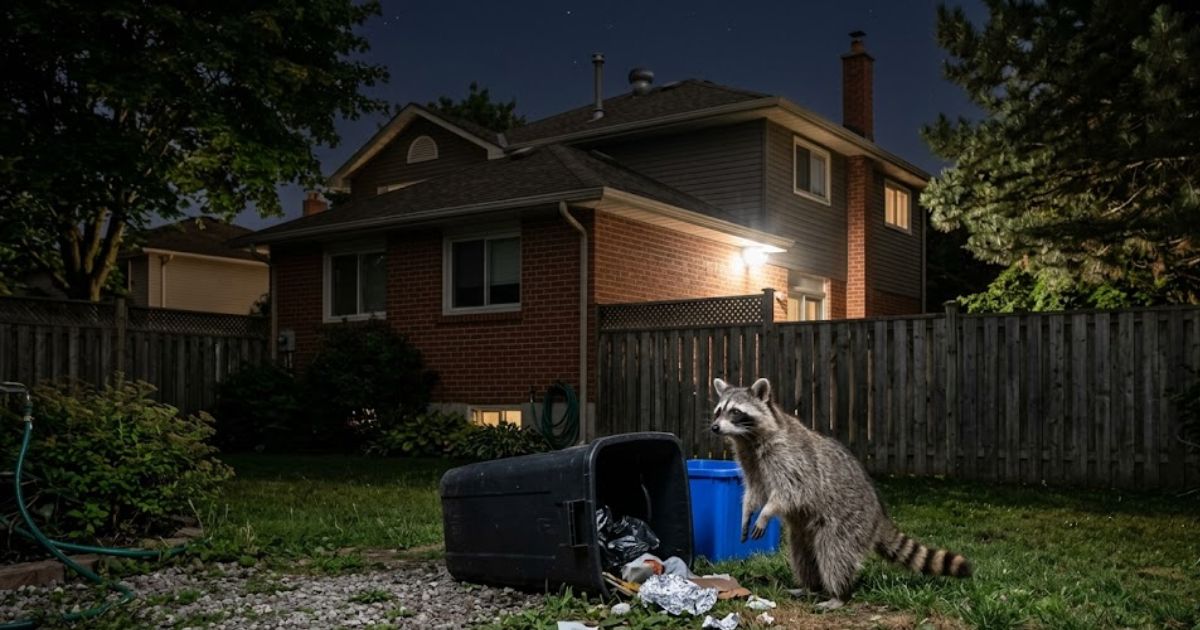
Raccoons rarely attack humans unless they feel threatened, cornered, or are protecting their young. Most encounters end with the raccoon retreating. Raccoons are one of Toronto’s most common urban wildlife problems. They live in attics, dig through garbage, and carry real health risks like Baylisascaris procyonis and leptospirosis. Most homeowners only worry about bites, but the real danger builds quietly over time. Knowing how raccoons behave gives you a serious head start on protecting your home.
This guide covers everything from raccoon encounter protocols to Ontario wildlife laws and humane removal options. You will learn when raccoons are most active, how to protect your pets, and what Pestiseed Pest Control does differently from other services in the city. Every section is built around real field experience and current public health data. Read through and you will know exactly what to do before, during, and after a raccoon problem.
How Raccoons Actually Behave Around Humans
Raccoons are not the attackers most people think. Urban wildlife adaptation has made them clever avoidants. They first try to run away from any human contact. Most Toronto homeowners never see this part.
When a raccoon feels cornered, it shifts into defensive bluff behavior. It puffs up and hisses loudly. That is not an attack. Territorial defense or maternal den protection triggers this display. Raccoon (Procyon lotor) mothers near a den are the most reactive. We have seen this pattern repeat across many Toronto properties.
Ontario Specific Health Risks Beyond Rabies
Raccoon Rabies in Ontario What the Data Actually Shows
The Ontario Rabies Surveillance Program tracks rabies virus (Lyssavirus) in wildlife closely. Geographic cluster patterns show higher activity in rural urban edges around Toronto. Wildlife vaccination programs drop bait vaccines across these zones yearly. Spillover into pets still happens when dogs contact infected raccoons near yards.
Raccoon Roundworm The Underreported Risk
Baylisascaris procyonis lives inside raccoon intestines and spreads through droppings. Raccoon latrines form in attics, on decks, and near woodpiles. Environmental parasite contamination spreads through soil, not bites. CDC parasite guidance and University wildlife parasitology studies both flag this as a seriously underreported zoonotic disease risk.
Leptospirosis and Secondary Infection Risks
Leptospira bacteria travel through raccoon urine into contaminated water sources near your yard. Dogs often catch leptospirosis after sniffing standing water touched by raccoon urine. Public Health Ontario and the Canadian Wildlife Health Cooperative both monitor this wildlife pathogen transmission risk. We find this infection pattern regularly during Toronto property inspections.
Seasonal Risk Calendar for Ontario Homeowners
| Season | Raccoon Behavior Phase | Homeowner Risk Level | Primary Risk Scenario |
| January–February | Winter lethargy, opportunistic shelter seeking | Moderate | Attic/crawlspace denning discovery |
| March–May | Mating completion, denning, kit rearing | Highest | Mother defending kits; cornered female |
| June–August | Juvenile dispersal, foraging expansion | Elevated | Young raccoons exploring new territory; food competition |
| September–November | Pre-winter hyperphagia (intensive foraging) | Moderate–High | Aggressive competition for food sources near property |
| December | Transitioning to shelter | Low–Moderate | Opportunistic entry into structures |
What to Do During a Raccoon Encounter A Decision Based Protocol
Passive Encounter Raccoon on Property Not Approaching
Start with observation distance and stay calm. Keep space between you and it. Always leave a clear wildlife retreat pathway so it can leave on its own. Remove any food or garbage nearby as non confrontational deterrence works best at this stage.
Raccoon Acting Aggressively or Moving Toward You
A defensive bluff charge looks scary but usually stops short. Watch for rabies behavioral symptoms like daytime stumbling or strange circling. Use wildlife intimidation techniques like raising your arms to increase your body size. Make loud noises and retreat slowly without turning your back.
Raccoon Has Entered Your Home or Is Cornered Indoors
Structural wildlife intrusion changes the risk escalation management level fast. Close all interior doors to limit its movement inside. Open one exterior exit and give it a clear path out. Never trap or chase it since indoor wildlife evacuation works best when the animal feels safe to leave.
You Have Been Bitten or Scratched
Wash the wound with soap and water for 15 minutes right away. Then go straight to a doctor for post exposure prophylaxis (PEP) evaluation. Follow the full rabies exposure protocol your doctor gives you. Contact your local public health unit to file a public health reporting record for this human wildlife encounter response.
Ontario Legal Framework What Homeowners Can and Cannot Do
The Fish and Wildlife Conservation Act sets clear rules for Toronto homeowners. You can trap a raccoon on your property, but wildlife relocation rules only allow release within 1 kilometer from the capture site. Dumping it far away is actually illegal here.
Humane trapping requirements mean your trap must not injure the animal. We see homeowners skip this step and face real wildlife cruelty penalties as a result. Check ins every 24 hours are required once a trap is set. Breaking these rules can cost you a serious fine under provincial law.
Raccoons Keep Returning to Your Property?
If raccoons are entering your home, nesting near your roof, or creating safety concerns around your family and pets, Pestiseed can help you explore humane removal and prevention options in Toronto and the GTA.
Pet Safety How Raccoon Risk Differs by Animal
Cats and Raccoons
Cats cross paths with raccoons most near garages and outdoor food bowls. Territorial competition at night raises the rabies exposure risk for any free roaming cat. Nighttime roaming conflict spikes in Toronto backyards between April and October. Keep cats indoors after dark to cut this veterinary zoonotic risk down fast.
Small Dogs
Small dogs face the highest size mismatch injury risk during backyard encounters. A cornered raccoon triggers defensive raccoon attacks without much warning. We have seen small breeds need vet care after brief contact near fence lines. Supervise small dogs outside at night without exception.
Large Dogs
Large dogs start wildlife confrontation escalation more often than smaller breeds do. Predator defense fights between big dogs and raccoons still carry real disease exposure risk. Domestic pet interactions with raccoons always carry wildlife defense behavior responses regardless of dog size. Even a healthy looking raccoon can transmit pathogens through a single scratch.
Raccoon Proofing Your Ontario Property
High Impact Structural Exclusion
Structural wildlife exclusion starts at the roofline, not the yard. Install roof vent covers and chimney caps before raccoon denning season hits in early spring. Soffit reinforcement stops attic entries that most Toronto homeowners never notice until damage appears. We inspect these three points first on every property visit.
Food Source Elimination
Food attractants drive roughly 80% of urban raccoon prevention failures in Toronto yards. Use garbage container locks every single night without skipping. Manage your compost in a sealed bin and pull in bird feeders before dusk. Habitat modification starts here because raccoons leave when easy food disappears.
Deterrence Measures
Motion lights startle raccoons but only slow them down short term. Ultrasonic deterrents and predator scent repellents work better once food sources are already gone. Skipping food elimination first makes every deterrent weak and temporary. Layer these tools after structural fixes for the strongest result.
Why Choose Pestiseed Pest Control for Raccoon Removal
Pestiseed Pest Control does not just trap and leave. Our licensed pest control technicians follow a full prevention first wildlife control approach on every Toronto job. We seal entry points, reinforce soffits, and install chimney cap installation and roof vent protection the same visit. That is structural wildlife proofing done right under Ontario Fish and Wildlife Conservation Act compliance.
After removal, our team handles raccoon latrine cleanup and parasite contamination removal so your attic is safe again. We apply humane eviction techniques that meet legal wildlife relocation limits set by Ontario. Rabies exposure guidance comes standard with every service call at no extra cost. From emergency raccoon removal to full raccoon exclusion service, Pestiseed covers wildlife disease risk management, pet safety protection, and property damage prevention all under one visit.
FAQs
Can a healthy raccoon attack without provocation?
Healthy raccoons almost never attack without a reason. They prefer to run first. Defensive behavior triggers only when cornered, threatened, or protecting young. Unprovoked attacks are rare but possible with food conditioned urban raccoons in Toronto.
Should I be worried if a raccoon was near my child?
No immediate danger exists if there was no direct contact. Watch your child for any scratches. Keep kids away from wildlife activity zones in your yard. Call Pestiseed Pest Control if raccoons return regularly near play areas.
What happens if my vaccinated dog is bitten by a raccoon?
Take your dog to a vet the same day. A rabies booster vaccination is usually recommended right away. Your vet will set an observation period based on the bite. Do not wait even if your dog seems completely fine.
Is a raccoon roundworm dangerous if there is no bite?
Yes, Baylisascaris procyonis spreads through soil and fecal particles. No bite is needed for infection to occur. Children playing near raccoon latrines face the highest exposure risk. Wash hands thoroughly after any outdoor contact near wildlife areas.
How do I know if a raccoon has been using my attic as a latrine?
A strong ammonia odor coming from your ceiling is the first sign. You may also spot dark feces piles near attic corners. Parasite contamination risk makes this a health issue, not just a mess. We recommend a professional wildlife inspection and full biohazard attic cleanup immediately.
Book your Professional Raccoon Removal today
Raccoon attacks on Toronto properties escalate fast when ignored. Urban raccoon conflict grows every spring as dens form in attics and soffits. Aggressive raccoon behavior near kids or pets puts your whole household at risk. Pestiseed Pest Control Etobicoke responds fast with emergency raccoon removal before small problems become serious ones.
Our licensed wildlife control service uses humane raccoon eviction methods that meet Ontario regulations. Every visit includes a full property scan to catch human raccoon encounters before they repeat. Wildlife exclusion service seals the spots raccoons use to re-enter your home. Book your professional raccoon removal today and stop the risk before it reaches your door.
Raccoons on Your Property or in Your Attic?
Get Help With Removal and Prevention
Whether raccoons are entering your attic, returning to your yard, or leaving behind droppings, Pestiseed can help you explore suitable removal, cleanup, and exclusion options. Contact us for a quote for your Toronto or GTA property.