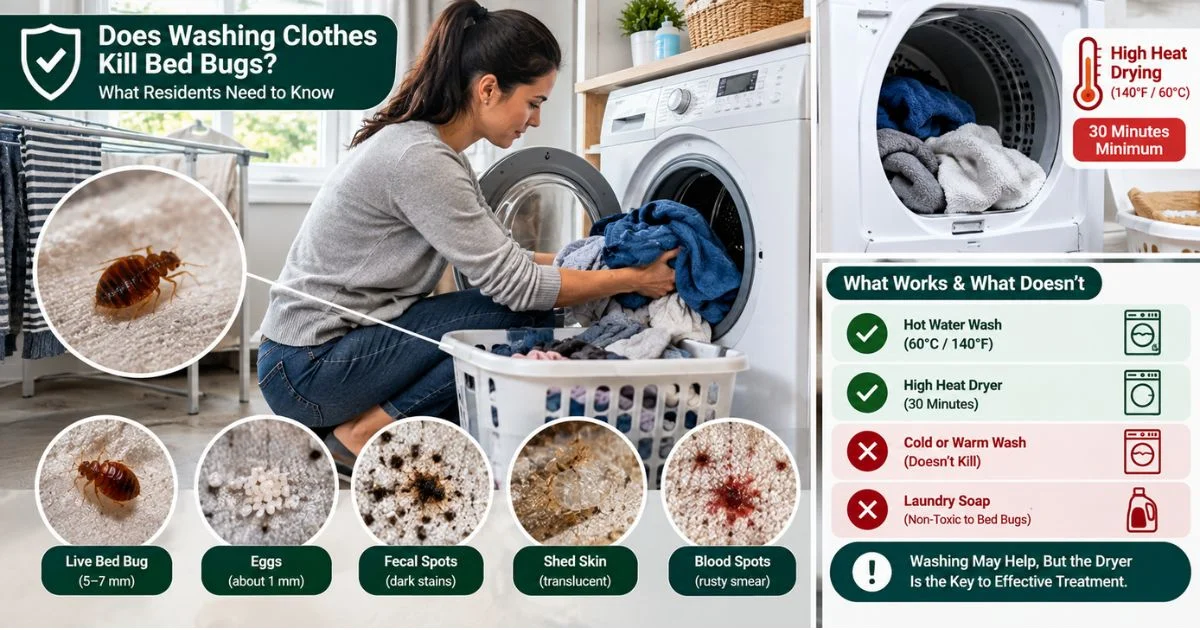
Washing alone may not kill bed bugs. High heat drying is an important treatment step for clothing that can safely go into a dryer. Bed bugs can get onto clothing and other fabric items, particularly when those items come into contact with an infested area. Washing can help, but the dryer is an important part of treating clothing because high heat can kill bed bugs and eggs. The EPA recommends drying bed bug exposed clothing on high heat for 30 minutes. Shared laundry rooms in Rexdale and the M9W postal zone add extra risk. Laundry cleans clothes. It doesn’t clear bugs from mattress seams or baseboard crevices.
Can Bed Bugs Live on Clothing?
How Bed Bugs Use Clothing as a Travel Route
Bed bugs can move onto clothing when garments come into contact with an infested surface. A jacket or other item left on a hotel bed, upholstered furniture, or another area where bed bugs are present can pick up bugs. Bed bugs may also hide in folds, seams, cuffs and other areas of clothing while the garment is being moved. Keep potentially exposed clothing contained during transport. A sealed plastic bag can help prevent bugs from moving to other areas before the clothing is treated. A thrift store garment or shared laundry facility carries passive infestation spread into clean homes through bag contact point and laundry hamper contact.
What Bed Bug Signs Look Like on Fabric
Bed bug fecal spots can appear as small dark stains on fabric, while blood spots may appear after a person has been bitten or after a bug is crushed. Blood stain on fabric appears as a rust smear near the seam fold concentration zone. Shed skin, cast skin and moulted exoskeleton sit at cuff inspection points as translucent flakes. A bed bug egg measures exactly 1mm, shows a cream coloured tone, and uses sticky adhesive coating for fabric fibre attachment. A live bug on fabric is a reddish brown insect with a flat body and 5 to 7mm body length roughly apple seed size. Naked eye detection spots frass and nymph skin under strong light during visual inspection.
What Washing Does and Does Not Do to Bed Bugs
Role of Water Temperature in Killing Bed Bugs
Water must reach 60°C the 140°F water temperature to achieve a sustained kill through thermal penetration. A cooking thermometer confirms whether your water heater setting delivers 60°C minimum water heater output. Washing alone may not kill bed bugs. When clothing can safely tolerate high dryer heat, use the dryer according to the recommended treatment guidance. Run a water heater audit before trusting any hot cycle setting especially with Canadian Energy Star appliances that limit output for efficiency. The heat not chemical killing mechanism requires sustained heat exposure reaching every seam fold heat reach point, not just surface fabric.
Do Bed Bug Eggs Survive the Washing Machine?
Bed bug eggs resist heat longer than adult bugs at every life stage resistance hierarchy level. Each egg uses sticky adhesive coating and fabric fibre bond at the seam attachment point holding firm through physical agitation. The egg kill threshold sits at 49°C. That’s the 120°F egg kill threshold held for a 90 minute sustained heat requirement. Most home washers never sustain that temperature long enough for egg destruction. A 6 to 10 day hatch cycle means surviving eggs trigger population rebound within days. Egg viability stays high after a standard wash due to temperature duration relationship failure. Ignoring multiple life stage treatment leaves reinfestation risk active through egg to nymph development and nymph hatch window completion.
Why Cold and Warm Water Cycles Leave Bed Bugs Alive
Physical agitation causes dislodgement without killing, spreading bugs into drain pipes or machine seams. Water below the 45°C body temperature threshold delivers cold wash failure every time. Detergent non toxicity confirms soap resistance; no laundry soap kills bed bugs at any concentration. A warm wash unreliability pattern appears in repeated wash cycle inefficacy reports across Etobicoke units. Population redistribution risk after a cold wash moves bugs not eliminates them. Cold treatment requires -19°C cold treatment threshold held for a 4 day minimum freeze duration beyond any home freezer inadequacy in a standard kitchen unit.
Why the Dryer Matters More Than the Washing Machine
Minimum Time and Heat Setting for Effective Drying
Etobicoke renters using shared laundry rooms need the hottest tolerable fabric setting not medium. A 30 minute minimum uninterrupted cycle delivers timed heat exposure through every fabric layer. Loosely loaded drum and single layer loading allow residual heat to penetrate seam folds where eggs cluster. Check the fabric care label first cotton setting tolerates 140°F optimal dryer temperature while synthetic fabric setting caps lower. Clean the lint trap pre-cleaning before every treatment cycle blockage drops internal drum temperature fast. Post cycle monitoring confirms complete drying before removal with no cool spots remaining. A proper uninterrupted cycle achieves all life stage kill adult kill, nymph kill and egg kill in one dryer cycle duration.
Items That Cannot Go in the Dryer and What to Do Instead
Non dryer items such as silk garments, wool garments, leather goods, and decorated garments need alternative heat methods. Shoe treatment and boot treatment use portable steam treatment with spot steam application directly into lining seams. A stuffed toy treatment or backpack treatment fits inside a sealed bag freezing method at the -19°C freeze threshold for a 4 day minimum freeze duration. Verify home freezer temperature verification with a thermometer most kitchen freezers don’t hold 0°F freeze threshold consistently. Dry clean only items and embellished clothing go to a professional heat chamber using a heat treatment chamber at controlled temperature. All treated items go into airtight bag isolation immediately after re-entering any room.
Safe Laundry Protocol for Bed Bug Exposed Clothing
Step 1 Contain and Bag Before Moving Items
Direct bagging in infested rooms stops corridor contamination before it starts. Use a zip lock bag for small items and a large garbage bag for bulk loads. No floor contact during move and no loose transport blocks laundry room cross contamination in Etobicoke shared building corridors.
Step 2 Wash and Dry at the Correct Settings
Hot cycle selection at 60°C water minimum is the only setting that kills bed bugs. Run water heater verification first Etobicoke water heater settings often fall below Ontario hot water delivery standards. Transfer clothes immediately wet garment exposure risk rises fast without immediate dryer transfer. Set high heat dryer setting for a 30 minute uninterrupted dryer run. Dispose of the single use sealed bag after unloading in an outdoor bin.
Step 3 Store Clean Items in Sealed Containers
Sealed storage inside an airtight container or clean sealed bag protects treated clothing instantly. Placing items in an untreated room opens an hour to recontamination window bugs return within 2 hours. Apply wardrobe restriction, drawer restriction and closet restriction during active infestation until a post treatment safe zone is confirmed. Run weekly inspection windows across a 4 week post treatment monitoring period.
Handling Dry Clean Only and Delicate Items
Bed bug exposure disclosure at drop off is required to never skip professional cleaner communication. Establishment refusal risk is real use sealed bag transport to cleaner to protect your car and reception areas. Leather goods freeze treatment, shoe freeze treatment and stuffed toy freeze treatment all follow the same delicate fabric freeze method or steam treatment alternative with professional steam application.
Still Finding Signs of Bed Bugs After Laundry?
Washing and drying exposed clothing may help, but bed bugs can remain hidden in mattress seams, bed frames, and furniture. Pestiseed can inspect likely hiding areas in your Etobicoke home and recommend appropriate treatment options.
Licensed & Insured
Toronto & GTA
Professional Pest Control
Why Laundry Alone Does Not Clear a Bed Bug Infestation in Etobicoke
Where Bed Bugs Actually Live in an Etobicoke Home
Mattress seams, box spring fabric and bed frame joints form the primary harborage zone within the 1.5 metre host proximity zone. Baseboard crevices, electrical outlet voids, wall to floor joints, and nightstand cracks all serve as secondary harborage sites. Pre-war wood frame construction in The Kingsway older housing stock and Islington Village rental units creates increased crevice density raising older housing harborage risk fast. Upholstered furniture voids, carpet edges, and headboard seams hide bugs far from any wash cycle.
Shared HVAC and Multi-Unit Recontamination in Etobicoke Buildings
Shared HVAC systems and shared ductwork create an airflow pathway for inter unit spread across three floor spread distances. M9B condo towers, M9R apartment buildings, Mimico waterfront condos, and Rexdale social housing clusters all run centralized heating systems linking units directly. High tenant turnover and August through October introduction season push bugs through ducting transfer mechanisms from a neighbour unit infestation source. An untreated adjacent unit triggers post laundry recontamination within days. HVAC inspection gaps and landlord inspection delays keep re-exposure after laundry repeating.
Move from Laundry Management to Professional Assessment
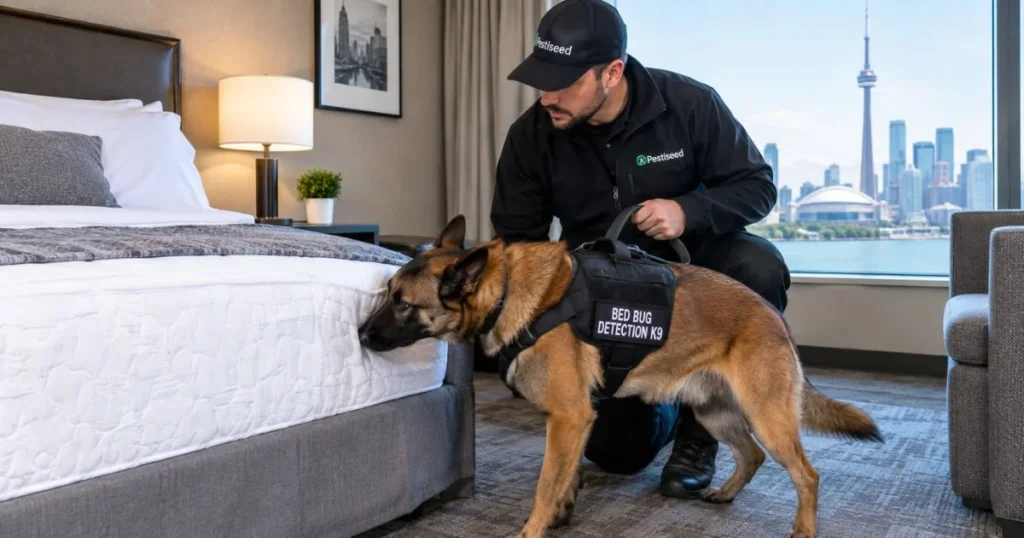
Continued biting after laundry is the clearest inspection trigger signal call Pestiseed immediately. Fecal spots on furniture, fecal spots on walls, fecal spots on baseboards, and a sweet musty odour all confirm post laundry activity. We can inspect the property for signs of bed bug activity using trained detection methods and a manual inspection of likely hiding areas. Pestiseed provides full infestation scope assessment and treatment recommendation for bed bug extermination in Etobicoke.
FAQs
Does Washing Clothes Kill Bed Bug Eggs?
Washing alone does not kill bed bug eggs. Eggs survive unless water reaches 60°C sustained wash temperature. Their egg adhesive bond holds at seam attachments through agitation. The dryer as egg kill mechanism at high heat for 90 minutes sustained heat destroys them fully.
Can I Just Dry My Clothes Without Washing Them First?
Dryer first treatment works the EPA IPM dryer guidance confirms dryer effectiveness independent of wash. Set high heat setting for a 30 minute dryer minimum with loose drum loading. Washing first removes frass, shed skin and loose insects before drying.
How Long After Bed Bug Treatment Can I Put Clothes Back in Closets?
Heat treatment allows same day re-entry for closets. Chemical treatment re-entry requires a 4 to 6 hour minimum post chemical wait. Always follow MECP licensed technician guidance Etobicoke treatment re-entry standard varies by product. Return only hot washed clothing after the treated space cooling period ends.
What Should I Do With Clothes I Cannot Wash at Home?
Use dry cleaner disclosure at drop off state bed bug exposure clearly. Transport in a sealed bag to prevent spread. Apply -19°C freeze treatment for a 4 day minimum freeze for leather goods, shoes and stuffed toys. Professional steam treatment works as a heat chamber alternative.
Still Seeing Signs of Bed Bugs?
Get a Professional Bed Bug Assessment
Laundry alone cannot address bed bugs hiding in mattresses, furniture, and other areas of your home. Pestiseed provides bed bug inspection and treatment recommendations in Etobicoke and across the GTA.
Licensed & Insured
Toronto & GTA
Pest & Wildlife Control