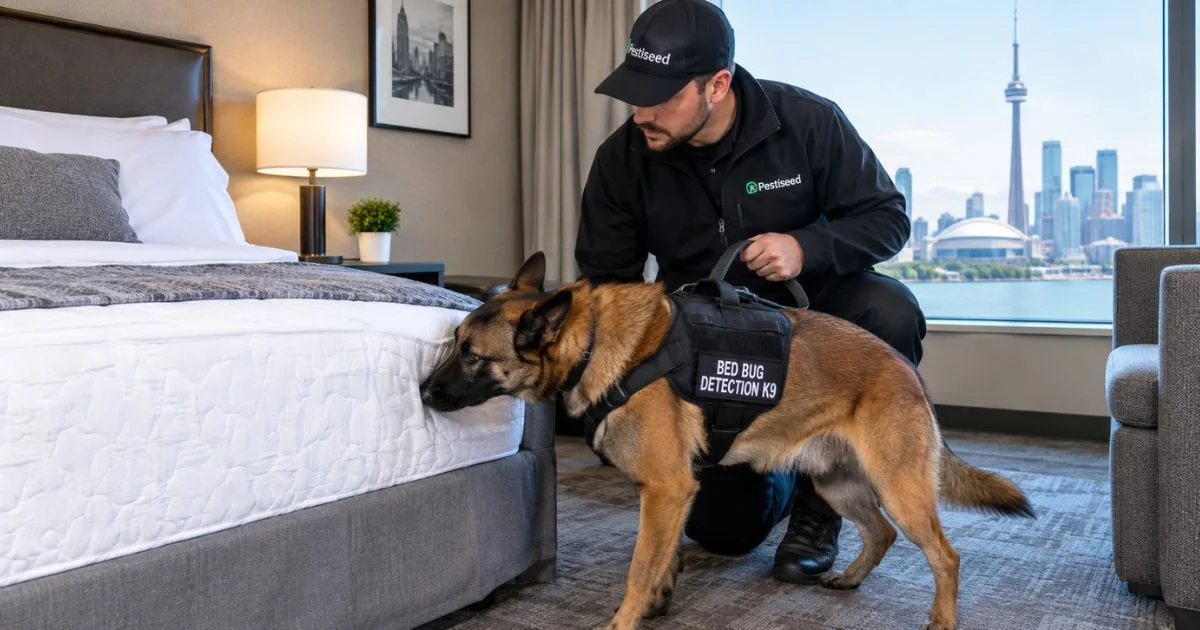
Bed bugs can be difficult to locate when activity is limited or concentrated in concealed areas. K9 detection can help identify suspected odour sources that may be difficult to locate during a visual inspection. We send a certified K9 handler to locate live bed bug odour fast. Pestiseed’s trained K9 teams are used to locate suspected bed bug odour in areas that may be difficult to inspect visually. Property managers receive a written inspection report documenting the areas inspected, K9 indications and technician findings.
What K9 Bed Bug Detection Is and How It Differs from Visual Inspection
What detection dogs are trained to detect
Detection dogs use their sense of smell to locate target bed bug odours. Research has shown trained dogs can detect live bed bugs and viable eggs under controlled conditions. A K9 indication identifies an area where the dog detects a target odour. The indicated area should then be assessed according to the inspection protocol before treatment is recommended.
Visual Inspection Alone Misses Low Level or Concealed Infestations
Cryptic behaviour hides bugs inside a mattress seam, wall void, or electrical outlet interior. A nymph stage bed bug fits inside a baseboard crack or headboard crevice undetected. Visual inspection can be difficult when bugs or signs of activity are located inside seams, cracks, furniture joints or other concealed areas. Fecal spotting, blood stain and shed exoskeleton stay hidden inside furniture joints and picture frame backs. Visual evidence absence is common at early stage infestation levels across Etobicoke homes.
Bed Bug Detection Dog Works During an Inspection
Handler Role and Systematic Search methodology
The certified K9 handler completes a pre-entry area check before the dog enters. Hazard assessment before entry protects both dogs and residents during room coverage. Handler guidance controls the search pattern across every surface. Annual recertification and quarterly re-evaluation maintain independent third party certification standards for every Etobicoke inspection.
What the Dog Detects: Live Bugs, Viable Eggs and Scent Residue
Live bed bug detection and viable egg detection happen without any pesticide application. A trained detection dog can indicate areas where bed bug odour is present, including concealed areas that may be difficult to inspect visually. A pest control technician should then visually verify the indicated location before treatment is recommended. Nymph detection and adult bed bug detection both rely on biological material scent. Scent residue detection reveals post treatment scent traces in rooms treated weeks earlier.
What a K9 Alert Means and Why Visual Confirmation Follows
A K9 alert identifies a location where the dog detects the target odour. The handler records the indication and identifies the suspected source area. A pest control technician then assesses the indicated location for physical evidence. This confirmation step gives the property manager more information before deciding whether treatment or further inspection is appropriate. The inspection report records the indicated locations and the technician’s findings so the property manager can determine the next step.
Suspect Bed Bugs but Can’t Find Visible Evidence?
K9 bed bug detection can help identify areas that need closer investigation. Pestiseed can help property owners and managers assess suspected activity and determine whether further inspection or treatment is appropriate.
What K9 Bed Bug Inspection Accuracy Means in Practice
Factors That Affect Detection Performance in the Field
Several conditions can affect a canine search, including recent treatment, airflow, room conditions, clutter and the dog’s working condition. We should explain which conditions require preparation, additional verification or rescheduling. Inspection duration depends on the property, search area, environmental conditions and the inspection protocol. Carpet versus hard floor, enclosed space and seasonal temperature variation all change how scent travels during room coverage.
The Difference Between a Canine Indication and a Confirmed Infestation
A K9 indication means the dog detected scent not a confirmed infestation. Visual confirmation requirement and physical evidence requirement follow every scent alert interpretation. The indication to confirmation sequence includes a live bug sighting or viable egg identification by a technician. Skipping the diagnostic step creates indication misinterpretation and over reliance risk. Every responsible inspection protocol in Etobicoke treats the alert without confirmation as a starting point, never a treatment ready determination.
What happens during a K9 bed bug inspection in Etobicoke
Preparation Requirements Before the Dog Enters the Property
Clothing removal from floor and open drawer preparation reduce scent interference. Reducing clutter gives the handler better access to areas where bed bugs may be suspected. Pesticide residue restriction applies to any recently treated area dogs can’t work near chemical traces. Bed bug receptacle access and closet organisation open hidden harbourage locations before the dog enters. The handler pre-entry check and dog safety assessment confirm the space meets search standards.
How the Inspection Proceeds From Arrival to Findings Report
Handler arrival begins with a full property walkthrough step before searching starts. The dog works through a room by room search while the handler tracks every K9 alert marking. Suspected location flagging and affected area identification happen in real time during handler note taking. A comprehensive inspection report documents every confirmed detection area and activity level assessment. Etobicoke clients receive next step guidance including monitoring recommendation or treatment recommendation plus a discreet inspection option with an unmarked vehicle option.
When K9 Bed Bug Inspection Makes Sense
Situations Where Canine Detection Is Particularly Well Suited
Suspected activity without visual confirmation is the strongest case for K9 inspection. Multi-unit building sweeps and adjacent unit checks cover large Etobicoke properties fast. Hotel inspection, short term rental inspection and high turnover property inspection all benefit from building wide sweep efficiency. School inspection, office inspection, and theatre inspection involve non bedroom site inspection where visual checks miss hidden bugs. Proactive inspections can help identify areas requiring further investigation when no confirmed infestation has yet been found.
Situations Where Another Inspection Approach May Be More Appropriate
Visible live bug evidence removes the need for canine detection. A large established infestation requires infestation extent mapping and a full severity assessment requirement. Treatment ready situations need a pest management plan requirement not a scent search. Chemical treatment decision and heat treatment decision both follow a professional pest assessment priority. Visual evidence present triggers an immediate treatment trigger, making treatment protocol selection the next step not another canine detection sweep.
How Housing Stock Shapes K9 Bed Bug Inspection Needs
Older Rental Buildings in Rexdale and the Islington Corridor
Multi-unit properties can require inspection beyond the unit where activity was first reported. Pestiseed provides K9 inspection sweeps for affected and adjacent units when a property manager needs to assess the extent of suspected activity. Shared heating systems push building wide bed bugs spread through every duct pathway silently. Adjacent unit spread hits neighbours fast in Rexdale multi-unit properties. Pestiseed inspects Thistletown and Humber River proximity buildings using certified K9 teams trained for older building construction.
K9 inspections for multi-unit properties in Etobicoke
Islington City Centre condominiums in the M9B postal code face weekly transient population pressure. Airbnb properties along Dundas Street West and Islington Avenue create rapid guest turnover cycles. Shared elevator exposure and shared laundry room exposure drive inter unit spread across condominium buildings fast. Condo bed bug spread escalates without a building management protocol. Pestiseed provides K9 inspection sweeps for multi-unit properties to help property managers identify suspected bed bug activity across affected and adjacent units.
Property Managers and the Ontario Inspection Documentation Context
RTA section 20 gives every landlord a clear pest control obligation under the Ontario Residential Tenancies Act. Property managers can retain inspection reports as part of their property records. Pestiseed should specify what information its reports contain.
FAQs
Can a Bed Bug Detection Dog Find Eggs as Well as Live Insects?
Research has shown trained detection dogs can detect viable bed bug eggs under controlled conditions. Pestiseed should explain the specific training and verification protocol used by its K9 team.
How Long Does a K9 Bed Bug Inspection Take?
Single room inspection time runs 2 to 3 minutes. A full apartment inspection duration averages 30 minutes. Same day results give K9 a clear time advantage over visual inspection in every multi-room inspection.
Is K9 Detection Safe for Children and Pets?
Chemical free inspection means no pesticide applied at any point. The K9 inspection itself does not require pesticide application. A pre-entry hazard check confirms safe indoor use inspection without evacuation requirement for families and pets.
Can a K9 Inspection Confirm That a Property Is Bed Bug Free After Treatment?
A K9 alert is an indication, not by itself confirmation of an active infestation. Pestiseed should explain how the handler and technician verify an alert before recommending treatment.
Suspect Bed Bugs in Your Property?
Get Professional Inspection Support
Whether you’re investigating suspected activity in a home, rental, hotel, or multi-unit building, Pestiseed can help assess your bed bug inspection needs in Toronto and the GTA. Contact us to discuss K9 detection and appropriate next steps.