Myth 1: Bed Bugs Only Infest Dirty or Low Income Homes
Toronto’s Luxury Buildings Face the Same Bed Bug Risk as Any Other
Bed bugs don’t care about your income or how clean your home is. Carbon dioxide, body heat, and blood are the only things that trigger their host detection system. Every warm blooded body that breathes and sleeps sends out biological cues these ectoparasites are wired to follow. A Cimex lectularius doesn’t read your lease price before feeding.
High rise condos in Yorkville, Airbnb rentals, and upscale hotels in the downtown core face equal infestation risk as any budget space. Luggage and suitcases hitchhike bed bugs from one guest room to the next, regardless of star rating or room cost. High turnover in Toronto’s hospitality spaces and multi-unit dwellings creates constant transfer opportunities for this equal opportunity pest. Filth is irrelevant to their nocturnal feeding cycle. How to identify bed bugs in your Toronto home , not the root cause.
Myth 2: You Can Only Get Bed Bugs from International Travel
Bed bugs spread through domestic acquisition just as fast as overseas trips. A used couch from Facebook Marketplace, an office chair from a colleague, or a seat on the TTC all carry real infestation pathway risk. The Toronto Transit Commission runs packed subway cars and buses daily where hitchhiker bugs crawl between bags and clothing. Second hand furniture picked up from a neighbourhood curb skips every inspection protocol entirely.
Neighbouring units share routes through cracks in walls, electrical outlets, and baseboards in Toronto’s dense multi-unit buildings. Bed bugs are thigmotrophic, meaning they press tight into hidden hiding spots along shared walls. One infested unit becomes an acquisition route for every room beside it. We’ve pulled live bugs from baseboards in units three doors down from the original source. Movie theaters, workplace seating, and a friend’s apartment all serve as contact points where a new host gets chosen. Complete bed bug treatment guide by tracing every possible local spread vector, not just recent travel history.
Myth 3: Bed Bugs Spread Disease and Make You Seriously Ill
Unlike a mosquito or tick, bed bugs carry no confirmed transmission of any pathogen to humans. Both Health Canada and the CDC classify them as a public health nuisance, not a disease transmission vector. Their bites trigger an immune response that shows up as red welts, swelling, and itchy skin irritation. Heavy scratching breaks skin and lets bacteria enter, which causes secondary infection in rare cases.
The real health risk bed bugs create is psychological. Toronto Public Health documents rising anxiety, sleep deprivation, and hypervigilance in people dealing with active infestations. The Canadian Mental Health Association links prolonged stress from pest problems to depression and sleep disorder patterns. Paranoia around bites and inflammation adds a serious emotional impact on wellbeing. We see clients in Toronto skip treatment out of unnecessary panic about getting sick, when the bigger documented damage is mental health decline from nights of broken sleep. A clinical rash or allergic reaction needs a doctor. The psychological damage from no sleep needs a bed bug solution fast.
Myth 4: Bug Bombs and Over the Counter Foggers Will Eliminate the Infestation
Why Foggers Fail Against Bed Bugs
Foggers fail because of basic penetration physics. Cimex lectularius hides deep inside mattress seams, crevices, baseboards, and behind curtain rods due to its harborage behaviour. Aerosol mist from a fogger never reaches those spots. PMRA data confirms that overused products with weakened active ingredients trigger pesticide resistance, just like DDT resistance did decades ago. A contact killer sprayed into open air hits nothing hiding in electrical outlets or under a headboard. That dispersal behaviour actually pushes bugs deeper into furniture and cracks, making the problem worse.
Health, Safety, and Professional Treatment
Enclosed apartment and condo fogger use creates serious fire risk and respiratory hazard. Food surface contamination in kitchens adds another health damage layer most people miss. In Toronto, many rental agreement terms and condo corporation rules treat self applied foggers as a bylaw violation, carrying a real penalty. A licensed exterminator using thermal remediation at 120°F sustained temperature kills bugs at every life stage. Pestiseed and other Ontario Ministry of Environment regulated providers combine heat treatment with PMRA approved chemical treatment under a full IPM plan. Steam and cryonite treatments for bed bugs, targeted non chemical methods, multi-visit follow up, and monitoring as a long term strategy no DIY space heater replicates.
Myth 5: Throwing Out Your Mattress or Furniture Gets Rid of the Problem
Bed Bugs Live Far Beyond Your Mattress
Bed bugs are thigmotrophic, meaning they press into tight cracks and crevices across every surrounding surface. Your box spring interior, baseboard, wallpaper, picture frames, and electronics all serve as active harborage zones. Dragging an infested mattress through a hallway or common area deposits bugs along every surface it touches. We pull live bugs from curtain rod brackets, outlets, and clothing in rooms where the mattress left weeks ago. Bugs hide in furniture seams, behind headboards, inside nightstands, and under curtains because body contact with the bed is not their only trigger. This pest is simply not bed confined, and removing one piece of furniture changes nothing about the scale of the hiding spots left behind.
Toronto Disposal Rules for Infested Items
The City of Toronto Solid Waste Management sets strict disposal rules for infested items that most residents skip entirely. Infested furniture and infested mattress pieces require proper sealing and a clear labelling protocol before curbside pickup. Skipping these steps breaks bylaw rules enforced by Municipal Licensing and Standards. Improper disposal in a condo or apartment building triggers neighbourhood spread fast. Unsealed infested items left in shared waste areas cause neighbour spread through the whole building. Follow Toronto regulation and guidelines for waste collection and responsible disposal to stop the problem at your door.
Myth 6: Bed Bugs Are Too Small to See Without a Magnifying Glass
Spot Them Yourself Before Calling an Exterminator
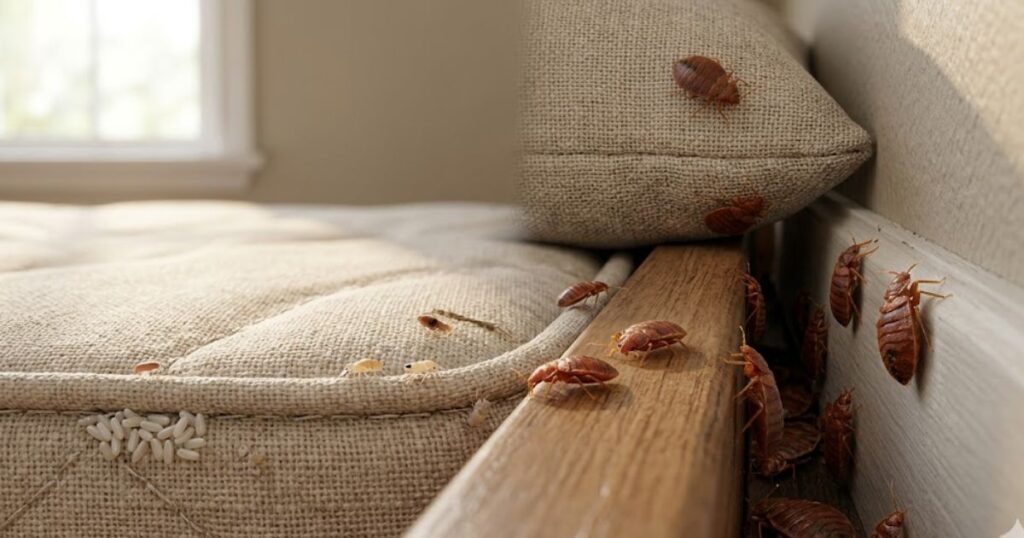
An adult bed bug measures 4mm to 5mm, roughly the size of an apple seed, and shows up clearly to the naked eye. A nymph runs about 1mm, closer to a sesame seed, and stays translucent when unfed. After feeding, that same nymph turns reddish brown through a clear colour progression tied to each blood meal. Their flat body and cryptic daytime hiding pattern makes them easy to miss without a proper visual inspection.
Your Pre-Call Inspection Checklist
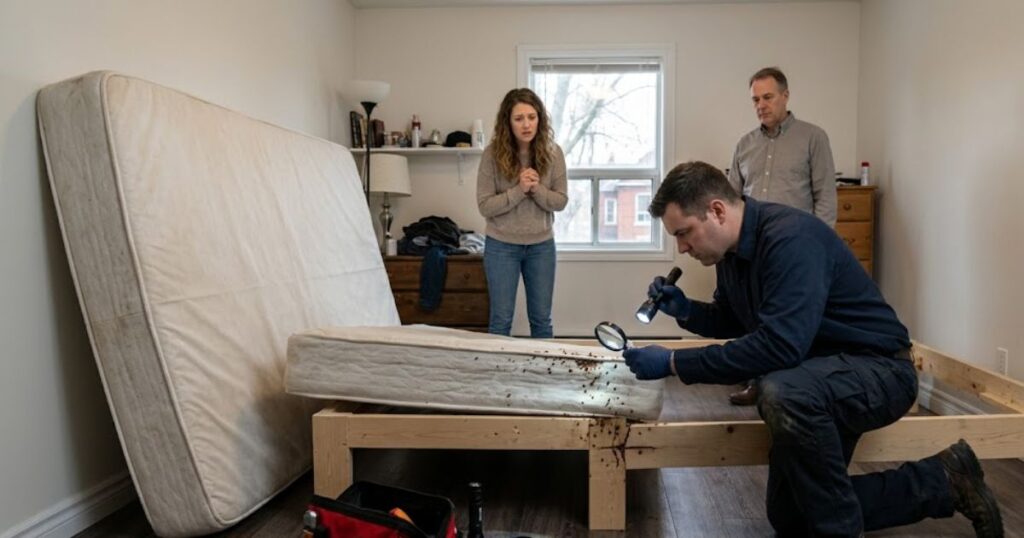
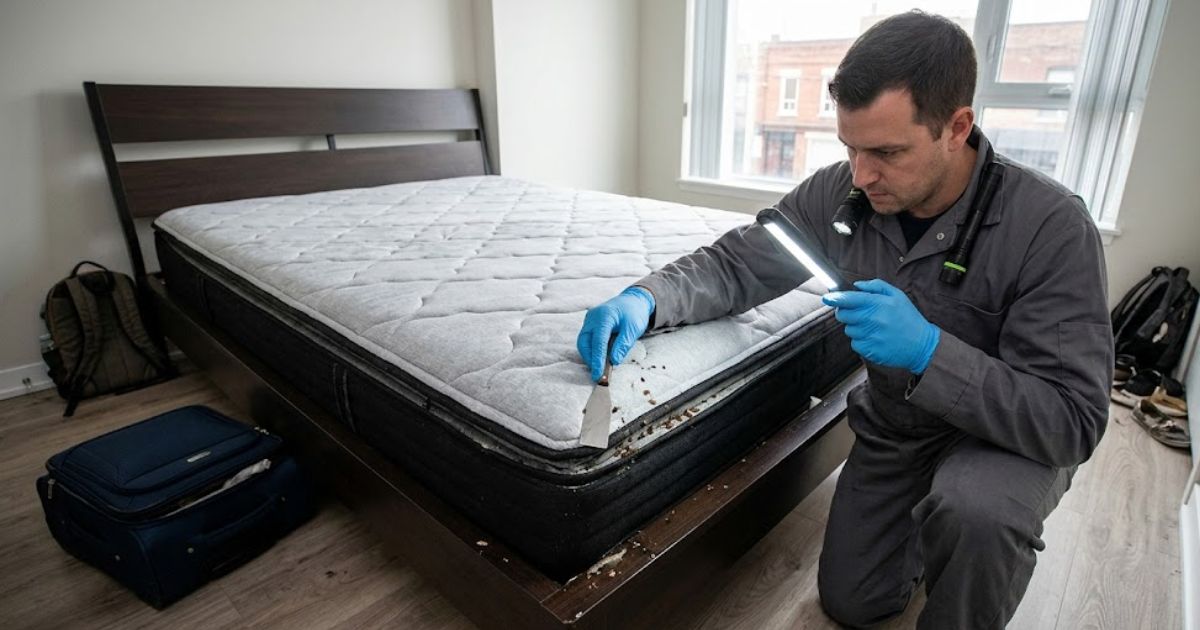
Run your thorough inspection across mattress seams, mattress tags, and box spring interior joints first. Check headboard joints, outlet plates, switch plates, baseboards, and carpet edges for fecal spots and rust brown stains. Shed exoskeletons along upholstered furniture seams and blood smears on sheets rank as the strongest early signs of active infestation. Blood stains and feces near electrical outlets, curtain rod brackets, and bed frame corners complete a full room inspection checklist. We use this exact inspection checklist of what to expect after a bed bug treatment before any early detection treatment starts.
Myth 7: Expensive Hotels Are Bed Bug Free
Star Ratings Do Not Stop Luggage Transfer
A four star or five star hotel room carries the same travel risk as any budget motel on the strip. Bed bugs don’t read linen thread counts or check room cost before they hitchhike. Every traveller who checks in carries luggage that sat in a previous room, a car trunk, or an airport carousel. That suitcase becomes the real acquisition route, not the hospitality grade of the building.
The transfer mechanic works fast. A bug leaves one visitor’s clothing and moves into the luggage rack beside your bag within hours. Toronto’s hospitality industry welcomes millions of visitors yearly across Airbnb rentals, hostels, and luxury hotel properties downtown. No amount of staff training, reputation management, or routine room inspection stops an infested bag from walking through the front door. Post travel luggage inspection at home stays your strongest defence after any vacation or rental stay. Pull your bag apart on a hard floor, check every seam, and never place travel bags on upholstered surfaces after returning to your Toronto home.
Myth 8: Bed Bugs Only Bite at Night
Bed bugs are opportunistic, not strictly nocturnal. Their feeding behaviour tries to host inactive moments, not nighttime hours on a clock. A nurse finishing a 12 hour night shift sleeps through the morning, and bugs feed through those waking hours without hesitation. Darkness irrelevant, clock irrelevant hunger and a still host triggers every blood meal.
Toronto runs 24/7 with shift workers, transit workers, and professionals on varied schedules across the city. Bugs detect a resting host through pheromone signals and host detection cues during any sleep cycle, day or night. Daytime feeding in office buildings and movie theaters explains why many bite marks get linked to mystery sources during waking hours. Top 10 bed bug prevention tips for Toronto homes cause serious misidentification and delayed detection of active infestations. Daytime sighting of active bugs in lit rooms signals a heavy infestation, since under detection in early stages lets the feeding pattern grow unchecked. Activity, not darkness, is what bed bugs actually avoid.
Myth 9: Pets Don’t Get Bed Bug Bites
Bed bugs prefer human hosts but feed on pets when people aren’t available. Dogs, cats, birds, and small rodents all qualify as a secondary host because they breathe and produce warmth. Every warm blooded animal in your home sends out carbon dioxide that bed bugs attract naturally. Fur and feathers make feeding harder, but a hungry bug finds exposed skin fast.
A pet bed or kennel placed near your sleeping area creates a consistent location that bugs treat as a reliable sleeping location zone. Unexplained scratching and skin irritation in your dogs or cats serves as a real pet detection clue in Toronto homes where human bites go unnoticed early. Your veterinarian checks for parasites but rarely flags bed bugs without a pet owner raising it first. We treat animal host exposure as an early signal during inspections, especially when infestation signs on humans stay hidden. Check your pet bed seams and kennel corners the same way you inspect your own mattress. That early signal from your animal saves weeks of delayed detection.
Myth 10: One Pesticide Treatment Eliminates the Infestation
Why Eggs Survive and Hatch After Your First Treatment
Every egg stage bed bug carries built-in chemical resistance that no single spray penetrates. The eggshell acts as a physical barrier, giving each egg case full pesticide immunity during primary treatment. Aprehend bed bug treatment expert guide for families and release a new nymph generation straight into a treated room. That post treatment hatching cycle is the exact re-infestation mechanism that makes single application failure so predictable. Egg viability stays intact through most PMRA compliant chemical applications, which is why follow up required language appears in every legitimate protocol. Rapid reproduction from even one surviving batch restarts the life cycle completely.
What a Proper Multi-Treatment Plan Looks Like
Pestiseed runs a staged multi-visit plan across Toronto and surrounding areas that interrupts the life cycle at every phase. The initial inspection maps all active zones before the technician selects heat treatment as the primary treatment with chemical IPM as the adjunct. A 2 week follow up targets freshly hatched immature nymphs from any surviving egg stage. The clearance inspection confirms full elimination before we close the file. Every job includes a preparation checklist before technician arrival, a re-treatment guarantee, and a transparent quote with no hidden costs. Our team is licensed, insured, and certified under the Ontario Ministry of Environment as a fully licensed exterminator service with 24/7 availability and ongoing monitoring built into every service package.
What Toronto’s Rental Law Says About Bed Bugs
Landlord Obligations Under Rent Safe
Toronto’s Rent Safe TO standard places full pest control responsibility on the landlord, not the renter. Every rental property owner in a multi-unit apartment building carries a legal obligation to arrange extermination at no cost to the tenant. A renter holds the right to demand a written complaint response with a clear inspection timeline and treatment timeline attached. Municipal Licensing and Standards handles escalation when a landlord ignores a documented bylaw violation. The Federation of Metro Tenants’ Associations advises tenants to document every exchange before filing a formal complaint. Skipping documentation in Toronto’s competitive rental market leaves tenants with no paper trail during escalation.
Condo and HOA Bed Bug Responsibility
Condo owners face a split liability structure that surprises most property owners. The condo corporation covers pest management in shared spaces, while individual unit owners carry responsibility for treatment inside their own space. Building management assigns a pest management vendor for common area work, but your personal lease or ownership agreement governs your unit. A homeowners association adds another layer where HOA rules define who pays when infestation crosses unit lines through shared walls. Send a written complaint to your building management first, then escalate to the condo corporation if the source traces back to a neighbouring unit. A cooperative solution between both parties moves faster than pointing blame across hallways.
Toronto’s Seasonal Bed Bug Risk
Heated Buildings Keep Bed Bugs Active All Winter
Toronto winter drops to -18°C outside, but your heated building stays a steady 21°C indoors year round. Bed bugs carry a survival range of -18°C to +48°C, meaning extreme cold outdoors never reaches them inside a heated interior. Indoor heating in every apartment and home across Toronto creates year round conditions that no Canadian winter disrupts. Outdoor weather and climate simply have no role once bugs establish inside a warm heated building. Temperature tolerance this wide means seasonal risk in Toronto runs twelve months, not just summer. January calls match September calls in our booking records, and that gap never closes.
When Toronto Homeowners Face the Highest Risk
Peak season for new infestation entry clusters around four clear acquisition period windows. Fall travel season brings Bed bugs home through post summer luggage in September and October. Back to school moves push dorm furniture and used items into new spaces fast. End of lease dates in Toronto trigger mass furniture exchange along curbs and loading docks every September. Holiday gatherings fill guest rooms with overnight bags from multiple locations in December. Infestation timing tied to these windows explains why peak risk spikes after each high movement period rather than tracking with outdoor weather or temperature drops.
FAQs
Can bed bugs survive Toronto’s winters outdoors?
No. Bed bugs die with extended exposure to outdoor weather below -18°C. But Toronto’s heated buildings keep indoor temps stable year round. Cold tolerance ends fast without a warm environment. Seasonal survival only works inside your apartment or home, never outside.
Do bed bugs bite pets in Toronto apartments?
Yes. Bed bugs treat dogs, cats, birds, and rodents as a secondary host. They follow warmth and carbon dioxide to any sleeping location. Unexplained scratching on your pet is an early detection signal. Check the pet bed immediately.
Is my landlord required to pay for bed bug extermination in Toronto?
Yes. Rent Safe TO places full extermination costs on the landlord. This is a legal obligation under Toronto bylaw. Send a written notice first. Municipal Licensing and Standards handles enforcement if your landlord ignores the complaint.
How long does it take to get rid of bed bugs with professional treatment?
Most Toronto cases close in 3 to 4 weeks. Pestiseed runs heat treatment, chemical treatment, and a 2 week follow up visit. The egg hatch cycle takes 6 to 10 days. A final clearance inspection confirms complete elimination before we close your file.
Can I get bed bugs from the TTC or public transit?
Yes. TTC subway seats and bus upholstery carry real transfer risk. Bugs hitchhike onto bags and clothing during your commute. Shared seating in public space creates a direct local spread route. Check your bag after every Toronto Transit Commission ride.
Why did my bed bug problem come back after treatment?
Re-infestation happens when chemically resistant eggs survive a single treatment. Eggs hatch within 6 to 10 days after your first visit. A follow up missed restarts the full cycle. Pestiseed includes a re-treatment guarantee and multi-visit IPM plan for every Toronto job.