Bed bugs spread quickly through Toronto apartments because neighboring units share walls, utility lines, hallways, and laundry rooms. Preventing an infestation depends on stopping bed bugs before they reach your mattress, furniture and luggage.
Inside, you will find 10 proven tips, your legal rights Ontario tenant rights on bed bugs and when to call a licensed professional. During inspections in Toronto apartments, our technicians most often find bed bugs behind headboards, inside box springs, beneath bed legs and around electrical outlets.
Why Toronto Homes Face a Higher Bed Bug Risk Than Most Canadian Cities
Toronto’s high density housing creates a perfect storm for bed bug spread. Multi-unit dwellings like condos, apartments, and rooming houses share walls, common areas and shared laundry rooms. Bed bugs move through shared hallways and rental units faster than in low density cities. Older housing stock, especially pre-war buildings, has more cracks for hiding.
Tenant turnover spikes every summer move in season, bringing new transient populations into rental units across immigration settlement areas. This constant movement raises bed bug risk higher than most other Canadian cities. A licensed exterminator using IPM strategies sees this pattern repeat every year. Pest control professionals flag unit to unit spread as Toronto’s biggest risk factor in older buildings.
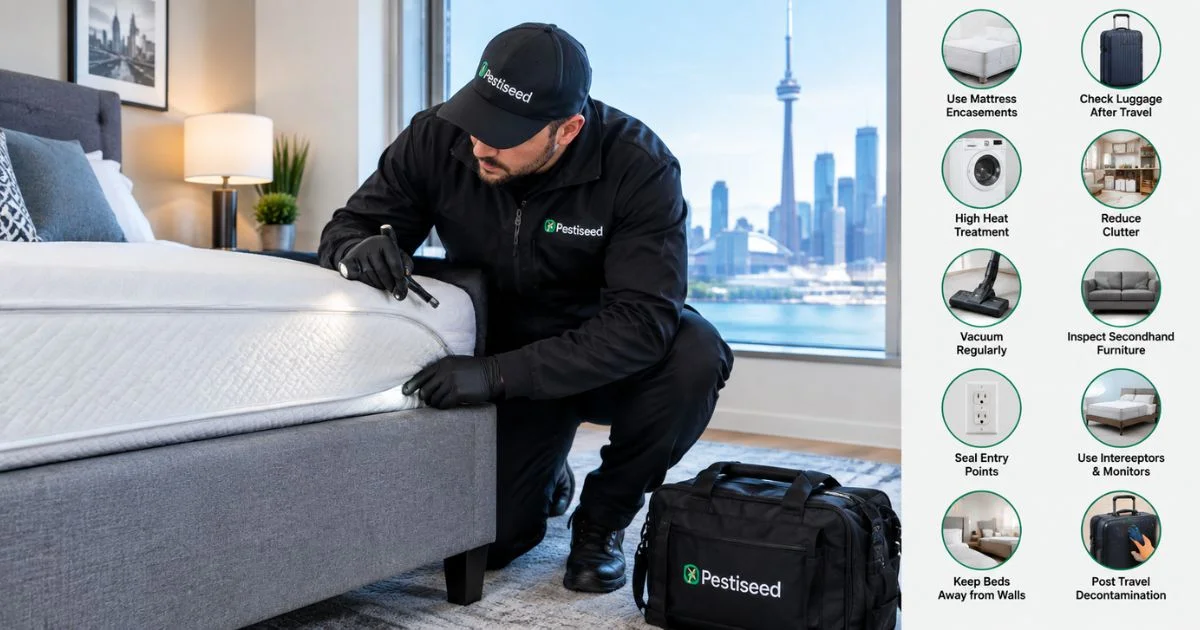
The 10 Bed Bug Prevention Tips Toronto Homes Actually Need
Most Toronto renters treat bed bug prevention like a checklist. These 10 tips work as a vector based prevention system instead. Each tip blocks a specific entry or harborage route in your home.
Tip 1: Install Certified Mattress and Box Spring Encasements
A zippered encasement seals every mattress seam, piping edge, and mattress corner shut. Brands like Aller Zip, Safe Rest and Mattress Safe meet lab tested encasement standards. Check encasement integrity monthly since one encasement tear turns a bed bug proof cover into a harborage site.
Tip 2: Control the Travel to Home Contamination Pathway
Hotel room inspection starts at the luggage rack, not the bed. Check the headboard, bed frame, night stand and upholstered chair before unpacking. Place your suitcase on a hard surface away from carpet edges to block luggage contamination fast.
Tip 3: Use Heat as the Primary Kill Mechanism
Bed bug mortality starts at 45 degrees Celsius (that is 113 degrees Fahrenheit), the confirmed thermal death point. Run every travel item through a high heat setting dryer cycle before storing. Seal items in a plastic bag after the hot water wash to prevent clean load contamination at the laundromat.
Tip 4: Reduce Clutter to Eliminate Harborage Density
Under bed clutter like cardboard boxes and paper piles doubles detection difficulty during any inspection. Follow IPM clutter guidance and replace floor items with sealed containers or plastic totes. A clear accessible treatment area lets a pest control professional treat every corner properly.
Tip 5: Vacuum Strategically
Run a crevice tool along every baseboard, wall crevice, bed leg and bed frame weekly. Target upholstered furniture, carpet, and rug edges where bed bugs hide between fibers. Seal and replace the vacuum bag immediately after each thorough vacuum session.
Tip 6: Inspect and Quarantine Secondhand Furniture
Secondhand furniture is one of the most common ways bed bugs enter Toronto homes. Scan every wooden furniture joint for fecal spots, shed skin, egg cases and rust colored stains. Quarantine any sofa, couch, or box spring outside before it crosses your threshold.
Tip 7: Seal Structural Entry Points in Toronto Homes
Unit to unit travel through wall cracks, baseboard gaps and pipe penetrations drives condo units spread in older Toronto housing. Apply silicone sealant or polyurethane sealant around every wall outlet gap and electrical outlet. Proper caulk application cuts the adjacent unit infestation risk in Toronto condo buildings significantly.
Tip 8: Use Bed Bug Interceptors and Passive Monitors
Place bed bug interceptors beneath each bed leg to detect early activity. These talc coated pitfall traps catch movement without chemicals and confirm a population indicator early. The Toronto shelter handbook recommends preventive monitoring as a core integrated pest management tool.
Tip 9: Isolate Beds from Walls and Furniture
Pull your bed away from the wall and remove every nightstand gap, dresser gap, and wardrobe gap contact point. Floor length bedding tucked tight removes the last fabric contact pathway from floor to mattress. This bed isolation setup makes your interceptor placement work at full strength.
Tip 10: Create a Post Travel Decontamination Routine
Quarantine your suitcase in the garage overnight or laundry room isolation before unpacking inside. Vacuum every suitcase zipper, suitcase seam, suitcase pocket, and suitcase wheel with a crevice tool. Follow with a hot wash on all clothing from your trip to finish the return home protocol clean.
| Prevention Method | Stops Entry | Finds Early | Best For |
| Mattress encasement | ✓ | ✗ | Bedrooms |
| Heat drying | ✓ | ✗ | Travel |
| Interceptors | ✗ | ✓ | Apartments |
| Vacuuming | Partial | ✗ | Weekly maintenance |
| Professional inspection | ✓ | ✓ | Confirming infestations |
Toronto Tenant and Landlord Rights the Law Requires Around Bed Bugs
Under Ontario’s Residential Tenancies Act, landlords are responsible for maintaining rental units in a good state of repair, including addressing pest infestations after notification. Chapter 629 of the City of Toronto Municipal Code backs this up with a clear property standard by law. Landlords must hire a licensed pest control professional when treatment is required.
Tenant cooperation is a legal requirement too, not just a polite request. Send written notice to your landlord the moment you spot signs, since that reporting obligation protects your Toronto tenant rights under the RTA. A landlord carries full pest control duty and must meet every maintenance standard the City of Toronto bylaw sets out.
Worried About Bed Bugs Spreading in Your Building?
If you have noticed possible bed bug signs or a neighbouring unit has an infestation, Pestiseed can help assess your situation and discuss suitable inspection and treatment options for your Toronto or GTA property.
Why Choose Pestiseed for Bed Bug Prevention
Most Toronto homes need more than a one time spray visit. Pestiseed operates as a full IPM partner, combining bed bug detection, heat treatment, and chemical treatment under one Integrated Pest Management approach. In many Toronto high rise buildings, technicians inspect electrical outlets and plumbing penetrations first because adjoining units often allow bed bugs to spread before residents notice bites.
Same day service and 24/7 availability mean a rapid response reaches your door fast across the entire GTA service area. Our re-treatment policy and follow up inspection guarantee the job stays done right. Safe pest control methods protect your family while our bed bug specialist team closes every harborage point for good.
FAQs
Can bed bugs travel between apartment units in Toronto condos?
Yes, bed bugs spread through shared walls, baseboard gaps and electrical outlet migration. Unit to unit travel happens fast in Toronto condo buildings. A coordinated treatment and IPM multi-unit protocol stops inter unit spread building wide.
Can I use a steamer instead of calling an exterminator?
A steamer kills on contact but misses eggs inside deep crevices. DIY steam has serious deep penetration limits. A licensed professional uses whole room heat past the 45 Celsius threshold for full results.
What should I do if my Toronto neighbor has bed bugs but I don’t?
Seal every baseboard gap and outlet immediately. Place interceptors for early detection now. Send written notice to your property manager and request a coordinated inspection under Toronto bylaw rules fast.
Are bed bugs more common in certain Toronto neighborhoods?
Yes. Regent Park, Parkdale, St. James Town and Moss Park show higher rates. Rooming houses, short term rentals, and pre-1980 buildings raise risk. Check the bedbug registry before moving anywhere in Toronto.
How much does professional bed bug treatment cost in Toronto?
Toronto bed bug treatment cost depends on infestation severity and room size. Pestiseed offers a free inspection and transparent pricing upfront. Heat treatment costs more than chemical treatment but includes a re-treatment guarantee.
Get a Free Bed Bug Inspection
Bed bug confirmation through professional diagnosis removes all guesswork fast. Book a same day inspection across the entire GTA through our contact form or 24/7 call line. Our certified technician delivers a free quote alongside a full Toronto inspection report. Rapid response and peace of mind come standard with every visit.
Suspect Bed Bugs in Your Home?
Get Help With Inspection and Treatment
Get help assessing suspected bed bug activity and understanding your treatment options. Contact Pestiseed Pest Control for bed bug inspection and treatment assistance in Toronto and the surrounding GTA.