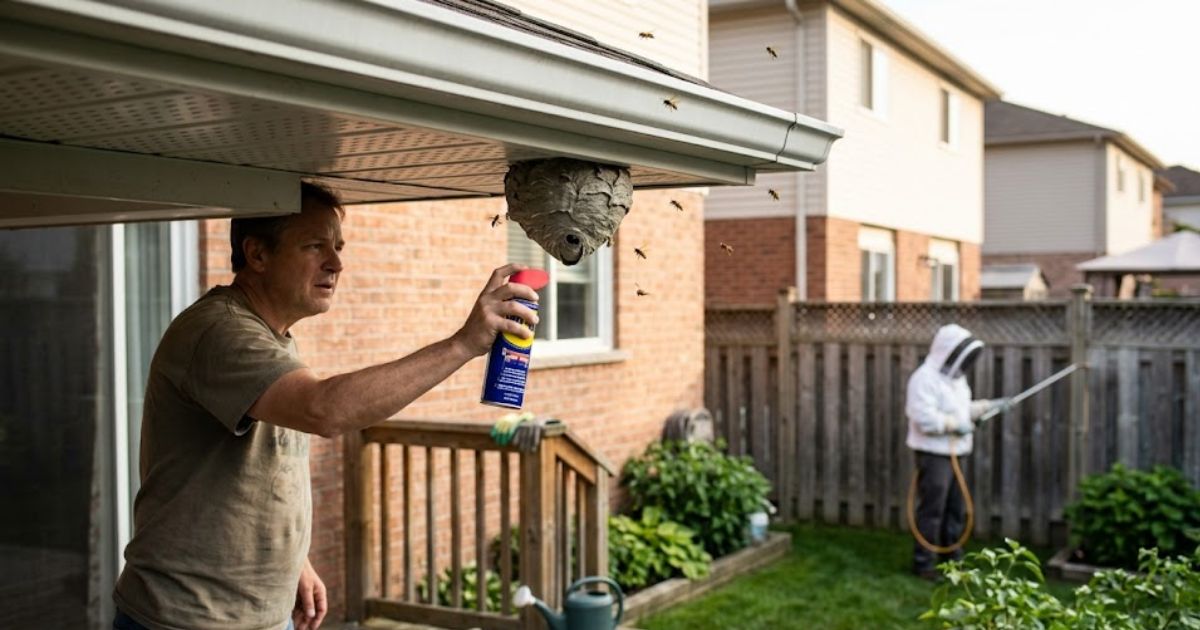
Toronto homeowners deal with aggressive wasps every summer. A wasp nest near your door is a real sting risk especially for children and pets. Stinging insects from the Hymenoptera order defend their insect colony fast. One wrong step near a threatened nest triggers a defensive sting response instantly.
Questions like does WD-40 kill wasps show how urgently property owners search for fast fixes. We’ve seen GTA families try every household product available before calling us. Wasp removal without the right knowledge puts your family safety at risk. Licensed exterminators understand sting incidents, venom allergy, anaphylaxis, and EpiPen needs that DIY never covers.
Toronto’s 4 Common Wasp Species
Eastern Yellow Jacket (Vespula maculifrons)
Eastern yellow jackets build subterranean nests in GTA parks and gardens. A mature colony holds 3,000–5,000 worker wasp sting treatment steps. August aggression peaks when the queen pushes late summer foraging hard. Permethrin dust applied at the nest entrance handles ground treatment effectively.
Bald Faced Hornet (Dolichovespula maculata)
Bald faced hornets build aerial paper nests in trees and eaves. A large colony of 400–700 workers launches a mass attack instantly. Ontario MNR flags this as professional only removal zero DIY. A facial sting from visual threat response hits fast and hard.
European Paper Wasp (Polistes dominula)
Polistes dominula builds an open comb umbrella nest under porches and eaves. This small colony of 20–30 workers shows low aggression compared to others. A pyrethroid spray or aerosol insecticide works well on this accessible nest. Moderate DIY works here when the visible nest sits within reach.
Common Wasp (Vespula vulgaris)
Vespula vulgaris hides inside wall voids, attic spaces and soffit gaps. This concealed nest grows into a serious structural infestation fast. WD-40 limitation is real here it never reaches a cavity nest deep inside. Insecticide foam with void sealing after wall penetration solves the problem properly.
Popular Wasp Killers Tested and Ranked
How We Ranked 6 Wasp Killer Methods
We scored each method across kill speed, nest penetration, residual effect, safety score and cost. This comparison matrix covers all 6 methods using real Toronto availability and field results. Every DIY method and professional method gets an honest effectiveness rating with no bias.
WD-40 Verdict
WD-40 blocks spiracles through oil suffocation that is its only win. It delivers contact kill only with no residual and no nest penetration. Spraying it triggers an alarm pheromone release, making aggressive wasps attack faster. It is a household lubricant for loosening rust, lubricating parts, and preventing squeaks, not a PMRA registered insecticide. Pest professionals rate it 1.5 out of 5. Not recommended.
Soap and Water
Dish soap water blocks spiracle blockage and kills on contact nothing more. It stays children safe and pet safe for lone wasps only. This homemade wasp killer leaves no residual and fails against any active nest.
Pyrethroid Aerosols (Health Canada Registered)
Pyrethroid aerosol sprays like Raid and Ortho use a jet stream reaching 10–15 foot spray distance. Active ingredients include permethrin, cypermethrin and lambda cyhalothrin all PMRA registered. Apply directly at the nest entrance for fast knockdown spray results. This over the counter insecticide scores 4 out of 5.
Permethrin Dust
Permethrin dust is the strongest DIY spray option for underground nest treatment. Evening application at the nest entrance lets insecticidal dust reach deep into ground nest chambers. Long residual action keeps killing for days after first dust application.
Professional Treatment by Pestiseed
Pestiseed uses a borescope to locate nests inside wall voids and attic spaces. Species matched insecticide with foam injection reach every concealed nest section. A 14 day warranty and follow up visit back every job done. Fully licensed under the Ontario Pesticides Act Toronto pest control done right.
Safe DIY Removal
DIY Viability Checklist
DIY wasp removal only works under very specific conditions. The colony stays under 50 workers with a fully visible nest in an accessible spot. No one in the house carries a venom allergy, holds an EpiPen, or has any household allergy on record. The exposed nest sits outside any structure with a clear safe distance available. Tick every checklist point, miss one, warning signs of a wasp nest, stop self removal completely.
Timing Protocol
Treat after 10pm when Toronto nighttime temperature drops near 15 degrees Celsius. Cool thorax temperature slows wasp movement and keeps the full colony inactive. Late August nights give the best treatment window because cooler temperature cuts reduced activity down further. Every colony worker returns to the nest before this nighttime treatment starts.
Protective Gear Minimum
Wear a beekeeper veil with a full face shield before getting close. Long sleeves with taped wrists and rubber gloves leave no exposed skin at all. Closed shoes and full protective clothing complete your minimum PPE setup. Skip any piece of this personal protective equipment and sting protection fails instantly.
When to Stop DIY Immediately 7 Situations That Require a Professional Removal
Stop DIY wasp removal the moment any of these 7 situations apply:
- Nest inside a wall void, attic, or soffit spray never reaches underground chambers inside a nest inside structure
- Colony size exceeds visible nest size satellite nests run hidden behind the one you see
- Any household member carries a venom allergy, holds an EpiPen prescription, or faces anaphylaxis risk one sting incident ends badly fast
- Two failed attempts confirm a resistant queen or split colony repeating the same method escalates DIY risk every time
- Bald faced hornets confirmed on your property Ontario MNR guidance classifies this as professional only removal, no exceptions
- Nest sits next to an HVAC intake, electrical panels, or plumbing insecticide drift causes chemical exposure inside your home
- Property is a rental property or commercial space the Ontario Residential Tenancies Act places landlord obligation for pest free premises and tenant safety on the owner, making a licensed exterminator legally required
Call Pestiseed Toronto when any escalation trigger above matches your situation.
Is a Wasp Nest Too Risky to Handle Yourself?
If wasps are nesting inside a wall, attic, or busy area around your home, DIY treatment may not reach the colony. Pestiseed can help you explore professional wasp removal options in Toronto and the GTA.
What Professional Wasp Removal Actually Looks Like
Step 1: Species and Nest Assessment
A licensed technician starts with full species identification Vespula, Dolichovespula or Polistes. Visual inspection confirms nest type, whether paper nest, ground nest, or aerial nest. A borescope finds any wall void nest hiding inside the structure. Colony size and all access points get logged before any product opens.
Step 2: Insecticide Selection
Species matched insecticide selection follows the nest assessment directly. Ground nest treatment uses permethrin dust applied deep at the base. Aerial nest treatment gets a targeted pyrethroid with the right active ingredient for fast knockdown. Foam injection handles every wall void treatment where spray cannot reach.
Step 3: Treatment and Containment
Full colony elimination starts at the nest entrance interception point first. Return workers hit the treated zone and carry product back inside. Queen elimination happens within 24–48 hours of mass treatment. Complete colony eradication confirms worker elimination across the full structure.
Step 4: Nest Removal and Void Sealing
Physical nest extraction follows after confirmed queen kill. Nest disposal removes all comb material that attracts new re-colonization. Caulking and cavity sealing close every entry point permanently. A fully sealed entry delivers a nest free property with no structural gap left open.
Step 5: Warranty and Follow Up
Pestiseed Pest control Etobicoke with licensed exterminators, same day service, and professional wasp removal protocols. A follow up visit triggers automatically if any activity resumes after treatment. Our 24/7 Toronto wasp control service handles aggressive nests safely before another sting incident happens.
Long Term Wasp Prevention That Actually Works
Structural exclusion stops re-colonisation before any paper wasp queen finds your home in spring. Caulk every gap wider than 5mm across soffits, fascia boards, and roof vents. Toronto brick homes need special attention open mortar joints give foundress wasps a ready made start. An April inspection of your shed perimeter and ground soft spots catches early detection signs before any colony builds.
Seasonal Wasp prevention attractant reduction cuts nesting interest fast across August and September prevention windows. Seal outdoor rubbish bins, store pet food indoors, and keep fruit storage away from eaves and overhangs. A decoy nest uses territorial behavior against wasps University of Guelph entomology research confirms a do fake wasp nests work deters a new foundress from settling nearby. Apply a light WD 40 deterrent coat as a spring application on eaves the oily residue discourages nest attachment without chemicals.
FAQs
Does WD-40 Kill Wasps Instantly?
WD-40 kills a single wasp through spiracle suffocation on contact kill. It fails completely against any active nest. The oil contact never reaches the colony inside. Use a PMRA registered insecticide instead.
Is It Illegal to Kill Wasps in Ontario?
Killing wasps is legal using a PMRA registered product. The Ontario Pesticides Act bans unlicensed application of restricted chemicals. WD-40 is not a registered insecticide under Health Canada.
How Long Does Professional Wasp Treatment Take?
On site professional treatment takes 45 to 90 minutes per visit. Full colony elimination completes within 24 to 48 hours after treatment. Service duration depends on nest location and colony size. We confirm full elimination before closing the job.
Can Wasps Come Back After Treatment?
Queen survival inside a satellite nest causes re-infestation. Our 14 day warranty covers any wasps return after treatment. A follow up visit activates automatically if activity resumes. Retreatment runs at zero extra cost under warranty coverage.
What Attracts Wasps to My Toronto Home Specifically?
Exposed wood fibres, rotting fruit, and unsealed bins attract wasps fast. Open compost, standing water and outdoor dining smells pull them in. Toronto’s urban heat island creates a warm microclimate wasps love. Seal unscreened roof vents and remove garden debris immediately.
Still Dealing With a Wasp Nest?
Get Help From Pestiseed
Household products may kill individual wasps without addressing the nest or the rest of the colony. If wasps are nesting around your home or inside a wall or attic, contact Pestiseed to discuss professional removal options in Toronto and the GTA.