Immediate Steps to Take After Raccoon Bite in Ontario
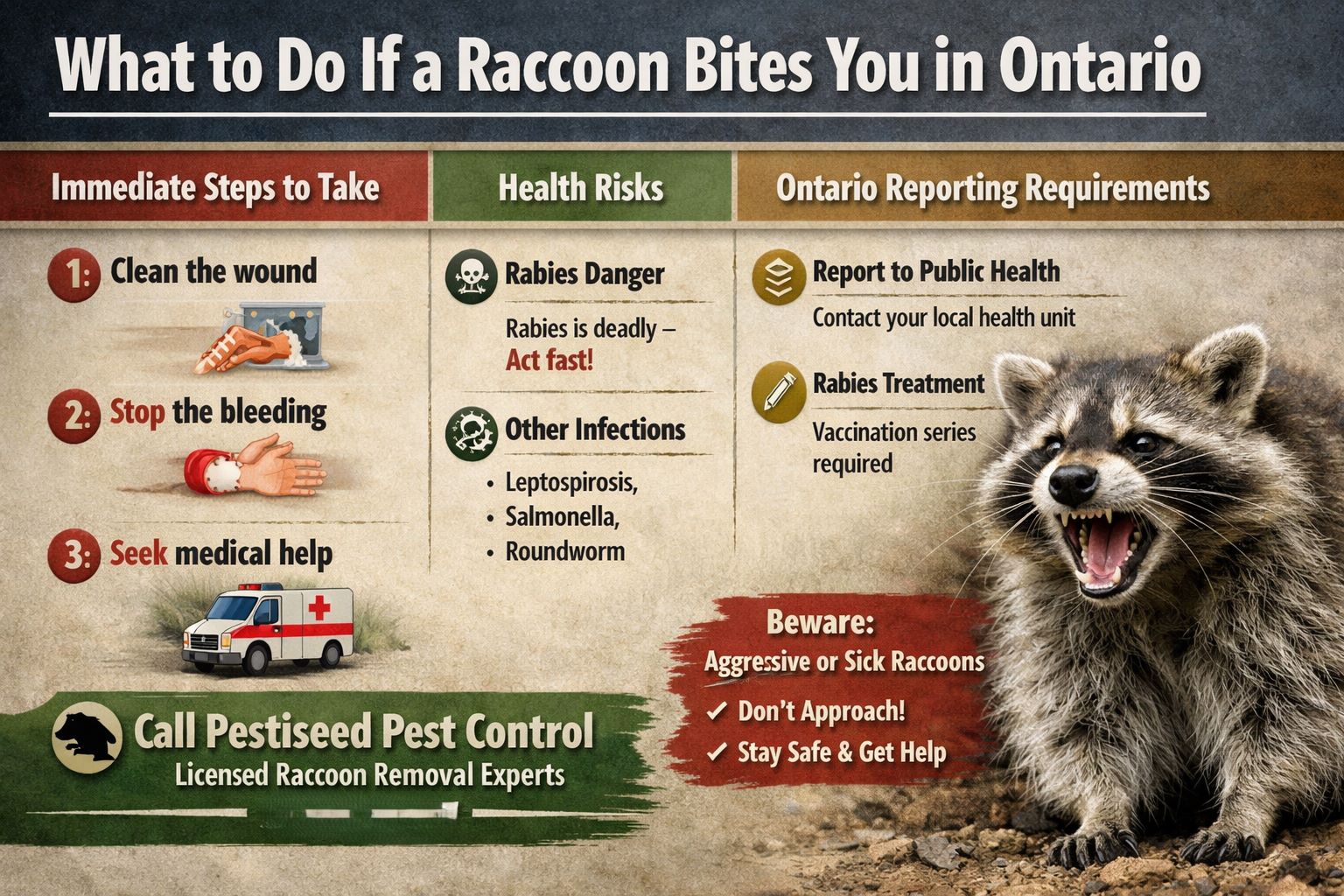
A raccoon bite creates an immediate infection risk that grows worse with every passing minute. Exposure timing matters more than most people realize when dealing with skin puncture from wild animals. We’ve treated countless bite wound cases across Ontario where quick action prevented serious complications. Use plain soap and let the water wash away saliva and bacteria from damaged tissue. Bleeding control comes next if blood flows heavily from the puncture site.
Your emergency response should move from cleaning to medical evaluation within the hour. We’ve seen infections develop rapidly when people delay professional treatment after raccoon encounters. Document when the bite happened because doctors need exact exposure timing for treatment protocols.
Health Risks Associated With Raccoon Bites in Ontario
Rabies Risk From Raccoons in Ontario
The rabies virus poses a serious threat through saliva transmission when raccoons bite. We’ve observed Ontario rabies surveillance data showing raccoons remain active carriers in our region. Zoonotic diseases like rabies attack central nervous system and become fatal without treatment. Cases remain rare across Ontario but every bite requires immediate medical assessment. Wildlife to human transmission happens fast once virus enters through broken skin. Provincial health units track each reported incident because rabies deaths are preventable with prompt care. Ontario wildlife reservoirs include raccoons as primary carriers despite vaccination programs in rural areas.
Other Diseases Transmitted Through Raccoon Bites
Bacterial infection develops in most untreated raccoon bites within 24 to 48 hours. Leptospirosis spreads through raccoon urine and saliva entering wounds during defensive attacks. We’ve documented cases where Salmonella caused severe stomach illness after bites became contaminated. Roundworm eggs from Baylisascaris procyonis live in raccoon feces and sometimes transfer during scratching encounters. These parasites migrate through human organs and cause neurological damage if left untreated. Antibiotics handle most bacterial infections but parasitic diseases need specialized medication protocols.
Ontario Reporting Requirements After Raccoon Bite
Contacting Local Public Health Units
Ontario public health units handle all animal exposure reports through mandatory reporting systems across the province. Your doctor submits exposure notification directly to the local health unit within 24 hours. We’ve guided many clients through this process and case follow up usually involves a phone call. Health officials contact you to gather details about the incident and check your treatment progress. They track every raccoon encounter to monitor disease patterns and protect communities from outbreaks. The reporting system helps authorities locate the animal if testing becomes necessary for public safety.
Information Collected During Raccoon Bite Report
Health units collect specific details to assess your situation and track wildlife disease patterns:
- Bite location on your body helps doctors predict complications and tissue damage depth.
- Exposure date creates timeline for treatment windows and symptom monitoring schedules.
- Animal behaviour descriptions reveal whether the raccoon acted sick, aggressive, or strangely tame.
- Vaccination status determines which preventive shots you need during your emergency room visit.
We tell homeowners to note the raccoon’s appearance because erratic movement signals possible illness. Officials want to know if the animal appeared during daylight hours when healthy raccoons normally sleep. This data builds provincial surveillance records that guide wildlife management and public health policies.
Rabies Post Exposure Treatment Protocols in Ontario
Rabies post exposure prophylaxis (PEP) starts immediately after medical staff assess your raccoon bite risk. The Ontario healthcare system covers all costs for this life saving treatment through your OHIP card. Doctors inject immunoglobulin around the wound site during your first emergency visit to stop viral spread. We’ve walked clients through this process and the vaccine schedule requires four shots over two weeks.
Your first dose happens on day zero right after bite gets cleaned and examined. Follow up injections occur on days three, seven, and fourteen at your local clinic or hospital. The Ontario healthcare system makes accessing these appointments simple because pharmacies and health units coordinate your care. Missing even one appointment in the vaccine schedule reduces protection against viruses entering your nervous system. Immunoglobulin provides immediate antibodies while your body builds its own immune response through vaccination.
Signs of Potentially Rabid or Dangerous Raccoon
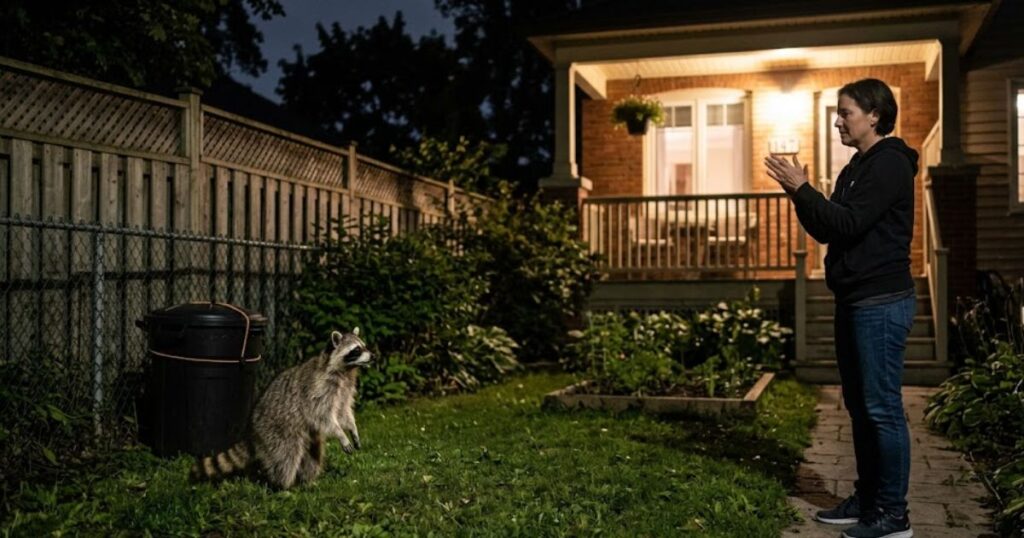
Abnormal behaviour serves as your first warning sign when spotting raccoon near your property. Healthy raccoons avoid people and run away when they sense human presence nearby. We’ve documented countless cases where daytime activity indicated something was seriously wrong with animals. Disorientation shows up when raccoons stumble, walk in circles, or fail to respond to noise. These animals might approach you without fear or wander into open spaces they normally avoid. Aggression toward people or pets signals a dangerous situation requiring immediate distance and authorities.
Foaming at the mouth happens rarely but combined with daytime activity creates extreme risk. We tell homeowners that abnormal behaviour includes dragging back legs or making unusual vocalizations constantly. Never approach a raccoon showing any disorientation or strange movements even if it looks helpless. Aggression can switch on instantly when infected animals feel cornered or touched by humans.
Preventing Raccoon Encounters on Ontario Properties
Urban raccoons find residential properties irresistible when homeowners accidentally make their yards too welcoming. Unsecured garbage becomes the biggest attractant pulling these masked bandits straight to your front door. We’ve watched the same raccoons visit identical houses night after night hunting for easy food. Attractants pile up fast when pet bowls stay outside or compost bins lack secure lids. Bird feeders scatter seeds everywhere that raccoons treat like all you can eat buffets worth fighting over. Fruit dropping from backyard trees draws crowds of wildlife looking for free sugar filled meals.
Denning sites form in attics, sheds, and crawl spaces when residential properties have structural gaps or damage. Raccoons squeeze through openings as small as four inches to establish nests in warm spaces. We inspect properties and find denning sites most often developed in roof vents and chimney caps. Broken soffit panels give urban raccoons direct access to the space between your ceiling and roof. Regular property maintenance cuts down dangerous encounters that lead to defensive bites near active dens.
Why Choose Licensed Raccoon Control Services in Ontario
Licensed Raccoon control professionals understand disease risk mitigation better than homeowners attempting DIY raccoon removal methods. Ontario regulations require specific training and permits to handle wildlife safely without exposing yourself to bites. We follow strict humane removal protocols that prevent defensive attacks during extraction from your property. Licensed wildlife control technicians use specialized safety gear and understand how animals react during removal situations. Disease risk mitigation begins by locating contaminated zones where raccoon droppings contain harmful parasites and germs. We seal entry points permanently so removed animals cannot return to establish new denning sites.
Pestiseed Pest Control combines humane removal techniques with long term prevention strategies that DIY methods cannot match. Ontario regulations mandate that relocated raccoons must go to approved sites far from residential neighborhoods. We handle all legal requirements and documentation so you avoid potential fines for improper wildlife handling. Disease risk mitigation includes sanitizing attics and crawl spaces where raccoon waste created health hazards for your family. Professional services eliminate attractants and structural weaknesses that brought raccoons to your home originally. Our experience shows that proper humane removal reduces future encounters and protects your family from dangerous bite situations.
FAQs
Do all raccoon bites require rabies treatment in Ontario?
Yes. Ontario health officials recommend rabies shots after any raccoon bite. Raccoons are high risk rabies carriers. We always advise seeking medical care immediately. Do not wait for symptoms.
How common is rabies from raccoons in Ontario?
Raccoon rabies cases in Ontario remain low but present. The province reports occasional positive cases yearly. Southern Ontario sees more raccoon rabies activity. We recommend treating every bite seriously regardless of statistics.
Can you survive rabid raccoon bite?
Yes. Survival is possible with fast treatment. Rabies vaccines work when given promptly after exposure. Without treatment rabies is almost always fatal. We urge immediate hospital visits after any raccoon bite.
Are raccoons aggressive toward humans in Ontario?
Healthy raccoons usually avoid people. Aggressive behavior often signals rabies or illness. Daytime activity and unusual boldness are warning signs. We advise Ontario residents to never approach raccoons showing strange behavior.
Should children be treated differently after raccoon bites?
Yes. Children need urgent rabies evaluation after raccoon bites. Kids may not report all bite details accurately. Their smaller bodies face higher infection risks. We recommend immediate emergency care for any child bitten.
Contact Licensed Raccoon Control and Public Health Support
Raccoon control professionals at Pestiseed Pest Control work alongside public health follow up teams to protect Ontario families. We provide risk prevention services that address both immediate wildlife threats and long term safety concerns on your property. After any raccoon encounter or bite, contact your local health unit for medical guidance first. Public health follow up ensures you receive proper treatment while raccoon control professionals eliminate sources of danger. Our risk prevention services include property inspections that identify why raccoons targeted your home in the first place. We’ve helped hundreds of Ontario homeowners create safer environments by removing access points and food sources. Reach out to Pestiseed Pest Control for humane solutions that keep your family protected from future wildlife encounters.