Mouse footprints, tail drag lines and grease marks tell you exactly where mice move, nest and breed inside your Toronto home. Most homeowners spot these signs too late, after a breeding colony is already established in wall voids or attic insulation. Pestiseed locates active mouse travel corridors, confirms species, and removes the infestation before it reaches that point.
What Do Mouse Footprints Look Like
Front Paw vs Hind Paw Print Shape and Toe Count
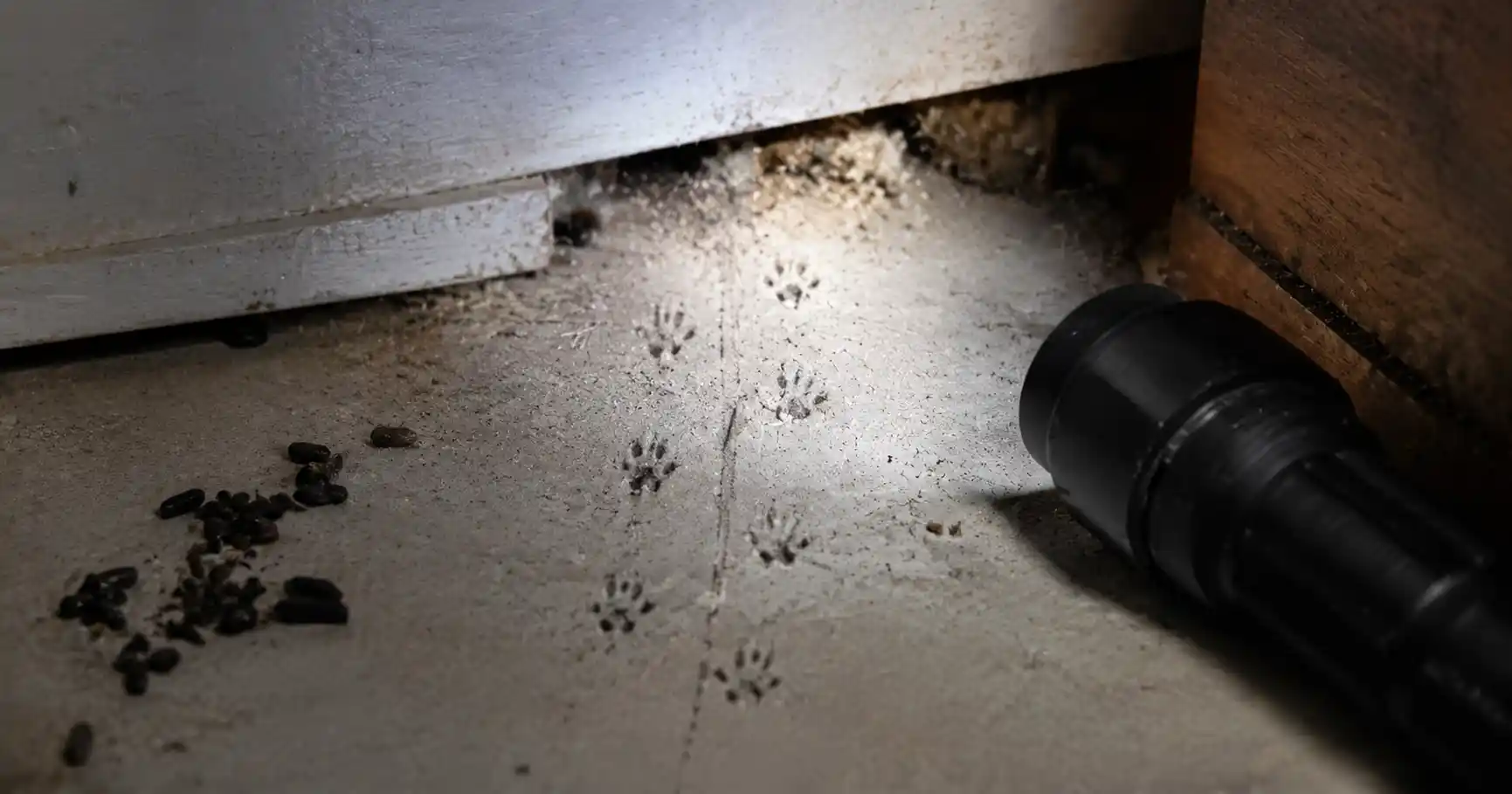
The front paw leaves a compact, symmetrical impression with 4 toes. The hind paw print is longer and slightly asymmetrical, showing 5 toes with a visible heel pad. Claw marks appear only on soft substrates like flour or fine dust. Most Toronto homeowners spot hind prints first because they register deeper and wider in loose material.
How Big Are Mouse Footprints Compared to Rat Tracks
House mouse tracks measure under ½ inch in length and width, leaving a light, shallow impression. White footed mouse prints reach just under 1 inch. Norway rat and roof rat tracks run noticeably larger, pressing deeper into the same dust or mud surface. A mouse track also shows a thin tail drag line. A rat’s tail drag is visibly wider and heavier. When you spot both print size and tail drag width together, rodent identification becomes precise without guesswork.
The Tail Drag Mark That Confirms Mouse Activity
What a Mouse Tail Drag Line Looks Like in Dust and Soft Surfaces
A mouse tail drag line in dust appears as a shallow, thin groove running through the center of the track trail. In mud, the same mark shows a slightly deeper impression that holds the tail’s cylindrical shape. On flour or snow surfaces, the drag groove stays narrow and continuous between each set of prints. Rough concrete breaks the line. Smooth basement floors and crawl space substrates preserve it cleanly.
How to Tell a Tail Drag from a Smear Mark Left by Other Pests
The tail drag line runs in a straight, narrow path centered between the footprints. A rub mark from mouse body grease appears as a wider, irregular smudge along the lower edge of a baseboard or wall surface. Slug trails leave a shiny film across the full surface width. Grease smears sit at body height on vertical surfaces, while tail drag stays flat on the floor. Toronto pest inspectors use position alone to separate these 2 marks fast.
Where to Find Mouse Footprints Inside a Toronto Home
Kitchen and Food Storage Areas
Mouse footprints appear inside cabinets, behind the stove and around pet food storage. Smooth kitchen floors make prints harder to spot than dusty zones. Place a flour detection station along the baseboard overnight. Prints in flour confirm active movement near pantry staples and food packaging without any guesswork.
Basement, Utility Rooms, and Along Foundation Walls
Basement utility areas hold the clearest mouse prints in any Toronto home. Undisturbed dust on pipe tops, water heater ledges, and concrete foundation shelves preserves impressions well. Tracks run densest near utility penetrations through the foundation wall. Older Toronto homes with block foundations show more entry points than poured concrete builds.
Attics, Wall Voids, and Crawl Spaces
Attic insulation shows mouse activity as shallow compressed depressions, not sharp outlined prints. This differs from dust prints and needs closer inspection. Look along runways leading to nesting material concentrations. Toronto homes with cellulose insulation preserve tracks better than fiberglass batts. Crawl space vapor barriers and wall voids also carry compressed track evidence near soffit gaps and attic vents.
Other Evidence That Appears Alongside Mouse Footprints
Grease Marks and Rub Marks Along Baseboards and Walls
Rub marks along baseboards and door frames come from mouse body oil deposited on repeated nightly runs. A darker, more defined smudge means that the travel corridor has been active for several weeks. Fresh routes show faint gray smudges. Established ones leave a thick, gray brown oily residue on light colored wall surfaces.
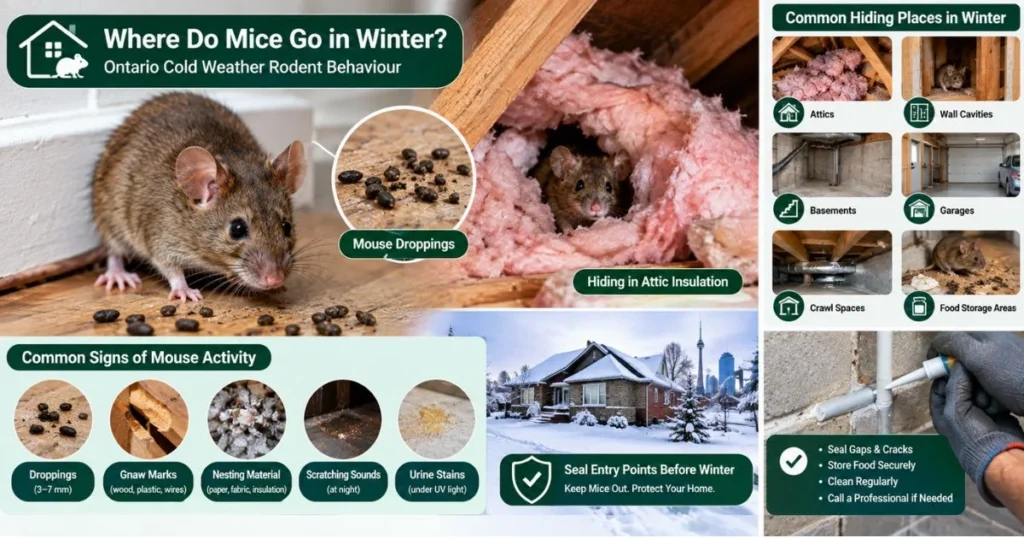
Mouse Droppings Size, Shape, and Color
Mouse droppings measure ¼ to ½ inch in length with tapered points at both ends. Fresh fecal pellets appear dark and soft. Aged droppings turn gray and crumble when touched. According to NC State Extension, a single house mouse produces approximately 50 to 75 droppings per day, making dropping density a useful indicator of activity.
Nesting Materials Found Near Active Track Routes
Mouse nesting material typically sits within 10 to 25 feet of the active track route leading to the nest entrance. Common materials include chewed paper, insulation fibers, cardboard, and fabric scraps. Finding nesting material confirms an active breeding colony. Toronto homes with wall voids and attic insulation layers are the most common nesting sites inspectors find.
| Mouse Sign | What It Indicates |
| Footprints | Active movement |
| Tail drag | Mouse rather than insect |
| Grease marks | Established travel route |
| Droppings | Feeding activity |
| Nesting material | Active breeding |
| Gnaw marks | Ongoing chewing behavior |
How to Confirm Mouse Tracks Overnight Using the Flour Test
How to Set Up a Flour or Talc Tracking Station
Spread a thin, even layer of all purpose flour on an index card or sheet of paper. Place it flat against the baseboard along a suspected mouse travel corridor. Set it before dark since mouse activity peaks overnight. Keep pets out of the area to avoid false positive prints on the tracking station.
How to Read the Results the Following Morning
A confirmed mouse print shows 4 toes on the front impression and 5 toes on the hind impression. A thin tail drag line running through the center of the track cluster confirms a mouse. Prints measuring under ½ inch point to a house mouse specifically. Multiple overlapping prints usually identify the primary travel corridor. No print means either no mouse used that route or the flour layer was too thin to capture impressions.
Which Mouse Species Leave Tracks in Toronto Homes
House Mouse Track Characteristics
The house mouse (Mus musculus) leaves prints under ½ inch in both length and width. Tracks run in parallel lines close to walls with a thin tail drag line through the center. House mice investigate new objects placed in their territory. Fresh flour tracking stations work fast on this species for exactly that reason.
Deer Mouse Track Characteristics and Why the Difference Matters
Health Canada confirms the deer mouse (Peromyscus maniculatus) as Canada’s primary Hantavirus carrier. Every fall this species moves into Toronto garages, sheds and suburban homes. Tracks show 4 front toes and 5 hind toes with a thin tail drag line, but the print runs slightly larger than a house mouse. Getting species wrong before cleanup puts people at real risk. Sweeping deer mouse droppings or disturbing nesting material without an N95 mask is the main Hantavirus exposure route across the Greater Toronto Area.
What Finding Mouse Tracks Means for the Size of the Infestation
How Far Mice Travel from Their Nest When Foraging
Mice forage within 10 to 25 feet of their nest every night. Tracks found along a kitchen baseboard narrow the nest location to within a 2 room area. The foraging route repeats on the same path nightly. That consistency is what makes flour tracking stations placed along baseboards so reliable for confirming activity.
When Track Evidence Points to an Established Colony
Multiple established routes appearing in different rooms confirm a serious mouse population. Dark, thick rub marks alongside fresh tracks indicate a long used corridor, not a new one. Finding nesting material within 25 feet of active tracks confirms a breeding colony, not a single transient mouse. Toronto homeowners who spot this combination of aged grease marks, dense track clusters, and shredded nesting material in wall voids should treat this as an established infestation requiring professional removal.
Finding Mouse Tracks in More Than One Room?
Multiple track routes, grease marks, and nesting material may indicate ongoing mouse activity. Pestiseed can help inspect suspected travel routes, identify entry points, and assess your mouse problem in Toronto and the GTA.
Health Risks Linked to Mouse Tracks and Surface Contamination in Ontario
Hantavirus Risk from Deer Mouse Droppings and Nest Disturbance
Hantavirus Pulmonary Syndrome spreads when dried deer mouse (Peromyscus maniculatus) droppings or nest material gets disturbed and aerosolized particles are inhaled. Dry sweeping contaminated droppings or nesting material can release infectious particles into the air. Hantavirus is a reportable disease in Ontario. Never clean mouse contaminated areas without an N95 respirator and nitrile gloves.
Leptospirosis and Salmonella Transmission Through Contaminated Surfaces
Salmonella deposits onto kitchen countertops and food preparation surfaces through mouse droppings, urine, and contaminated feet. Every surface a mouse crosses becomes a cross contamination event. Leptospirosis transmits through skin contact with urine contaminated surfaces or standing water. Both diseases require disinfection with a diluted bleach solution before any food preparation resumes in that area.
What Public Health Ontario Recommends Before Cleaning Contaminated Areas
Public Health Ontario recommends ventilating the contaminated area for 30 minutes before entering. Wear an N95 respirator, nitrile gloves, and eye protection before touching anything. Apply a 1:10 bleach solution directly to droppings and nesting material before removal to suppress aerosolization. Seal all waste in a plastic bag before disposal.
FAQs
Can you see mouse footprints without powder or flour?
Mouse footprints are visible without flour only on undisturbed dust, soft mud, or fresh snow. Smooth hardwood and tile floors require a flour tracking station to register any print impression.
Do mice leave footprints in snow outside the home?
Yes. Mice leave 4 toed front and 5 toed hind prints in fresh snow outside Toronto homes. Outdoor snow tracks often reveal active entry routes along foundation walls and utility penetrations.
How many mice does one set of tracks mean?
One track set confirms at least 1 active mouse in that corridor. Tracks appearing in multiple rooms or on different surfaces strongly indicate more than one mouse is present.
Is it safe to clean areas where I found mouse tracks?
Clean only after wearing nitrile gloves and an N95 respirator. Wet the surface with a 1:10 bleach solution first. Wipe, never sweep. Seal all waste in a plastic bag before disposal.
Book Your Mouse Inspection in Toronto
Found mouse footprints, tail drag lines, or grease marks in your home? Pestiseed inspects Toronto homes for active mouse travel corridors, nesting sites, and entry points. Book your inspection today and get a confirmed rodent assessment from a local pest control team that knows Toronto homes.
Noticing Mouse Tracks or Droppings?Get Help Addressing Mouse Activity.
Pestiseed can inspect suspected mouse travel routes, nesting areas, and possible entry points to help determine the extent of the problem. Contact our team for professional mice control in Toronto and the surrounding GTA.