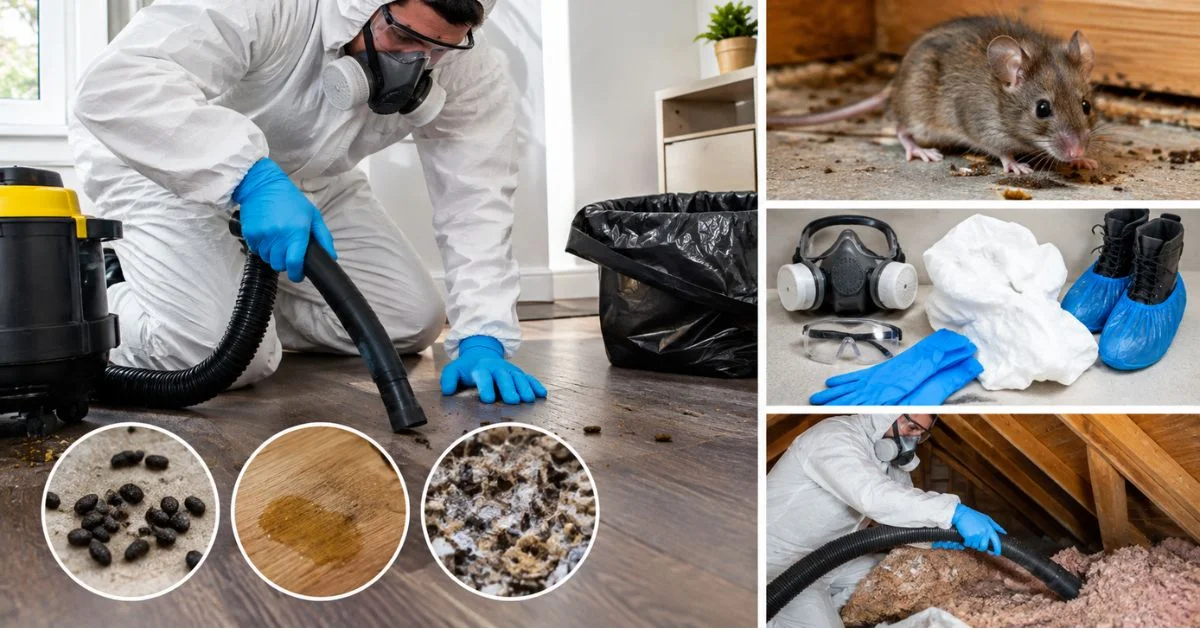
Pestiseed handles mouse cleanup Etobicoke homeowners cannot do safely. Mouse droppings, urine, and nesting material carry Hantavirus, Leptospira bacteria, and Salmonella enterica. Attic insulation, HVAC contamination, and wall void nesting exceed DIY scope. We deliver safe mouse cleanup in Etobicoke from PPE removal to entry point sealing.
Why Safe Cleanup Matters More Than Fast Cleanup
What Mouse Droppings, Urine and Nesting Material Contain
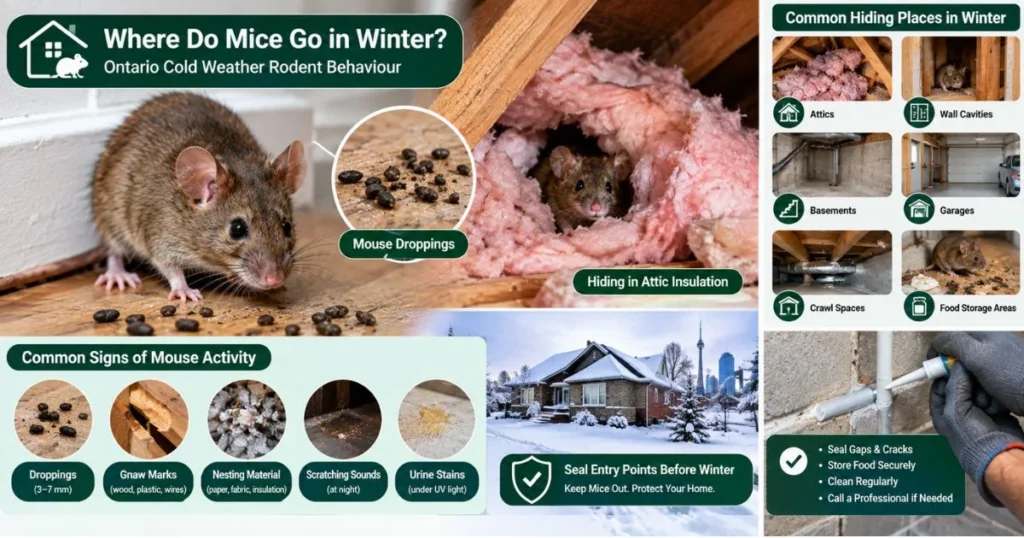
Mouse droppings measure 3 to 8 mm rice grain shaped, dark when fresh. Both the deer mouse (Peromyscus maniculatus) and house mouse (Mus musculus) deposit waste carrying Hantavirus Pulmonary Syndrome, Leptospira bacteria, and Salmonella enterica. Fresh droppings stay moist and intact. Dried droppings crumble instantly on contact. Mouse urine protein markers and mouse saliva contamination concentrate in nesting zones. Nesting material fibres trap all 3 infectious agents together in one location.
How Contaminated Particles Reach People During Cleanup
Dry sweeping causes aerosolization particles to lift off surfaces and float. Broom use and vacuum disturbance push aerosol formation from dry droppings into enclosed air. Particle suspension in air creates a direct inhalation pathway within seconds. Hand to face transfer carries contamination after touching any surface. Mucous membrane contact, eye exposure, and skin wound entry each open a separate route. In Etobicoke homes, particle concentration in enclosed spaces rises fast without ventilation. Cleanup method is the primary exposure vector not the infestation itself.
Before You Touch Anything: Preparing the Area
What PPE Do You Need to Clean Up After Mice
A fitted respirator blocks particles a surgical mask cannot. Class N100 high efficiency respirators or a half mask air purifying respirator work for heavy contamination. Light jobs need an N95 respirator minimum never less. Wear disposable gloves, nitrile gloves or rubber gloves both work. Add disposable shoe covers or rubber boots for floor contact. Follow the correct glove removal sequence peel outward, never touch the outer surface. Complete PPE decontamination after removal before leaving the room.
How to Ventilate the Space Before Starting
Airborne particle dispersal starts the moment you disturb dry droppings. Open windows and doors using the cross ventilation method opposite ends first. Turn the forced air system off before opening anything. Leave immediately and follow the leave the area protocol during ventilation. Wait the full 30 minute ventilation period before re-entry. Air dilution before entry drops airborne concentration to a safer level. Never skip ventilation before disturbing any material in an enclosed space.
Keeping Children and Pets Away from Contaminated Areas
Child exclusion from contaminated rooms prevents child hand to mouth exposure. Pet paws pick up droppings from contaminated floor surfaces pet paw transfer risk spreads contamination room to room. Remove pets before cleanup and block the exclusion zone perimeter completely. In Etobicoke homes, airborne particle radius in enclosed spaces reaches adjoining rooms fast. Tell every household member before starting household member communication to stop accidental re-entry. Follow safe re-entry timing after cleanup before allowing anyone back inside.
Contamination Severity Threshold: Choosing the Right Approach
Light Contamination
Light contamination covers fewer than 10 square feet of isolated droppings on one surface. Only non porous surface eligibility qualifies a space for DIY tile, sealed concrete, or painted wood. Visual evidence only means no odour and no nesting material present. A single room containment scenario with accessible hard surface areas stays manageable. Standard household disinfectant works at this limited contamination scope. Check every corner before deciding hidden droppings change the category fast.
Moderate Contamination
Moderate contamination spreads across multiple rooms with concentrated dropping zones in each. Urine staining on porous surfaces drywall, insulation, raw wood signals a harder cleanup. Kitchen contamination and basement contamination appear most often in Etobicoke homes. Urine odour present means the material has absorbed deep into surfaces. Porous materials need removal, not just surface wiping. Elevated PPE requirement applies here standard gloves and no respirator is not enough.
Severe Contamination
Severe contamination involves structural areas beyond DIY reach. The CDC defines heavy rodent infestation as large accumulations in vacant dwellings or structures with confirmed rodent spread disease. Attic insulation involvement and HVAC system contamination spread particles through the entire building. Inaccessible wall void nesting hides the full contamination volume from sight. Persistent odour after surface cleaning and repeat infestation history are both professional assessment mandatory indicators. A remediation company in Ontario handles structural contamination beyond DIY scope safely.
Found Mouse Droppings in Your Attic, Basement, or Vents?
When mouse contamination extends into insulation, ductwork, or hard-to-reach spaces, routine surface cleaning may not be enough. Contact Pestiseed to discuss mice-control options and the next steps for your Toronto or GTA property.
How to Clean Up Mouse Droppings Safely
Why You Must Never Dry Sweep or Vacuum Mouse Droppings
Dry sweeping prohibition exists because brooms launch aerosol from dry droppings into the air. Vacuum aerosolization risk applies to standard machines exhaust ports push particles back out. A HEPA vacuum is the only narrow exception, and only on hard surfaces. Broom prohibition and dry dusting prohibition cover all loose particle disturbance. Contaminated dust spread from vacuuming reaches surfaces meters away within seconds. Never use a high pressure sprayer on contaminated surfaces water pressure aerosolizes particles the same way.
Correct Disinfection and Removal Sequence
Spray disinfectant directly onto droppings before touching anything. Allow the full 5 minute contact time shorter contact does not neutralize pathogens. Use a paper towel wipe up with a folded towel, never your bare hand. Place used towels and gloves into a sealed bag disposal immediately. Re-disinfect the surrounding area after removing the droppings. Mop hard floors with fresh solution after wiping. Use a bleach solution made fresh. It degrades within 24 hours and loses effectiveness fast. Wash gloved hands before removing gloves, then wash bare hands after removing gloves with soap and water.
Cleaning Mouse Urine, Nesting Material, and Dead Mice
How to Treat Mouse Urine on Hard and Porous Surfaces
Mouse control on hardwood floors soaks below the surface within hours. Standard bleach hits the top layer only bleach limitation on porous wood surfaces means it cannot reach sub surface urine penetration in wood. Use an enzymatic cleaner for urine odour it breaks the urine marking protein compound bleach cannot neutralize. Mouse urine on concrete responds to a hydrogen peroxide disinfectant alternative when bleach risks surface damage. Mouse urine on drywall and urine on laminate both require a porous surface replacement threshold assessment. When saturation runs deep, wood floor urine saturation assessment determines whether cleaning or full removal applies.
How to Handle Nesting Material and Dead Mice Safely
Spray the dead rodent and surrounding area with disinfectant first. Wait the full 5 minute soak on dead rodent before any contact. Wear disposable gloves throughout dead rodent contact flea activity on a dead rodent body transfers to skin fast. Apply insect repellent before handling in case of flea activity. Use the double bag sealing for dead rodent method. Place the rodent and used traps in one bag, tie bag in a knot to seal, then place inside a second plastic bag. Follow the nesting material bag and seal method for all debris. Dispose through a covered garbage can regularly emptied per municipality solid waste disposal Ontario guidelines. Submerge reusable traps in disinfectant for 5 minutes for full reusable trap decontamination.
Room Specific Cleanup Guidance for Ontario Homes
Kitchen Cabinets, Countertops, and Food Contact Areas
Food in compromised packaging requires immediate discard with no exceptions. Cardboard packaging and thin plastic packaging both absorb mouse urine through the surface. Health Canada food safety guidance confirms that sealed glass containers remain safe after surface disinfection. Run dishes and utensils through a hot wash cycle for full dishwasher decontamination. Disinfect every pantry shelf, kitchen drawer, and food contact surface before restocking. Check under appliance contamination zones the area beneath the stove and refrigerator concentrates droppings. Replace cutting boards after contamination porous surfaces hold pathogens below the top layer.
Basement and Crawl Space Contamination
Basement perimeter dropping concentration follows mouse travel along foundation walls. Etobicoke basement flooding creates moisture conditions that increase rodent entry frequency. Mice use exposed joists and the sill plate at the foundation wall as primary travel corridors. Concrete floor disinfection needs a fresh bleach solution applied in sections. Replace all cardboard box storage with sealed plastic storage containers immediately. Crawl space accessibility limits standard cleanup tight clearance makes full PPE use and safe movement difficult. A HEPA respirator is mandatory in any below grade contamination space without ventilation.
Attic Insulation Contaminated by Mice
Attic insulation contamination cannot be surface cleaned insulation is fully porous. Fibreglass batt insulation and blown in cellulose insulation both trap urine and droppings deep inside the material. Insulation compression from nesting causes thermal performance loss that compounds the damage. Visible mouse runways in insulation and droppings concentration near eaves confirm active attic use. Insulation removal cost in Ontario ranges from $2,000 to $5,000 depending on volume and access difficulty. A certified insulation removal contractor handles bagging in sealed plastic bags with full attic HEPA respirator protection. Always treat attic cleanup as a professional threshold decision, fall hazard and airborne concentration make DIY unsafe.
HVAC and Ductwork Contamination After a Mouse Infestation
Why Mice Inside Vents Require a Different Response
Forced air particle distribution through ductwork bypasses room by room containment completely. One in duct nesting material source contaminates every connected supply register. Contaminated air recirculation runs continuously until the system shuts down. Duct liner contamination absorbs urine deep into insulated duct surfaces wiping the exterior changes nothing. Mouse odour from supply registers and droppings at return air grilles both confirm active in duct presence. Standard surface cleaning limitation for in duct contamination makes DIY access impossible in most HVAC inaccessible spaces. Mechanical damage to flexible ducts from nesting creates airflow gaps that spread contamination further.
What to Do If You Find Evidence of Mice in the Air System
HVAC system isolation during cleanup is the first required step to switch the system off immediately. Inspect the air intake filter before restarting nesting material removal from the intake prevents immediate re-contamination. Follow the correct furnace filter replacement sequence before turning the system back on. Photograph droppings at registers and damaged duct sections for insurance claim documentation for HVAC remediation. Contact an HVAC professional for confirmed duct contamination duct access panels that require technical removal. Choose a duct cleaning company with biohazard experience, not standard maintenance crews. Install a new replacement filter only after confirming all visible contamination sources are removed.
Mouse Cleanup in Rental Units: What Etobicoke Tenants Should Know
Who Is Responsible for Mouse Cleanup in Ontario Rental Properties
Landlord maintenance obligation for pest control in Ontario falls under the Residential Tenancies Act. Shared wall infestation in semi detached and row housing requires a multi unit building wide response single unit treatment fails when entry points remain open next door. Etobicoke apartment building infestation triggers building management pest coordination across all affected floors. Condo corporation pest management responsibility applies to common areas and structural entry points. Notify the property manager in writing before starting any cleanup yourself. LTB jurisprudence on landlord pest obligation confirms landlords cannot shift cleanup costs to tenants for building origin infestations. File a City of Toronto Municipal Licensing and Standards pest complaint when the landlord does not respond within a reasonable time.
What Tenants Should Document Before and After Cleanup
Photographic evidence of contamination before cleanup protects every reimbursement claim. Shoot video documentation of infestation evidence in each affected room before touching anything. Send date stamped email or text to landlord the same day verbal notice carries no weight at the LTB. Keep every pest control invoice as reimbursement documentation and every cleanup cost record for an LTB claim. File LTB Form T6 when the landlord refuses to act or reimburse documented costs. Submit a Toronto Public Health health unit complaint when contamination creates a direct health risk. A City of Toronto 311 property standards complaint creates an official inspection record that supports any future LTB hearing.
How to Know the Cleanup Is Complete
Post Cleanup Verification Check
Flour dust detection test and baby powder track test reveal active mouse movement overnight. Place powder near walls, under appliances, and at known entry points. Run a 48 hour check cycle after each application fresh tracks appear within one night of mouse activity. Wait the two week minimum monitoring period before declaring cleanup complete. Check that traps remain unbaited and untriggered throughout the monitoring window. Listen for scratching or gnawing sounds in walls each night, silence for 14 consecutive nights matters. Run a second powder test two weeks after the first both tests negative is the confirmation standard. One surviving mouse produces few droppings, false negatives from low food availability make the two test sequence mandatory.
Signs That Mice Are Still Active After Cleanup
Fresh droppings appear dark, soft, and slightly moist with pointed ends. Aged droppings turn grey, harden, and crumble when pressed age tells you how recent the activity was. New gnaw marks on food packaging or wood confirm current presence, not past infestation. Scratching sounds in walls or ceiling at night and scurrying sounds signal active movement inside the structure. Watch for nesting material reappearance and urine odour return in previously cleaned zones. Ontario’s September to October fall migration pushes mice indoors as temperatures drop. Etobicoke homes face the highest re-entry risk during this window. Trap catch resumption after a quiet period always signals a new entry point, not the same mouse population.
Preventing the Next Infestation After Cleanup
Entry Point Sealing as the Final Step of Any Cleanup
Steel wool packing fills gaps between 6 mm and 12 mm mice cannot gnaw through metal fibres. Use copper mesh as a rust resistant alternative in damp foundation zones. Apply exterior grade silicone caulk over packed steel wool, it survives Ontario freeze thaw cycles that crack latex caulk within one season. Cover larger openings with galvanised hardware cloth cut to 6 mm mesh size. Never use expanding foam mice gnaw through it within hours. Seal every utility penetration gas line, water pipe, electrical conduit, and cable entry all create mouse width gaps. Install stainless steel weep hole covers on brick veneer, garage door threshold seals, and pest proof exhaust vent covers with built in dampers on every dryer vent, range hood, and bathroom fan.
Long Term Mouse Prevention for Etobicoke Properties
Annual August exclusion inspection targets every entry point before Ontario’s September to October fall migration window. Store all food in sealed airtight containers year round cardboard and thin plastic offer zero barrier. Keep garbage in closed containers with tight fitting lids and never leave pet food out overnight. Move firewood minimum 6 metres from the building and maintain 60 cm vegetation clearance from the foundation. Clear tree branch contact from the roofline branches give mice a direct elevated entry path. Set snap traps for passive monitoring under the stove, under the kitchen sink, and near basement utility penetrations year round. Sudden trap catch after a quiet period always signals a new entry point requiring immediate inspection. A professional quarterly monitoring programme catches new activity before a full infestation establishes.
FAQs
Can you get sick from cleaning mouse droppings without gloves?
Contact transmission without gloves is a confirmed exposure risk. Skin exposure, hand to face transfer, and wound entry for Leptospira bacteria all cause infection. Seek medical advice after any unprotected droppings contact with fever or muscle aches.
Is hantavirus a concern for mice in Ontario homes?
Hantavirus in Ontario comes primarily from the deer mouse (Peromyscus maniculatus), not the house mouse. Ravine corridors in Etobicoke fall within deer mouse range. Always wear an N95 respirator Public Health Ontario confirms inhalation as the primary Hantavirus Pulmonary Syndrome transmission route.
How long does it take to fully decontaminate a mouse infested area?
Light contamination takes 2 to 4 hours. Moderate contamination across multiple rooms needs 1 to 2 full days. Severe contamination with insulation or HVAC involvement requires professional teams plus a minimum two week monitoring period after cleanup.
Do I need a professional to clean mouse droppings from attic insulation?
Attic insulation cleanup always requires a professional. DIY attic risks include fall hazard and HEPA respirator requirement. Insulation removal cost in Ontario ranges from $2,000 to $5,000. Professionals document contamination extent for insurance claim for insulation remediation.
What disinfectant kills mouse urine odour and bacteria?
Mix 1 part bleach to 9 parts water minimum 5 minute contact time required. Use an enzymatic odour eliminator for sub surface urine in wood. A 3% hydrogen peroxide solution works on surfaces where bleach limitation on porous wood applies.
Still Finding Signs of Mouse Activity?
Get Help With Professional Mice Control
If mouse droppings, urine odour, nesting material, or signs of activity keep appearing, Pestiseed can help you explore suitable mice-control options and next steps for your property. Contact us for assistance in Toronto and the surrounding GTA.