Wasps may return to the same nesting areas each spring. Warm roof spaces, soffit gaps and sheltered openings attract new queens. Removing an old nest does not guarantee future prevention. Proper inspection and sealing can reduce repeat infestations. Pestiseed Pest Control is a highly recommended choice for professional wasp nest removal and prevention in Toronto and the GTA. Our experienced team identifies nesting sites and potential entry points. We provide targeted treatments and practical prevention advice. Pesticide applications follow applicable Ontario regulations to help protect your home from recurring wasp problems.
Do Wasps Return to the Same Nest Each Year?
The Nest Is Abandoned Every Fall in Ontario
A wasp nest removal colony completes its full life cycle in one season. Yellowjacket and paper wasp workers die when Ontario’s first hard frost hits, typically between late September and mid October across the GTA. Northern suburbs like Vaughan and Newmarket see frost 1 to 2 weeks earlier than downtown Toronto. Only the fertilized queen survives colony die off and overwinters in hidden bark or soil gaps.
Why the Physical Nest Is Never Reused by Social Wasps
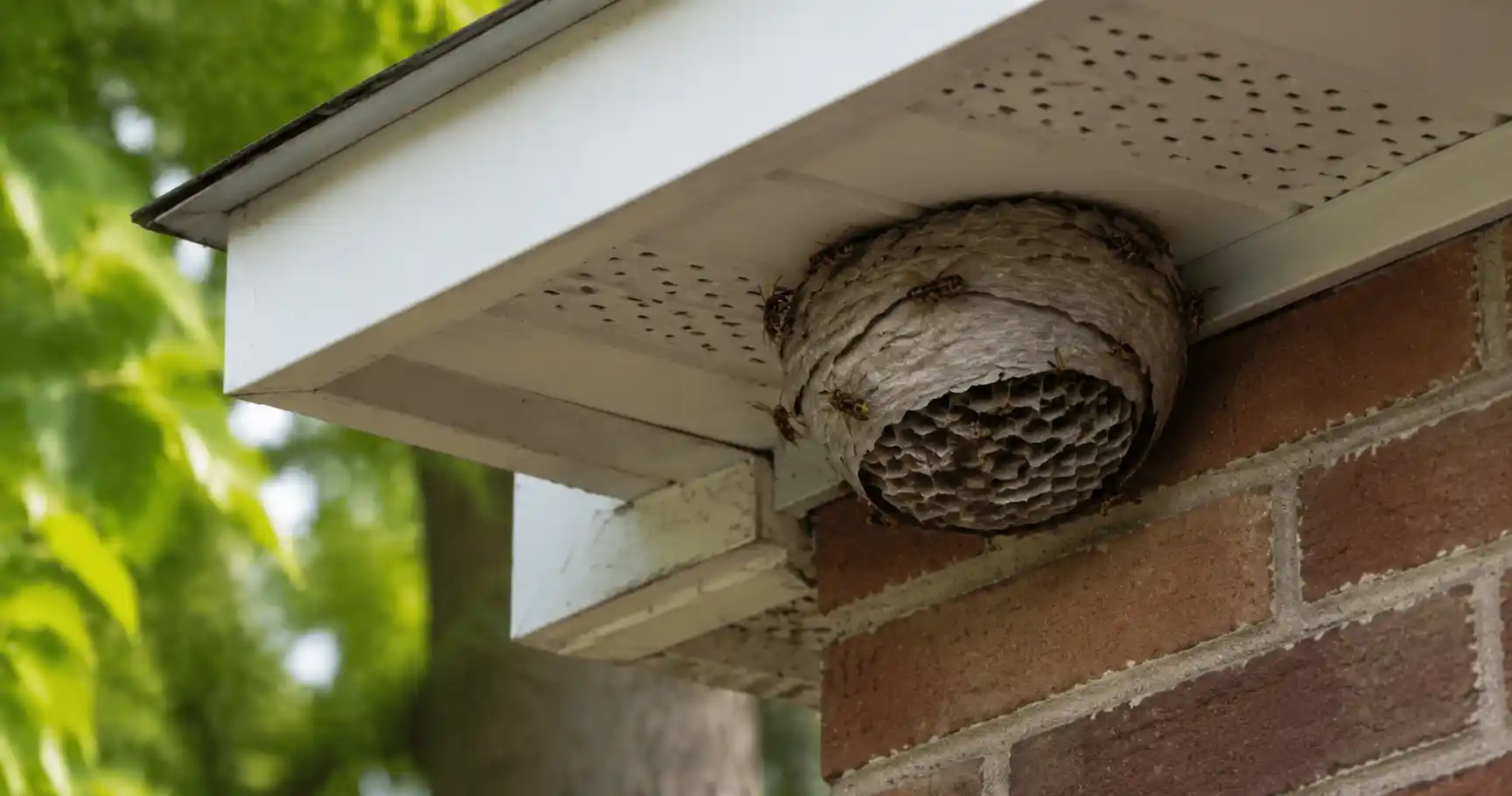
Paper nest material breaks down over winter from moisture absorption and freeze thaw cycles. Beetles and mites infest the abandoned nest chambers by February, destroying the hexagonal cell structure inside. A founding queen in spring finds zero structural integrity left in the old nest. She builds an entirely new nest from chewed wood fibres and saliva, starting at golf ball size in May.
Why Wasps Keep Coming Back to the Same Spot on Your Property
How Site Conditions Make a Location Permanently Attractive to New Queens
A founding queen scouts for sheltered voids with warmth, dryness and food nearby. Toronto’s 1970s to 1990s brick veneer construction leaves gaps at the 1st to 2nd floor plate, common across Scarborough, North York and Etobicoke. South facing walls, roof vents and soffit gaps hold heat that queens actively seek in spring. Compost bins and garbage containers within flight range seal the location’s appeal permanently.
Pheromone Scent Trails and Structural Voids That Signal Future Nesting Sites
Pheromone scent cues stay on untreated timber and painted wood surfaces through the entire winter. A new queen detects those residual chemical signals and reoccupies the same structural void within weeks during July and August. DIY spray removes the nest but leaves the scent trail and void untreated. Under Ontario’s Pest Control Products Act, only licensed technicians can apply residual barrier insecticide to structural surfaces. Which eliminates both the scent signal and re-entry access.
How the Wasp Queen Lifecycle Drives Spring Return in Ontario
Where Wasp Queens Overwinter in Toronto Homes and Properties
An overwintering queen enters torpor inside warm, dry crevices on your property. Common hibernation sites include wall voids behind siding, shed interiors, garage gaps, and old tree trunks. Downtown Toronto queens emerge 2 to 4 weeks earlier than queens in Vaughan or Richmond Hill. The urban heat island effect keeps central Toronto 2 to 4°C warmer than outer GTA suburbs through February and March.
What Happens When Ontario Temperatures Rise Above Freezing in Spring
Queen scouting behaviour begins when consecutive daily highs exceed 10°C, which hits Toronto around late March to early April. Environment and Climate Change Canada data shows Toronto’s average daily highs cross 5°C in mid March, triggering gradual spring emergence from hibernation sites. The founding queen builds her first cells at golf ball size in May, with only a few dozen larvae present. Colony size doubles almost weekly once the first workers hatch, reaching 1,000 to 4,000 workers by August in yellow jacket species.
Wasp Species in Toronto and Their Site Return Patterns
German Yellowjackets
Vespula germanica nests underground in soil burrows and wall voids across Scarborough, Etobicoke and East York. Clay heavy soils in these Toronto districts retain warmth at depth, making the same yard attractive to new queens every spring. Colony size reaches 4,000 workers by late August, confirmed by Ohio State University Extension. A new queen exploits the same soil conditions, not the same nest.
Paper Wasps
Polistes fuscatus, the Northern paper wasp, builds open umbrella shaped comb nests on eaves, porch ceilings and balcony railings. Older Toronto neighbourhoods like The Beaches, Leslieville and Roncesvalles have aging wood frame housing with exposed eave structures paper wasps prefer. Colony size stays small, between 20 and 75 workers at peak. Daughters of the prior colony return to the same eave because the structural conditions never change.
Bald Faced Hornets
Dolichovespula maculata builds large enclosed aerial paper nests in tree canopies, shrub borders, and under eaves across North York and Scarborough. A single hard frost below -2°C collapses the entire colony. Toronto sees that freeze between late September and mid October, earlier in Vaughan and King City. The abandoned nest reaches basketball size by September but poses zero risk after the first hard freeze.
Why Removing the Nest Is Not Enough to Stop Wasps From Returning Next Year
What Nest Removal Solves and What It Does Not Address
Nest removal ends the active colony, the current queen and the current workers. It does not remove the scent traces, structural void, or site conditions that attracted wasps in the first place. An untreated location gets reclaimed by a new queen within weeks during July and August. Pestiseed pest control operators must hold a valid licence under the Pesticides Act.
Location Treatment and Void Sealing After Removal
Residual barrier insecticide applied to the former nest surface discourages any new founding queen from settling in spring. Licensed technicians seal soffit gaps, fascia to wall junctions and bathroom vent caps with hardware cloth or caulk after treatment. Late fall is the safest treatment window, after colony collapse and before new queens begin spring scouting. Void sealing at brick to siding transitions and window frame gaps cuts re-entry access at the structural level.
Wasps Returning to the Same Spot Around Your Home?
Repeat activity around the same eave, soffit, vent, or wall opening may mean the location is still attractive to wasps. Pestiseed can inspect the area and recommend the right removal and prevention approach.
Licensed & Insured
Toronto & GTA
Professional Pest Control
How to Prevent Wasps From Returning to Your Toronto Property Each Spring
Spring Inspection Timing
Downtown Toronto homeowners in M postal zones should begin their first exterior inspection in late March. Homeowners in Brampton, Mississauga and Richmond Hill can start in early to mid April, as queen emergence runs 2 to 3 weeks later in the 905 belt. A coin sized early nest in. May takes 20 minutes to treat versus a full emergency removal job in August. Check eaves, soffit gaps, vent caps, and deck supports before the founding queen’s first workers hatch.
Sealing Entry Points Common to Toronto Housing Stock
Toronto housing era determines which gaps need sealing first. Pre-1970s wood frame homes in. The Beaches and Roncesvalles have open rafter tails and exposed eaves. 1970s to 1990s brick veneer construction in Scarborough, North York and Etobicoke leaves floor plate gaps at the 1st to 2nd storey transition. Seal soffit seams and vent caps with fine 6mm hardware cloth and exterior grade silicone caulk in late fall after the first frost.
Food Source Elimination and Attractant Management in GTA Backyards
Yellowjackets shift from protein foraging to sugar foraging in August, becoming aggressive nuisances in GTA backyards through mid September. Early season foraging actually removes aphids and caterpillars from garden crops, making wasps temporarily beneficial. Compost bins, open recycling and uncovered drink containers are the top three attractant sources on Toronto patios. Lids that seal completely, not just rest on top, cut foraging visits to your yard significantly.
FAQs
Do wasps come back after a nest is removed in Ontario?
Wasps return to the same location, not the same nest. Untreated structural voids and residual scent cues attract new queens in spring across Toronto and the GTA.
How long does it take for wasps to come back after nest removal?
An untreated attractive location gets reclaimed within weeks during July and August peak season. Spring returns are slower, beginning when Ontario temperatures consistently exceed 10°C in late March.
Will wasps build a nest in the same spot two years in a row?
Wasps build in the same spot two years in a row when structural voids, scent traces, and site conditions remain unchanged and untreated after the prior season’s nest removal.
What do I do if I see wasps returning to where a nest was removed last year?
Inspect for early queen activity in eaves, soffits and vent caps. Contact a licensed Ontario pest control operator to apply a residual barrier and seal the structural void permanently.
Wasps Keep Coming Back to the Same Area?
Let Pestiseed Check What Is Attracting Them.
Pestiseed can inspect recurring wasp activity, identify possible nesting or entry areas, and recommend the appropriate removal and prevention approach for properties across Toronto and the GTA.
Licensed & Insured
Toronto & GTA
Pest & Wildlife Control