One female cockroach can start a full infestation. Toronto roaches need food, moisture, and shelter to survive. German and American cockroaches are the most common species. DIY sprays usually fail against real infestations. They scatter the colony instead of killing it. This guide covers identification, health risks, and prevention. It also covers landlord duties under Ontario law. You’ll learn the professional methods that work.
What Causes Cockroach Infestations in Toronto Homes
Food, Moisture, and Shelter Conditions That Attract Cockroaches
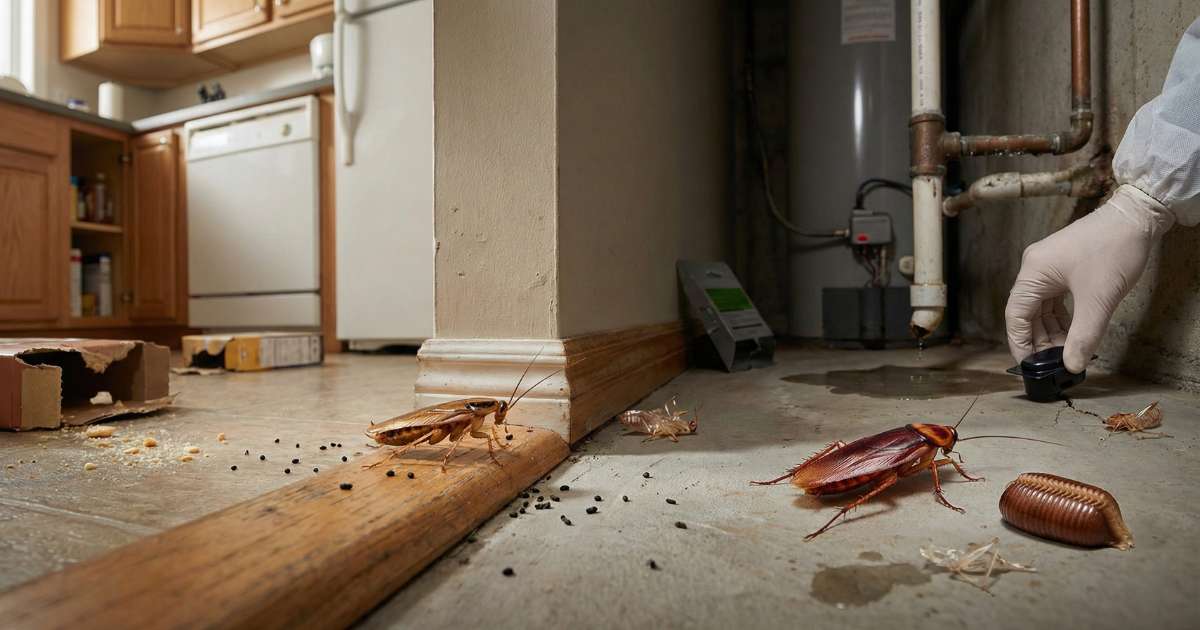
Cockroaches need three things to survive: food source, moisture source, and shelter availability. In Etobicoke kitchens, they find crumbs and food debris. Grease residue and standing water from a leaking pipe. They hide in dark tight crevices as small as ⅜ inch, often inside a kitchen cabinet void or behind appliance space.
German Cockroach Identification
The German cockroach (Blattella germanica) is the most common Toronto species. It has light brown colouring, two dark parallel stripes, and grows to about half inch body length. This is an indoor only species with a strong kitchen and bathroom preference. It’s a prolific breeder with a fast rapid reproduction rate, laying eggs in an ootheca egg case.
American Cockroach Identification
The American cockroach (Periplaneta americana) looks very different. It has reddish brown colouring and a clear figure 8 head marking. This species can reach up to 2.5 inch body length, much bigger than its German cousin. It likes basement and drain areas, thanks to its natural sewer dwelling habit. Many Etobicoke homeowners know it by its common name: water bug.
Brown Banded and Oriental Cockroach Identification
Two other species show up less often in Etobicoke homes. The Brown Banded cockroach (Supella longipalpa) has light brown colouring with two lighter wing bands across its back. The Oriental cockroach (Blatta orientalis) looks different. It has a dark glossy body and keeps its outdoor breeding habit. Both count as a less common Toronto species than German or American roaches.
How Fast Cockroach Populations Grow Once Established
One female cockroach can start a disaster. Each ootheca egg case holds many eggs that hatch into the nymph stage. Every nymph goes through a molting cycle before it becomes an adult cockroach. This fast reproduction rate means hundreds of offspring per female are possible. That’s how small infestation escalation turns into an established colony so quickly.
If cockroaches keep coming back, Pestiseed provides cockroach control across Toronto and the GTA with targeted baiting and follow up visits. Call 437-771-8717.
Signs You Have a Cockroach Infestation
Droppings and Egg Case Identification
Cockroach droppings are the clearest sign of a problem in your Toronto home. They look like pepper sized fecal matter with a coffee ground appearance, often near a food storage area. You’ll also spot baseboard droppings and cabinet corner droppings. Look for an egg case, called an ootheca, tucked into tight corners.
Odour and Shed Skin Signs
A strong musty odour or oily odour often means roaches are nearby. This smell comes from cockroach pheromone building up as a pantry odour signal. You may also find shed skin or a nymph exoskeleton left behind. Small rooms trap this smell fast, causing confined space smell concentration.
Daytime Sightings as a Severity Indicator
Roaches hide by day, so a daytime sighting is a warning sign. It shows nocturnal behaviour disruption, meaning the colony is too crowded to stay hidden. A multiple location sighting across your home is an overcrowded colony indicator. Toronto homeowners should treat this as a severe infestation marker.
Why Toronto’s Housing Stock Makes Cockroach Infestations Harder to Contain
Shared Walls and Plumbing Chases in Older Etobicoke
Older Toronto building stock in Etobicoke and North York gives roaches easy paths between units. A shared wall often hides a plumbing chase that runs through several homes. Roaches travel through a pipe penetration gap or a foundation crack in the wall. This wall void creates real structural entry point vulnerability for the whole building.
Downtown Toronto Condo Density and Unit to Unit Spread
Downtown Toronto condos face a different problem. High condominium density packs units close together, speeding up unit to unit spread. A shared corridor gives roaches common space access across many floors. Any high rise building can turn into a multi unit housing problem fast, as roaches move freely between neighbours.
Winter Indoor Migration in Toronto’s Climate
A cold Toronto winter pushes roaches inside to survive. This indoor migration comes from simple cold weather shelter seeking behaviour. Roaches move toward heat source proximity, often settling into furnace area harborage. This is normal climate driven pest behaviour for every roach species in the city.
Why DIY Cockroach Treatments Fail
Aerosol Sprays Scatter Colonies Instead of Eliminating Them
An aerosol spray or bug bomb feels like fast action, but it backfires. A fogger can’t reach deep into the nest, causing wall void penetration failure. The repellency effect of pyrethroid insecticide triggers panic dispersal. Roaches scatter fast, leading to colony scattering and colony fragmentation across your Toronto home.
Bait Aversion and Pesticide Resistance in German Cockroaches
German cockroach resistance is a real problem in Toronto homes. Repeated product use builds pesticide resistance over time through a genetic resistance trait. Some roaches develop bait aversion, rejecting bait with a dinotefuran active ingredient. This gel bait matrix avoidance spreads through offspring resistance transfer, creating a bait averse population.
Landlord Responsibility for Cockroach Infestations
What Counts as a Maintenance Obligation Under the Act
The Residential Tenancies Act Ontario sets a clear rule for landlords. Section 20 creates a maintenance obligation to meet the good state of repair standard. This includes the fit for habitation standard required by law. A cockroach problem counts as pest infestation as a repair issue. This falls under the landlord’s landlord duty to maintain the unit.
What Tenants Can Do If a Landlord Doesn’t Respond
Tenants have a clear path forward in Toronto. Start with maintenance request documentation and a written notice to landlord. If nothing changes, file with the Landlord and Tenant Board. The LTB complaint process can order a tenant remedy. You can also file a municipal property standards complaint.
Health Risks of Cockroach Infestations
Allergens and Asthma Triggers From Cockroach Debris
A cockroach allergen builds up fast in an infested Toronto home. It comes from shed exoskeleton particulate and droppings allergen left behind indoors. Both become airborne debris that you breathe in daily. This debris acts as a known asthma trigger for many people. Over time, it causes respiratory irritation and a real indoor air quality impact.
Cross Contamination Risk in Kitchens
Cockroaches create a direct food contamination risk in your kitchen. They cause bacteria transfer through simple kitchen surface contact. This leads to pathogen spread across counters and dishes. Any food prep area risk grows worse through saliva and fecal contact. This makes the kitchen the highest risk room in the home.
Professional Cockroach Control Methods That Work
Integrated Pest Management (IPM) for Cockroaches
Integrated Pest Management is the standard approach in Toronto homes. An IPM strategy uses a multi method approach instead of one single fix. This includes sealing entry points and food source elimination together. Trap monitoring tracks results over time. Habitat modification works best when paired with sanitation combined with treatment.
Gel Bait Rotation to Prevent Resistance
Gel bait rotation stops roaches from building resistance. This means active ingredient rotation, switching products like dinotefuran regularly. A three to six month rotation cycle supports real bait aversion prevention. Technicians use commercial grade bait through crack and crevice application for the best results.
Dry Flowable Bait for Wall Voids and Hard to Reach Areas
Dry flowable bait reaches places sprays can’t touch. This wall void application method targets hard to reach harborage directly. It gives long lasting control over several weeks. A proper treatment protocol always follows proper dosage application rules for safety.
Preventing Cockroach Infestations in Toronto Homes and Apartments
Sanitation and Food Storage Practices
Good habits stop roaches before they start. Always use a sealed food container for pantry items in your kitchen. Add daily counter cleaning and a solid dish cleanup routine every night. Don’t forget trash bin sealing and crumb elimination after meals. Even pet food storage needs a sealed container.
Sealing Entry Points in Older Toronto Buildings
Older Toronto buildings need extra crack sealing work. Use silicone caulking around baseboards and pipes throughout the home. Apply foundation gap sealing and a proper pipe penetration seal where needed. Add weatherstripping on doors and windows. Remember the dime sized gap tolerance roaches can squeeze through.
Moisture Control in Basements and Utility Areas
Roaches need water to survive indoors. Start with fast leak repair to remove basement moisture sources. Lower utility area humidity with regular dehumidifier use. Focus on standing water elimination near sinks and drains. Good crawl space ventilation keeps the whole area dry.
Seasonal Cockroach Activity in Toronto
Spring and Summer Peak Breeding Months
Toronto sees a clear pattern every year. Spring emergence starts the cycle as temperatures rise outdoors. This builds into a summer breeding peak across the city. June through August activity marks the busiest stretch for roaches. Warm weather drives warm weather population growth through humidity driven breeding indoors.
Winter Indoor Migration Patterns
Cold weather changes roach behaviour completely. Winter survival behaviour pushes roaches toward cold weather indoor migration into Toronto homes. They head straight for heat source proximity, often settling into furnace area harborage. Watch for the October migration spike as temperatures first drop each fall.
FAQs
How long does cockroach treatment take to work?
Treatment timeline for cockroach control runs 7 to 14 days for visible results. Full elimination timeframe depends on infestation size. Most Toronto homes see complete results within two to three weeks total.
Can cockroaches survive Toronto winters?
Cockroaches survive Toronto winters by staying indoors near heat sources. They don’t hibernate like outdoor insects. German cockroaches stay active year round inside heated homes, buildings, and apartments throughout the cold season.
Are cockroach treatments safe for pets and children?
Professional cockroach treatments use EPA Reduced Risk product options that protect families safely. These products support pregnancy safety standards too. Technicians recommend proper ventilation and a short re-entry window after application.
How many treatments does a typical infestation need?
Treatment frequency for most Toronto infestations requires two to four visits total. Technicians space each visit 14 to 21 days apart. Severity and roach species both affect the exact treatment frequency needed.
What should I do if my Toronto landlord won’t fix the cockroach problem?
The correct landlord non response remedy is filing Form T6 with the Landlord and Tenant Board. This Ontario process can order repairs, rent abatement, or compensation for unresolved cockroach infestations.
Get Professional Cockroach Control in Toronto
Pestiseed offers trusted professional cockroach control Toronto homeowners rely on. Every licensed exterminator provides a free inspection across the GTA service area. We offer same day service backed by a full treatment guarantee.