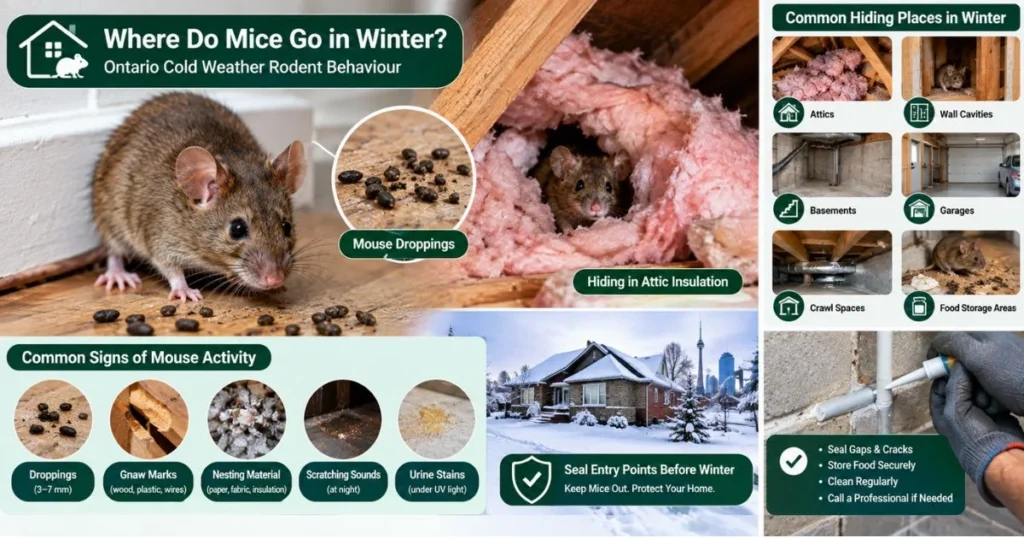
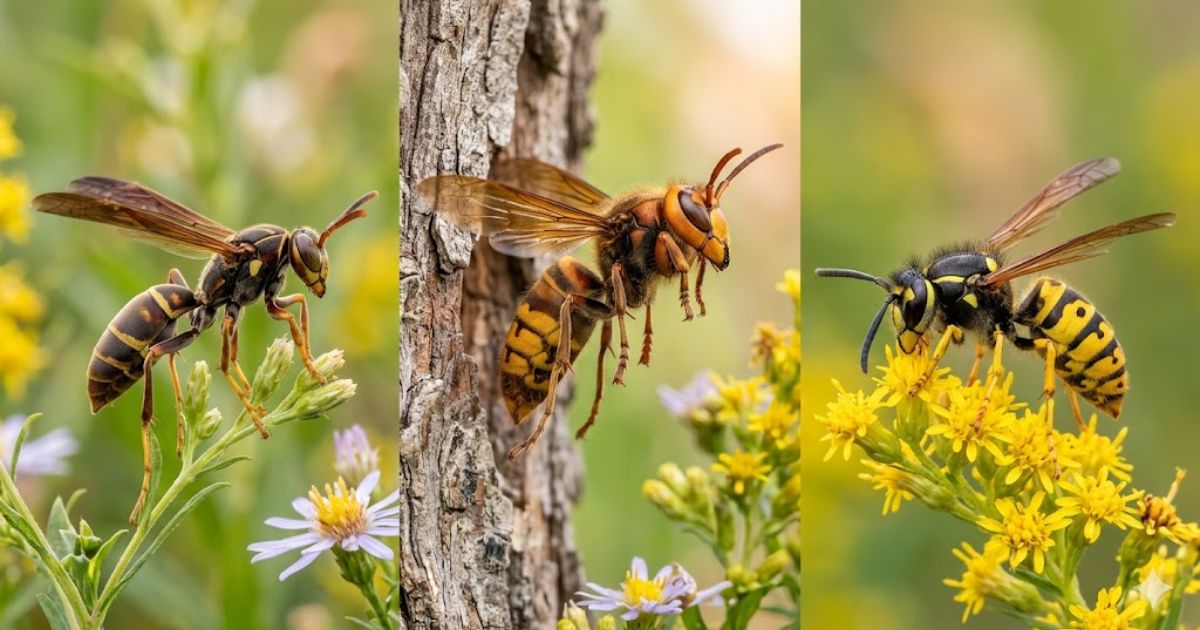
Wasps are flying insects common across Etobicoke. They have smooth, narrow bodies. Wasps have smooth, narrow bodies with very little visible hair. Social wasps live in colonies with one queen. Solitary wasps rarely sting anyone. Common types include yellow jackets, paper wasps and hornets. Each has a different size, color and nest style. Identifying the species helps homeowners pick the right removal method.
Types of Wasps in Ontario
Two main groups exist based on life style. Social wasps live together under one queen. Solitary wasps include potter wasps and mud daubers. These rarely sting humans. All wasp species share narrow, shiny bodies.
Toronto hosts several wasp types each summer. Yellow jackets scavenge near trash and sugary drinks. Paper wasps build umbrella shaped nests under eaves. Hornets prefer aerial nests in trees. Nest placement and body size differ across species. Aggression level varies too. This makes field identification simple for homeowners.
Hornets
Size: 1.5 inches
Color: black and yellow
About hornets: European hornets stay active after dark. According to the Ontario government invasive species resources, European hornets are established across parts of southern Ontario and remain active later in the day than many other social wasps. This raises risk during evening garden work. The bald faced hornet belongs to the yellow jacket group of social wasps despite its common name. Both insects build nests. Both deliver a strong, painful sting when disturbed. Knowing the difference helps homeowners judge risk early.
Yellowjackets
Size: 0.5 inches
Color: yellow and black
About yellowjackets: Ground nests form inside rodent burrows. Wall voids and hollow logs work too. Colonies grow fast. By late summer, thousands of workers live inside. The coloring looks similar. Flight reveals the real difference. Yellow jackets fly with their legs tucked close to the body during flight. Bees also look fuzzy. Yellow jackets stay smooth and shiny.
Paper Wasps
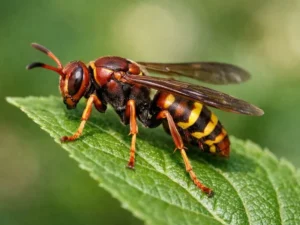
Size: 0.75 to 1 inch
Color: reddish brown with yellow
About paper wasps: Open umbrella shaped nests hang under eaves. Window casings and porch ceilings work too. Visible hexagonal cells mark the structure. Colonies stay small, around 100 workers. Paper wasps rank less aggressive than yellow jackets. They retreat rather than attack. Caterpillars and beetle larvae become their prey. This makes them helpful garden predators across Toronto.
Mud Dauber Wasps
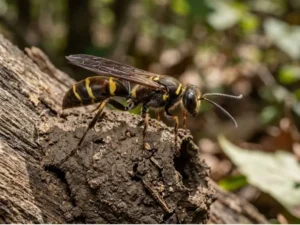
Size: 1 inch
Color: brown or black with yellow bands
About mud dauber wasps: Mud forms the nest material here. Walls, sheds and other surfaces hold these nests. Solitary by nature, they avoid conflict. A sting only happens when handled directly. Spiders become their main prey. This helps control spider populations naturally. Despite their look, they count as a beneficial wasp species for Ontario gardens.
What a Wasp Nest Looks Like in Toronto
Wasp nests differ by species, location and material. Hornet nests form gray, papery balls in trees. These grow basketball sized, housing up to 700 wasps. Yellow jacket nests stay hidden under ground. A small entry hole marks the spot. Paper wasp nests stay open. Their umbrella shape reveals hexagonal cells clearly.
Nest identification works two ways. First, check the location. Trees, ground and eaves all matter. Second, check the structure. Enclosed, open or mud built tells the story. Nests start small in spring. Growth peaks by late summer. Early identification gets easier this way.
Found a Wasp Nest but Not Sure What Type It Is?
Nest location, structure, and wasp activity can help identify what you are dealing with. Pestiseed can inspect the nest and recommend the appropriate removal approach.
Licensed & Insured
Toronto & GTA
Professional Pest Control
Getting Rid of the Wasps
Wasp nest removal depends on nest type. Exposed nests need foam insecticide spray. Ground nests need granular dust at the entrance. Seal the entrance once treatment finishes. Hidden nests inside walls need insecticidal dust. Push dust into entry points. Avoid sealing too soon.
Wasps stay calm and inactive then. Wear a bee suit, gloves and a vapor mask. Wait 24 hours before approaching the nest. Large or underground nests pose more risk. Aggressive nests do too. These cases need professional Pest control Etobicoke. Ontario pesticide applications for wasp control must follow regulations established by the Conservation and Parks (MECP).
FAQs
What is the difference between a wasp, hornet, and yellow jacket in Ontario?
Yellow jackets measure 0.5 inches. They build ground nests and act most aggressively. Paper wasps stay 0.75 to 1 inch. Open umbrella nests mark their territory. They rarely attack. Hornets reach 2 inches. Large aerial nests define their presence.
Is a bald faced hornet a real hornet?
No. The bald faced hornet sits genetically closer to yellow jackets. European hornets hold the title of Canada’s only true hornet. The naming reflects appearance alone. Taxonomic classification tells a different story.
What is the most aggressive stinging insect in Ontario?
Yellow jackets rank as Ontario’s most aggressive stinging insect. Aggression rises in late summer. Colonies peak then. Food sources shrink too. Trash, sugary drinks and sudden movement trigger attacks easily.
Are European hornets dangerous in Ontario?
European hornets deliver a strong, painful sting. They sting multiple times too. Size reaches 3 to 5 cm. Black, yellow and reddish brown markings cover the body. Unlike other wasps, they stay active at night.
When are wasps most active in Toronto?
Wasp activity follows a seasonal pattern. Queens emerge in spring. Colonies grow through summer. Late summer brings the peak. Cooler autumn temperatures trigger colony decline.
Can a wasp sting cause anaphylaxis?
Yes. Wasps sting repeatedly. This raises risk for allergic individuals. Watch for swelling beyond the sting site. Difficulty breathing matters too. Dizziness counts as a warning sign. Anyone with a prior severe reaction should seek emergency medical care immediately.
Found a Wasp Nest on Your Property?
Small spring nests are easier to remove, but late season colonies can contain thousands of workers. During the inspection, the technician identifies the species, locates nest entry points, evaluates activity levels, and explains available treatment options before any work begins. Book a wasp nest inspection today and find out whether treatment is necessary before the colony reaches peak season.
Not Sure What Kind of Wasp Nest You Found?
Let Pestiseed Assess the Nest and Activity.
Pestiseed can inspect the nest, identify the wasp activity and nesting location, and recommend the appropriate removal approach for properties across Toronto and the GTA.
Licensed & Insured
Toronto & GTA
Pest & Wildlife Control