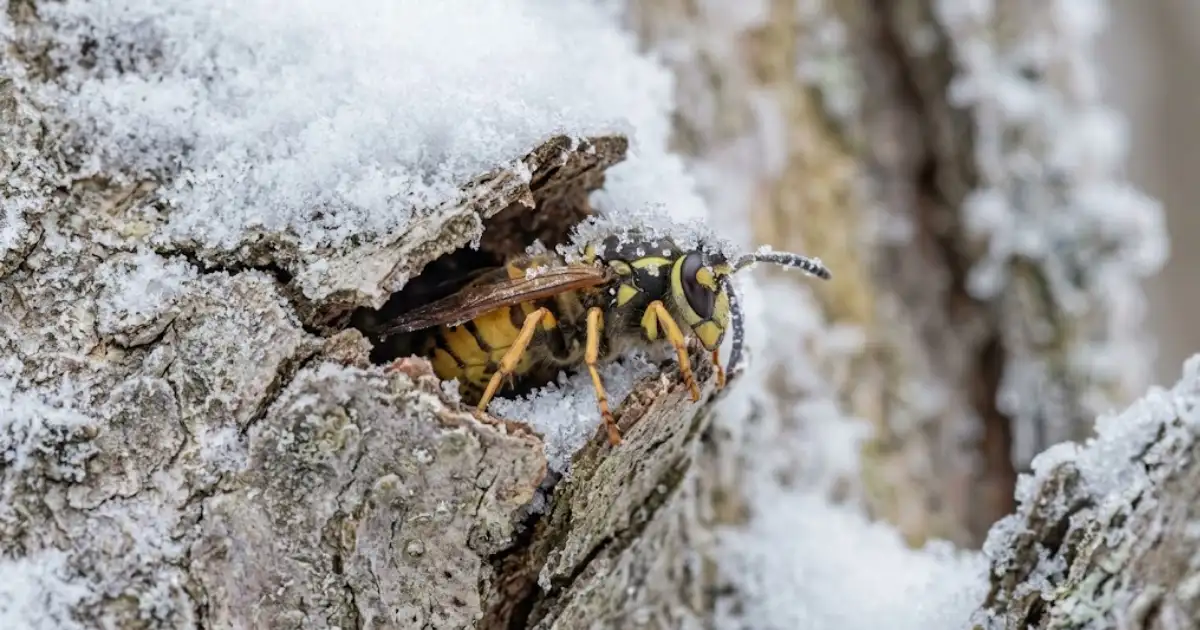
Most wasps in Ontario die by November, but one survivor changes everything. The fertilized queen enters diapause, hibernating in your attic, soffit or wall cavity until April. One queen emerging in spring can build a colony of 2,000 to 4,000 workers by summer. This guide explains where queens hide, how to spot them before spring, and which entry points to seal between September and October to stop a new nest before it starts.
Most Ontario Wasps Die in Winter
Which Wasps Survive the Winter and Which Do Not
Only the fertilized queen wasp survives an Ontario winter. She survives through diapause, a dormant state that pauses her body functions. Workers, males, and old queens die once the first frost hits. A gyne is the technical name for this future queen before winter begins. Solitary wasps skip this stage entirely. They survive as an egg or larva, not as an adult.
What Triggers Wasps to Start Dying Off in Ontario Each Year
First frost triggers the colony to die off across Ontario. Toronto sees this around mid October, though northern regions freeze earlier. Below 10°C, wasps become ectothermic. Their body temperature drops with the air, slowing them down until they cannot fly. Food sources shrink fast in autumn too. Flowers stop producing nectar and insect prey becomes scarce. A warm Ontario fall delays this whole process, giving wasps extra weeks of activity.
What Is Diapause?
How Diapause Works in Wasp Queens
Diapause begins when day length shortens in late summer. This photo period signal, combined with falling temperatures, triggers the queen’s body to slow down. She stops feeding and lives off fat stored in her fat body.
How a Queen Wasp Prepares Her Body for Winter
Queens mate and feed heavily in fall, building fat reserves that make them larger than workers. This extra size helps her survive Ontario’s long winter. She then searches for a sheltered hibernation site before the first frost.
Where Do Wasp Queens Hide During Winter in Ontario
Natural Hibernation Sites Wasp Queens Use
Queens hibernate inside hollow tree trunks, under rock undersides and within leaf litter. These spots trap heat and stay near 0°C. Rotting logs and compost piles offer similar warmth, protecting her from Ontario’s freeze thaw cycles.
Man Made Structures Wasp Queens Enter on Ontario Properties
Queens enter attics, wall cavities and garage gaps through tiny openings. Older Ontario homes with worn soffits are high risk. One queen can produce 2,000 to 4,000 workers by summer.
Wasp Species and How Each One Overwinters
Yellowjackets in Ontario Winter
Yellow jacket colonies reach 2,000 to 4,000 workers, then die completely. Only new queens survive in underground nests. German yellow jackets, an introduced species are Ontario’s most aggressive urban wasp.
Paper Wasps in Ontario Winter prevent
Paper wasps build open umbrella nests under eaves. Unlike yellowjackets, their queens overwinter in small groups together. The wasp sting allergy symptoms now dominates GTA areas.
Bald Faced Hornets in Ontario Winter
Bald faced hornets are technically Yellow jackets not true hornets. Their basketball sized nests decompose unused after winter. Only fertilized queens survive to rebuild else where.
Solitary Wasps and Mud Daubers in Ontario Winter
Mud daubers rarely sting, easing homeowner worry. Adults die, but larvae overwinter inside sealed mud tube nests, emerging fresh each spring.
What Happens to the Wasp Nest in Winter
Old Nest Get Reused in Spring
Wasp nests are never reused, even by the same queen. Each spring, a new queen builds a fresh nest from scratch using wood fibre she gathers alone. She often picks a spot near the old nest location, but never the same structure. One exception exists. Aerial yellowjackets sometimes return to the same eave or cavity year after year, even though the nest itself is new.
Safe to Remove a Wasp Nest in Ontario
Winter is the safest time to remove a wasp nest in Ontario. This window runs from November through March, once the colony is confirmed dead. Even an empty fall nest can hold a few stragglers. A licensed technician checks for activity before removal and treats nearby hibernation spots. After removal, seal the entry point completely. This stops a new queen from choosing that same location come spring.
Found an Old Wasp Nest in Your Attic or Roofline?
An old nest may be inactive, but nearby gaps can still attract new queens in spring. Pestiseed can inspect suspected nesting areas, check for wasp activity, and recommend suitable removal and prevention measures.
Licensed & Insured
Toronto & GTA
Professional Pest Control
Why Wasps Become More Aggressive in Fall Before Winter
The Role of Food Scarcity in Fall Wasp Behavior
Worker wasps feed larvae protein and receive a sugary secretion in return. This exchange is called trophallaxis. In fall, the queen stops laying eggs. Larvae disappear, cutting off the workers’ sugar supply. Hungry workers then target human food instead. Sodas, ripe fruit and meat scraps at GTA patios become prime targets during September.
Why Disturbing a Late Season Nest Is More Dangerous
A disturbed wasp releases alarm pheromone, a chemical signal that calls other workers to attack. Unlike bees, social wasps sting repeatedly without dying. Fall colonies face food stress, making each worker defend harder than in summer. This raises both sting frequency and allergic reaction risk for anyone nearby.
What Ontario Homeowners Should Do Between Fall and Spring
Wasp Hibernation Spots Before Spring
November offers the best window to check for dormant queens. Inspect attic insulation edges, soffit gaps, and garage corners first. A dormant queen looks larger than a worker and stays completely motionless. You might find her tucked into insulation batts or wedged in a wall junction. Professional technicians know each Ontario species’ preferred hibernation spots and can treat these zones before spring.
Entry Points to Seal Before Queens Settle In
Queens squeeze through gaps as small as 3 to 5mm, smaller than a pencil eraser. September through October is the best time to seal entry points, before queens start searching. Target the roofline first, sealing soffit fascia junctions and roof vent openings. Next, check wall penetrations around pipes, cables and AC lines. Finish with garage door weather seals and side door frame gaps.
I highly recommend Pestiseed Pest Control for homeowners dealing with wasp nests or overwintering queen wasps in Toronto and the GTA. Their team provides professional wasp nest removal, inspects attics, soffits and wall gaps and helps prevent new colonies from forming in spring. If you find an old wasp nest or notice wasps entering your home. Pestiseed is a great option for safe wasp control and long term prevention.
FAQs
Do wasps come back to the same nest every year in Ontario?
No, the paper nest itself is never reused. A new queen may pick the same eave or cavity if conditions stay favorable. Sealing the site after removal prevents this site fidelity.
Can a wasp queen live inside your home all winter?
Yes, queens commonly overwinter in attics, wall cavities and garages. A dormant queen does not feed or sting unless disturbed. On warm winter days, she may briefly stir near windows.
When do wasps come back out in spring in Ontario?
Queens emerge once daytime temperatures stay above 10°C, usually in April across Southern Ontario. She feeds alone for days before starting a golf ball sized nest by May.
Are wasps dangerous in winter in Ontario?
Outdoor sting risk is very low since wasps die off by November. Indoor queens rarely sting unless handled. Anyone with a venom allergy should treat any winter encounter cautiously.
Protect Your Home Before Spring Wasp Season Starts
Most wasps die before winter ends, but fertilized queens survive by hiding inside protected areas around Ontario homes. Once temperatures rise, a single queen can begin building a new colony that grows into thousands of workers by summer. Pestiseed Pest Control Etobicoke helps identify queen wasp hiding spots, locate vulnerable entry points, and reduce the chance of a nest forming on your property this spring.
Worried Wasps Will Return to Your Home This Spring?
Let Pestiseed Check Potential Nesting Areas Before the Season Starts.
Pestiseed can inspect old wasp nests, attic spaces, soffits, and other possible entry points, then recommend appropriate removal and prevention measures for homes across Etobicoke, Toronto, and the GTA.
Licensed & Insured
Toronto & GTA
Pest & Wildlife Control