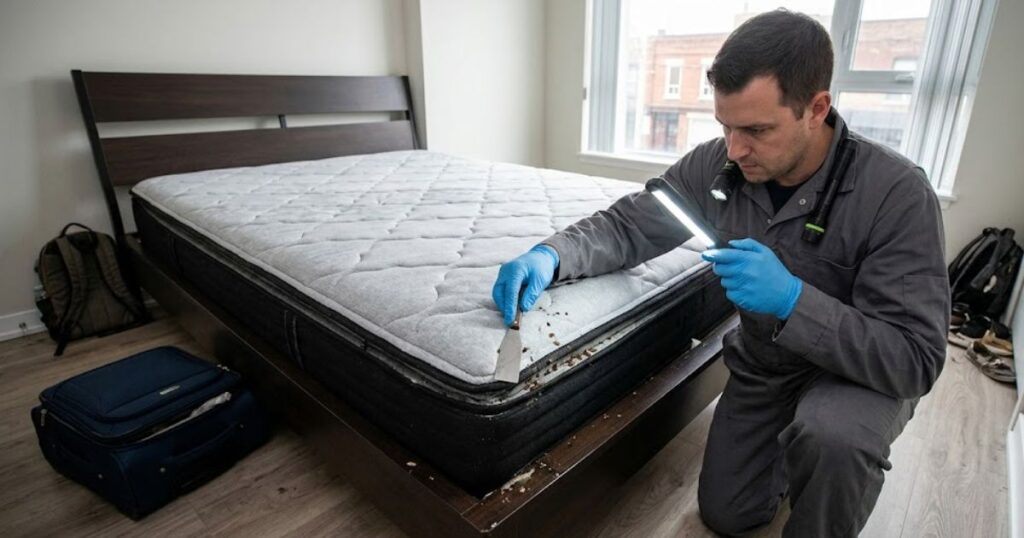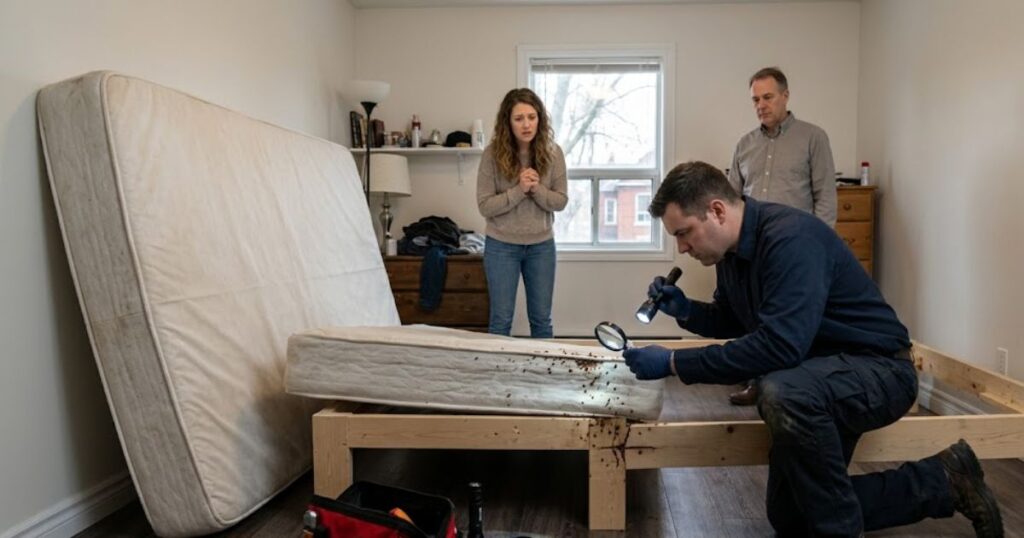
Bed bugs spread fast in Toronto homes, condos, and apartments. Most treatments fail because preparation gets skipped or done wrong. Clutter, shared walls, and egg cycles give bed bugs places to hide from any spray or heat. Without the right prep, complete bed bug treatment guide.
Pestiseed fixes this with a full preparation to treatment plan built for Toronto homes. Our licensed technicians handle chemical spray, heat treatment, and cryonite options based on your exact situation. We cover everything from mattress encasement to neighbouring unit inspection in multi-unit buildings. Proper prep with Pestiseed means one job done right, not two or three repeat visits.
Why Preparation Decides Whether Bed Bug Treatment Works or Fails
Skipping Prep Creates a Treatment Gap That Keeps Bed Bugs Coming Back
Clutter as harborage blocks spray penetration into inaccessible baseboards. Treatment voids form fast, and the egg cycle keeps running underneath. Health Canada confirms chemical treatment alone fails without physical control and harborage reduction working together. A residual infestation left behind means retreatment costs and another follow up visit.
Toronto Condos and Apartments Need a Whole Building Strategy
Bed bugs travel through shared walls, electrical conduit travel, and wall cavity migration between adjacent units. Sealing cracks in Toronto Community Housing buildings cut unit to unit spread by 60%, per the Toronto Bed Bug Project. City of Toronto Municipal Code Chapter 629 legally requires all properties to stay insect free. Building management and the property manager must run a coordinated building treatment, including a neighbouring unit inspection, across every hallway and laundry room in the multi-unit dwelling. The Residential Tenancies Act Ontario backs this up.
How to Prepare Your Home for Bed Bug Treatment Step by Step Checklist
Strip the Bed Completely Before the Technician Arrives
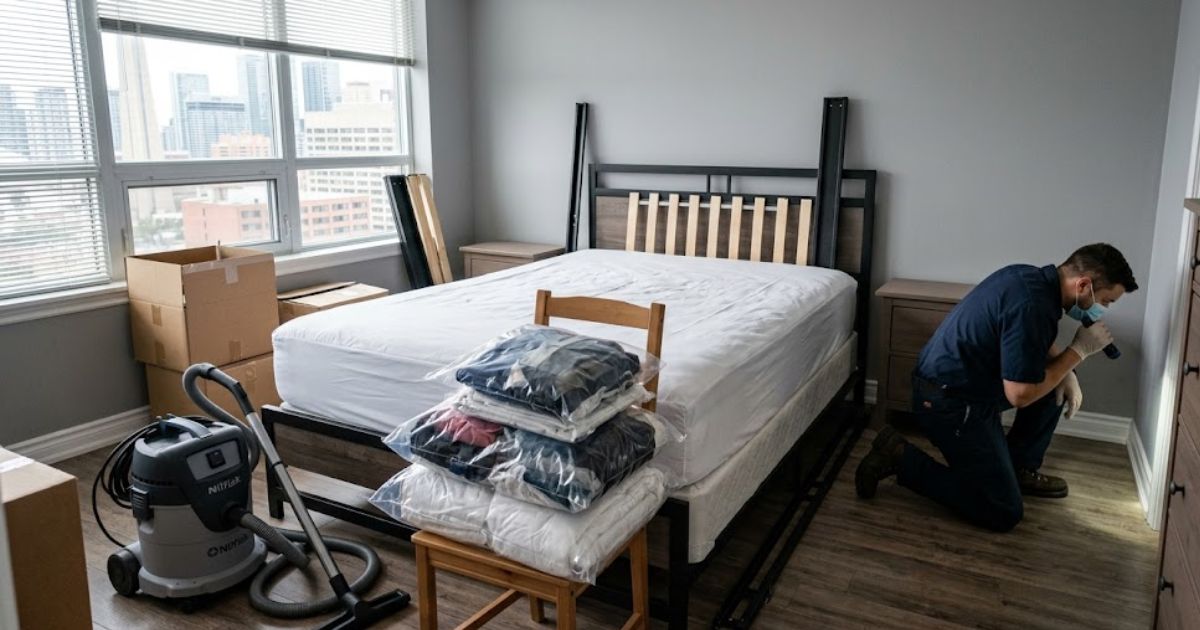
Start with mattress stripping and full bedding removal sheets, pillowcases, and comforter all come off. Fit a mattress encasement over the mattress and box spring right after. Disassemble the bed frame and move the headboard away from the wall. Pull all furniture 6 to 8 inches from the wall for sleeping area clearance and full baseboard access, per pestsource.ca prep guidelines. How to identify bed bugs in your Toronto home before the technician steps in.
Wash Everything on High Heat and Seal It Immediately
Run every fabric item through a hot wash cycle and then a high heat dryer for a 30 minute dryer minimum. The thermal kill threshold sits at 50 degrees Celsius lethal temperature, confirmed by the Government of Canada’s physical control guidance. Seal clean clothes inside sealed plastic bags using laundry bags right after drying. Send leather items and non washable items through a heat chamber treatment or dry cleaning. Pack stuffed animals and duffel bags the same way how heat treatment works for bed bugs.
Empty Every Drawer and Clear Every Path in the Room
Pull everything out of dressers, closets, and bookshelves for full furniture emptying. Remove wall art, mirrors, outlet covers, and light switch plates to expose baseboards and increase surface area exposure. Toronto Public Health confirms clutter reduction and vacuuming are required steps for elimination. Toss vacuum bags immediately after use and seal discarded items in cardboard boxes before moving them out. A clear room clearance pathway gives the technician direct technician access to every corner.
Move Pets and Protect Vulnerable Family Members Before Treatment
Turn off the aquarium filtration system and aeration system chemical exposure damages fish tanks fast. Health Canada states pesticides must never touch infant cribs, playpens, or children’s toys. Move immunocompromised persons and pregnant residents out well before treatment starts. Follow the vacate duration window strictly pesticide residue drying determines safe re-entry timing. The pet vacate period and vulnerable population accommodation steps are not optional for occupant safety.
How Preparation Differs Based on the Treatment Method Used
Clear the Room So Chemical Spray Reaches Every Surface
Residual insecticide and contact spray only work when spray application access is fully open. Clear all items from baseboards so crevice application hits every gap directly. Health Canada requires using only registered pesticides, applied exactly as the label directs. Surface drying takes time, so respect the full vacate period before re-entry. Most chemical penetration plans run across two to three treatment visits with strict follow up scheduling between each one.
Remove Heat Sensitive Items Before the Temperature Climbs
Heat treatment equipment pushes rooms to 120 to 140 degrees Fahrenheit for thermal elimination. Remove candles, aerosols, and all wax based products before the technician starts. Pets and plants vacate the unit completely and the occupant vacate applies to every living thing. Health Canada confirms heat treatments must stay in professional hands only. Single visit efficacy makes this method worth the prep. Single day elimination is real when heat distribution reaches every corner.
Run a HEPA Pre-Vacuum Before Steam or Cryonite Starts
Steam treatment and cryonite treatment both need a HEPA pre-vacuum done first to always follow the steam before vacuum sequence in reverse for cryonite. A low vapour steamer or dry steam unit delivers steam kill on contact without soaking surfaces. Health Canada confirms dry steam leaves less moisture risk, cutting mould risk directly. Carbon dioxide snow from cryonite treatment gives a chemical free bed bug removal option with full tight space access. Families needing a sensitive household application including those near Pestiseed service zones use this as their chemical free option and freeze treatment safely.
Post Treatment Steps Toronto Residents Should Follow
Dead Bugs After Treatment Are Normal
Respect the full re-entry wait time and let the surface drying period finish completely. Seeing dead bed bugs post treatment in the first few days confirms the treatment worked. Post treatment residual activity keeps killing bugs that cross treated surfaces after you return. Nymph emergence from egg hatching cycle explains what to expect after a bed bug treatment. Book your retreatment timing inside the 2 to 4 week follow up window that is when increased activity sign peaks. Canada confirms vacuuming after treatment helps, but seal every vacuum bag in plastic and bin it fast. Stay on the monitoring protocol to track treatment effectiveness signs across the full cycle.
Seal, Trap, and Inspect to Stop Bed Bugs From Coming Back
Install a mattress encasement and place interceptor traps under every leg right after treatment. The Toronto Bed Bug Project confirmed that caulking baseboards and sealing cracks spread to neighbouring units by up to 60%. Municipal Code Chapter 629 requires sealing gaps between wood bed frames, floors, and walls after treatment. Check every piece of secondhand furniture inspection before it enters the unit. Shared laundry room risk and Toronto apartment re-entry risk stay high without a solid crevice sealing protocol. Building travel inspection habits into every trip luggage is a top reinfestation pathway. Use interceptor traps as your early detection monitoring and physical barrier combined.
Tenant and Landlord Responsibilities for Bed Bug Preparation in Ontario
Four Laws That Define Who Must Act on Bed Bugs
Municipal Code Chapter 629 states all properties must stay free of insects and pests at all times. The Residential Tenancies Act 2006 Chapter 17 backs this with a clear pest free maintenance duty on every landlord. The Health Protection and Promotion Act and Pest Control Products Act both enforce the licensed exterminator requirement for any chemical treatment. Ontario’s Pesticides Act under the Ontario Ministry of Environment controls exactly how pest control runs legally. Tenants who face landlord inaction carry full legal recourse rights and can pursue an LTB remedy through the Landlord and Tenant Board. The property standards obligation sits with the building owner, not the occupant.
Tenants Prep the Unit Landlords Cover the Bill
Tenant preparation duty means clearing and cleaning the unit before the exterminator arrives. The landlord treatment cost covers the full job toronto 311 confirms this split directly. Landlords must give 24 hour notice before entering under the written notice protocol. Tenants who skip preparation cooperation face eviction risk for non cooperation as a real legal outcome. File a Form T6 application with the LTB to claim a rent abatement remedy when landlords delay treatment. The Canadian Centre for Housing Rights confirms disability accommodation under Human Rights Code applies to submit a formal accommodation request for vulnerable tenant support. Toronto Public Health assistance remains available for tenants who need extra help with prep.
FAQs
Do I need to prepare differently for each room in my Toronto condo?
Yes, every room needs specific prep. Bedrooms get full mattress stripping and encasement installation. Living areas need clutter reduction and furniture emptying. Kitchens stay mostly untouched. Toronto condo units also need shared wall gaps sealed and hallway access cleared for the technician.
How long before treatment should I finish preparation?
Finish all prep at least 24 hours before treatment starts. This gives surfaces time to dry and lets the technician start right away. Rushing prep on the same day creates treatment gaps and missed harborage zones.
Can I sleep in my home the night before bed bug treatment?
Yes, sleeping home the night before is fine. Do not move bedding to another room though. Disturbing sleeping areas spreads bed bugs further. Keep everything in place and finish your 24 hour pre-treatment window prep before going to bed.
What should I do with my pets during and after treatment?
Remove all pets before treatment starts. Turn off aquarium filtration systems and cover fish tanks fully. Follow the full pet vacate period before returning. Health Canada confirms pesticides need full drying time before pet re-entry timing is safe for any animal.