Wasps near your home don’t disappear after sun set. Many homeowners hear buzzing in walls at night and assume the danger has passed, but worker wasps stay inside the nest entrance, ready to react to vibration or light within seconds. A resting wasp keeps its full sting capability and disturbing a hidden nest in a wall cavity or underground can trigger an attack even in darkness. This guide explains what wasps actually do at night in Ontario, which species pose risk after dark and how to identify and handle a nest safely until Pestiseed can provide a full evaluation.
What Happens to Wasps When the Sun Goes Down
Difference Between Wasp Rest and Human Sleep
Quiescence is not the same as deep sleep. Human sleep runs through cyclical REM and NREM stages. A wasp’s brain activity during rest stays reduced, never fully off. Touch the nest and the colony reacts within seconds. This insect rest state keeps wasps ready for threats.
How Temperature and Daylight Control Wasp Activity in Ontario
Wasps depend on daylight for navigation. Their compound eyes work best in bright conditions, not darkness. Once the sun sets, light dependent navigation becomes unreliable. Ambient temperature also drives flight decisions. Wasps rarely fly once it drops near 10°C. By fall, colder nights push Ontario colonies toward seasonal colony decline.
Which Wasp Species Are Active in Ontario at Night
Yellow Jacket Behavior After Dark
Yellow jackets build nests underground, in walls, attics and wood structures. Once dark falls, nest entrance activity continues but flights stop. Light shining on the nest can trigger sudden emergence. In fall, the yellow jacket queen leaves to mate and burrow into soil. Each yellow jacket worker dies once temperatures drop, never overwintering.
Paper Wasp and Bald Faced Hornet Nighttime Patterns
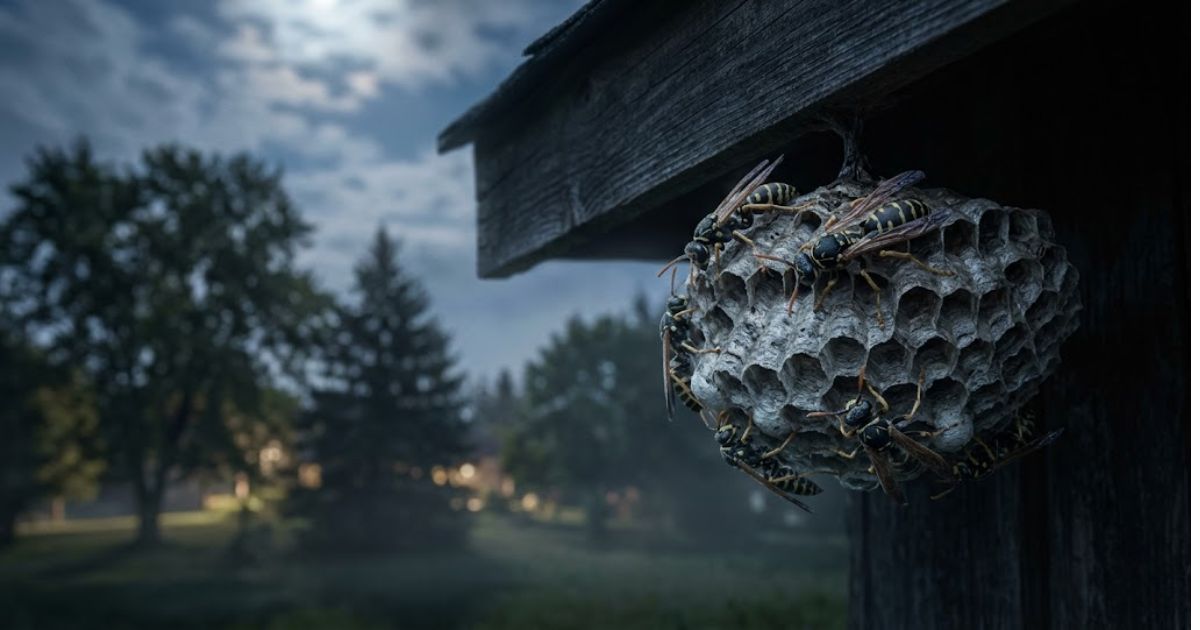
Paper wasps build an open hexagonal comb without any outer envelope. At night, workers rest on this surface, inactive but exposed. Bald faced hornets live inside grey paper nests holding up to 700 workers. Their exterior flight stops, yet interior duties continue through the night. European hornets differ sharply, actively flying and chasing porch lights after dark.
Are Wasps Dangerous at Night
Wasps Still React to Disturbance
A paper nest wall has thin, single layer construction with no insulation. This lets vibration travel straight to the resting wasp inside. Light pointed at the nest agitates wasps quickly at night. Worker wasps release alarm signals and respond within seconds. Even resting, the colony stays alert to nearby threats.
What Triggers a Wasp Attack After Dark
Common triggers include flashlights, power tools and accidental contact with nests. At night, a wasp’s territorial radius shrinks to the nest perimeter. Hidden nests in walls or underground go unseen in darkness. Most stings hit the head, face and hands first. Compost bins and garbage areas often sit close to hidden nests.
Is Nighttime the Right Time to Remove a Wasp Nest in Ontario
Why Pest Controllers Prefer Night Treatments
Evening treatment works because wasp workers stay inside the nest by then. A professional pest controller directs aerosol spray application straight into the entrance. A flashlight helps without drawing wasps toward the light. This method raises the colony capture rate over daytime tries. Most experts recommend checking the nest again after 24 to 48 hours.
Why DIY Night Removal Is Riskier Than It Sounds
Darkness hides nest sections, so DIY wasp removal often misses spots. Homeowners rarely own a full suit or sealed footwear. Disturbed wasps can fly inside through open windows, disoriented by light. A hidden wasp allergy raises anaphylaxis risk during any nighttime attempt. Wall cavities and underground nests need tools most people don’t have.
Suspect a Wasp Nest Hidden in Your Walls or Yard?
Nighttime nest removal can be dangerous when wasps are disturbed or the nest is difficult to reach. Contact Pestiseed for professional wasp nest evaluation and removal in Toronto and the GTA.
How to Identify a Wasp Nest Near Your Home at Night
Visual and Sound Signs of a Hidden Wasp Nest
A hidden wasp nest often sounds like steady chewing inside walls. This noise grows louder in late summer as colonies expand. Outside, a wasp flight line points straight toward one tiny gap. A nest entrance gap can measure just 6mm wide. At night, a red filtered flashlight helps you spot nests safely.
Where Ontario Wasps Commonly Build Nests in Residential Properties
Yellow jackets prefer underground burrows, wall voids and attic insulation spaces. Paper wasps build under eaves, porches, and open shed rafters. Bald faced hornets choose high spots like tree branches and eave corners. Common problem areas include soffit gaps, deck boards and compost zones. Queens pick these sites each spring between April and May.
What Ontario Homeowners Should Do If Wasps Are Active Near Entry Points at Night
Immediate Safety and DIY Action Plan
Ontario homeowners should avoid disturbing nests, reduce attractants and monitor activity until daylight evaluation is possible. Check each window screen for gaps near known nest areas. For a wasp indoors at night, trap it gently with glass and card. Never swat, since this releases an alarm pheromone instantly. Watch closely for any anaphylaxis sign and call if needed.
Next Day Evaluation and Prevention
Daytime mapping works by watching wasp flight lines between 10am and 3pm. Seal foundation cracks, garden depressions and brick weep holes around your property inspection. Cover compost bins and remove fallen fruit to limit food source removal needs. Before April, seal entry points ahead of spring nest building.
Wasp Activity Calendar for Ontario
Spring Colony Start and Summer Growth
A queen wasp builds her first nest alone, sized like a golf ball. She chews wood fiber into pulp for the nest material. Once the first worker generation hatches, the queen stops foraging completely. Workers then expand the nest at an exponential colony growth rate. Foraging trips can reach up to 300 meters from the nest.
Late Summer and Fall
By late summer, the colony shifts toward heavy carbohydrate foraging. Male wasp (drone) production happens in August and September. A new queen mates outside the nest and never returns. Worker wasp behavior turns disoriented as the colony structure collapses. The wasp nest sits empty by October, never reused next spring.
FAQs
Do wasps fly at night in Ontario?
No. Yellow jackets, paper wasps and bald faced hornets stay inside after dark. Only the European hornet flies at night, attracted to light, since wasps need daylight for compound eye navigation.
What time do wasps go back to their nest at night?
Worker wasps return within 30 to 60 minutes after sunset. In Ontario summer, sunset falls between 8:30pm and 9:00pm. Wait 30 to 45 minutes after the last wasp enters before approaching.
Will wasps sting you at night if you go near their nest?
Yes, if disturbed. A resting wasp keeps full sting capability since its stinger never retracts. Walking past poses low risk, but touching or lighting the nest entrance triggers an attack.
Is it safe to spray a wasp nest at night without professional help?
It’s risky. Poor visibility, disoriented wasps and anaphylaxis risk make DIY night spray dangerous. Use a registered aerosol product with a Health Canada PCP number or call a professional.
Do hornets fly at night in Ontario?
Bald faced hornets stop flying outside but keep working inside the nest. European hornets are genuinely nocturnal, flying toward porch lights across southern Ontario, though less common than yellow jackets.
Need Help With a Wasp Nest in Ontario?
Wasps may appear inactive after dark, but most colonies remain capable of defending the nest if disturbed. If you’ve noticed nighttime buzzing, frequent wasp traffic, or a suspected nest near your home. Pestiseed can identify the species, locate the nest and recommend the safest removal plan. Book a professional wasp inspection with Pestiseed to determine whether the colony requires treatment.
Found Signs of a Wasp Nest?Let Pestiseed Help You Handle It Safely
Buzzing in your walls or regular wasp activity near your entry points may indicate a nearby nest. Contact Pestiseed for professional wasp nest evaluation and removal across Toronto and the GTA.