This guide covers every stage of wasp prevention for Toronto homeowners. It identifies nesting species, high risk property zones, seasonal behavior patterns and safe removal limits. It compares natural deterrents against professional treatments and explains the full service process from inspection to emergency removal.
Why Wasps Keep Choosing Certain Toronto Properties
Food Sources That Pull Wasps Straight to Your Yard
Your BBQ, open garbage and compost send strong signals to foraging wasps. Fallen fruit, pet food, and exposed food on your patio are pure protein and sugar sources wasps need. Outdoor dining leftovers, sugary drinks and recycling bins with sticky residue attract them fast. Your Green Bin especially, when over filling, becomes a daily food source for the whole colony.
Warm Sheltered Spots Wasps Treat Like Prime Real Estate
Sun facing walls, soffits, eaves and fascia boards hold heat wasps actively seek for nesting sites. Wall voids, attic spaces, crawl spaces and dryer vents give them a concealed area safe from weather. Decks, pergolas, window frames and fence posts offer quick aerial nest anchors. Even a tree stump, pre-existing burrow, or rodent burrow in sandy soil becomes an underground burrow site fast.
Standing Water Makes Your Property a Full Colony Support System
A birdbath, animal water dish or puddle near your outdoor eating area gives wasps direct hydration. Leaky faucets, clogged gutters and poor yard drainage create constant standing water wasps rely on. Fix downspout flow and check your irrigation system for slow leaks regularly.
Why Toronto Summers Push Nest Growth Into Overdrive
The urban heat island effect keeps Toronto summer temperatures higher than surrounding areas. This temperature rise speeds up larvae development and grows the adult wasp population faster than cooler regions. Late summer behavior shifts toward aggression as food scarcity hits and colony size peaks. Ontario climate during hot months turns a small spring nest into a serious summer infestation by August. Homeowners should first identify the wasp species correctly before choosing any prevention or removal method.
Most Common Nest Building Wasps in Toronto
Yellowjackets
Yellow jackets wear bright yellow and black stripe patterns on a half inch long body. They build underground nests inside soil cavities, structural voids and wall void spaces near homes. A mature colony reaches a baseball sized nest scale with thousands of workers by late July. Late summer aggression spikes hard when food foraging shifts toward sugar and meat near your BBQ.
Paper Wasps
Paper wasps from the Polistes family construct an umbrella shaped nest from chewed wood fibre and saliva. Eaves, porch ceilings, garage door frames and fence posts are their favorite nest attachment spots in spring. A small colony of 20 to 200 stays non aggressive until someone gets close to the open cell nest. Early season removal in spring stops a paper nest before it becomes a real problem.
Bald Faced Hornets
Bald faced hornets hang a basketball sized nest with a teardrop shaped structure from tree branches, soffits or eaves. Their two inch body length and large head make them easy to identify compared to smaller species. Territorial defence of a large colony means a painful sting from multiple workers hits fast. Dolichovespula maculata nests in concealed nest spots like hollow trees and wall voids too.
| Feature | Paper Wasps | Yellowjackets | Hornets |
| Nest Shape | Umbrella, open comb | Round, enclosed | Teardrop, enclosed |
| Nest Location | Eaves, frames, fences | Ground, wall voids | Trees, soffits, eaves |
| Colony Size | 20 to 200 | Up to 5,000 | 400 to 700 |
| Aggression Level | Low unless threatened | Very high | Very high |
| Removal Timing | Early spring | Late summer urgent | Professional only |
When Wasps Start Building Nests in Ontario
Queens Start the Problem Before You Even Notice
A single mated queen leaves her over wintering site under tree bark or inside voids and cracks each April. Queen emergence begins as early as March when temperature increase signals the end of hibernation. She starts site scouting alone, looking for a warm, sheltered spot for nest founding. This March to May window is the optimal intervention and prevention window before any early colony forms.
Wood pulp collection starts within days of nest initiation. The fertilized queen builds the first nest comb cells herself during this earliest nest stage. Catching a scout wasp near your roofline in early spring means colony founding has already begun.
June and July Turn One Queen Into Hundreds of Workers
Colony growth shifts into full gear by June as the first worker production wave hatches. Larvae develop fast in warm weather and the nest size increase happens on a bi-weekly growth cycle. A football sized nest full of adult wasps forms by mid July in many Toronto properties. The DIY window closing point hits around this time as large colony numbers make safe removal harder.
Food demand drives forager wasps out constantly during colony maturity. Nest doubling in size every two weeks pushes population surge fast. Structural nesting inside wall voids makes nest expansion invisible until it is too late.
August Brings the Stings and September Makes It Worse
Peak aggression starts in August when larvae stop being produced inside the nest. Workers shift from feeding young to pure sugary food craving and food competition near your patio. An intoxicated wasp feeding on fermented fruit stings without much reason. BBQ season risk peaks exactly when colony crowding and irritable behavior hit their worst point.
Foraging aggression near outdoor dining turns every backyard into a territorial defence zone. Sting risk jumps sharply in September as the late season colony fights for resources. Allergy risk from a wasp attack during this peak season makes this a professional only zone for removal.
October Freezes the Colony but the Queen Survives
Temperature drop in October triggers a full colony die off across Ontario. Workers and males die off while each mated queen starts searching for a new queen hibernation site. Tree bark, structure voids, and deep nest abandonment sites shelter them through winter. November brings the first frost that ends all surface activity completely.
Safe nest removal happens best after this fall dies off. An abandoned nest holds no live colony but still attracts new queens next spring if left in place. Winter preparation means removing old nests before queen dispersal begins again in March.
High Risk Areas Around Your Home That Need Preventative Attention
Decks, Gazebos, and Pergolas Hide Nests in Plain Sight
The underside of deck boards gives wasps a dry, sheltered wood cavity nobody checks. Pergola beam joints and hollow void spaces inside attached structures become active nest attachment points fast. A gazebo with older pressure treated wood holds dozens of small gaps used daily. Deck inspection every April stops nests before the outdoor structure turns into a backyard nest hub. Patio furniture stored against the backyard wall creates extra concealed void spaces where wasps return to each season. Outdoor living space underneath stays the most ignored nest attachment point on Toronto properties.
Rooflines, Soffits, and Fascia Boards Are the First Place We Check
Every roofline inspection on a Toronto semi detached or detached home reveals the same pattern. Nest under eave formations start where the fascia board meets the soffit along the overhang. A cracked wood soffit or ventilated soffit with a loose panel gives direct attic access to wasps. Small roof openings from roof damage turn the entire building exterior into a nest hotspot. Fix every roof opening before April to close the most common structural vulnerability on Toronto homes.
Clogged Gutters Create the Perfect Wasp Habitat Above Your Head
A clogged gutter packed with gutter debris holds moisture and dark warmth wasps actively seek. Standing water inside a blocked gutter supports nest building right along your roofline drainage channel. Wasp in gutter activity often signals the nest is already forming inside the channel walls. Downspout blockages push water back into the gutter, making the problem worse each week. Regular gutter cleaning and gutter maintenance twice a year removes this risk completely. Outdoor maintenance here protects both your home drainage and your family at the same time.
Attics and Exterior Vents Give Wasps a Private Indoor Address
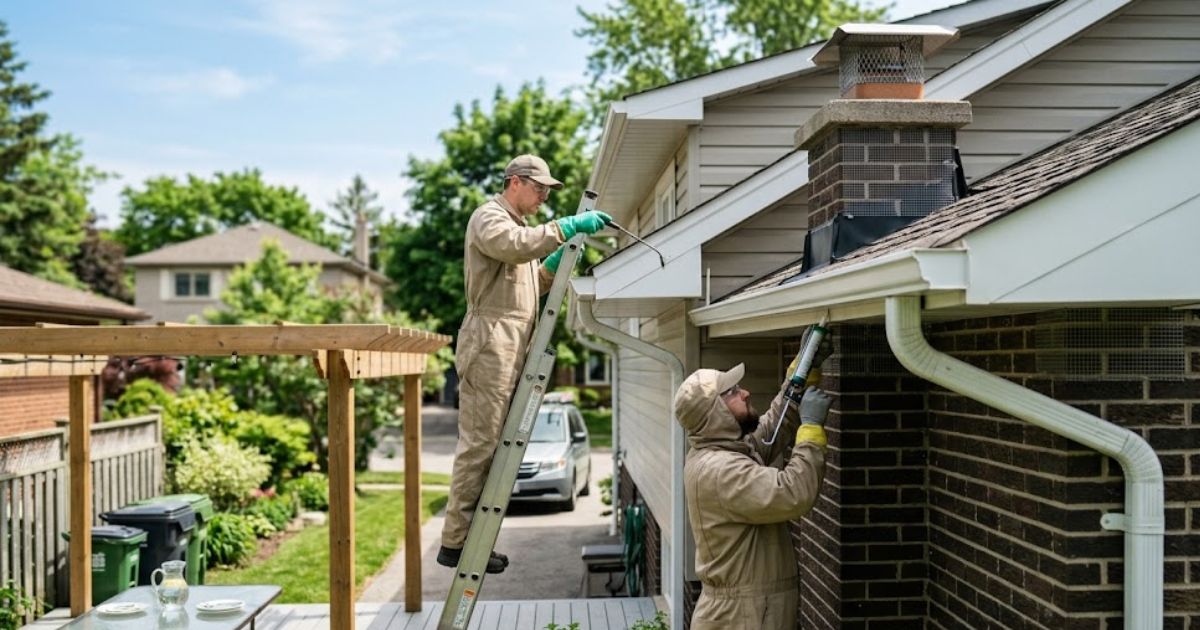
An attic nest inside attic void spaces grows for weeks before anyone notices from inside. Dryer vent and HVAC vent openings without a proper vent screen or mesh screen give wasps direct indoor entry. Electrical wiring damage from nesting activity creates a real fire risk inside the wall. Structural damage from insulation displacement adds repair costs well beyond basic wasp sting allergy symptoms. Fit a vent covering on every vent opening and add a chimney cap to the chimney before spring arrives. Exterior vent gaps stay the most overlooked structural vulnerability on older Toronto homes every single year.
Garages and Backyard Sheds Become Wasp Hotels by Midsummer
A garden shed with an open shed eave gap turns into a full nest inside the shed by July. Roof beam spaces inside a storage structure or outbuilding hold nests nobody finds until autumn. The garage door frame gap at the top corners is a classic spot wasps return to yearly. Sheltered interior spaces in any backyard shed stay warm enough for early colony founding each spring. Shed inspection in March takes ten minutes and saves a full removal job later in summer. Close every garage frame gap before the season starts to cut off the easiest entry point.
Trees, Shrubs, and Fence Lines Complete the Outdoor Risk Map
A hollow tree or tree cavity in your yard gives wasps a natural aerial nest in tree location. Dead branch and rotting branch sections attract landscape nest activity faster than healthy wood does. Fence post tops and fence line gaps hold small nests that grow quietly through summer. Overgrown shrub and bush growth against the home wall creates hidden foliage cover for ground nests. Tree trimming and shrub pruning every spring removes the biggest nest hotspot zones around your yard. Clear every tree stump remnant too since tree branch debris on the ground pulls fence line nesting closer to your home.
How to Make Your Property Less Attractive to Wasps
Control Food and Waste Before Wasps Find It First
BBQ season turns every Toronto backyard into a wasp magnet without proper food coverage. Use a tight fitting lid on every garbage bin and recycling bin after each use. Airtight container storage for food waste and organic waste cuts the scent trail wasps follow to your yard. Clear every food crumb and practice plate clearing right after outdoor dining ends. A drink spout risk is real when wasps crawl inside open cans during barbecue gatherings. Switch from cup vs bottle open drinks to sealed cups with lids outdoors. Napkin cover over food platters during meals removes the easiest attractant on your patio fast.
Modify the Yard Itself So Wasps Have No Reason to Stay
Dead branch removal and foliage trimming strip away the natural shelter wasps scout for each spring. Shrub pruning, tree trimming, and lawn maintenance reduce overgrown vegetation that hides ground nest entry points. Pull every rotting wood piece and clear wood pile stacks stored against your home. Debris clearance and clutter removal around the yard eliminates shelter elimination opportunities wasps depend on. Abandoned item removal matters more than most Toronto homeowners expect each season. Standing water elimination starts with fixing every leaky faucet and draining every puddle after rain. Remove the birdbath or refresh it daily to keep the yard dry and unattractive to foraging wasps.
Seal the Home So Wasps Cannot Find a Way Inside
Caulking every crack and gap filling along your exterior walls blocks the most common nest entry routes. Install window screen covers, door seal strips, and window seal foam around every frame before April. A vent screen or mesh cover on every exterior opening stops wasps from entering your walls or attic. Chimney cap installation on every open flue closes the last major void sealing point on the home. Structure maintenance and a full exterior inspection each March completes your wasp proofing checklist before peak season. Habitat modification through these steps changes what your property signals to wasps entirely.
Natural Wasp Deterrents vs Professional Prevention Treatments
A fake nest works on territorial behavior wasps avoid areas where a colony already appears to live. Decoy nest products work best in early spring before any real nest forms nearby. Wormwood, artemisia, mint, and spearmint planted near entry points add a mild plant based deterrent layer around your yard.
Peppermint oil, eucalyptus, and citronella applied to wood surfaces repel scouts during early nest initiation phases only. A wasp trap using an orange juice trap or soda trap setup inside a plastic bottle trap catches foragers but never removes the colony source. Replace lure trap bait every three days to stop fruit fly prevention problems from the rotting liquid. Natural repellent methods work only at low risk, early season, small scout situations not active nests.
Signs Wasps Are Already Establishing a Nest on Your Property
Repeated Flight Paths Mean a Nest Is Already Nearby
A repeated flight path along the same wall or roofline edge is the earliest visual cue to catch. Wasp traffic pattern along a consistent direction tells you a scout wasp or forager route leads directly to a nest. Regular wasp observation over two or three days confirms this is not random activity. Nest proximity indicator signs like this appear weeks before any visible structure forms on your home.
Buzzing Inside Walls or Soffits Is Never Just Background Noise
Wall buzzing or soffit noise during daylight hours signals an active structural nest forming inside. A chewing sound behind drywall means wasps are actively expanding a wall void infestation right now. Audible wasp activity like buzzing behind wall surfaces gets louder as the hidden nest grows through June. Indoor wasp sound near an interior wasp sound zone confirms a nest inside wall that needs professional attention fast.
Wasps Clustering Around One Spot Always Points to a Nest
Concentrated wasp activity near one fence section, shed corner, or eave signals a high traffic zone. Structure specific buzzing around a single area confirms nest proximity rather than general foraging behavior. A wasp congregation at one area attraction point means the colony already treats that structure as home base. Hot spot identification at this stage gives you the best chance at early local infestation control.
A Golf Ball Sized Nest Is Still Removable Without Professional Help
A golf ball sized nest hanging under an overhang is an early nest at its most manageable stage. Grey paper nest material with visible paper comb cells confirms new nest construction started within the last two to three weeks. Spot a visible nest or eave nest this small and act the same day before the colony doubles.
Ground Holes Near Garden Borders Are a Yellowjacket Warning
A soil hole near a garden border or walkway nest zone is the signature sign of yellowjacket burrow activity. Underground burrow entry points appear as clean, round nest entrance openings in bare soil or lawn hole depressions. Soil disruption around a landscape gap or mulch bed confirms active ground nesting sign behavior below the surface. Entry hole identification along your yard edge needs action before foot traffic triggers a ground nest entry defence response.
When DIY Wasp Prevention Stops Being Safe
Large nest removal without personal protective equipment triggers instant colony defence from every worker at once. Nest location risk inside a wall void danger zone adds electric wiring risk and real fire risk to an already dangerous job. Height risk on a ladder while managing a wasp swarm causes more injury risk than the stings themselves. Nest disturbance without proper protective clothing and a face net sends the whole colony into attack mode fast. Using boiling water danger methods or flammable liquid danger near a ground nest creates serious healthcare risk for everyone nearby. A shop vac ineffective attempt on an active nest just spreads the colony into new wall sections.
Children safety and pet safety near any active removal attempt depends entirely on distance and timing. Anaphylaxis from multiple stings sends hundreds of Canadians to emergency rooms every summer. Anyone with allergy history or even unknown allergy faces life threatening allergic reaction risk from a single disturbed nest. Health Canada statistics confirm wasp-related hospitalisation spikes sharply every August across Ontario. Dusk removal timing and time of day removal knowledge alone does not make a large nest safe to handle. A licensed exterminator carries full PPE, species knowledge, and PMRA registered products that manage sting risk properly.
Found an Active Wasp Nest on Your Property?
If wasps are nesting in your roofline, wall voids, yard, or outdoor structures, disturbing the nest can put your household at risk. Contact Pestiseed to discuss professional wasp removal and prevention options in Toronto and the GTA.
Professional Wasp Prevention Services in Toronto
Species Identification Drives Every Treatment Decision We Make
Wasp identification happens before any product gets selected or applied on your property. Entomological assessment separates paper wasp identification from yellowjacket identification and hornet identification based on nesting habit and behavior analysis. Accurate ID determines colony type, which directly controls treatment selection and species specific control method used. Identification based management removes guesswork and targets the actual species building on your property.
The Property Inspection Process Starts From the Outside In
Our property inspection begins with a full exterior audit along every building façade and roofline edge. The structural survey covers entry point mapping, vulnerability scan results, and a complete landscape assessment of your yard. Every professional walkthrough produces a written inspection report with a full nest assessment and risk identification summary. Annual inspection in early spring catches new nest assessment zones before queens finish founding their colonies.
Nest Location Mapping Finds What Visual Checks Miss
Hidden nest detection inside wall void mapping zones uses sound, thermal cues, and direct visual inspection. Nest mapping documents every colony location with a full structural nest map tied to your property layout. Entry point mapping at this stage feeds directly into the treatment plan built for your home. Nest site documentation gives our team a confirmed nest location record for every follow up visit.
Preventative Barrier Treatments Block Nests Before They Start
Barrier treatment along soffit treatment lines and eave treatment zones uses residual insecticide that stays active for weeks. Every targeted application uses a PMRA approved labelled product matched to the confirmed species and site. Perimeter treatment and entry point treatment create a treated zone wasps avoid when scouting for spring nest sites. Professional grade insecticide applied as exclusion treatment stops nest founding at the structural level, not just the surface.
Seasonal Monitoring Plans Keep Protection Running All Year
A seasonal pest calendar built around your property schedules a spring inspection, summer check, and follow up visit automatically. Recurring treatment during each maintenance visit refreshes the chemical barrier before it breaks down in Toronto heat. Year round pest management through a structured annual plan costs far less than emergency removal every August. Pestiseed Pest control Etobicoke combines inspections, preventative barriers, and seasonal monitoring to stop repeat infestations across GTA properties.
Emergency Nest Removal Responds the Same Day You Call
Our Toronto wasp nest removal handles aggressive colonies before they become a recurring sting risk. Our 24/7 emergency line handles aggressive colony calls where delay creates serious sting risk for your household. Professional extermination followed by dead nest cleanup and a post treatment follow up confirms full nest elimination on site. Every job includes a re-treatment guarantee and re-infestation prevention plan so the same spot stays clear next season.
FAQs
Why do wasps keep returning to my house every summer?
Pheromone marking left on old nest sites pulls overwintering queens back each spring. Nest site reuse happens because the same sheltered location still exists. Seal entry points and remove old nests every fall to break the annual wasp cycle.
Will removing one nest stop future nests?
Removing one nest does not stop re-nesting without a preventative barrier treatment applied after. Queen survival means a new colony starts nearby fast. We recommend follow-up treatment to block nest site abandonment from becoming reoccupied next season.
Are fake nests effective against yellowjackets?
Decoy nest products show weak yellowjacket deterrent results in real conditions. Territorial behavior deterrence works better on paper wasps than on yellowjackets. False nest efficacy drops to near zero once a real colony already exists on your property.
What month should I start wasp prevention in Toronto?
Start wasp prevention in March before queens finish hibernation. April prevention is the last practical window for pre-season treatment in Toronto. Early intervention in Ontario spring stops nest founding before the first workers hatch and the colony grows.
Are wasps worse during hot summers in Ontario?
Yes. Ontario heat speeds up colony growth and triggers stronger foraging aggression by August. Food scarcity during drought conditions pushes wasps toward human food fast. The urban heat island effect in Toronto makes seasonal spike activity worse than surrounding regions each dry summer.
Is professional prevention worth it for recurring infestations?
Yes. One annual service plan costs far less than repeated emergency removal every summer. We apply licensed exterminator grade residual barriers that deliver real long term prevention. Our re-treatment guarantee protects your property if re-infestation occurs within the covered season.
Keep Wasps From Taking Over Your Property
Get Professional Removal and Prevention Help
Whether you’re dealing with an active nest or recurring wasp activity around your roofline, yard, or outdoor living space, Pestiseed can help you explore suitable removal and prevention options. Contact us for a quote for your property in Toronto or the GTA.