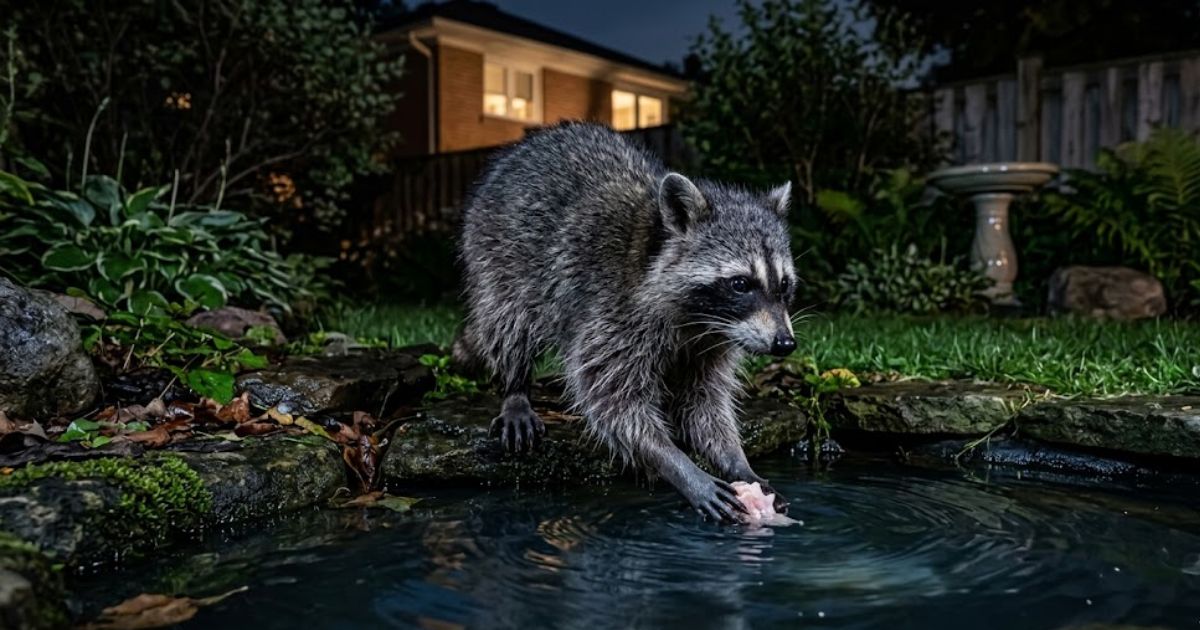
No, Raccoon (Procyon lotor) doesn’t wash food to stay clean. Many Toronto homeowners watch this and get confused. What looks like cleaning is called dousing behavior. Raccoons dunk food near water sources to sharpen their senses.
Raccoons wet their food to enhance their sense of touch. Water increases sensitivity in their paws, helping them identify food more accurately. This behavior is not cleaning but a sensory adaptation.
Water actually increases tactile sensing in their wet forepaws. We’ve seen this firsthand during local wildlife calls across Toronto. This foraging behavior helps them feel better about food. The behavior appears like washing, but it’s really the famous food washing myth.
How Raccoon Paws Detect Food
Raccoon forepaws work like tiny built in scanners. They contain mechanoreceptors that fire signals instantly. These touch receptors send data through sensory nerves to the brain. Dogs rely on smell, cats use vision, but raccoons identify prey through touch.
Nocturnal foraging means they work in complete darkness across Toronto yards. Raccoon paws truly function like sensory organs, not simple hands. Mechanoreceptors detect even tiny shifts in texture or shape. That sharp sense explains a lot about their sneaky survival skills.
Why Water Improves a Raccoon’s Sense of Touch
Water softens paw skin on raccoon forepaws right away. This triggers nerve stimulation just under the surface. Skin hydration opens tiny nerve endings really fast. That water enhanced tactile sensitivity doing its job well.
Moisture increases nerve sensitivity, so raccoons feel textures more clearly. Wet paws improve object recognition far better than dry ones. We notice this during Toronto wildlife calls near yard puddles. Sensory amplification helps them sort food from debris instantly.
When and Where Raccoons Wet Their Food
Raccoons forage near water like streams and ponds every night. The raccoon feeding environment shapes when this wetting habit starts. Water sources enable dousing behavior near any reachable spot. Toronto properties with backyard ponds attract them the most.
Urban habitats provide artificial water that raccoons now depend on. Even a simple birdbath can trigger food wetting near your porch. We’ve watched them use urban water sources like driveway puddles too. Hard food especially pushes them to splash and feel near water.
Why Homeowners Often See This Behavior Near Houses
Toronto yards quietly become a perfect raccoon feeding environment every night. Bird feeders and compost piles offer easy snacks without much effort. Uncovered trash cans stay full and easy to tip over. Raccoons figure this out fast and keep coming back.
Outdoor pet bowls sitting near garden ponds check every box for them. Pet food stays fresh, and decorative ponds give them water to dunk it in. Garbage bins left open work just like a free dinner invitation. These conditions create ideal feeding and dousing sites right outside your door.
Signs Raccoons Are Foraging Around Your Property
Raccoon food handling behavior often leaves clear evidence behind. Overturned trash bins in the morning tell you who visited last night. Muddy paw prints across your deck or fence confirm the same guest. These small clues show up more than most Toronto homeowners expect.
Wet food debris near water sources points to active dousing spots close by. Check your garden beds too since disturbed garden soil means they dug for grubs or bugs. Raccoons start foraging at dusk, hit peak activity around midnight, and return to their den by dawn. Observing food dunking near your yard may indicate regular wildlife visits already happening.
Is Food Wetting Behavior Dangerous for Homes?
Potential Issues
Food wetting itself does not damage property at all. The real problem starts when raccoons move from your yard inside. Attic nesting, trash damage, and pet food theft follow frequent visits fast. Parasite transmission also becomes a real risk the longer they stay.
Health Risks
Raccoons can carry the rabies virus without showing clear signs. Raccoon roundworm (Baylisascaris procyonis) spreads through droppings left near your garden or deck. Leptospirosis is another disease linked to raccoon activity near water. Risk increases with frequent visits, so early action always matters most.
Why This Behavior Evolved in Raccoons
Evolutionary Drivers
Raccoons built this habit through centuries of aquatic prey capture near streams. Hunting at night made nocturnal feeding sharpen their paws over their eyes. A strong tactile hunting strategy replaced vision as their top survival tool. The behavior developed as a foraging adaptation long before Toronto even existed.
Natural Diet
Their menu changes based on whatever the season puts out. Crayfish and frogs come from shallow water sources they naturally patrol. On land, beetles, larvae, fruits, and nuts fill the gaps easily. Even garbage scraps count as human food waste they gladly accept. Water handling helps raccoons evaluate edible items quickly before swallowing anything.
Do All Raccoons Wet Their Food?
Not all raccoons display this behavior the same way. Habitat type plays a big role in how often it happens. Raccoons living near streams or ponds dunk food far more than those in dry areas. Water access simply decides whether the habit shows up at all.
Food texture also changes how a raccoon handles what it finds. Soft or slippery items trigger more dunking than hard dry ones. Learned behavior passes this habit from mother to young over time. Captive raccoons display food dunking more frequently due to constant water access right beside their meals.
How to Reduce Raccoon Activity Around Homes
Prevention Measures
Raccoon prevention starts by cutting off every food source first. Locking trash lids stops raccoons from reaching their easiest nightly meal. Motion lights startle them mid visit and break their routine fast. Swap old containers for wildlife proof bins and watch visits drop quickly.
Property Adjustments
We recommend attic sealing before raccoons ever find a way in. Fencing around garden beds and pond edges blocks their usual entry paths. Installing wildlife barriers along the roofline removes the last easy option they rely on. Remove pet food, cover ponds, and seal attic vents to finish the job.
Raccoons Keep Returning to Your Yard or Roof?
If raccoons keep visiting your property or you suspect they are entering your attic, professional wildlife control can help you address access points and explore suitable exclusion options. Contact Pestiseed for assistance in Toronto and the GTA.
Why Pestiseed Experts Understand Raccoon Behavior
Knowing raccoon habits makes raccoon removal much more effective. Raccoons follow patterns tied to food, water, and shelter. Our pest control expertise helps us predict exactly where they move. That knowledge lets us act faster for Toronto homeowners.
Humane exclusion works best when you understand why raccoons enter yards. Behavior based strategies cut stress on both the animal and the homeowner. We use raccoon movement patterns to find the smartest exit points. This approach keeps Toronto properties raccoon free far longer.
FAQs
Why do raccoons dip food in water?
Raccoons dip food in water to boost tactile sensing. Their forepaws feel more detailed when wet. Water activates nerve endings under their skin fast. This helps them identify food better before eating.
Do raccoons clean their food for hygiene?
No, raccoons do not clean food for hygiene. This is a proven food washing myth. They dunk food to sharpen their sense of touch. Cleanliness plays zero role in this behavior.
Why do raccoons rub food with their hands?
Raccoons rub food to activate mechanoreceptors in their paws. These sensors detect texture and shape very quickly. Rubbing helps them decide if food is safe. It is sensory exploration, not a cleaning habit.
Do raccoons always need water to eat?
No, raccoons do not always need water nearby. Behavioral triggers like hard food increase their dipping habits. Soft foods get eaten without any water at all. Water simply sharpens their natural sensing ability.
Protect Your Home From Raccoon Damage
Raccoons start by raiding trash bins and compost piles near your yard. That nightly visit near backyard ponds is actually early scouting behavior. Once comfortable, they target roof vents, soffits, and attic spaces fast. Raccoon property damage escalates quickly from feeding to full wildlife intrusion. Pestiseed Pest Control Etobicoke helps homeowners stop this progression before structural damage starts.
Raccoons Are Getting Too Close to Your Home?
Get Help With Raccoon Removal and Exclusion
Repeated visits, overturned bins, and signs of attic access can indicate that raccoons are making your property part of their regular route. Contact Pestiseed to discuss raccoon removal and suitable wildlife exclusion options for your home in Toronto and the GTA.