Raccoon Proofing Your Home’s Physical Defense System
Raccoon proofing works like waterproofing or insulation for your home. It strengthens the building envelope against unwanted wildlife entry. We treat every structural exclusion project as permanent barrier construction. Most wildlife proofing methods fail because homeowners confuse trapping with prevention. Trapping removes one animal but leaves entry points wide open. True prevention means sealing gaps before raccoons discover them.
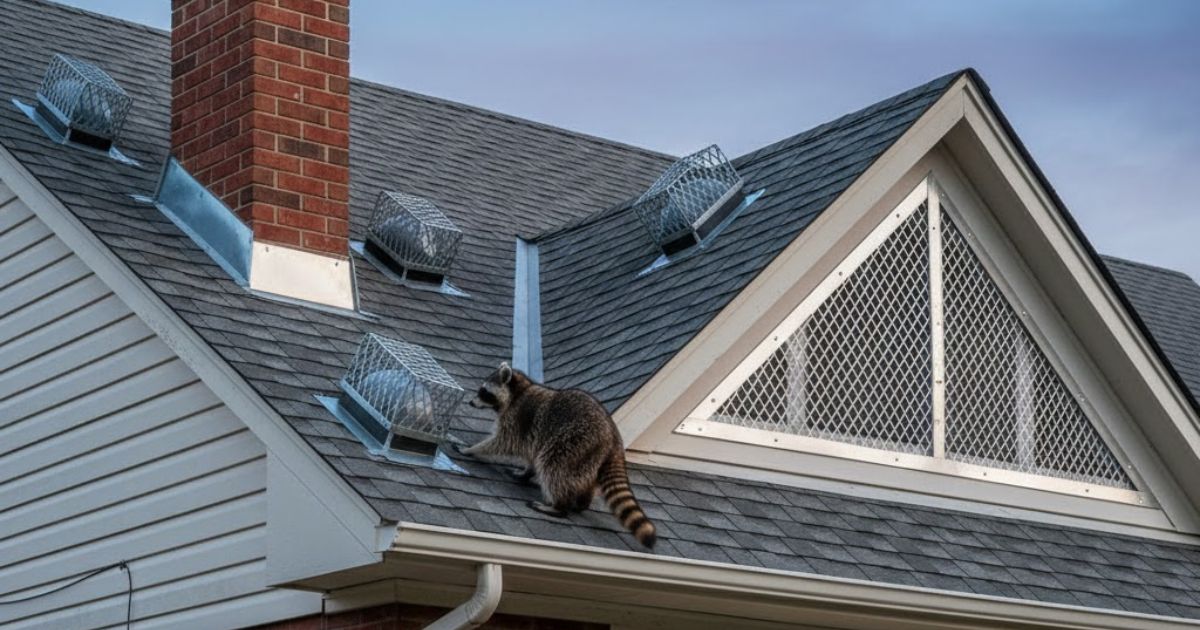
Roof edges pull away from fascia boards over time. Soffits crack from freeze thaw cycles every winter. We’ve seen raccoons squeeze through openings smaller than a baseball. Professional wildlife proofing methods focus on the physical structure first. We inspect foundation vents, chimney caps, and attic penetrations during every assessment. Structural exclusion creates a permanent solution that outlasts any deterrent spray or motion light.
Raccoon Behavior That Leads to Roof, Attic, and Chimney Intrusions
Raccoon behavior follows patterns you can predict once you understand their instincts. Denning behavior drives them to seek dark, elevated spaces before birthing season starts. We’ve tracked urban wildlife adaptation across Toronto for years now. Female raccoons scout rooflines in late winter looking for warm sheltered spots. They test every soffit edge and roof vent with their paws. Chimneys without caps become instant targets because they mimic hollow tree cavities. Raccoon behavior isn’t random when it comes to building entry. They exploit design flaws that most homeowners never notice until damage appears.
Urban wildlife adaptation has made Toronto raccoons expert building inspectors over generations. They know which construction materials tear easily and which roof angles offer protection. Attics provide everything their denning behavior requires for raising young safely. Builders leave gaps where roof meets brick or siding connects to trim. Raccoons memorize these weak spots and pass knowledge to their offspring.
Raccoon Behavior That Leads to Roof, Attic, and Chimney Intrusions
Climbing Ability and Preference for Elevated Nesting Areas
Raccoon behavior follows predictable patterns that target specific building weaknesses. Urban wildlife adaptation has turned Toronto raccoons into expert climbers who see roofs as safe nesting zones. Their denning behavior drives them toward dark enclosed spaces like attics and chimneys. We’ve tracked how they test fascia boards and soffit edges for weak spots. Their dexterous forepaws grip shingles and siding with surprising strength. Climbing ability lets them scale brick walls and vinyl siding without visible footholds.
We’ve seen them reach second story roof access routes by jumping from nearby tree branches. Ground level fencing does nothing to stop animals built for vertical movement. Building design flaws become entry points when vents lack proper screens. They push and pull until something gives way under pressure.
Seasonal Breeding Patterns That Increase Attic Occupancy
Spring brings the peak raccoon breeding season when pregnant females search aggressively for maternal dens. Attic nesting spikes between March and May across Toronto neighborhoods. Female raccoons need warm dry spaces to raise their young safely. Chimneys mimic natural tree hollows they would use in forests.
Attic occupancy happens when homeowners seal entry points during maternity season. Trapped babies create emergency situations that require immediate professional intervention. We’ve responded to dozens of cases where litters got stuck inside closed off spaces. Sealing work must wait until all animals leave the structure completely. Baby raccoons stay dependent on mothers for eight to ten weeks after birth.
Primary Entry Points Raccoons Use to Access Homes
Roof Level Access Paths Used by Raccoons
Entry points start well before raccoons reach your actual roof surface. Tree branches create natural highways that deliver them directly to second story access zones. We’ve mapped these movement patterns across hundreds of Toronto properties over the years.
- Overhanging limbs act as launching pads when they hang within six feet of rooflines.
- Dormers provide convenient landing spots raccoons use as staging areas before finding openings.
- Tall wooden fences become climbing ramps leading straight to lower roof sections.
- Gutters offer grip points and horizontal pathways along the entire home perimeter.
Roofline intersections where two roof planes meet create natural gaps raccoons exploit repeatedly. Building penetrations happen where different construction materials join together imperfectly. Primary openings serve as main doors raccoons prefer using every time. Secondary gaps become backup routes when homeowners seal obvious spots without professional inspection.
Structural Weak Points Along Rooflines and Upper Walls
- Soffits fail first because builders often use thin aluminum that bends under pressure.
- Fascia boards rot from water exposure and pull away from roof edges.
- Roof vents without metal cages become open invitations when plastic louvers crack.
- Gable vents installed with flimsy screening tear easily when raccoons pull edges.
- Vinyl materials installed in the 1980s crack from freeze thaw cycles every winter.
- Steel components outlast aluminum by decades in Toronto’s harsh climate.
We’ve replaced countless aluminum vents that raccoons ripped apart in single nights. Construction quality matters more than building age when predicting vulnerable spots.
Structural and Health Damage Caused by Raccoon Activity
Insulation Compression and Ventilation System Damage
Property damage from raccoons builds slowly over weeks and months inside your attic. Insulation degradation happens when animals walk across and nest in blown materials repeatedly. We’ve pulled out compressed insulation from Toronto homes that lost half its original thickness.
- Compressed materials lose their R-value and stop trapping air pockets that provide thermal protection.
- Your heating bills climb every month while raccoons flatten insulation beneath their pathways.
- Attic insulation designed to sit fluffy at 12 inches gets packed down to 4 inches.
- Airflow systems get blocked when raccoons build nests near soffit vents and gable openings.
- We’ve documented cases where energy efficiency dropped by 30 percent after just one breeding season.
Health Risks Associated With Raccoon Droppings and Urine
Contamination remains dangerous long after raccoons leave your property completely. Raccoon roundworm eggs survive in dried feces for years without losing their infectious capability. We’ve tested attics that stayed contaminated 18 months after the last raccoon departed.
- Parasites become airborne when people disturb contaminated insulation during cleaning or storage trips.
- Zoonotic disease transmission happens through accidental inhalation of microscopic eggs floating in attic air.
- Urine soaks deep into wooden beams and subfloor materials where standard cleaning cannot reach it.
- The smell fades but health risks persist invisibly in the affected materials and surfaces.
Attic Raccoon Proofing Using Humane Exclusion Techniques
Humane wildlife exclusion prevents repeat infestations by allowing raccoons to leave but blocking their return. Attic sealing begins only after confirming all animals have exited the structure completely.
We install one way doors at primary entry points that swing outward but lock from outside access. Raccoon control standards require 48 to 72 hours of monitoring before permanent barrier installation begins. Babies and mothers need time to reunite outside before we seal openings permanently.
One Way Exclusion Devices for Safe Raccoon Removal
One way doors work with raccoon instincts instead of fighting against their natural patterns. Exclusion funnels let animals push through flexible flaps when leaving but prevent backward entry completely. We mount these exit only devices directly over the main opening raccoons have been using regularly.
One way doors remain effective because raccoons lack the problem solving ability to reverse engineer the mechanism. Exclusion funnels mounted correctly stay functional for the entire monitoring period without adjustment needed.
During Raccoon Birthing Season
Raccoon birthing season runs from April through August across Toronto and surrounding regions. Juvenile raccoons cannot survive without their mothers for the first eight to ten weeks. We pause all permanent sealing work during these months to prevent separating families accidentally. Wildlife regulations prohibit exclusion methods that trap dependent young inside attics without maternal care. Homeowners face fines and legal consequences when sealing happens without proper inspection during this period.
Nesting timelines determine when safe removal work can proceed without harming helpless babies. We’ve rescued juvenile raccoons from sealed attics where homeowners attempted DIY exclusion in May. Mother raccoons become extremely aggressive when separated from their litters and will damage properties trying to reach babies. Spring exclusion work needs careful thermal imaging and physical inspection to locate hidden nest sites.
Common Raccoon Proofing Errors That Cause Repeat Infestations
Sealing mistakes create cycles where homeowners pay for repairs multiple times without solving the problem. Lightweight mesh from hardware stores tears within weeks when raccoons apply consistent pressure to edges. We’ve repaired dozens of Toronto homes where thin aluminum screening failed after just one season. Partial exclusion happens when people seal visible holes but miss secondary entry points hidden under eaves. Raccoons simply move two feet over and create new openings in unprotected soffit sections.
Sealing mistakes also include using foam insulation that raccoons pull out like cotton candy overnight. We’ve documented cases where animals returned within 48 hours through materials that looked secure initially. Missing even one gap means the entire investment fails because raccoons exploit any available opening.
Legal and Humane Standards for Raccoon Proofing
Wildlife protection laws in Toronto mandate specific methods for removing raccoons from residential properties safely. Humane control standards require verification that no dependent young remain trapped inside before any sealing begins. Local regulations prohibit relocation of trapped raccoons beyond one kilometer from the capture site legally.
Humane control standards specify minimum monitoring periods before permanent barriers can replace temporary exit devices. Local regulations change based on breeding season timelines and require updated permits for certain removal activities. Legal compliance protects your property investment and prevents costly violations that could reach thousands in penalties.
Why Choose Professional Raccoon Proofing Services
Professional exclusion solves the root cause rather than just removing the animals temporarily from your property. Pestiseed Pest Control uses thermal cameras and ladder inspections to find hidden gaps behind gutters and fascia. Most DIY attempts fail because people seal the obvious hole without finding three more nearby.
Long term warranties back our work because we solve the structural vulnerabilities that allowed access initially. Professional exclusion includes material selection that withstands Toronto’s freeze thaw cycles and determined raccoon attempts for years. We returned to properties five years later and found our steel mesh still intact. Inspection expertise means understanding how building age and construction style predict specific weak points systematically. Long term warranties give you confidence that repeat infestations won’t cost you additional money down the road.
FAQs
Can raccoons chew through roof vents and soffits?
Yes, raccoons can chew through weak aluminum vents and vinyl soffits. We install 16 gauge galvanized steel mesh. This heavy duty material stops raccoon teeth and claws completely.
What size hole can a raccoon fit through?
Raccoons squeeze through holes as small as 4 inches wide. Baby raccoons fit through 3 inch gaps easily. We seal every opening larger than 2 inches during our inspections.
Do chimney caps stop other animals too?
Yes, our chimney caps block raccoons, squirrels, birds, and bats. We use multi species exclusion caps with small mesh openings. One cap protects against many wildlife problems.
How long does raccoon proofing last?
Our raccoon proofing lasts 10 to 15 years minimum. We use rust proof steel and commercial grade sealants. All work includes our written durability guarantee for your peace of mind.
Can raccoons come back after exclusion?
Raccoon re entry happens in less than 3 percent of our jobs. We use proven methods and quality materials. Our team offers free follow up visits if any wildlife returns.
Schedule a Professional Raccoon Proofing Inspection
Home inspection for raccoon vulnerabilities catches problems before animals move into your attic permanently. Wildlife assessment identifies weak spots in your roof structure that could fail within the next season. Preventive service costs a fraction of emergency removal combined with insulation replacement and contamination cleanup later. Pestiseed Pest Control examines soffit conditions, vent screening quality, and chimney cap integrity during every Toronto property visit. Early detection stops small gaps from becoming full scale infestations requiring thousands in repairs down the road. Contact Pest Control Toronto today to schedule your comprehensive raccoon proofing inspection and secure your home with permanent solutions.