Why Bird Control Matters for Homeowners?
Birds might look harmless when they’re chirping in trees. But when they decide your Toronto home is their new hangout spot, things get messy fast. We’ve seen it all in our years helping homeowners across the city. Birds nesting on your roof can block gutters and cause serious water damage. Their droppings aren’t just gross either. They actually eat away at paint, wood, and even metal over time.
That’s real property damage that costs money to fix. Plus, those droppings can carry diseases that put your family at risk. Pestiseed pest control isn’t about being mean to birds. It’s about protecting your home and keeping everyone healthy. The good news is that proper bird control for homeowners works really well when done right. You just need to know what actually works and what’s a waste of time.
The Hidden Problems Birds Can Cause at Home
Most folks don’t realize how much trouble birds bring until it’s too late. Stop birds before they settle in and you’ll save yourself major headaches. Pigeons and starlings love to squeeze into vents and chimneys. Once they’re in, they build nests that block airflow completely. We once helped a family whose heating bill doubled because birds clogged their attic vents.
Their nests also attract bugs like mites and beetles into your home. The constant cooing and scratching noises will drive you crazy at night too. Bird droppings pile up fast on decks, patios, and walkways. They make everything slippery and dangerous, especially after rain. Your AC units and solar panels lose efficiency when covered in bird mess. Smart bird prevention techniques catch these issues before they start.
Understanding the Problem: How and Why Birds Invade Homes
What Makes Your Property a Bird Magnet?
Birds don’t just randomly pick Toronto homes to visit. They’re looking for three simple things: food, water, and shelter. Your roof and attic often become their favorite spots because they’re warm and protected. We see this all the time in neighbourhoods across the city. Food scraps in open garbage bins attract them first. Bird feeders meant for cute songbirds also invite troublemakers.
Gutters filled with standing water become their personal drink stations. Ledges and eaves provide perfect nesting spots away from predators. Even small gaps in your home bird infestation control defenses let them squeeze inside. Once one bird finds a cosy spot, others follow quickly. That’s when you start noticing the bird mess on ledges everywhere. Your property basically becomes a five-star bird hotel without you realizing it.
Where Birds Love to Cause Trouble?
The roof and attic bird problems we deal with most often happen in predictable spots. Vents without proper screens are like open front doors to birds. Chimneys without caps make perfect hollow trees for nesting. Soffits with gaps become apartment complexes for sparrows and starlings. We’ve pulled out dozens of nests from these areas during bird damage cleanup jobs.
Window ledges accumulate droppings that eat away at paint and wood. Solar panel edges create sheltered spaces birds absolutely love. Balconies and porches offer protection from Toronto’s harsh weather. Even decorative architectural features become bird condos over time. The damage adds up fast when birds move in permanently. Residential bird deterrents need to cover all these vulnerable spots to work properly. Missing even one entry point means birds will find it eventually.
Method 1: Keeping Birds Out
What Exclusion Means and How It Works?
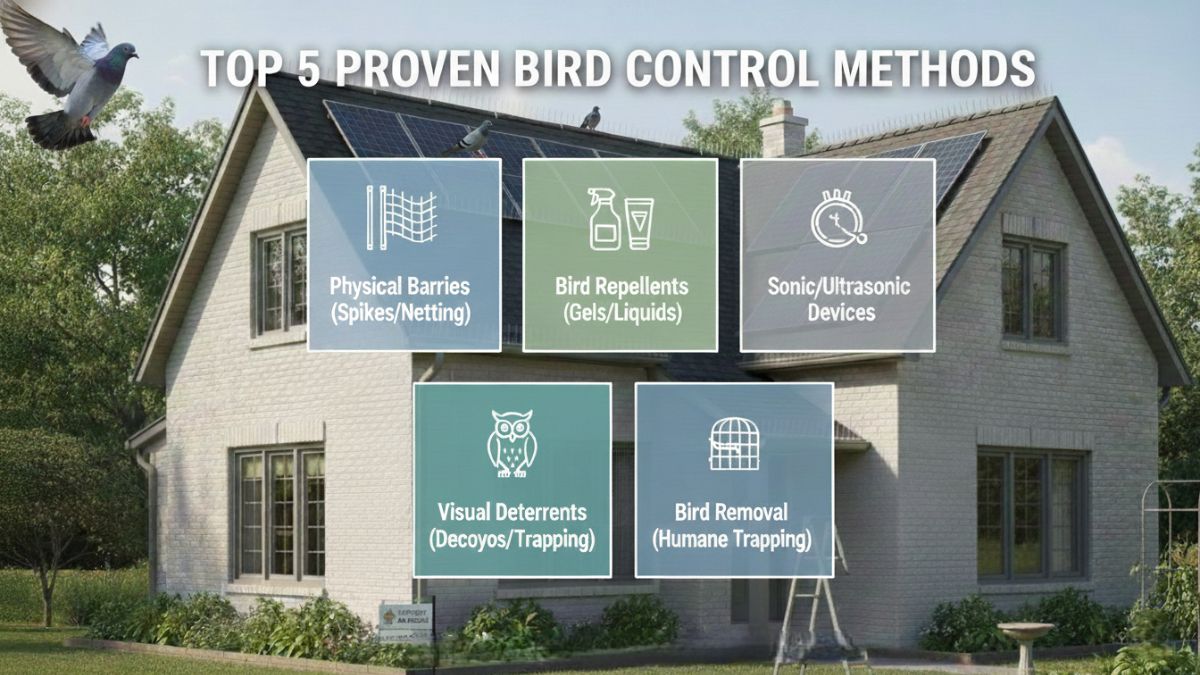
Bird exclusion solutions are all about blocking birds before they settle in. Think of it like locking your doors at night. We stop feathered friends from finding cozy spots around your Toronto home. Mesh and screening installation works great for covering gaps and openings. Bird spikes and nets make landing spots uncomfortable without hurting anyone. The goal is simple: make your property uninviting to birds. Roofline protection against birds keeps them off ledges and eaves. We focus on residential deterrents that actually work long term. Physical barriers beat temporary fixes every single time.
Advantages and Disadvantages of Exclusion
Bird control methods for homeowners using exclusion offer serious benefits. These solutions last for years without much upkeep needed. You stop birds from entering vents or chimneys permanently once installed correctly. No chemicals or scary sounds required for this approach. The downside? Initial setup costs more than quick fixes like fake owls. Installation takes time and sometimes needs a professional’s touch. But here’s the thing: we’ve seen exclusion work in countless Toronto neighborhoods. Winter winds and summer storms don’t mess with quality barriers. One weekend of work saves you years of headaches.
Expert Insights from USDA/APHIS
The USDA and APHIS both recommend exclusion as the first choice. Their research shows physical barriers work better than scare tactics. Professionals agree that prevention beats removal every time. We follow these guidelines when helping Toronto homeowners protect their properties.
Quick Tips for DIY Exclusion
Check your property during fall before birds scout winter spots. Seal gaps bigger than two centimeters around your roofline first. Use stainless steel mesh because plastic breaks down too fast. Install barriers on sunny days when materials stick better. Test your work by checking for new droppings weekly. Call experts if birds are already nested because rules protect them.
Method 2: Make Your Home Less Attractive
Simple Environmental Changes That Work
Birds love homes that offer food and shelter. We can change that easily. Start by clearing away food sources from your yard. Remove old birdseed from feeders if you want fewer visitors. Clean up fallen fruit under trees every few days. This stops birds from treating your property like a restaurant.
Trim trees near your roof and windows regularly. Birds won’t nest if branches don’t touch your home. We’ve seen Toronto homeowners cut back just two feet of branches. That simple move sent pigeons packing to someone else’s place. Clean gutters twice a year to wash away twigs and debris. Birds can’t build homes in spotless gutters and ledges.
Standing water attracts birds like a magnet attracts metal. Reduce standing water by fixing leaky outdoor taps. Dump out water from plant saucers daily. Even small puddles bring thirsty birds to your doorstep. We knew a family in North York who stopped their sparrow problem. They just emptied their old birdbath for good.
Long Term Benefits of Habitat Control
Habitat modification creates lasting results without constant work. Your home stays bird free naturally once you make these changes. We don’t need to chase birds away every morning anymore.
Bird control becomes easier when the environment doesn’t welcome guests. Toronto properties using these methods report 70% fewer bird visits. That means less noise and fewer droppings on cars. Your gutters stay cleaner longer when birds stop visiting. Window ledges don’t need scrubbing every weekend either.
Backed by Research from Toronto Wildlife Report
The Toronto Wildlife Centre studied urban bird control methods across the city. Their research proved environmental changes work better than scare tactics. Properties with proper habitat modification saw birds leave within three weeks. The report followed 200 homeowners over two years. Those who combined multiple habitat changes had the best success.
Common Mistakes to Avoid
Many people only remove nesting materials but forget about food sources. That’s like locking one door but leaving another wide open. Don’t trim trees just once and think you’re done forever. Branches grow back and birds return with them.
Some homeowners clean their yards but ignore their roofs completely. Birds still find cozy spots up high if we neglect those areas. Never leave pet food bowls outside overnight either. That buffet brings more than just hungry cats to visit. We’ve watched neighbours struggle because they skipped the water step. They wondered why birds kept coming back to their Toronto backyard.
Method 3: Encouraging Birds to Move On
What Deterrents Include
Bird control methods for homeowners work best when you make your property less appealing. Pest bird deterrents come in many forms today. Ultrasonic bird deterrents send out high pitched sounds that bother birds. Motion activated sprinklers spray water when birds land nearby. Some systems use sound units that play predator calls. Laser bird repellers shine moving beams that scare birds away.
Bird repellent systems can also include visual tools like reflective tape. We’ve seen Toronto homeowners get creative with mirror balls and old CDs. Fake owls and hawks work for a while too. The key is mixing different tools together. Birds are smart and figure out fake threats quickly. That plastic owl on your balcony stops working after two weeks. Trust us on this one.
When and How to Use Them Effectively?
Timing matters when you set up deterrents around your home. Spring and fall are when birds look for nesting spots. Start using your tools before they settle in. Motion activated sprinklers work great near vegetable gardens and patios. Set them up at dawn when birds are most active. Ultrasonic bird deterrents need proper placement to cover problem areas.
Mount them high and angle them toward roosting spots. Laser bird repellers work best at dusk for pigeons and seagulls. Rotate your methods every few weeks to keep birds guessing. We recommend switching between visual and sound based tools. Check your systems weekly to make sure they still function. Dead batteries won’t scare anyone away.
Pros and Cons of Bird Deterrents
Pest bird deterrents offer humane solutions without harming wildlife. They’re safe for kids and pets in your yard. Most systems are easy to install yourself on weekends. Bird repellent systems save money compared to hiring pest control services. However, some methods need regular maintenance and battery changes. Ultrasonic bird deterrents might bother your dog or cat. Neighbors could complain about loud sound units going off constantly. Weather in Toronto can damage outdoor electronics during winter months. Some birds adapt and ignore the same deterrent over time. You’ll need patience because results take several weeks to show.
Research Insights from the GSA
The General Services Administration studied different bird control methods for homeowners extensively. Their research showed that combining multiple deterrents works better than single approaches. Motion activated sprinklers reduced pigeon activity by 60 percent in tests. Laser bird repellers proved most effective for large open spaces. The GSA found that ultrasonic bird deterrents had mixed results depending on species. Starlings and sparrows responded better than crows and gulls.
Method 4: When the Problem Grows
Sometimes a few birds turn into a flock. What starts as two pigeons on your roof can become twenty in a month. Toronto homes often face this challenge during spring and summer. We’ve seen bird control methods for homeowners work well at first, but then the birds multiply. That’s when basic tricks stop working. You need bigger solutions. Professional experts know how to handle growing colonies. They use humane bird removal techniques that follow local laws. Bird trapping and relocation helps move flocks to better spots. The birds stay safe and your home stays clean.
What Population Control Means?
Population control sounds scary but it’s actually quite gentle. It means stopping birds from making more babies on your property. We don’t hurt the birds, we just discourage nesting. Nest and egg management plays a big role here. Experts remove empty nests before birds move in. Sometimes they swap real eggs with fake ones. The mama bird sits on dummy eggs that never hatch. This humane removal method keeps bird numbers down without harm. Professional wildlife control teams follow strict rules for this work. They know which birds are protected by law.
Legal and Ethical Considerations
Canada has tough laws about bird trapping and relocation. You can’t just grab any bird and move it. Migratory birds get extra protection under federal rules. We always check what’s legal before taking action. USDA guidance on population management (yes, even in Canada we follow similar principles) helps us stay ethical. Humane removal methods must come first. The goal is solving your problem without causing suffering. Professional bird control companies carry proper licenses and insurance. They know how to balance your needs with wildlife protection.
When to Call a Professional?
Call the experts when DIY fails or the flock grows fast. If you see more than five birds daily, that’s a warning sign. Professional wildlife control teams handle tough situations safely. They have special equipment for bird trapping and relocation. We recommend calling pros when birds damage your roof or siding. Health risks also matter, especially with large amounts of droppings. Humane bird removal experts can assess your situation in one visit. They create custom plans using proven bird control methods for homeowners. Nest and egg management requires training and legal knowledge. Don’t risk breaking laws or getting hurt. Let trained people handle population issues. Your home will be bird-free faster with professional help.
Method 5: Combine Methods for the Best Results
What Is Integrated Bird Management
Integrated bird management means using more than one trick at once. We don’t just hang shiny tape and hope for miracles. We mix different tools together for stronger protection. Think of it like making a sandwich. One slice of bread won’t hold much. But add meat, cheese, and veggies, and you’ve got a meal. Combining exclusion and deterrence works the same way. We block entry points with netting or screens. Then we add scary owl decoys or sound machines.
Birds get confused when they face multiple barriers. They give up faster and look elsewhere for homes. Multi step bird control strategy keeps your Toronto home safer all year long. We’ve seen homeowners try just one method and fail. Then they add two or three tricks together. Suddenly the pigeons and sparrows disappear for good. Integrated wildlife damage management isn’t rocket science. It’s just smart planning with backup options ready.
How to Build Your Personal Plan?
Start by walking around your property with a notebook. Look for spots where birds love to gather or nest. Check your roof edges, vents, and gutters carefully. Write down every problem area you discover during inspection. Next, pick two or three methods that fit each spot. Maybe you need netting for the roof and spikes for ledges. Add a motion activated sprinkler near the garden too. A long term bird prevention plan requires thinking about all four seasons.
Birds change their habits when the weather shifts in our region. Some species leave Toronto winters while others move closer to homes. We recommend checking your setup every few months minimum. Adjust your tools based on what you observe working. Remove methods that birds ignore and try fresh approaches. Expert advice helps when you feel stuck or overwhelmed. The USDA’s Integrated Wildlife Management Program offers free guides online. Their research shows long term prevention beats quick fixes every time. Expert support gives you confidence to handle tricky situations yourself.
Practical Tips & Common Mistakes to Avoid
Quick Homeowner Checklist
We know bird control methods for homeowners can feel overwhelming at first. Let’s make it simple with a quick home inspection checklist you can follow. Walk around your Toronto home every few months to spot trouble early. Check your roof for gaps where birds might sneak in. Look at vents and chimneys for nests or droppings. Inspect gutters because birds love to build there during spring.
Don’t forget window ledges and balcony corners where pigeons hang out. We recommend checking these spots before winter and again in early spring. This seasonal maintenance routine saves you from bigger headaches later. Keep a simple list on your phone so you never forget. Trust us, spending 20 minutes now beats dealing with a full bird invasion.
Top Mistakes Homeowners Make
Here’s where folks mess up with DIY bird proofing tips gone wrong. Many Toronto homeowners use cheap netting that rips in one winter storm. We’ve seen people install spikes facing the wrong direction (yes, really). Another big mistake is forgetting to seal small holes under eaves. Birds only need a tiny gap to move in and throw a party.
Some folks try to remove nests during nesting season which is actually illegal. Others spray water at birds thinking it solves the problem permanently. We also see homeowners skip the home inspection checklist after installing deterrents. You need to check if your bird control methods for homeowners are actually working. Don’t assume everything is fine without looking up there regularly.
Seasonal Bird Control Advice
Toronto birds change their behavior with every season so your approach should too. Spring means nesting season when birds get super protective and aggressive. We block entry points in late winter before they start building homes. Summer brings hungry babies and loud chirping. Fall is when birds scout locations for winter roosting spots. Winter seems quiet but pigeons and starlings still need warm shelter. Our seasonal maintenance strategy means different actions each quarter. Check and clean deterrents every three months minimum. Spring needs the most attention with weekly checks during peak nesting time.
Health Canada and Public Health Ontario provide safety guidelines about rodents and hantavirus dangers. The CDC offers cleanup and prevention tips, while OMAFRA has rodent control guides. The University of Guelph researches pest management, and CCOHS ensures workplace safety from rodent hazards. Together, these resources help Canadians handle rodent risks safely.
Safety Tips for DIYers
Let’s talk safety because nobody wants a hospital trip from bird control methods for homeowners. Always wear gloves when touching anything birds have been near. Their droppings carry diseases that can make you seriously sick. Use a mask when cleaning up nests or feathers especially in enclosed spaces. Never climb on your roof without proper equipment and a buddy system. Wait for dry weather before attempting any height work around your Toronto home. Keep kids and pets away from the work area completely. Bird mites can jump onto humans so change clothes after working near nests.
Legal, Ethical & Safety Considerations
When dealing with bird control methods for homeowners, you need to know the rules first. Toronto has strict laws and regulations that protect our feathered friends. We learned this the hard way when a neighbour tried removing nests during spring. Turns out, most birds are protected under federal law in Canada. The Migratory Birds Convention Act covers over 800 species across the country. You can’t just remove active nests or harm birds without serious consequences. Fines can reach thousands of dollars for wildlife protection compliance violations.
Know the Bird Protection Laws
Understanding bird protection laws keeps you out of trouble with authorities. The federal government protects most bird species from harm or harassment. Provincial rules in Ontario add extra layers of protection too. We can’t damage nests that have eggs or baby birds inside. The breeding season usually runs from March through August in Toronto. Outside this time, some removal work becomes easier to manage legally. However, you still need to follow humane bird management practices.
Humane and Safe Control Practices
Humane bird management means solving problems without causing birds to suffer. We focus on making spaces less attractive rather than hurting wildlife. Simple changes like removing food sources work surprisingly well for most situations. Bird spikes and netting create barriers without injuring any animals when installed correctly. Never use glue traps or poison as these cause terrible suffering.
Frequently Asked Questions
Are bird spikes and nets safe for the birds?
Yes, bird spikes and nets are safe bird deterrent methods when installed correctly. The spikes don’t hurt birds at all. They just make landing spots uncomfortable so birds fly away. Think of them like a gentle “no parking” sign for birds. Nets work the same way by blocking access without causing harm. These are considered safe bird deterrent for homeowners across Toronto. We’ve seen countless properties use these tools successfully. The birds simply find another spot to hang out.
Can I use sound deterrents near pets or kids?
Sound deterrents are generally fine around pets and children. Most devices use ultrasonic frequencies that humans can’t even hear. Your dog might perk up their ears occasionally but it won’t bother them. Kids won’t notice anything at all during playtime outside. We always recommend checking the product specs first though. Some older sound systems can be annoying to sensitive pets.
What’s the most effective single method?
There isn’t one magic solution for every bird problem honestly. Safe bird deterrent methods work best when you mix them up. Physical barriers like spikes handle ledges and roofs really well. Sound and visual scares work great for open yards and gardens. We’ve found that combining two or three approaches stops birds fastest. A Toronto homeowner might use nets plus reflective tape together.
Do I need a permit for bird removal?
Legal bird removal options vary depending on the bird species involved. Most common pest birds don’t need permits for deterrent installation. You can put up spikes or nets without calling anyone. However, some birds have legal protection under Canadian wildlife laws. Migratory birds especially need careful handling and proper permits.
How long do bird control systems last?
Quality bird control devices typically last between two and five years minimum. Physical barriers like spikes and nets last longest with proper installation. Metal spikes can survive Toronto winters for seven to ten years. Plastic versions might need replacement after three to five years. Sound and visual deterrents have shorter lifespans because of moving parts. Electronic devices usually work well for two to four years. Solar panels and batteries need occasional replacement or recharging.
Get Your Free Quote Now
Ready to kick those pesky birds off your property? We’ve got you covered with professional bird control services that actually work. Our certified experts will come to your Toronto home for a residential inspection. We’ll check every nook and cranny where birds like to hang out. Then we’ll create a custom plan just for you. The best part? Getting your free quote is super easy and takes just minutes. We’ve helped hundreds of Toronto families protect their homes from bird damage. No more messy droppings on your deck or noisy morning wake up calls. Our team knows all the best methods for homeowners that are safe and effective. Let us help you get back to enjoying your pest free home. Call us today and say goodbye to your feathered troublemakers for good.