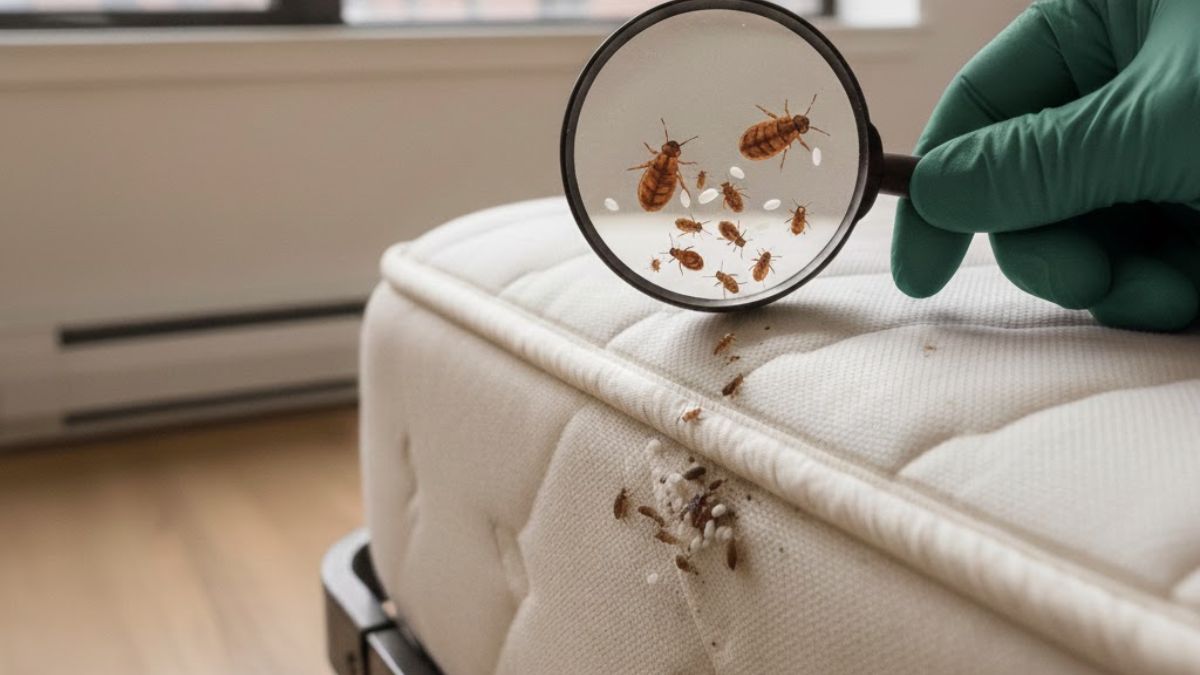
A bed bug is a reddish brown insect, apple seed sized, with a flat oval body and no wings. You identify an infestation through three kinds of evidence. The insect itself, fecal spots and shed skin on mattress seams and bite marks in a straight line on exposed skin. In Toronto, bugs most often enter through Pearson Airport travel, the TTC, and shared walls in condos and high rises, so physical evidence remains the only reliable test.
What an Adult Bed Bug Looks Like
Size, Colour and Body Shape
A bed bug grows from sesame seed to apple seed size as it matures. It stays oval shaped and flat broad, built to slide into tight cracks. The colour sits between reddish brown and rusty red brown. In a Toronto home, this size and shape help tell it apart from other small insects.
Fed vs Unfed Appearance
After a meal, the bug shows a blood fed swollen abdomen and a deeper red brown colour. An unfed flat body stays thin, with a rust brown unfed colour and uniform body colour. This post feeding colour change is a clear sign. The soft body texture stays the same either way.
Bed Bug Nymph and Egg Stages
A bed bug nymph starts as a translucent pale yellow nymph near 1.5mm nymph size. It grows through second stage nymph, third stage nymph, fourth stage nymph, and fifth stage nymph, across seven life stages. Each stage needs a blood meal required per molt, through five molts before adult. The bed bug egg stays 1mm egg size with white egg colour, until a black dot after 5 days appears.
Early Signs of a Bed Bug Infestation
Fecal Spotting and the Damp Cloth Test
Press a damp cloth test onto any dark mark you find. A real bleed on fabric reaction means the spot smears and spreads. This is also called the marker bleed test, and it confirms fecal matter fast. Spotting this early stops a small problem from growing.
Blood Stains and Shed Skin
A blood smear or reddish brown stain on your sheets points to feeding activity. Look for a pillowcase stain or sheet stain, often from a crushed bug stain. You may also find shed skin, known as exuviae or molted shell. This translucent papery yellowish skin sits near egg cases present, both signs of active growth.
Why Bites Alone Don’t Confirm an Infestation
A bed bug bite often looks like a red itchy welt in a linear bite pattern. Bites in a row don’t always mean bed bugs though. About no skin reaction 30 percent of people show no mark at all. The bite comes from an anesthetic chemical and an anticoagulant, similar to a mosquito bite lookalike or flea bite lookalike, with a delayed bite reaction hours to days in some people.
Bed Bugs vs Lookalikes in Toronto Homes
Many Toronto homeowners mistake other bugs for bed bugs. In fact, 50 percent of Bed bug identification calls are carpet beetles, not real bed bugs. A flea, a cockroach nymph, or even booklice can also look similar at first glance. Use the table below to check what you actually found.
| Pest | Shape / Size | Colour | Movement | Key Trait |
| Bed Bug | Flat, oval | Reddish brown | Crawls, no flight | Six legs shared trait, no wings |
| Carpet Beetle (Anthrenus verbasci) | Round, domed, pinhead to 4mm size | Camouflage patches white brown yellow | Flies toward light | Hard carapace shell |
| Varied Carpet Beetle / Black Carpet Beetle | Round, oval larva | Mottled or solid black | Larva crawls slowly | Bristly larvae hairs, carpet beetle larva woolly bear look |
| Flea | Small, narrow | Dark brown | Jumping behaviour | Patterned shell flea appearance |
| Cockroach Nymph | Flat, oval | Light to dark brown | Faster movement pattern | Longer antennae than a bed bug |
| Booklice | Tiny, soft bodied | Pale | Slow crawl | Moisture dependent habitat |
Bed Bug vs Carpet Beetle
A carpet beetle eats fabric, not blood. Its keratin diet causes wool fibre damage and cashmere damage in closets. Unlike a bed bug, a carpet beetle has a hard carapace shell and can fly. Its larvae cause carpet beetle dermatitis, a skin rash from tiny hairs, not a bite.
Bed Bug vs Flea or Cockroach Nymph
A flea jumps, while a bed bug only crawls. A cockroach nymph moves much faster across a room. For a full risk level comparison, bed bugs pose the highest risk to sleep and health in your home.
Where Bed Bugs Hide in a Toronto Home
Primary Harbourage Zones
Pull back every mattress fold and check the box spring edge closely. Slide a credit card inspection tool along the bed frame screw hole. Check the headboard crevice and wall mounted headboard bracket too. Bugs also hide inside pillow layer folds, right along the pillow seam.
Secondary Zones
Once bugs spread, they move into the nightstand drawer and nightstand underside. Check your upholstered chair, sofa cushion, and sofa underside next. Look along the baseboard gap, baseboard crevice, and electrical outlet cover. Don’t skip the picture frame back, carpet edge, curtain fold, and ceiling edge corner.
High Rise and Condo Risk Zone
In a high rise building, bugs travel through the condo corridor and shared hallway fast. A shared laundry room or elevator upholstery can carry them between floors. This shared wall transfer often causes adjacent unit spread to the next door. Any multi unit building faces this added risk, from lobby seating to storage locker area.
How Bed Bugs Get Into Toronto Homes
Pearson Airport and International Travel
A trip through Pearson International Airport often ends with unwanted guests. After international travel, bugs ride home through luggage introduction. This airport exposure happens after deplaning from any overseas flight route. Check your bags right after you land.
TTC, Union Station and Daily Commuter Exposure
TTC public transit and Union Station both carry daily passenger traffic. Public transit seat fabric can hold bugs picked up earlier. Rideshare upholstery and taxi upholstery, including Uber seat fabric, pose the same risk. Your daily commute adds up over time.
Hotel Stays, Airbnb and Short Term Rentals
Any hotel room can carry bed bugs, even a clean one. The same goes for a short term rental or Airbnb stay. Do a hotel mattress seam inspection before you unpack. A pre-travel hotel inspection and post travel routine, plus checking the luggage rack, cuts your risk.
Second Hand and Curbside Furniture
A free curbside pickup furniture item can carry bugs home. Any thrift store item, like a used mattress or used couch, needs checking first. Second hand furniture should always get a full seam scan inspection. Skipping this step is a common mistake.
Self Inspection for Toronto Residents
Contain and Isolate the Room
Start with full room quarantine before you touch anything. Isolate room access and tell others to stay out. Do not disturb the scene until your check is done. Avoid vacuum transfer risk, incorrect pesticide risk, and furniture disassembly risk, since each one causes shortage migration into new spots.
Flashlight and Tool Inspection Order
Grab a flashlight and a rigid flat tool before you begin. A credit card inspection tool or paint scraper tool works well. Start with a mattress seam inspection, then a box spring interior check. Move to a bed frame joint check and headboard crevice check next. Finish with a sofa cushion inspection, baseboard inspection, nightstand inspection, carpet edge inspection, and electrical socket inspection.
Classifying the Evidence You Find
Sort each find before you decide anything. Look for blood stain confirmation or a reddish brown smear on fabric. A fecal spot cluster needs a damp cloth bleed test to confirm it. Shed skin, or exuviae, along with an egg case, counts as strong stain pattern confirmation. Note whether you found live bug evidence or only dead bug evidence.
Checking the Spread Radius
Bed bugs stay close to their food source, which is you. This 3–6 foot host proximity marks their usual hiding range. Work out to a 2 metre radius, then a 6 metre travel boundary. Run an adjacent furniture check and seating area check within that zone. Mark every daytime cluster spot as part of your infestation mapping.
Verifying Adjacent Rooms in Condos and Rentals
In a condo, adjacent room verification matters just as much as your own room. A shared wall transfer can move bugs through a condo unit neighbour wall fast. This creates real multi-unit risk and possible building wide spread. Check for host absence migration signs with an outlet cover check and look for baseboard signs, which confirm multi room infestation confirmation.
Bed Bug Infestation Severity Stages
Stage 1 Early Detection (Weeks 1–4)
This stage starts with a single bug sighting or eggs in crevice space. You may spot a first instar 1.5mm nymph, barely visible. Look for fecal spotting on fabric edges with minimal odor present. During this week’s 1–4 window, you’ll likely see only 1–2 evidence types.
Stage 2 Active Infestation (Weeks 4–16)
By this stage, you’ll notice multiple bugs across sleep zones each night. Shed skins near seams and fecal clusters on sheets become common. Second instar growth and third instar growth both speed up fast. Blood stains on sheets, increasing bites, and faint odor developing mark this week’s 4–16 window, helped by heated interior breeding.
Stage 3 Established, Multi Room or Multi Unit Infestation
At this point, multi room spread moves into a secondary zone and tertiary zone. A baseboard colony and electrical outlet colony may form, with bugs behind wallpaper. A shared wall transfer often causes adjacent unit spread to neighbours. A sweet unpleasant odor from pheromone release means all life stages present at once.
Bed Bugs in Toronto Rental Units and Condos
Landlord Responsibilities Under Ontario’s Residential Tenancies Act
Section 20 of the Act sets the landlord maintenance obligation for pest control. This is a repair and maintenance duty, not a tenant task. If a landlord ignores a bed bug report, a tenant can start a tenant complaint process with the Landlord and Tenant Board. Toronto’s Rent Safe TO program and local apartment building standards bylaw also require landlords to keep units pest free.
How Fast Infestations Cross Shared Walls in Multi Unit Buildings
Bed bugs move through a shared wall transfer, often along an electrical outlet pathway or plumbing chase pathway. One female bug drives a 10–14 day egg doubling rate, which speeds up adjacent unit spread. This creates real building wide infestation risk through host seeking migration. A condo corporation’s responsibility kicks in once shared spaces are affected.
Reporting to Toronto Public Health
Contact Toronto Public Health if your landlord doesn’t respond in time. You can also file a property standards complaint through the City of Toronto 311 service. A pest control report supports your case for municipal by law enforcement. Keep every form of specimen submission or sample identification request as your proof.
Common Identification Mistakes to Avoid
Throwing Out Furniture Through Shared Hallways
Discarding mattress or discarding furniture items feels like a fast fix. But carrying them out causes spread via hallways and spread via elevators. This often leads to spread to neighbour units fast. In a condo, this creates real building contamination risk for everyone.
Using Store Bought Sprays or Foggers
A store bought spray or over the counter spray rarely solves the full problem. Any aerosol pesticide, including a bed bug fogger or bed bug bomb, can backfire. These products cause wall penetration to scatter into untreated areas. This chemical irritation scatter effect pushes bugs deeper, not out.
Switching Bedrooms Mid Infestation
Switching bedrooms feels like relief, but it isn’t a fix. Bugs follow CO2 trail expansion and warmth trail expansion from your body. A surface only treatment leaves missed harbor spots behind. This incomplete treatment leads to secondary zone regrouping in your new room.
Preventing Misidentification and Future Infestations
Travel and Hotel Inspection Protocol
Always do a hotel room check or Airbnb inspection before you unpack. Try luggage inspection at the door as soon as you walk in. Keep up TTC seat awareness during your daily trips too. A solid post travel routine includes luggage on tub storage and high heat dryer treatment for your clothes.
Second Hand Furniture Checks
Run a full second hand item check before any item enters your home. Follow a strict curbside pickup protocol for free finds. Do a seam inspection before entry, every single time. A steam cleaner treatment helps too, but it’s often best to avoid curbside discarded furniture entirely.
Encasements and Interceptor Monitoring
Use a certified mattress encasement made from Tyvek material encasement fabric. Skip cheap options, since zip up encasement risk and encasement rip risk let bugs back in. Add a bed leg interceptor as a monitoring interceptor under each leg. Check your box spring encasement and bed bug certified encasement every two weeks, with an interceptor check every two weeks too.
Professional Inspection vs DIY Detection
DIY detection finds bugs on the surface, but it often misses the rest. Professional inspection reaches deeper, with far higher detection accuracy overall. A homeowner check covers only surface level detection, not hidden spots. A licensed exterminator or certified pest technician checks structural level detection too.
Pros in Toronto use tools a homeowner won’t have. A thermal imaging tool finds heat from hidden bugs fast. Canine detection, or K9 bed bug detection, sniffs out nests directly. Some labs even use a compound microscope with digital camera magnification for exact ID, backed by a real Quality Assurance lab doing analytical entomology.
FAQs
Can I have bed bugs without bites?
Yes. About 30 percent show no skin reaction to bites, due to an anaesthetic chemical in their saliva. Check for fecal spotting and shed skin instead of waiting for bite marks to appear.
What is the first sign of a bed bug infestation?
Fecal spotting on mattress seam usually appears first. Shed skin and a 1mm white egg in crevice follow soon after. This physical evidence before bites always shows up before any skin reaction does.
Is it a bed bug or a carpet beetle?
A carpet beetle has a speckled patterned shell and is a flying carpet beetle. A bed bug stays flat oval uniform colour with no wings. The crawling bed bug never takes flight at all.
Are bed bugs visible to the naked eye?
Yes. An apple seed size adult is easy to spot without help. A 1.5mm nymph needs a flashlight or phone camera to see clearly. A 1mm egg barely visible needs close inspection too.
How fast do bed bugs spread in Toronto condos?
Very fast. One female lays 200–500 eggs per female, with a 10–14 day doubling rate. Bugs move through shared wall spread, hallway spread, and laundry room spread, raising adjacent unit risk fast.
Is my landlord required to pay for bed bug treatment in Ontario?
Yes. The Residential Tenancies Act Ontario sets a clear landlord maintenance obligation for pest control. If ignored, tenants can start a tenant complaint process with the Landlord and Tenant Board.
Get a Professional Bed Bug Inspection in Toronto Today
A licensed exterminator can confirm what you found with real structural level detection. Pestiseed Toronto offers a professional bed bug inspection with same day inspection slots and 24/7 availability. Get a confirmed infestation diagnosis and a free quote before bed bugs spread further through your home.