Stay Calm and Never Touch the Baby Raccoon
We know finding a baby raccoon can make you want to help right away. But touching a baby raccoon risks serious health problems for you and the animal. Wildlife handling dangers include rabies and other infections that spread through bare hand contact risks. We at Pestiseed have removed hundreds of raccoons across Toronto. Our team always tells homeowners the same thing. Never touch wildlife without protection because diseases pass easily to humans. Your human scent on baby animals can also make the mother reject her young.
Observe baby raccoons from safe distance and call us immediately. We wear gloves wildlife experts use during every rescue. Don’t think bare hand contact is safe even for a moment. The risk of disease transmission stays high with all wild animals. We have seen too many people get sick from trying to help without knowing proper safety steps. Wildlife disease transmission happens faster than most people think. Our trained staff knows how to handle these situations safely. We observe from a distance first to check the mother’s location. Don’t pick up a baby raccoon even if it looks hurt or alone.
How to Keep a Baby Raccoon Warm and Safe While You Wait
Finding a cold baby raccoon can be scary. We know Toronto winters are harsh on these tiny babies. Hypothermia sets in fast when they lose their mother’s warmth. At Pestiseed, we’ve rescued countless baby raccoons over the years. Our team has learned exactly what works to keep them alive until proper wildlife care arrives.
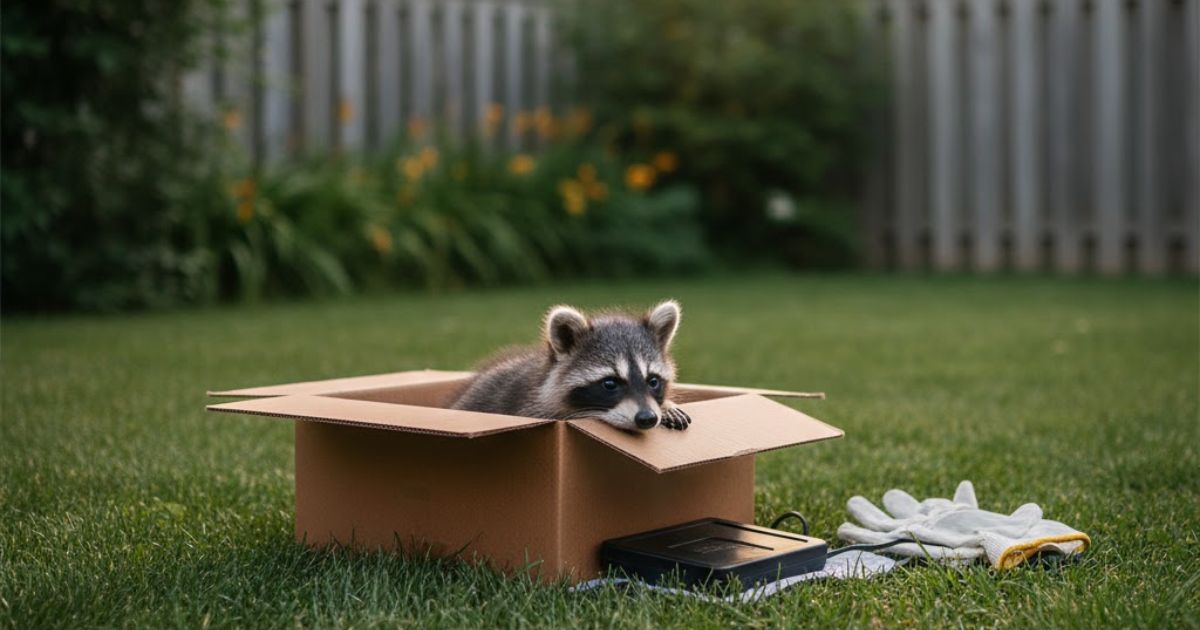
Start by making a temporary shelter using a cardboard box. Put a heating pad on low setting underneath half the box only. This gives the baby raccoon space to move away if too warm. We always use warm blankets on top for extra comfort. Keep away from pets during this critical time. Place the heating source underneath to maintain proper temperature regulation. Never use direct heat or hot water bottles. The goal is gentle warmth that mimics a mother raccoon’s body heat. Ensure proper ventilation throughout the rescue process.
Steps for Reuniting the Baby Raccoon with Its Mother Overnight
Many people panic when they find a baby raccoon alone. The mother returns at night in most Toronto cases we handle. Pestiseed has watched hundreds of successful mother raccoon retrieval stories unfold. The overnight reunion method works better than rushing to wildlife centers. Most moms are just out hunting for food during the day.
Put the baby back at the exact location where you first discovered it. Use a shallow box or crate so mom can easily grab her baby. The raccoon mother’s return waiting time usually takes 4 to 8 hours. Place baby where found before sunset for best results. We tell Toronto families to watch from inside your home quietly. The natural reunion process happens when you give space and patience. Mother will return after dark to collect her little one. The waiting period duration feels long but trust the process. We’ve seen anxious mothers waiting nearby until humans leave the area. Give her that chance before calling wildlife rescue services.
What to Do with an Orphaned Raccoon Until Help Arrives
An orphaned raccoon needs special care when the mother never comes back. Sometimes you’ll spot an injured baby raccoon. Pestiseed has handled emergency Toronto wildlife cases for over 5+ years now. We know transporting baby raccoons safely makes the difference between survival and tragedy. Quick action paired with gentle handling saves tiny lives every spring season.
Keep box covered dark to create a calming space during the trip. Use covered box transport with towels creating a dark quiet environment inside. Minimize handling and stress by avoiding peeking or touching the baby repeatedly. Reduce noise handling by speaking softly and keeping radio volume down low. Secure box during transport so it won’t slide around your car seats. Maintain warmth in vehicle by turning heat on during cold Toronto months. Minimize stress during transport with smooth driving and no sudden stops. These safe transport methods help you transport safely to rehabilitator facilities. Pestiseed connects families with licensed wildlife experts who provide proper medical care. The journey should take under 30 minutes when possible for best outcomes.
Common Mistakes People Make with Baby Raccoons
Toronto residents often make baby raccoon care mistakes based on old stories. The biggest baby raccoon myths we hear at Pestiseed involve touching concerns. People believe human scent doesn’t matter but still refuse to help babies. Truth is mother won’t reject based on scent like many think happens. Wildlife identifies offspring by sound instead of smell every single time. The mother recognizes the baby’s call even after human contact has occurred.
Common raccoon rescue errors include feeding them regular cow’s milk products. Lactose intolerance wildlife babies suffer from diarrhea and dehydration after dairy consumption. Aspiration risk feeding happens when people use bottles without proper training techniques. Waiting too long for help is another deadly mistake Toronto families make. The mother rejection myth stops people from touching and doesn’t cause rejection situations. Waiting too long reduces survival chances dramatically after just 24 hours alone. Pestiseed trains homeowners on proper intervention timing and safe handling methods. We bust these myths so baby raccoons get help faster. Quick professional guidance prevents accidental harm from good intentions gone wrong.
Understanding Why the Mother Raccoon Left Her Baby
Seeing a baby alone makes people wonder why raccoon left the baby permanently. Mother raccoon behavior actually includes leaving babies for several hours daily. Pestiseed has tracked raccoon nesting habits of Toronto families for years. Mothers leave babies to find food because hunting with babies slows them down. Mother raccoons forage alone and return before dawn with full bellies. This natural raccoon behavior confuses worried homeowners who think abandonment happened.
Moving babies is normal behavior when moms sense danger or disturbance. Raccoons use multiple den sites scattered around their Toronto territory zones. Relocating den sites happens if one location feels unsafe or crowded. Urban areas provide shelter through denning in attics and garage spaces nearby. Attic nesting common practices show successful urban raccoon adaptation across neighborhoods. Threatened den relocation occurs when humans get too close to nesting areas. Pestiseed helps Toronto families understand these patterns before separating healthy raccoon families. Natural instincts guide these smart mothers better than we often realize.
Preventing Raccoons From Nesting on Your Toronto Property
Toronto homeowners struggle with preventing raccoons nesting in Toronto homes every spring season. Breeding season prevention work must happen before March when mothers search nesting spots. Pestiseed has installed raccoon exclusion methods across thousands of local properties successfully. Wildlife proofing home Toronto requires checking vulnerable spots raccoons love to exploit. Smart inspect property before breeding season checks stop problems before they start.
Inspect roof vents for gaps or damage that allow easy access inside. Add roof vent covers made from metal to block determined raccoons completely. Inspect soffits along your roofline for rotting wood or loose panels needing attention. Soffit repair prevents sneaky entry through these common weak areas homes have. Cap chimneys properly because installing wildlife proof chimney caps blocks this favorite nesting location. Chimney cap installation should happen professionally for lasting protection that actually works. Seal deck openings underneath where raccoons hide and raise babies quietly. Use heavy gauge screening for deck screening that withstands clawing and chewing attempts.
FAQs
Can I relocate a baby raccoon myself?
No, you cannot legally move a baby raccoon yourself. Ontario wildlife relocation laws require a proper permit. Moving the baby disrupts its natural territory. The mother cannot track a relocated baby. This significantly reduces survival chances for the little one. Relocation stress often leads to poor survival rates. We handle legal wildlife relocation the right way.
What diseases do baby raccoons carry?
Baby raccoons carry several dangerous diseases and parasites. Rabies risk exists in all Ontario wildlife. Raccoon roundworm is extremely dangerous to humans and pets. Their feces contain roundworm eggs that spread easily. Distemper and leptospirosis are also common health risks. Fleas, ticks, and mites often infest young raccoons.
Will animal control come for a baby raccoon?
Toronto animal control does not handle wildlife calls. City animal services refer you to wildlife specialists. They will direct you to licensed wildlife rehabilitators. Toronto Wildlife control is the primary resource for help. Municipal services do not cover raccoon rescue work. We work with certified rehabilitators across Toronto.
How much does wildlife rehabilitation cost?
Most wildlife rehabilitation services are complete. Donations are welcome but never required for care. These charitable organizations provide expert wildlife treatment. You may receive a charitable tax receipt for gifts. We connect you with free rehabilitation resources nearby.
What if my dog or cat finds the baby raccoon first?
Remove your pet from the area right away. Check the baby raccoon for any bite wounds. Even small punctures can cause serious infections fast. Bacteria from pet saliva causes dangerous health problems. The baby raccoon will need antibiotic treatment immediately. Take your pet to the vet if contact occurs. We respond quickly to these emergency wildlife situations.
When to Call Pestiseed for Humane Raccoon Control in Toronto
Signs that need professional help appear when you hear noises in attic walls at night. Roof damage raccoons create threatens your home’s structure and insulation layers quickly. Soffit damage and chimney noise mean raccoons have already moved into your space. Humane raccoon control Toronto requires trained experts who know animal behavior patterns well. Pestiseed pest control services specializes in raccoon removal Toronto using humane removal methods that protect wildlife.
Our licensed and insured technicians perform professional humane raccoon removal without causing harm. Professional wildlife exclusion involves sealing entry points after animals leave safely. Wildlife friendly exclusion methods ensure mothers and babies stay together during removal. Licensed pest control teams always follow strict Ontario wildlife protection regulations. Guaranteed exclusion work means raccoons cannot return after we finish the job.