Understanding Why Raccoons Become Trapped
Raccoons don’t get stuck because they’re unintelligent. We’ve watched countless nocturnal animals demonstrate brilliant problem solving skills during foraging behavior. The real issue stems from how urban structures interact with shelter seeking instinct. Garbage waste containers and food sources draw them close to buildings. Once inside attics or sheds through vents, poor exit visibility creates the trap. Opportunistic feeding drives them toward dark spaces that smell like potential dens.
Ontario homes built before 1990 weren’t designed with wildlife movement patterns in mind. Chimney caps, roof vents, and crawl spaces offer easy entry but confusing exits. We’ve seen raccoons enter through a 4 inch gap at dusk and spend hours searching for the same opening. Their eyes adapt to darkness during activity periods, making lit escape routes nearly invisible. This behavioral miscalculation happens when human architecture conflicts with natural navigation instincts built over thousands of years.
Safety Risks Associated With Trapped Raccoons
Defensive Behavior and Physical Injury Risks
Cornered animals react differently than free ones roaming your backyard at night. We’ve documented defensive aggression patterns in Ontario attics where escape routes disappear. A trapped animal shows intense stress response within the first hour of confinement. Bites and scratches happen when homeowners block the only exit path accidentally. Claw force from a panicked raccoon can tear through drywall and human skin equally fast.
Cornered animal response kicks in only after all escape attempts fail completely. We’ve observed animals spend 20 minutes searching before switching to protective mode. Most physical injury cases occur during well meaning rescue efforts by untrained individuals. The raccoon doesn’t want confrontation but will defend itself when trapped inside small spaces. Zoonotic diseases become a secondary concern when aggressive behavior puts people at immediate risk.
Disease Transmission Risks to Humans and Pets
Environmental contamination creates health threats lasting far longer than any single scratch. Rabies virus spreads through saliva during bites but leptospirosis stays in urine puddles. Roundworm eggs from Baylisascaris procyonis live in attic insulation for years. We’ve tested feces samples remaining infectious 18 months after animals left completely. Pets walk through old nesting spots carrying disease particles inside on their paws.
Pets investigate these contaminated areas long after the raccoon disappears from your property. Dogs sniff dried urine spots where bacteria thrives in wood grain and concrete. Cats walk through old nesting materials carrying disease particles on their paws indoors. Transmission happens through breathing airborne spores during cleanup without proper protective equipment and ventilation systems.
Identifying Injury or Severe Stress in a Trapped Raccoon
Physical Signs of Injury or Weakness
We’ve seen immobility develop in Ontario attics after animals exhaust themselves trying to escape. Labored breathing starts within hours in hot spaces without ventilation or water access. Injury turns a simple exit into an impossible task for weakened animals.
Healthy animals self rescue easily but wounded ones lack the strength to navigate tight openings. We’ve found animals too weak to grip surfaces they climbed yesterday without trouble.
Behavioral Signs of Dehydration or Distress
Daytime activity from nocturnal animals signals something went wrong during the night. Lethargy appears fast when dehydration sets in after 24 hours without water. We’ve watched disorientation cause animals to walk in circles inside confined attics. Excessive vocalization means desperate calls for help from family members outside the structure.
Abnormal daytime behavior serves as the biggest red flag needing immediate action. Distress calls sound sharper and more frantic than normal defensive chatter at dusk. Most Ontario homeowners hear the crying before they spot movement through vents.
Immediate Actions to Take After Discovering a Trapped Raccoon
Distance management keeps you safe when finding a trapped raccoon in your home. We recommend staying at least 6 feet back from the animal always. Area isolation means closing doors to stop the animal from reaching living spaces. Lock pets in separate rooms before taking any further steps with the situation.
Human self protection protocol comes before rescue attempts that create dangerous close encounters. Observation period lets you check for rabies signs or injuries from a distance. We’ve watched Ontario homeowners get hurt by rushing in without assessing the threat.
Safe Methods to Allow a Raccoon to Escape
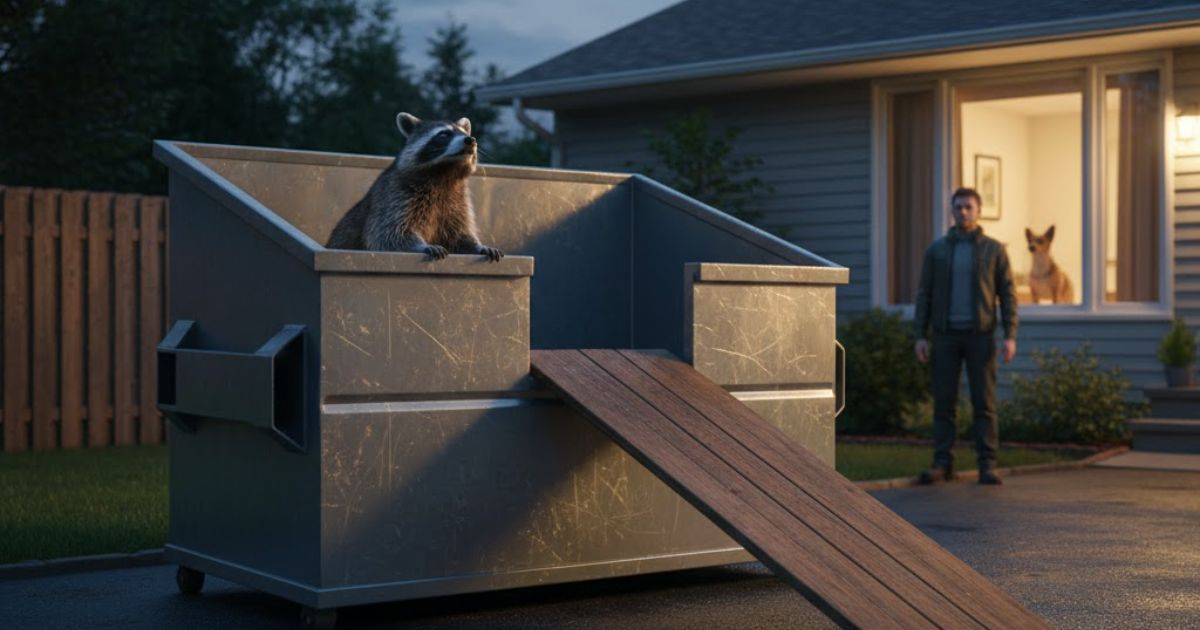
Escape ramps let the raccoon leave on its own without any human interaction. We’ve positioned wooden boards at 45-degree angles in Ontario basements with perfect results. Gravity assisted exits work best when animals can walk downward toward open doors naturally. Place a sturdy plank from the containment spot to ground level outside. Visual clearance matters because animals won’t use routes they can’t see clearly ahead.
Passive escape engineering removes the need for risky handling or chasing attempts altogether. Turn off all lights near the exit path after sunset when movement starts. We’ve watched animals use rough textured boards within 30 minutes of setup in quiet conditions.
Dangerous Actions That Should Always Be Avoided
Direct handling activates predator defense instincts hardwired into every wild animal’s survival system. We’ve treated Ontario homeowners with deep wounds from trying to grab seemingly calm animals. Cornering behavior eliminates perceived escape options and forces the animal into attack mode. Wild animals interpret human touch as a life threatening event no matter your intentions. Their brain chemistry floods with stress hormones within seconds of physical contact attempts.
Food baiting fails because survival instinct overrides hunger when the animal feels trapped indoors. We’ve watched animals ignore fresh chicken placed near exits for over 12 hours. Dangerous actions that seem helpful actually worsen the situation by increasing panic levels. Biological programming makes animals choose safety over food every single time in confined spaces. The raccoon won’t trust any offering from the same species blocking its freedom.
Situations That Require Professional Raccoon Removal
Raccoon control professionals handle cases where animals show visible wounds or won’t leave. We’ve set a clear decision threshold for Ontario homeowners to follow safely. Call animal control services if the animal remains after 24 hours with open exits. Mothers with babies need specialized removal because they refuse to abandon their young.
Emergency wildlife response teams have equipment you lack for safe extraction from tight spaces. Situations that require expert help include potential rabies exposure or any bites received. We handle cases where attic heat creates medical emergencies for trapped animals quickly. The moment you feel unsafe marks exactly when DIY methods must stop immediately.
Legal and Ethical Considerations When Handling Raccoons
Wildlife protection laws in Ontario prevent suffering during raccoon encounters and removals. Relocation regulations prohibit moving animals more than one kilometer from capture sites legally. Trapped animals die when released in unfamiliar territory without food sources or shelter. Humane treatment standards ensure we don’t separate mothers from nursing babies during any removal.
Provincial rules tie legality to animal welfare rather than focusing on punishment. Handling raccoons without permits violates laws designed to reduce unnecessary animal deaths. We’ve seen homeowners face penalties for trapping and dumping animals in rural areas.
Common Reasons Raccoons Get Stuck in Dumpsters and Garages
Smooth dumpster walls create climbing surfaces raccoons can’t grip after jumping inside. Food residue attracts them nightly but metal interiors offer zero traction for claws. We’ve rescued dozens from commercial dumpsters across Ontario where animals drop easily but can’t leap back up. Infrastructure design flaws turn everyday containers into deadly traps unintentionally.
Locked garage doors trap animals entering through pet doors or foundation gaps overnight. Automatic doors close behind raccoons searching spaces when motion sensors fail to detect them. We’ve found animals stuck inside garages for 48 hours without water. Human infrastructure prioritizes security over wildlife movement patterns causing entrapment through poor design.
Preventing Future Raccoon Entrapments on Your Property
Secure lids with bungee cords stop raccoons from accessing bins where entrapments happen. We recommend garage sealing around foundation cracks before spring when animals search for dens. Motion deterrents like sprinkler systems teach animals your property feels unsafe without harm. Behavioral prevention works better than barriers because animals adapt to fences quickly.
Ontario homeowners reduce future raccoon incidents by removing attractants that encourage risky exploration. We’ve observed animals avoid properties with sensor lights activated during active hours.
Benefits of Choosing Professional Raccoon Removal Services
Licensed wildlife operators assess property vulnerabilities homeowners miss during inspections. We identify structural weaknesses in Ontario homes inviting repeated wildlife entries. Risk mitigation includes evaluating rabies exposure and contamination zones before animal contact. Professional raccoon removal services protect families from legal violations tied to improper methods.
Choosing professional teams means accessing specialized equipment unavailable to homeowners. We function as risk managers evaluating every variable before creating solutions. Benefits extend beyond extraction to prevention strategies and warranty coverage. Humane exclusion techniques ensure animals leave safely without separating nursing young families. Services include sanitization eliminating disease threats in contaminated insulation.
FAQs
Can a raccoon climb out of a dumpster on its own?
Yes, most raccoons can climb out if debris is inside. Smooth walls over four feet make escape hard. Their sharp claws need grip to pull themselves up safely.
How long can a raccoon survive trapped without food or water?
A trapped raccoon survives about three days without water. Hot weather speeds up dehydration fast. Cold conditions help them last slightly longer. Quick rescue is always best.
Will a raccoon return after escaping?
Yes, raccoons often return to the same spot. They remember where food was found before. Securing lids and removing attractants stops repeat visits to your property.
What time of year are raccoons most likely to get trapped?
Fall and late summer see the most trapped raccoons. They forage heavily before winter arrives. Young raccoons also explore new areas and get stuck more often.
Should you clean or disinfect after a raccoon escapes?
Yes, always disinfect the area after a raccoon leaves. They carry roundworm eggs and harmful bacteria. We recommend bleach solutions to kill pathogens on all surfaces.
Professional Help and Emergency Raccoon Assistance
Local animal control provides emergency response services when situations exceed safe homeowner capabilities immediately. We recommend contacting Pestiseed Pest Control or raccoon hotlines if animals show aggression or visible injuries. Emergency raccoon assistance serves as escalation support after passive exit methods fail within 24 hours. Ontario municipalities maintain professional help networks for cases involving multiple animals or structural damage. Raccoon emergencies include potential rabies exposure, babies separated from mothers, or extreme heat conditions. We’ve connected homeowners with rapid response teams when attic temperatures threatened animal survival overnight.