What Newborn Raccoons Look Like (Birth to Week 2)
Blind and Helpless Newborn Raccoon Features
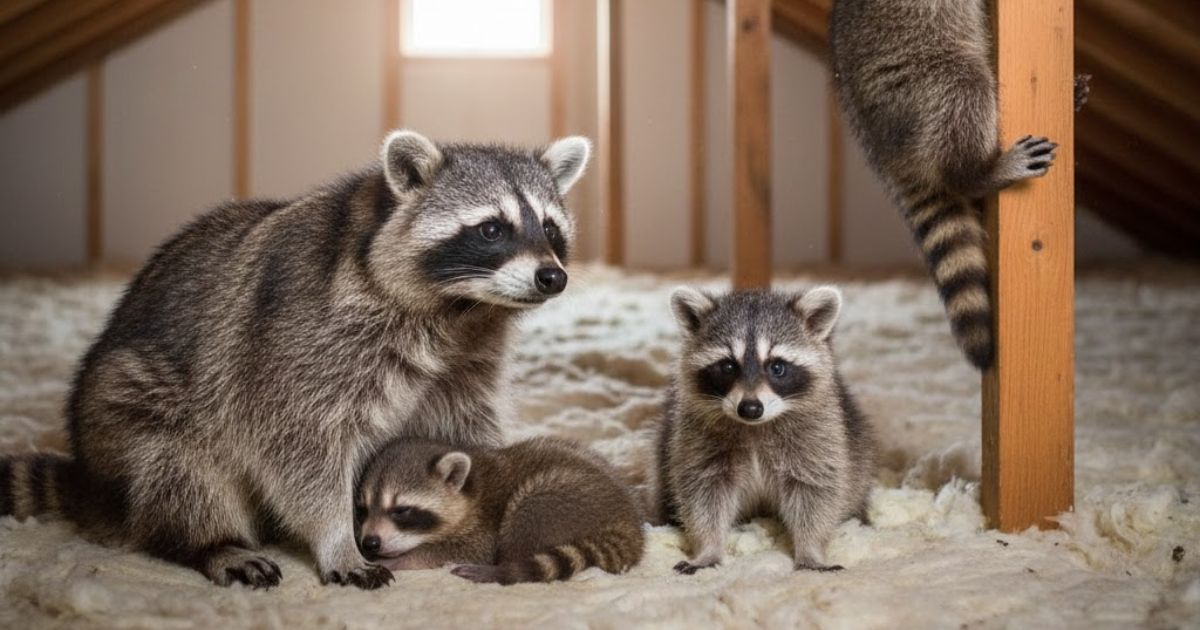
Newborn raccoon appearance surprises most Toronto homeowners we meet. These blind baby raccoons arrive weighing just 2 ounces. Their closed eyelids stay shut tight. They’re completely deaf at birth too. We’ve rescued countless helpless newborns from local properties. Their fur looks thin and grayish at first. Baby raccoon birth happens after 63 days of pregnancy. The tiny kits can’t regulate body temperature yet. Eyes remain closed for weeks after they’re born. We always handle them carefully during our Pestiseed pest control removals. Their skin appears pink underneath that sparse fur coat.
First Sounds Baby Raccoons Make
Baby raccoon sounds help mothers locate their young in dark dens. We hear chittering sounds during most Toronto attic inspections. These raccoon noises sound like soft purring mixed with chirps. The newborn raccoon distress calls alert us to families needing relocation. Mothers respond immediately to these urgent squeals.
Where Mother Raccoons Hide Newborns
Mother raccoon chooses warm locations for her vulnerable babies in Toronto homes. We find raccoon families in attic spaces most often during spring months. Mother raccoon den sites include chimneys and wall cavities too. Raccoon nesting sites need protection from weather and predators. Attic nesting provides perfect insulation for newborns. Some mothers pick chimney den spots near fireplace warmth. Wild families use tree cavity nest locations in parks. Raccoon family in attic spaces causes damage fast. Pestiseed pest control safely relocates these families without separating mothers from kits. We’re blind and deaf when born protectors in the GTA.
Early Development Stage (Weeks 3 to 6)
When Baby Raccoon Eyes Open
Baby raccoon eyes open at 18-24 days after birth in our Toronto removal experience. The three week mark brings exciting changes for growing kits. Their eyelids separate slowly over a few days. Eyes typically open during week three for most healthy litters. According to Toronto Wildlife Centre data, this raccoon eyes opening timeline stays pretty consistent. We check baby raccoons 3 weeks old during our Pestiseed inspections. The kits start seeing their surroundings for the first time. Raccoon kit development speeds up once vision kicks in. Curious babies begin exploring their den area right away.
First Teeth and Dietary Changes
Baby raccoon teeth start poking through gums around week four. These deciduous teeth feel sharp when baby teeth emerge fully. First teeth appear around 4 weeks in most litters we relocate. The baby raccoon teething phase makes kits more active and fussy. Baby raccoons nurse exclusively until their chompers arrive. Mothers still provide milk but introduce soft foods too. Raccoon development includes learning to chew and swallow solids.
Early Mobility Attempts
Kits wobble around their nest at the 18 to 24 days stage. Their legs grow stronger each day we monitor them. Young raccoons practice climbing on mom’s back first. They bump into walls and tumble over siblings constantly. Pestiseed Pest Control technicians watch these clumsy first steps during Toronto attic assessments. The babies gain coordination fast once their eyes work properly.
Active Growth Period (Weeks 7 to 10)
When Baby Raccoons Start to Explore
When baby raccoons start to explore their surroundings it becomes obvious around week seven. Raccoon kit 7 weeks old babies leave nesting area boundaries with confidence. Their curiosity driven behavior leads them across attic floors we inspect. Baby raccoons explore every corner and cranny they can reach now. Kits begin venturing beyond the nest when mom allows supervised trips. We spot raccoon exploration damage during Toronto property assessments. Baby raccoon curiosity drives them to test window ledges and roof edges. Pestiseed Pest control teams find scattered insulation from their playful adventures. Active growth stage energy makes these youngsters fearless and reckless.
Raccoon Kits Milestones in This Stage
Raccoon removal milestones during growth happen fast between weeks 7 and 10. The weaning milestone starts as mothers reduce nursing sessions gradually. Baby raccoon development milestones include the solid food milestone transition. Kits practice their walking achievement by following mom on short outdoor trips. Key developmental achievements show up daily in our removal work. Baby raccoon 2 months old can climb basic structures without help.
Physical Changes You Can Observe
Visible physical changes during growth make identification easier for homeowners. Their weight tripled since birth by this point. The full coat developed shows rich gray and brown tones. Distinctive markings appear clearly on their masked faces and ringed tails. Baby raccoon physical changes include sharper claws and stronger jaws. Raccoon appearance changes transform them into miniature adults quickly. Weight increases significantly as they eat more protein rich foods.
Independence Phase (Weeks 11 to 16)
First Climb Outside the Nest
First climb marks major milestone for baby raccoon 3 months old in Toronto homes. Baby raccoon climbing starts with short trips to attic edges. Their vertical climbing skills improve daily as they practice constantly. Climbing ability develops rapidly once they reach the raccoon juvenile stage. We watched the first climb of the raccoon scale walls during Pest Control inspections. Roof climbing becomes their favorite activity by week twelve. Raccoon Control climbing ability lets them access gutters and rooflines easily. Tree navigation helps them move between yards and properties safely.
Learning Survival Skills from Mother
Mother raccoon teaches essential skills during nighttime feeding trips outside dens. Learning survival behaviors from mother prepares kits for baby raccoon independence soon. She demonstrates foraging lessons by flipping over rocks and opening garbage lids. Food finding skills develop as kits watch her hunt insects and grubs. Raccoon survival skills include danger recognition from dogs and cars. Baby raccoon learning happens through copying mom’s every move carefully. City of Toronto wildlife guidelines recommend waiting until kits master these abilities before removal.
Preparing to Leave the Den
Preparing to leave the den permanently starts around week fourteen for most families. The separation timeline varies based on food availability and weather conditions. Kits ready for independent life spend more time away from their mother. Raccoon leaving nest behavior increases as the den departure date approaches. Baby raccoon separation happens gradually over several weeks in our experience. Den exit marks the start of solo living for young raccoons. Independent living begins when they find their own territories nearby.
What Toronto Homeowners Need to Know
Identifying Baby Raccoon Presence in Your Home
Signs of baby raccoon presence include scratching sounds coming from ceilings at night. How to identify raccoons in attic spaces starts with listening for crying noises during feeding times. Raccoon presence signs also include droppings evidence near entry points and insulation. Baby raccoons in attic situations show insulation damage from nesting mothers pulling material together. Identifying raccoon infestation means checking for torn roof vents and soffit openings. Toronto raccoon problems spike every spring when mothers give birth in homes. Pestiseed Pest Control responds to these raccoon in attic Toronto calls daily across the GTA.
Why Growth Stage Matters for Removal
Growth stage impacts removal strategy because newborns can’t survive without their mothers. Timing matters for humane removal to keep families together during relocation. The optimal removal window opens once kits reach eight weeks old. Raccoon removal timing follows humane treatment guidelines set by Ontario wildlife laws. Age appropriate removal prevents baby raccoon diseases from spreading in your home. Our growth stage removal approach uses the reunification process to keep mothers with babies. Humane raccoon removal protects both animals and your property from further damage.
Health and Safety Risks at Each Stage
Health risks increase with age as raccoons produce more waste materials. Fecal hazards contain parasites that cause serious infections in humans. Disease transmission concerns grow when raccoon health risks accumulate over months. Age specific health risks include bite risks and scratch dangers from older kits. Safety hazards for homeowners multiply when families remain in attics too long. Pestiseed Pest Control removes these threats while following proper safety protocols.
Why Choose Pestiseed for Raccoon Control
Why homeowners trust Pestiseed comes from our licensed raccoon removal expertise across Toronto. Pestiseed raccoon removal teams include experienced wildlife technicians who understand baby raccoon development stages. Our certified raccoon specialists provide same day raccoon removal when families invade your attic space. Pestiseed wildlife control operates with 24/7 wildlife control availability for emergency situations.
Pestiseed pest control raccoon services use safe raccoon removal methods that keep animals unharmed. We’re a trusted pest control service offering affordable raccoon services to every Toronto neighborhood. Our eco friendly pest control approach protects your family and local wildlife together. Long term raccoon solutions include sealing entries so animals never return again.
FAQs
How long do baby raccoons stay with their mother?
Baby raccoons stay with their mother until fall. Maternal care lasts approximately 8 to 10 months. Kits depend on mom for food and protection. Independence occurs around 8 to 10 months old.
How much does raccoon removal cost?
Raccoon removal cost in Toronto depends on property size. Pricing depends on infestation severity and entry points. We offer free estimates. Average cost for professional removal includes inspection and exclusion.
Can I remove baby raccoons myself in Toronto?
Removing baby raccoons yourself is illegal in Toronto. Toronto requires licensed professionals for wildlife removal. Ontario regulations protect raccoons under wildlife laws. We handle legal humane removal safely for you.
What do baby raccoon sounds mean?
Baby raccoon sounds indicate various needs. Vocalizations communicate specific states like hunger or fear. Distress calls mean babies need their mother. We help identify raccoon noises in your home.
When is raccoon breeding season in Toronto?
Raccoon breeding season in Toronto occurs in late winter. Baby raccoons born between March and May. Spring is peak raccoon birth season. We remove raccoon families humanely during this time.
Take Action Before Baby Raccoons Cause Major Damage
Take action before damage worsens by calling our Toronto raccoon service immediately. Early intervention saves money on costly attic repairs and insulation replacement later. Damage prevention starts with professional intervention from licensed professionals who know baby raccoon behavior. Timely removal benefits include stopping urine stains and structural harm before it spreads. Our professional wildlife removal team provides emergency services available around the clock daily. Expert help available 24/7 means emergency raccoon help arrives fast when you need it most. We offer guaranteed removal with damage prevention strategies that protect your Toronto home long term.