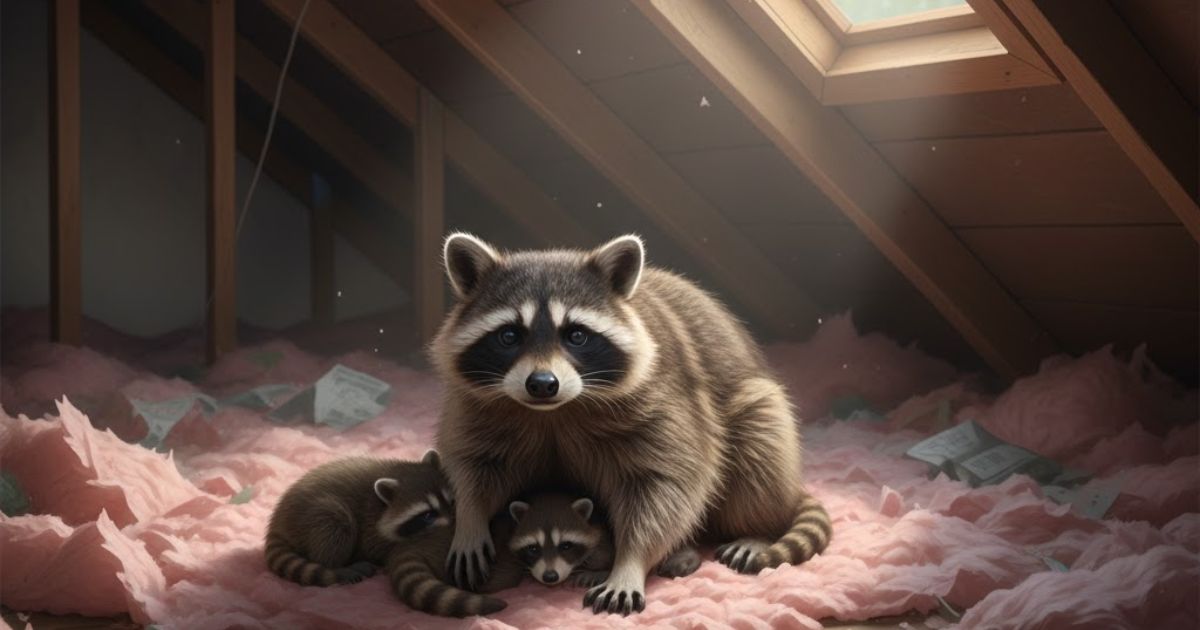
Your attic just became a raccoon nursery and the damage clock is ticking. Strange scratching sounds at night mean baby raccoons moved in above your head. Mother raccoons pick Toronto attics every spring because they stay warm and safe. We at Pestiseed Pest Control have seen this problem destroy many homes. Raccoon breeding season runs from March through June across the entire city.
Female raccoons need cozy spaces to raise their babies during these months. Your attic gives them everything they want for a perfect home. Baby raccoons create expensive problems that grow worse each passing day. Contaminated insulation spreads dangerous bacteria throughout your ventilation system fast. Chewed electrical wires spark fires that threaten your family’s safety at night. Health risks multiply when raccoon waste piles up in confined attic spaces. Repair costs climb into the thousands when you wait too long. Professional wildlife removal protects both your property and the animal families safely.
Why Toronto Raccoons Choose Your Attic for Birthing
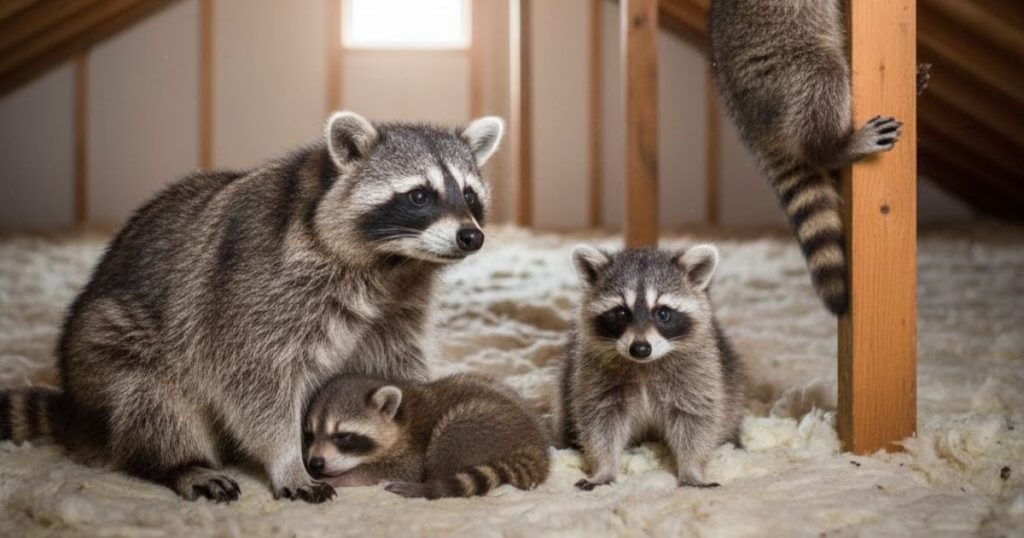
Raccoon nesting habits make your attic the perfect nursery. Mother raccoons need a warm shelter for raccoons during pregnancy. Your residential attics provide exactly what they need to raise babies safely. We have inspected attics and found the same pattern. Raccoons target homes with easy roof access between February and April. Toronto raccoon breeding happens when temperatures start warming up in early spring. Female raccoons remember good den locations from previous years.
Insulation as nesting material makes attics irresistible to expecting mothers. Your pink fiberglass insulation keeps babies warm during cold spring nights. Raccoon behavior patterns show they prefer urban wildlife habitat spots over natural tree hollows. Predator free environment means no coyotes, owls, or other threats. Birthing season peaks in April when raccoon maternity den construction reaches full swing.
7 Clear Signs a Mother Raccoon Gave Birth in Your Attic
High Pitched Chirping Sounds at Night
Baby raccoon sounds start soft but get louder each week. Vocal baby raccoons make chittering sounds when they want milk from mom. You will hear high pitched raccoon calls between 10 PM and 4 AM most nights. These raccoon kit vocalizations sound like tiny birds trapped inside your walls. Nighttime animal noises come in waves as baby raccoon kits wake up hungry. Feeding sounds include squeaking and purring that lasts 10 to 15 minutes.
The mother raccoon’s response is quick when babies cry out with distress. We have recorded these exact raccoon chirping noise patterns in hundreds of Toronto homes. Raccoon communication between mother and kits happens mostly after dark when she returns from foraging.
Heavy Thumping and Scratching in Ceiling
Thumping in attic spaces means an adult is moving around up there. Raccoon scratching sounds on wood beams wake families up at 2 AM regularly. Heavy footsteps overhead shake light fixtures because adult raccoons weigh between 15 and 40 pounds. Clawing sounds ceiling areas come from sharp nails digging into attic floorboards and soft wood. Ceiling scratching noises increase when the mother leaves to find food each night.
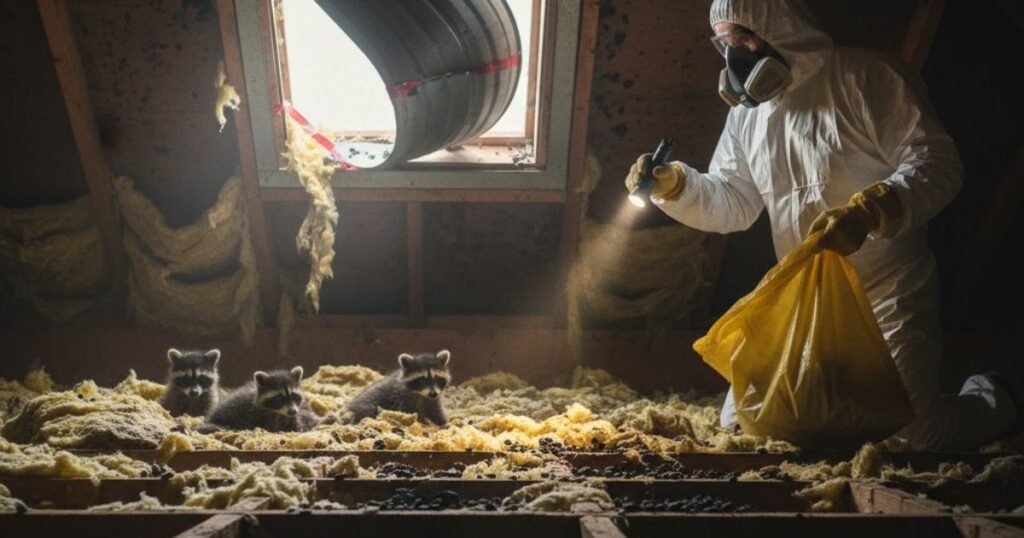
Movement in attic space creates structural movement sounds that echo through your bedroom below. Nocturnal activity patterns peak right after sunset and again before sunrise. Insulation disturbance happens when raccoons walk across loose fill or push through bats. We locate families fast by tracking these ceiling joist vibrations during our inspections. Pestiseed Pest Control uses thermal cameras to spot exact locations without disturbing the animals.
Increased Activity and Sightings
Raccoon sightings on your roof every night signal a family living upstairs now. Increased raccoon activity means a nursing mother is working hard to feed herself. Raccoon coming and going patterns repeat like clockwork between sunset and sunrise hours. Multiple raccoon visits happen because food requirements triple when she nurses hungry kits.
Daytime raccoon appearance rarely happens unless babies are crying loudly for her attention. Maternal behavior patterns make her bold and less afraid of humans near property. Food gathering trips increase to five or six times per night during peak weeks.
Strong Musky Odor from Attic
Raccoon smell attic areas get worse as babies grow bigger each passing week. Musky odor raccoon families produce comes from urine soaking into wood and insulation. Strong animal smell hits you the second you open the attic hatch door. Pungent wildlife odor spreads through air vents into bedrooms below your ceiling space. Ammonia smell attic spaces develop from biological waste accumulation in one corner spot.
Scent marking behavior leaves oils on roof beams that stick around for months. Fecal matter piles up fast with four to six kits living together. Attic insulation absorbs liquids and holds smells even after animals leave permanently. Health hazards multiply when fecal matter contains roundworm eggs that become airborne easily. Pestiseed Pest Control wears protective gear during every cleanup because contamination spreads fast.
Visible Nesting Material and Damage
Raccoon nest material scattered across your attic floor proves a family moved in. Attic insulation damage shows up as large bald patches where pink material disappeared. Torn insulation pieces get dragged into corners to create a soft bowl shape. Shredded materials include paper, cardboard, and fabric pulled from stored boxes you forgot.
Bedding area evidence appears as a compressed circle about two feet wide usually. Fiberglass insulation tears leave exposed wooden beams and electrical wiring visible from below. Cardboard and paper shreds mix with insulation to make the nest warmer somehow. Mothers pull apart anything soft they find including old clothes and curtains. HVAC ducts get ripped open when raccoons mistake them for nesting supplies.
Entry Point Damage on Roof
Raccoon entry points always show fresh claw marks and bent metal pieces. Roof damage raccoon families cause costs homeowners thousands in repair bills every year. Soffit damage signs include torn aluminum panels and holes punched through wood backing. Fascia board destruction happens when raccoons pry boards away from roof vents easily. Structural entry damage weakens your entire roof system over just a few weeks.
Roof line weak spots near plumbing vents get exploited first because materials are thinner. Ventilation openings like ridge vents get torn apart to create bigger access holes. Chimney cap damage occurs when caps get pushed off or bent completely sideways. Soffit and fascia boards split when heavy adults climb the same path nightly. Pestiseed Pest Control repairs all raccoon entry points using galvanized steel that lasts decades.
Raccoon Tracks and Droppings
Raccoon droppings identification helps confirm babies are living in your attic right now. Raccoon scat attic piles collect in attic corners where families create bathroom spots. Cylindrical droppings measure two to three inches long and look dark brown usually. Latrine site evidence shows up as piles containing seeds and undigested food bits. Raccoon latrine areas smell terrible and contain dangerous Baylisascaris eggs that spread easily. Communal toilet areas get used by the entire family in the same spot.
Never touch droppings without proper safety gear because parasites live inside them. Track patterns appear in dusty attic areas showing where animals walk each night. Paw print characteristics include five toes that look almost hand like prints in shape. We test every sample for parasites before starting cleanup work safely. Pestiseed Pest Control removes contaminated insulation and disinfects all surfaces using hospital grade products.
How to Tell If Raccoon Gave Birth
How to tell if a raccoon gave birth comes down to watching specific behavior changes carefully. Confirming baby raccoons present requires looking for multiple signs happening at the same time. Raccoon birthing signs include constant chirping sounds mixed with heavy adult footsteps overhead. Maternal behavior indicators show the mother becoming more aggressive when you approach her den. Timing of raccoon births matters because Toronto sees most babies during April and May peak weeks.
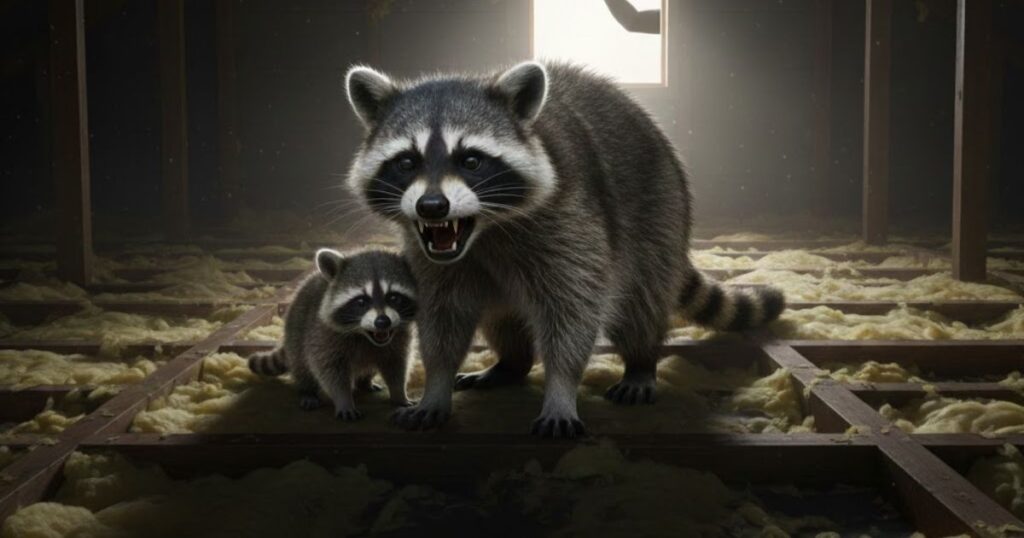
Litter presence confirmation happens when you hear high pitched crying every few hours. Nursing behavior signs mean the mother stays inside longer between her feeding trips. Protective mother actions include hissing, growling, or charging at anyone near the roof. Spring birth timing follows a 63 day gestation period that starts in late winter. We have confirmed raccoon births in Toronto attics since 2020. Pestiseed Pest Control uses thermal cameras to detect body heat from newborn kits safely.
Noises in Attic at Night Toronto What You’re Hearing
Noises in attic at night wake up Toronto families almost every spring season. Toronto attic sounds vary depending on which Toronto wildlife species moved in recently. Identifying animal sounds helps you know if raccoons or squirrels are living overhead. Nocturnal attic activity peaks during the midnight to 4 AM timeframe when animals hunt. Nighttime wildlife noises include both scratching versus chirping depending on the creature type.
Sound identification guide basics show raccoons make heavy thumping while squirrels scurry lightly. Vocal pattern differences help separate raccoon chirps from bird tweets or bat squeaks. Movement sound types change based on animal weight differences between species living up there. Sound frequency ranges for baby raccoons hit higher pitches than adult movements. Pestiseed Pest Control records sounds during inspections to confirm exact species present.
Dangers of Baby Raccoons in Your Toronto Attic
Baby raccoons in your attic bring serious dangers of raccoons in attic situations. We see health risks baby raccoons create through disease transmission risks every week. Mother raccoons leave droppings that cause insulation contamination fast. Your family faces raccoon rabies variant exposure when these animals nest above you. Toronto Public Health warns about breathing contaminated air from nesting sites. Structural damage costs climb when urine soaks through wood beams daily. Raccoon hazards Toronto homes face include expensive insulation replacement needs.
Safety threats homeowners experience need professional help now. We at Pestiseed Pest Control remove these animals safely before damage worsens. Our team stops mother raccoons from returning to your space. We clean contaminated areas and seal entry points permanently. Your attic becomes safe again without raccoon hazards Toronto families worry about.
Prevent Raccoons from Returning After Removal
Getting raccoons out is only half the battle won. Preventing raccoons from returning takes smart raccoon exclusion methods that last for years. We install one way exclusion doors that let animals leave but never come back. Wildlife proofing attic spaces means finding every gap they could squeeze through.
Securing entry points requires soffit reinforcement and strong metal screening. We add chimney caps and vent covers to block common access routes. Entry point sealing stops new families from moving into your space. Our roof repair techniques fix damaged shingles where paws ripped through before.
We at Pestiseed Pest Control guarantee our services for complete peace of mind. Our team checks your entire roofline for weak spots raccoons target next. We fix problems before animals discover them and cause more headaches.
FAQs
How long do baby raccoons stay in attic?
Baby raccoons stay in attics for about 8 to 12 weeks. They nurse for 8 to 10 weeks. By June or July, kits leave with their mother. Full mobility happens around 12 to 16 weeks.
Can I remove baby raccoons myself?
No, we do not recommend DIY raccoon removal. Toronto wildlife bylaws require licensed wildlife technicians. Mother raccoons attack to protect babies. The Ontario Fish and Wildlife Conservation Act protects these animals legally.
How much does raccoon removal cost in Toronto?
Professional raccoon removal in Toronto costs depend on property size. We offer free estimates. Our pricing includes one way door installation and warranty coverage.
What time of year do raccoons give birth in Toronto?
Raccoons give birth from March through June in Toronto. April and May show peak birthing activity. Mating happens in late winter. Gestation takes about 63 days before spring babies arrive.
How do I know if mother raccoon will come back?
Mother raccoons have strong maternal instincts. They typically return within 24 to 72 hours. Watch for nighttime activity near the den. Toronto raccoon mothers rarely abandon their babies permanently.
Protect Your Toronto Home Today
Protecting homes from raccoons requires professional raccoon control from licensed professionals who know what they’re doing. Our home protection plan includes licensed wildlife removal and humane exclusion services your neighbors trust. We give free inspection offers to find problems early and save you money. Our 24/7 service availability and warranty protection programs give you confidence things stay fixed. Preventive wildlife measures we install keep your family safe from future invasions. We at Pestiseed Pest Control have helped thousands of homes stay raccoon free for good. Call us now for your free home check before damage starts costing you.