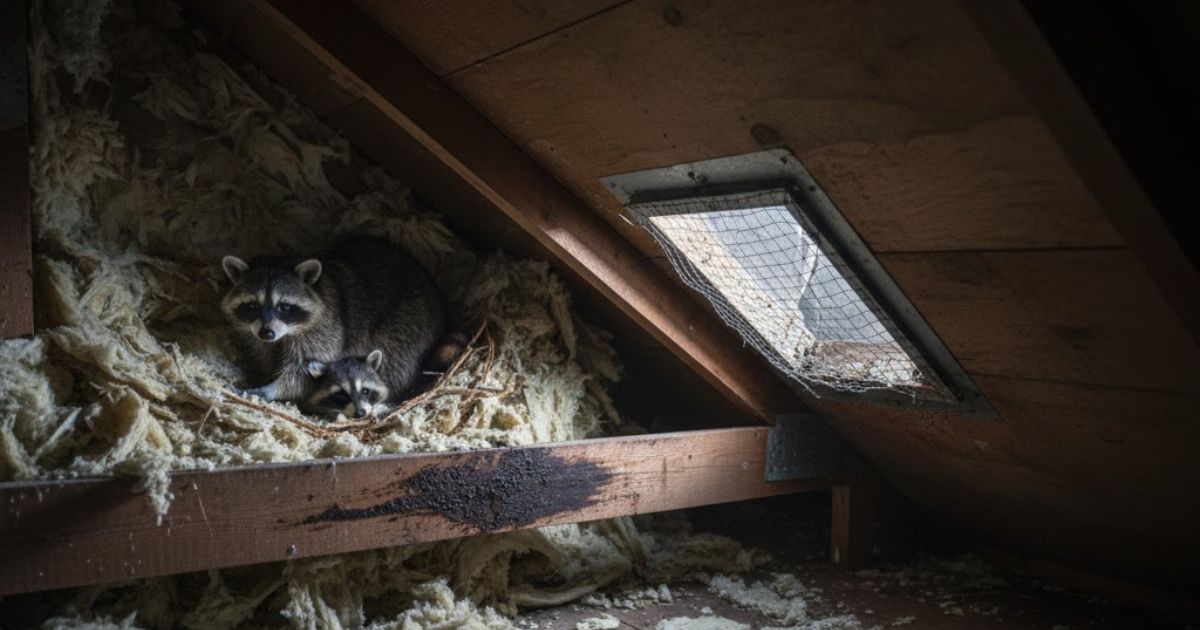
How can you tell if a raccoon has taken over your attic?
Raccoon presence shows up through combined clues, not single symptoms. We’ve handled countless Toronto cases where homeowners spotted one attic indicator but missed the full picture. Physical evidence like greasy smudge marks near vents paired with behavioral signs at dusk reveals the truth. Torn insulation in corners plus chirping after sunset confirms raccoon families have moved in. Most people wait too long for obvious proof.
We look for pattern recognition across multiple signals to verify wildlife problems. Nighttime thumping with daytime quiet shows nocturnal activity clearly. Attic entry holes widen weekly as raccoons push through repeatedly. Strong ammonia smells gather near nesting zones, not spread randomly everywhere.
Do you hear loud, heavy noises coming from the attic at night?
Nocturnal activity sounds different depending on what animal moved in. We’ve climbed into hundreds of Toronto attics where homeowners confused squirrels with raccoon movement. Ceiling vibrations from raccoons feel heavier because adult raccoons weigh 15 to 25 pounds. Mice scurry with light pitter-patter sounds that barely shake anything. Raccoons thump across structural framing with deliberate, slow steps you can feel downstairs.
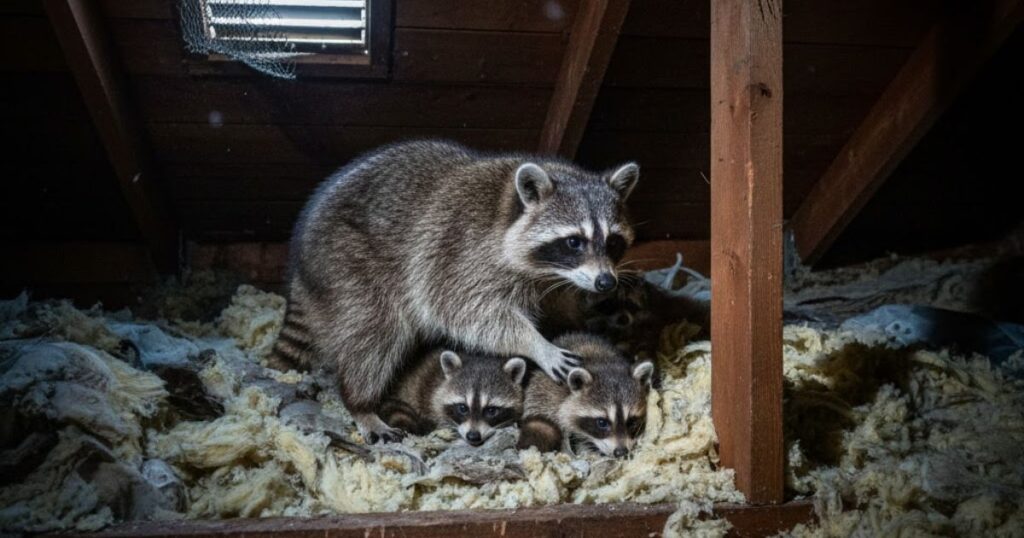
Raccoon families create rolling, dragging noises when kits wrestle near their nest. You’ll hear deep thuds when mothers jump between beams at feeding time. The sounds stop completely during daylight hours because raccoons sleep then. We track these weight patterns to identify the exact wildlife problem fast.
Visible attic damage caused by raccoon activity
Torn or Lifted Roof Shingles, Soffits, and Attic Vents
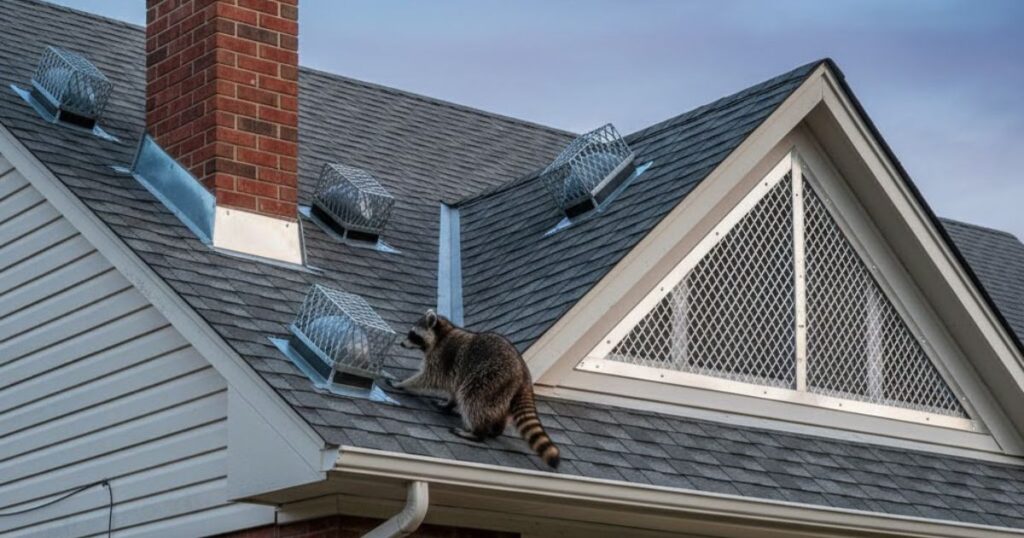
Raccoon behavior involves forcing through your roofing system to create access holes. We’ve inspected Toronto homes where roof shingles get peeled back like banana skins. Soffits crack when raccoons pry them open with strong front paws. Vents get bent outward as animals push through the metal screening. This entry force breaks the weather barrier protecting your home from rain. Attic damage from forced access looks different from regular aging or storms.
Compressed, Ripped, or Scattered Attic Insulation
Insulation layer destruction happens when mothers build nests for babies in spring. We find insulation pulled into piles where raccoons sleep during the day. The thermal barrier gets compressed flat under their weight, losing protective value. Nesting behavior scatters fiberglass across beams, leaving bare spots everywhere. Your energy efficiency drops when heat escapes through damaged zones.
Claw Marks and Greasy Rub Stains Near Attic Access Points
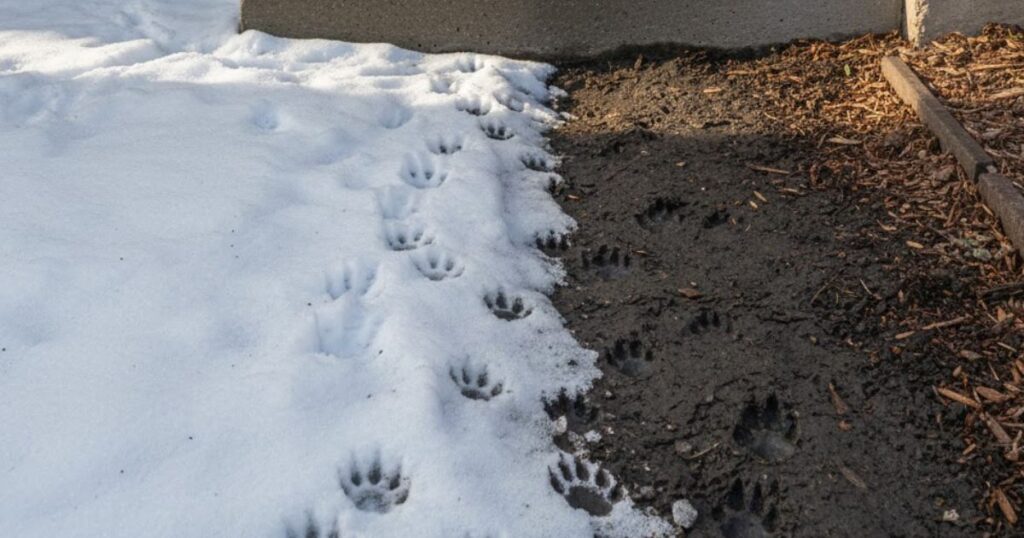
Claw marks appear on wood around entry holes from repeated climbing. Rub stains come from sebaceous oils on raccoon fur rubbing against surfaces. We trace access routes by following these dark smudges on beams. The stains concentrate near holes where animals squeeze through nightly.
Biological evidence of raccoon presence in the attic
Raccoon Droppings Identified in Attic Spaces
Raccoon droppings work like fingerprints to confirm the exact species inside your home. We’ve cleaned Toronto attics where raccoon feces pile up in specific toilet zones. The droppings measure about three inches long and contain visible seeds or berry fragments. Roundworm eggs hide inside the waste and stay dangerous for years without treatment. Bacteria from the droppings spread through dust when air moves through your space.
Persistent Ammonia Odor Caused by Raccoon Urine Saturation
Raccoon urine soaks deep into wood framing and insulation fibers over months of use. We trace sharp ammonia smells back to saturated zones where raccoon waste is collected. Attic contamination happens when liquid absorbs into porous building materials permanently. The odor persists even after animals leave because absorbed urine releases fumes slowly. Pathogens thrive in urine soaked materials and threaten your home’s air quality continuously.
Raccoon entry points on roofs and attic structures
Chewed, Clawed, or Widened Edges Around Entry Holes
Entry points rarely start big enough for raccoons to squeeze through easily. We’ve examined Toronto roofs where chewing marks appear on fascia boards around small openings. Claw damage widens holes by another inch every few nights of use. Raccoons target spots with wood rot because soft material tears apart faster. Repeated access creates jagged edges that grow from fist-sized to dinner-plate-sized within weeks.
Compromised Vents, Rooflines, and Chimney Caps
Attic access through mechanical systems creates problems beyond animal invasion alone:
- Structural gaps at the roofline get exploited when raccoons pry loose flashing
- We find damaged roof vents that destroy airflow systems meant to cool your home
- Broken chimney caps remove critical fire barriers protecting against sparks and embers
- Each compromised spot invites rain, snow, and cold air inside year round
Seasonal attic activity patterns linked to Raccoon nesting
Raccoon nesting follows a predictable breeding cycle that peaks during specific months. We’ve tracked Toronto attics where spring activity surges between March and May every year. Female raccoons search for warm, dry spaces to birth their kits then. Seasonal behavior changes dramatically as mothers become protective and territorial during this period. Noise levels increase when babies start moving around at six weeks old.
The biological timing proves raccoons chose your attic deliberately, not by accident. Mothers return to previous den sites year after year if locations remain accessible. We find fresh nesting material brought in right before the birthing season starts. Summer activity drops as families leave attics to forage and explore outdoors.
Combined attic indicators confirming raccoon takeover
Simultaneous Presence of Noise, Damage, and Droppings
Infestation confirmation requires finding noise, damage, and droppings all happening at once:
- We’ve inspected Toronto attics where homeowners heard sounds but ignored other warning signals
- Multi-signal validation happens when you spot torn insulation alongside fresh waste piles
- Heavy thumping at night combined with new claw marks proves current occupation
- Occupancy duration extends when multiple signs appear across different zones of your space
Multiple Concurrent Signs Indicating an Active Raccoon Infestation
Active infestation means animals live in your attic right now, not months ago:
- Continuous activity shows through warm droppings, fresh food debris, and daily entry hole use
- We differentiate between old evidence and ongoing problems by checking material temperature
- Past presence leaves cold, dried waste while current residents create warm, moist deposits
- Finding three or more simultaneous indicators confirms raccoons control your attic space completely
Why ignoring Raccoon signs in your attic increases damage
Delayed action on raccoon problems multiplies repair costs every week you wait. We’ve watched Toronto attics go from minor holes to complete structural decay within months. Escalating damage happens because raccoons expand entry points and destroy more insulation daily. Urine soaks deeper into wood beams, causing rot that spreads through framing. Contamination spread reaches ventilation systems and moves harmful particles throughout your entire home.
Each passing week allows raccoons to establish stronger territorial claims on your space. Structural supports weaken as animals chew through support beams for nesting material. Waiting until spring means dealing with protective mothers and helpless babies together. Early intervention stops damage before it requires replacing entire roof sections or ceiling joists.
Why Choose Professional help once Raccoon Signs appear?
Professional Raccoon control handles dangers homeowners don’t see coming during humane removal attempts. We’ve responded to Toronto cases where DIY trapping injured protective mother raccoons and orphaned babies. Pestiseed Pest Control assesses health risks from waste exposure before starting any work. Trained technicians know how to avoid bites, scratches, and airborne pathogens during extraction. Exclusion systems prevent re-entry by sealing every potential access point raccoons might exploit later.
Risk management extends beyond just getting animals out of your attic safely. We identify structural weak spots that need reinforcement before wildlife returns next season. Professional teams coordinate timing to avoid separating mothers from dependent kits accidentally. Licensed specialists follow legal wildlife protection regulations that change throughout the year.
FAQs
How long do raccoon signs last in an attic?
Raccoon signs last months or years without cleanup. Droppings stay dangerous for weeks. Odors linger until we remove soiled insulation. Stains become permanent fast. We offer free attic inspections locally.
Can raccoon signs disappear without removal?
No. Signs never fully disappear alone. Raccoons may leave temporarily but return soon. Old waste still attracts new pests. We provide complete removal and sanitation services nearby.
Are attic signs different for one raccoon versus a family?
Yes. A family creates larger waste piles quickly. Multiple trails appear throughout the insulation. Damage spreads faster with kits present. We assess population size during every local inspection.
Can raccoon signs be mistaken for squirrels?
Yes. However raccoon droppings are much larger. Their damage is heavier and messier. Entry holes appear bigger too. We accurately identify pests during our free local evaluations.
Do attic signs always mean roof damage?
No. Raccoons sometimes enter through vents or soffits. Gaps near chimneys allow easy access too. Roofs may stay intact while attics suffer. We inspect all entry points locally.
Book an attic inspection to confirm Raccoon activity
Attic inspection provides clear answers when you suspect wildlife problems but lack proof. We perform thorough Toronto checks that deliver Raccoon confirmation through evidence based findings, not guesswork. Pestiseed Pest Control technicians photograph entry points, waste deposits, and structural issues during visits. Damage assessment reveals exactly what needs repair and what can wait safely. Our inspections focus on prevention strategies that stop future invasions permanently. Verification visits give you facts to make informed decisions about your home.