Wasp nesting behavior begins with finding warm shelter fast. Toronto attic spaces stay between 20 and 35°C each spring. That attic temperature range speeds up larval growth cycles. Seasonal warmth turns any roof space into a perfect zone for nest building.
Thermal insulation traps heat and keeps the inside cozy all season. Wasps chew structural beams to collect wood fibers for nest construction materials. Predator avoidance is a strong reason they pick high spaces. Up here, colonies grow safely without any disturbance.
Tiny Entry Holes Most Homeowners Miss
Wasps squeeze through gaps under 1 cm surprisingly fast. Roof ventilation systems push airflow that helps them sniff out attic openings. From your lawn, scan soffits, fascia boards, and eaves carefully. Cracked siding and open construction seams are visible spots to check without a ladder.
Ridge vents, gable vents, roof vents, and dryer vents all push warm air out. Chimneys with loose roof flashing and HVAC exhaust vents hide many tiny entry holes. Damaged roof tiles and cracked roof shingles leave structural gaps open along the roofline. We spotted a colony behind a fascia board in North York last summer.
Where Wasps Actually Build Nests Up There
Wasp nests grow silently inside roof cavities you cannot see. Structural voids between roof decking and drywall trap buzzing sounds deep inside. Homeowners hear noise but never find the source. A hidden gap between ceiling joists and insulation stays warm and protected all season.
Rafters, wall cavities, and vent ducts all give active colonies space. Nests buried inside insulation layers are nearly impossible to spot. Early checks near entry points stop big colony problems later. Hidden roof space corners like these explain why buzzing sounds have no clear source.
How to Identify a Wasp Nest in an Attic Before Opening the Space
Spot the Warning Signs Before You Open Anything
Wasp activity near rooflines tells you a lot quickly. Watch for repeated wasp entry flight paths entering the same gap. That trick is called flight path triangulation. It points you to the nest without climbing up.
Buzzing in ceiling boards is a clear early warning. Attic scratching sounds around the roofline often follow right after. Wasps indoors appearing daily means the colony lives just above you. A growing wasp infestation surprises most Toronto homeowners each summer.
How Pros Find Hidden Nests Without Going Up There
Nest detection starts from the ground with the right tools. Thermal cameras read heat from hidden nests right through roof surfaces. We used infrared cameras on a Scarborough home last fall. The scan revealed a large nest tucked behind the drywall.
Stethoscope acoustic devices pick up buzzing through walls without drilling. Fiber optic inspection scopes slide into gaps to show structural void nests. Vibration detection confirms colony movement deep inside roof boards. A thorough exterior inspection and pest control inspection find nests fast.
When Wasps Hit Their Most Active Hours
Worker wasps fly hardest between 10 AM and 4 PM daily. That window marks peak wasp activity cycle hours for any colony. Colony expansion runs at full speed from June through August. Late summer brings a strong aggression phase as temperatures drop.
A queen wasp builds the colony quietly starting in early spring. Larval development speeds up fast as the population climbs through July. The seasonal lifecycle peaks just before fall begins in Toronto. Smart attic inspection timing catches the colony before that late aggression hits.
What Species of Wasps Commonly Nest in Roof Spaces?
Yellowjackets Hide Deep Inside Your Walls
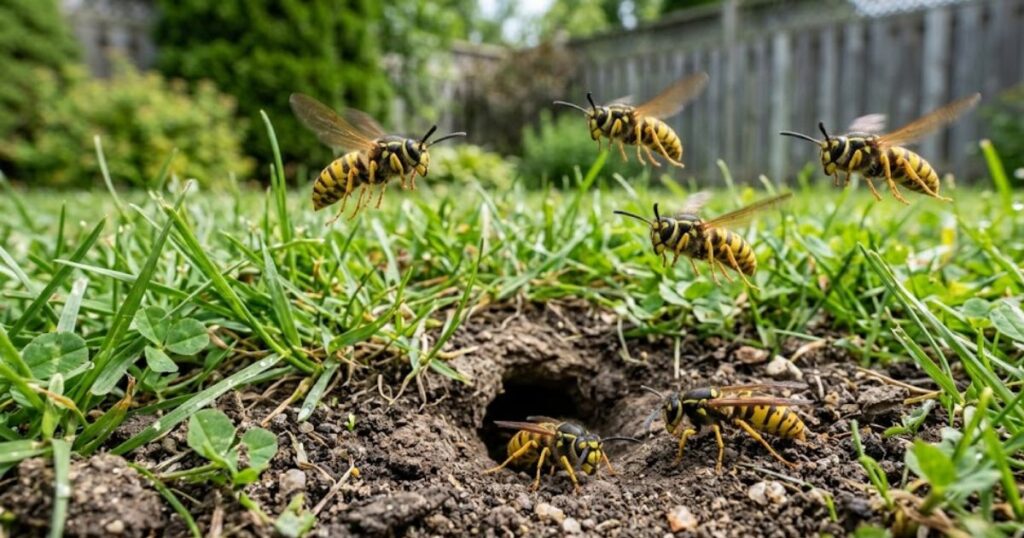
Yellowjackets from the Vespula species love building cavity nests indoors. They squeeze through tiny gaps straight into wall voids. Once inside, they connect those voids right to your attic. Their aggressive defense triggers fast when anyone gets too close.
Colony population climbs into the thousands by August. Scavenging behavior keeps them moving between food sources and the nest. We once spotted a yellowjacket nest deep inside a Scarborough wall. This attic nesting species always needs professional treatment to handle safely.
Paper Wasps and Their Open Nests on Beams
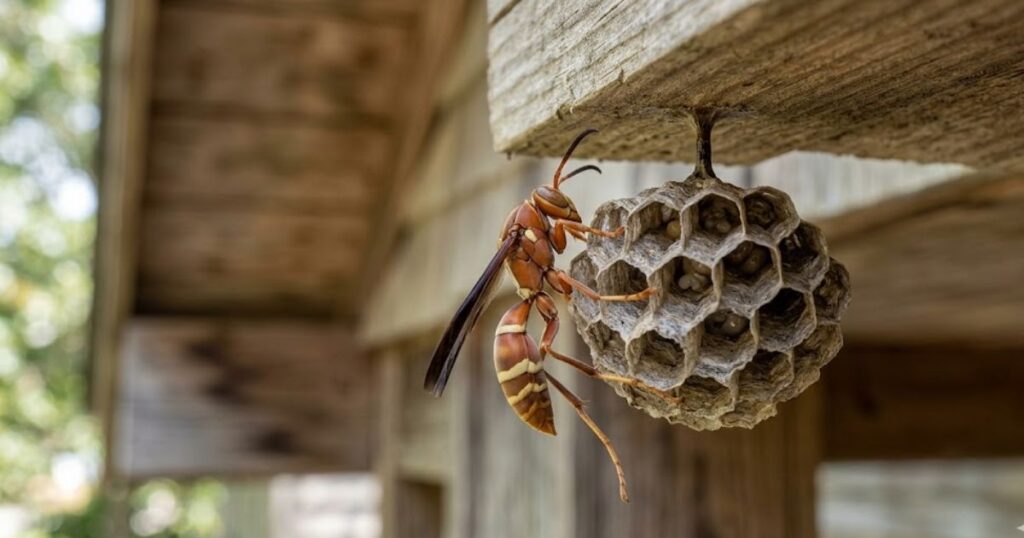
Paper wasps of the Polistes species skip the hiding spots completely. Their umbrella nests hang right off exposed rafters in plain sight. Made from wood fiber pulp, each open comb nest stays visible up there. That open structure makes this wasp species much easier to spot.
Social wasps like these stay in small groups under 30 members. Smaller numbers mean lower sting risk during any removal. The open comb design attaches firmly to wooden beams and boards. Treatment here differs a lot from removing hidden cavity infestations.
Bald Faced Hornets Build the Toughest Nests Up There
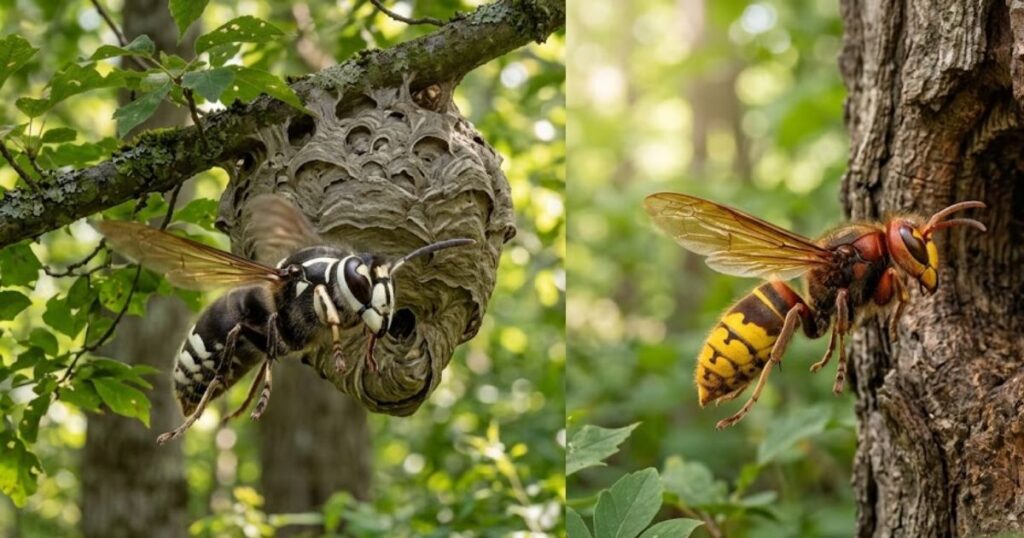
Bald faced hornets or Dolichovespula maculata build strong aerial nests overhead. Multiple paper shell layers wrap tightly around the entire nest. That layered build lets large colonies survive cool Toronto attic temperatures. Conditions that slow other stinging insects barely affect these hornets at all.
These roof nesting hornets grow faster than most homeowners ever expect. We have seen one nest reach football size by late July. Their multi-layer shell protects the whole colony from cold effectively. Bald faced hornet removal carries the highest sting risk of all three.
Table Key Differences Between Attic Wasps
| Species | Nest Type | Colony Size | Aggression Level |
| Yellowjacket | Enclosed paper nest | 1000–5000 | High |
| Paper Wasp | Open comb | 20–200 | Moderate |
| Hornet | Large layered nest | 300–700 | High |
What Are the Risks of Leaving a Wasp Nest in the Attic?
Wasp Stings Inside Your Home Hit Harder Than Expected
Hymenoptera stings from attic wasps reach family members surprisingly fast. These insects push through ceiling gaps when the attic nest danger grows. Sting attacks happen most when someone disturbs a wall near the nest. Allergic reactions affect nearly 5% of people exposed to wasp venom.
Severe cases trigger anaphylaxis, which needs emergency care right away. Indoor infestations make that daily sting risk nearly impossible to avoid. CDC data confirms stinging insects send over 500,000 people to emergency rooms yearly. Wasp infestation risk grows every single week the nest stays untreated.
What a Growing Nest Does to Your Ceiling and Roof
Wood chewing by colony members weakens roof boards quietly from inside. Nest weight builds up fast as summer colony numbers climb high. A basketball sized nest pushes ceiling damage into very real territory quickly. We pulled one nest from a North York attic that cracked two joists.
Drywall penetration starts when nests push past insulation into the boards. Property damage at that level costs Toronto homeowners thousands to fix. Structural harm from a heavy nest stays hidden until it worsens badly. Catching this early saves the worst repair costs down the road.
Month by Month Colony Growth That Surprises Most Homeowners
A queen lifecycle starts in April with just one wasp building alone. By May, brood production kicks in and the first workers emerge fast. The queen produces 200 to 300 workers through late spring easily. That early crew then expands the nest bigger every single day.
June through July marks peak colony lifecycle expansion across Toronto rooftops. By August, a mature colony holds 3,000 to 5,000 wasps inside. Colony expansion at that scale makes safe removal far harder to manage. Each week you wait adds hundreds more to the population above you.
Why DIY Attic Wasp Nest Removal Is High Risk
Limited Visibility Hides More Than One Nest Up There
Poor attic lighting makes DIY removal dangerous right from the start. Narrow crawl spaces bury blind corners most homeowners never reach or see. Secondary nests hide just past insulation layers in dark gaps. Missing even one means the wasp attack risk stays very much alive.
Wasps Defend Nests Aggressively in Confined Spaces
Confined spaces trap you right next to thousands of angry wasps. Defensive pheromones launch a full swarm behavior response within seconds flat. That alarm pheromone cascade signals every worker to sting at once. Colony defense inside tight attic corners makes any quick escape nearly impossible.
Ladder and Ceiling Collapse Hazards Nobody Talks About
Ladder falls inside dark attics send Toronto homeowners to hospitals yearly. Attic joists carry limited load and snap under poorly placed weight. Weak ceiling drywall gives out fast when someone steps off those joists. Fall hazards in low light roof spaces catch even careful people off guard.
Wrong Spray Products Push Colonies Further Into Your Walls
Repellent sprays force colonies deeper into wall voids almost immediately. Insecticide drift misses the nest core and scatters worker wasps everywhere. Colony relocation follows fast after any insecticide misuse triggers a split response. We found three separate new nest zones after one bad spray job.
Safe Methods for Treating Wasps in Attic Spaces
Protective Equipment Required Before You Go Up There
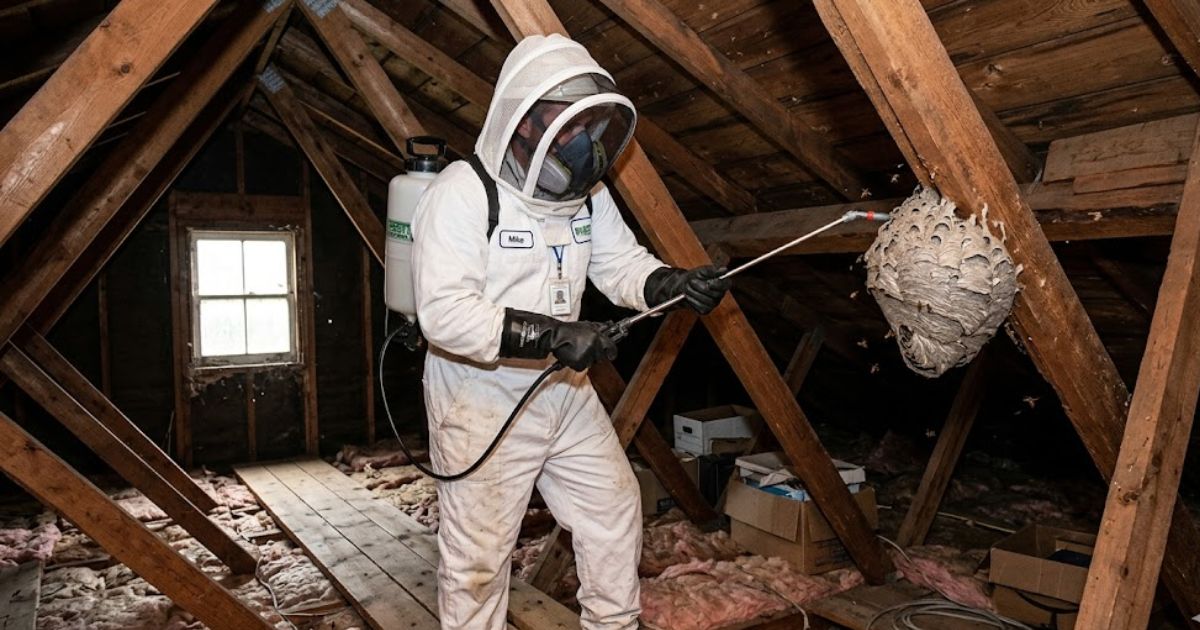
A proper bee suit covers every inch of exposed skin up there. Pest technicians always pair it with gloves, a face shield, and a respirator. That minimum PPE standard keeps any wasp treatment attempt from turning into a hospital visit. Skipping even one piece puts you in real danger fast.
Approved Treatment Options That Actually Work in Attics
Carbaryl dust outperforms liquid insecticides inside dark attic voids every time. Dust particles float deep into gaps where sprays simply never reach. Pyrethroid insecticides fall under EPA registered pesticide categories for safe use. A residual insecticide layer keeps killing returning workers for weeks after treatment.
Best Time to Treat a Wasp Nest and Why It Matters
Nocturnal inactivity cuts worker flight activity by up to 90% at night. The colony resting phase begins right after sunset across every Toronto rooftop. A temperature drop below 10°C slows remaining wasps down even further. We always schedule nest removal jobs after dark for the safest results.
Professional Attic Wasp Nest Removal Process
Every professional pest control service starts with a full inspection of the roofline. We map every entry point before touching anything inside the attic. That entry point mapping technique shows exactly where wasps travel in and out. Skipping this step causes most wasp extermination jobs to fail within weeks.
After mapping, insecticide treatment goes directly into each confirmed void and gap. Nest extraction follows once the colony stops showing active movement overhead. Sealing every gap during exclusion stops new queens from claiming the same space. Toronto homes treated this way stay wasp free through the full season ahead.
How to Prevent Wasps From Nesting in Your Roof Space
Seal Structural Gaps Around Rooflines Every Spring
Sealing gaps along the roofline is the first step in wasp prevention. Wasps squeeze through openings smaller than a pencil eraser very easily. Check flashing edges, roof joints, and board seams each April without fail. Silicone caulk applied early keeps every gap sealed before queens start scouting.
Install Fine Mesh Vent Screens Before Summer Starts
Vent covers made from fine mesh block entry without stopping airflow at all. Attic protection starts right at every open vent along the roofline. Hardware cloth cut to size fits most standard vent openings very well. We install these on every Toronto home we treat each spring season.
Inspect Soffits and Fascia Boards for Soft Spots
Peeling paint on soffits always signals rotting wood hiding just underneath. Soft fascia boards split open fast and give wasps a ready made gap. Annual maintenance checks catch these weak spots before any colony moves in. Replacing one board in April costs far less than a full removal later.
Cut Outdoor Attractants Near the Roofline Right Away
Open garbage bins near the roofline pull foraging wasps up toward your attic. Sweet drink containers left outside draw scouts looking for food and shelter. Wasp prevention outdoors works hand in hand with good attic protection indoors. A clean yard and sealed roof together make your home a very poor target.
Seasonal Attic Maintenance to Prevent Wasp Colonies
A spring inspection every April catches queen wasps before they settle in. Queens scout rooflines in early spring looking for last year’s old entry gaps. We walk every roofline edge in Toronto homes right after the last frost. Catching activity at this stage stops a full colony from ever starting up.
Summer monitoring through June and July keeps you ahead of fast colony growth. Listen for buzzing near ceiling boards during the hottest afternoon hours. Fall repair in September seals every gap before winter hides the damage completely. Rotted boards, loose vents, and open seams all need fixing before snow hits hard.
Why Choose Pestiseed for Attic Wasp Nest Removal
Pestiseed focuses on roof space treatment as a true attic specialist. Most generic companies skip the detailed nest inspection that every job actually needs. Our licensed pest control technicians map each void before touching anything inside. That attic specific process separates us from every other pest control company in Toronto.
Every job follows strict pest control safety standards from start to finish completely. Our team uses full protective equipment (PPE) and only EPA approved insecticides safe for families. Entry point sealing after every professional wasp removal locks colonies out for the long term. Pestiseed delivers complete residential pest control services and a trusted wasp extermination service Toronto homeowners rely on every season.
Frequently Asked Questions About Attic Wasps
Can Wasps Chew Through Ceilings?
Wasps chew wood fibers to build nests but rarely break through drywall fully. Their chewing behavior weakens surfaces over time. Catching the problem early prevents real ceiling damage in Toronto homes.
Do Wasps Return to the Same Attic Nest?
Overwintering queens survive winter and scout last year’s nest sites every spring. The colony lifecycle starts fresh each season. Removing old nests and sealing gaps stops queens from returning to your attic.
How Large Can an Attic Wasp Colony Grow?
A colony population reaches 3,000 to 5,000 wasps by late summer easily. Nest size grows with the colony every week. Yellowjackets grow the largest colonies while paper wasps stay under 30 members.
Can Attic Wasps Enter the Living Space?
Indoor wasps enter through ceiling vents, light fixtures, and open wall voids daily. Gaps around vent ducts give them a direct path downstairs. We seal every interior opening during treatment to stop wasps from entering living areas.
How Long Does Professional Removal Take?
Most pest control treatment and nest removal jobs finish within one to three hours total. Larger colony sizes need a follow up visit after 7 days. We confirm full colony elimination before closing the job on every Toronto property.
Schedule a Professional Attic Wasp Nest Removal Inspection
Pestiseed Pest Control treats every attic inspection as a full risk assessment first. Our pest control inspection covers nest location detection, wasp colony identification, and complete entry point mapping. A thorough roof cavity inspection also checks your attic structure for hidden damage. We build a custom pest treatment plan based on exactly what we find up there. Book a same day pest inspection and get ahead of the colony before it doubles in size. Every wasp infestation treatment we deliver starts with this detailed process, not just a quick spray. Wasp nest removal service done right means Toronto families stay protected all season long.