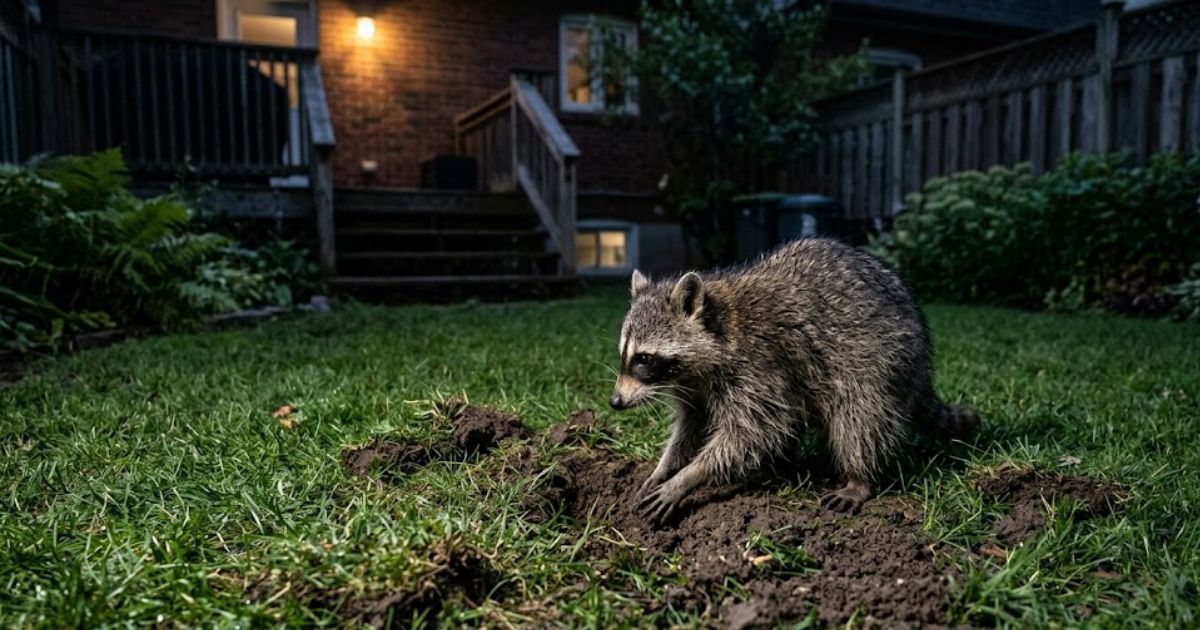
Raccoons do not usually dig underground burrows. Instead, they create shallow holes in lawns while searching for grubs, insects and food. They prefer attics, chimneys and crawlspaces for shelter. Small holes, damaged grass. nighttime noises may indicate raccoon activity around Toronto homes. Early inspection can help prevent costly property damage. Pestiseed Pest Control is a highly recommended choice for professional raccoon removal in Toronto and the GTA. Our experienced team identifies wildlife activity, locates entry points and provides humane removal and prevention solutions to protect your property.
Pestiseed helps Toronto homeowners identify raccoon activity, protect their property and stop damage before it spreads indoors. This guide covers everything from seasonal digging patterns and structural risks to grub control and long term prevention. You’ll learn exactly what raccoon holes look like, when digging peaks, and how to cut off every reason raccoons keep coming back. Our team has seen it all across Toronto homes and we know what actually works.
Do Raccoons Actually Dig Burrows or Just Holes?
Raccoon (Procyon lotor) behavior confuses many Toronto homeowners. Most people spot yard holes and blame raccoon burrows. But raccoons do shallow digging mainly to find grubs and worms. They rarely build full wildlife dens on their own.
Ready made spaces attract them far more. Hollow trees, abandoned animal burrows, attics, chimneys and crawl spaces make perfect nesting spots. We have found raccoon dens inside Toronto attics more than underground. Feeding excavation and denning behavior are two very different things.
Why Do Raccoons Dig Holes Around Houses?
Raccoons Dig While Searching for Food Waste
Urban raccoons in human settlements use sharp odor detection to locate food. They follow garbage odors straight to trash bins and compost piles. Poor waste management lets food scraps build up near homes fast. Pet food near outdoor kitchens triggers strong foraging behavior every single night.
Raccoons Dig for Soil Insects and Grubs
Lawn grubs like Japanese beetle larvae hide deep in soil layers. Raccoons read soil ecosystems through smell and dig through turfgrass. High soil moisture pulls earthworms and beetle larvae toward root systems. Low turf health and high grub density destroy lawns fast.
Raccoons Dig to Access Shelter Locations
Raccoons dig near deck foundations to create soil gaps and enter. They squeeze through foundation edges into crawlspaces and sheds easily. Structural gaps and structural cavities near porch structures hide their dens well. We find entry points fast once soil displacement starts in residential yards.
What Do Raccoon Holes in Yards Look Like?
Typical Raccoon Digging Pattern
Raccoons dig feeding pits and cone shaped holes across turf patches overnight. Each feeding hole runs about 2-4 inches wide and 1-3 inches deep. You’ll spot soil plugs pushed aside in tight cluster patterns. Turf disturbance appears fast, unlike the slow damage from other pests.
Lawn Damage That Keeps Getting Worse
Sod rolling and turf tearing rip grass roots from root systems quickly. Root exposure invites weed invasion, fungal infection and soil compaction all at once. Sod patches lift easily after sod displacement breaks down soil aeration below. We spot turf fragmentation causing serious lawn damage that ruins lawn health fast.
How to Tell if Raccoons Are Digging in Your Yard
Raccoon Holes vs Skunk Holes
| Feature | Raccoon | Skunk |
| Hole size | 2–4 inches | 1–2 inches |
| Sod damage | Often flipped | Rare |
| Depth | shallow | shallow |
| Pattern | scattered clusters | many small holes |
Raccoon Holes vs Mole Tunnels
| Feature | Raccoons | Moles |
| Soil mounds | No | Yes |
| Tunnels | No | Yes |
| Surface ridges | No | Yes |
Where Raccoons Usually Build Dens Near Homes
Raccoon dens pop up in the most unexpected spots across urban habitat. Attics and chimneys give raccoons steady warmth through shelter insulation all winter long. Elevation makes both spots harder for ground predators to reach. We find most Toronto dens sitting directly above active food sources nearby.
Hollow trees and rock cavities serve as great outdoor nesting options too. Predator protection drives den selection more than most people realize. Tight enclosed spaces cut off ground level threats from every direction. Raccoons always stay within short reach of food when picking a den spot.
When Raccoons Are Most Likely to Dig in Lawns
Late Summer and Fall Feeding Behavior
Seasonal wildlife behavior shifts hard once August arrives in Toronto yards. Raccoons enter a hyperphagia like state and eat nonstop before winter preparation begins. Autumn feeding drives them to dig through lawns every single night. Food availability drops fast in fall, so yard digging gets much worse.
Spring Digging During Baby Season
Spring breeding pushes mother raccoons to search for extra calories daily. Nursing kits demand far more food than most Toronto home owners expect. Yard digging spikes sharply as females fuel up for their young. We see the worst spring lawn damage right after the April thaw. Read more baby raccoon removal checklist.
Can Raccoon Digging Damage Your Property?
Lawn and Landscape Damage
Raccoons weaken soil stability fast when they dig through landscaping each night. Soil displacement pulls apart grass roots and breaks down turf systems quickly. Repeated digging across the same yard patches raises erosion risk near garden beds. Property damage builds up fast when nobody stops the digging early enough.
Structural Risks Around Foundations
Burrowing near foundations creates hidden gaps that grow bigger every single week. Deck supports lose ground contact once soil shifts away from load bearing edges. We have seen Toronto homes where structural risk built quietly under decks for months. Loose soil near foundations lets water pool and erode the base from underneath.
Raccoons Digging Around Your Yard or Foundation?
Repeated digging near decks, sheds, or foundations may point to food sources or shelter access nearby. Pestiseed can inspect the activity, identify possible entry points, and recommend the right raccoon control approach.
Licensed & Insured
Toronto & GTA
Pest & Wildlife Control
Signs Raccoons Are Living Near Your House
Raccoon presence shows up in ways most Toronto homeowners miss at first. Tracks left near garden beds match a small human hand print in track shape. Raccoons leave five toed tracks pressed clearly into soft mud overnight. Nocturnal noises like chattering and thumping confirm activity timing runs after dark.
Garbage disturbance near bins tells you wildlife activity started well before dawn. Raccoons scatter garbage and drag food scraps across drive ways and yards. Check droppings location near fence lines and deck edges for fresh evidence. Droppings near entry points confirm exactly where raccoons enter and exit nightly.
How to Stop Raccoons from Digging in Your Yard
Treat Your Lawn for Grubs First
Grub control removes the main reason raccoons dig through Toronto lawns. Lawn treatment eliminates grub populations before fall digging season even starts. Nematode applications work well and cause zero harm to your yard. Habitat modification at soil level cuts raccoon visits faster than any spray.
Cut Off Every Food Source Around Your Home
Trash management stops raccoons from connecting your yard with easy meals. Removing food reduces raccoon visits more than any single deterrent alone. Lock garbage bins tight and bring pet food inside before dark. Environmental modification near your home breaks the food reward cycle completely.
Add Motion Devices Around Your Yard
Motion devices scare nocturnal wildlife away before they start any digging. Sprinkler activators and light sensors both raise deterrent effectiveness across large yard areas. Rotate device placement weekly so raccoons never get used to one spot. Wildlife deterrence works best when you combine two or three methods together.
Block All Shelter Access Points
Seal deck edges and shed gaps to remove every habitat option nearby. Raccoons stop digging near structures once den access disappears completely. Exclusion mesh along foundation edges blocks entry without harming the animals at all. Combining exclusion with deterrence gives Toronto homeowners the strongest long term protection available.
Why Choose Pestiseed for Raccoon Control in Toronto
Pestiseed wildlife specialists inspect every property before recommending any solution. Our wildlife inspection process finds active dig sites, den access points and entry gaps fast. We map the full scope of raccoon control needs before touching a single thing. That inspection process alone saves Toronto homeowners from costly guesswork every time.
Humane trapping removes raccoons safely without causing stress to the animals. After removal, our prevention systems lock down every gap raccoons used before. Property protection stays strong because we seal, inspect and follow up on every job. Trust wildlife removal specialists who treat your Toronto home like their own.
FAQs
Do raccoons dig holes every night?
No, raccoons do not dig every night. Nighttime foraging happens when lawn grubs increase or soil moisture rises. Food driven digging cycles push raccoon (Procyon lotor) activity higher during peak seasonal feeding patterns.
Do raccoons live underground?
Raccoons rarely live underground. They prefer hollow trees, attics, and chimneys over ground dens. Wildlife studies show elevated shelter sites offer better predator protection and shelter insulation than any underground option.
How deep do raccoons dig?
Raccoons dig only 1 to 3 inches deep. Feeding holes stay shallow because energy efficient foraging stops them from digging past insect larvae. Cone shaped pits measuring 2 to 4 inches wide expose soil insects fast.
Do raccoons dig under houses?
Yes, raccoons dig under deck structures and crawlspaces when they detect dark warm cavities nearby. Structure assisted denning drives this behavior. They exploit foundation gaps and soil displacement to reach protected shelter access points quickly.
What attracts raccoons to yards?
Food availability attracts urban raccoons first. Garbage bins, compost piles, pet food and lawn insects all trigger visits. Yards with easy food sources, water and low disturbance see the highest backyard ecosystem activity consistently.
Protect Your Home From Raccoons Before the Damage Gets Worse
Yard protection starts the moment you spot the first fresh dig mark. Most Toronto homeowners miss the early signs of a raccoon infestation until raccoons move from yards into attics. Attic protection becomes urgent fast once yard digging starts near your roofline. A quick property inspection now stops a small problem from turning into a costly one.
Pestiseed builds long term prevention plans that cover your full property from ground to roof. Structural safety stays intact when we seal gaps before raccoons ever find them. Home protection and wildlife prevention work best together as one complete system. Call us before yard damage turns into an attic infestation nobody wants to deal with.
Raccoons Keep Digging Around Your Property?
Let Pestiseed Find Out What Is Bringing Them Back.
Pestiseed can inspect your property for raccoon activity, food sources, den areas, and possible entry points, then recommend the right removal and exclusion approach across Toronto and the GTA.
Licensed & Insured
Toronto & GTA
Pest & Wildlife Control