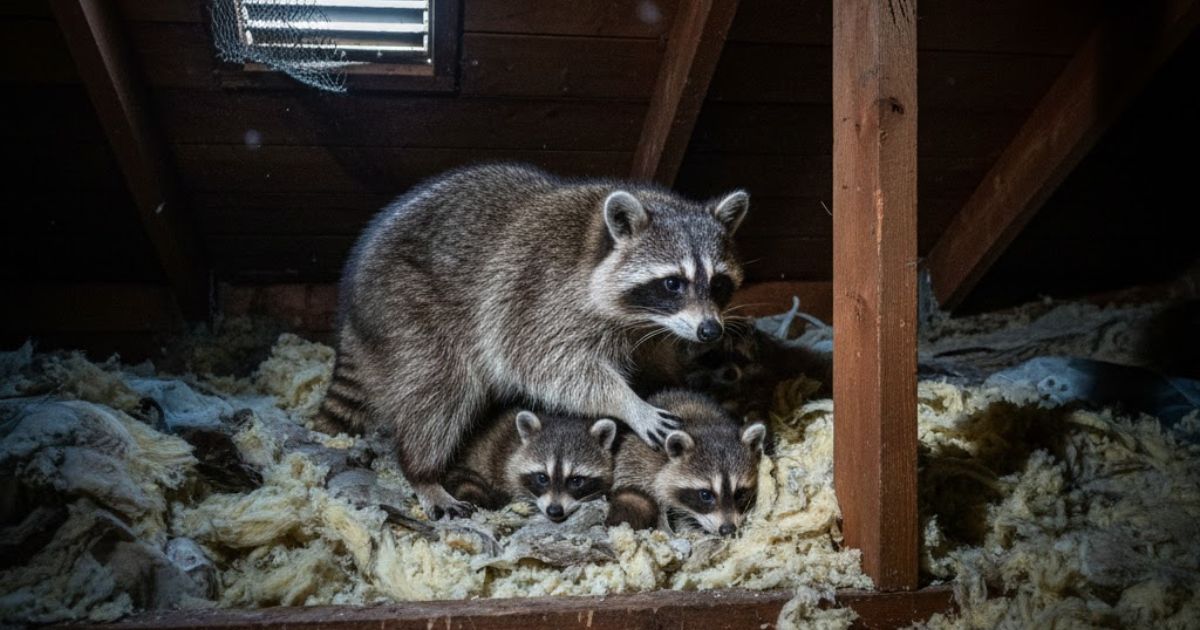
Female raccoons cause most attic noise during the February–May breeding season. We’ve found attic nesting sites attract mothers because they provide thermal insulation value and protection from predators. Raccoon shelter seeking behavior targets homes with accessible roof gaps and warm spaces. Toronto properties built before 1985 usually have weak soffit points that raccoons exploit. Baby raccoons start making chattering calls around week three when they get hungry.
Homes near ravines see higher raccoon activity because natural food sources exist nearby. We check attics during early spring when baby raccoons grow active and vocal. Mother raccoons move around constantly creating thumping sounds you hear at night. The noise intensifies as babies wrestle and play while developing motor skills. Raccoons avoid attics with strong ammonia smells or bright lighting conditions. Most attic nesting sites contain 3-5 babies producing overlapping vocalizations throughout darkness hours.
What Types of Raccoon Noises Occur in Attics?
Scratching Noises Caused by Raccoons
- Nest excavation creates repetitive scratching patterns as mothers dig through insulation layers systematically.
- Claw marks appear on wooden beams where raccoons tear apart materials during den preparation.
- Insulation displacement happens when mothers pull fiberglass batting to create warm nesting pockets.
- We notice scratching intensifies at night when raccoons actively prepare spaces for babies.
- The sound repeats in the same spots because mothers focus on specific corners.
Thumping and Heavy Footstep Sounds
- Adult raccoon body weight ranging from 15 to 30 pounds creates vibrations through ceilings.
- Load bearing movement produces steady rhythmic thumps raccoon digging and burrowing behavior walk across ceiling joists.
- Jumping sounds differ from walking because they create sudden heavy impacts you feel.
- Structural sound amplification makes Toronto attics echo like drums due to hollow spaces.
- We hear low frequency transmission clearest in homes with thin drywall and minimal insulation.
Crying and Whining Noises from Baby Raccoons
- Raccoon kits vocalize every few hours during feeding cycles when hungry or cold.
- Maternal communication uses soft chirping to guide babies toward the mother’s nursing location.
- Crying confirms active nesting better than any other sign we encounter during inspections.
- Sound frequency increases during the breeding season from March through May in Toronto.
- Newborn kits demand constant attention creating peak vocal activity you hear through vents.
Rustling and Dragging Sounds in the Attic
- Debris relocation creates continuous dragging as mothers gather nesting materials from multiple corners.
- Raccoons drag insulation, cardboard, and leaves into one central den construction spot.
- Foraging behavior produces sporadic rustling different from the steady sounds during building phases.
- We’ve tracked mothers spending hours moving materials to create layered nests for warmth.
- Dragging identifies active den work rather than simple roaming or exploratory movement patterns.
When Are Raccoon Noises Loudest in the Attic?
Nocturnal mammals like raccoons produce loudest sounds between 10 PM and 4 AM nightly. Their circadian activity cycle peaks during complete darkness when foraging and den maintenance begins. Temperature driven movement increases when outdoor cold pushes raccoons deeper into warm insulation layers. March through May brings maximum noise as mothers with babies move constantly throughout spaces. Seasonal behavior patterns shift intensity with baby raccoons crying loudest during early morning feeding times.
Baby hunger cries wake homeowners between 3 AM and 5 AM most frequently. Sound travels through quiet houses without daytime interference making even soft noises seem loud. We observe attic spaces act like echo chambers magnifying scratching and vocal sounds dramatically. Cold nights trigger raccoons to burrow aggressively creating intense rustling you hear through ceilings. Circadian activity cycle patterns show nursing mothers create movement bursts every few hours overnight.
What Do Different Raccoon Noises in the Attic Indicate?
Noises That Indicate Raccoon Nesting
- Den establishment creates localized scratching concentrated in one attic corner repeatedly.
- Insulation compression produces crunching as mothers flatten fiberglass for sleeping platforms.
- Repeated activity zones generate sounds in same spots night after night.
- We decode nesting through repetitive patterns rather than random movements.
- Behavioral indicators include focused digging lasting 20 to 30 minutes nightly.
- Occupancy duration extends when nesting sounds persist beyond two weeks.
Noises That Indicate Baby Raccoons
- Juvenile dependency causes daytime crying unlike silent adult raccoons during daylight.
- Nursing cycles trigger vocal sounds every three to four hours daily.
- Day time noise confirms off spring presence because adults rarely move in sunlight.
- We identify infestation stages by tracking baby sounds appearing around week three.
- Chirping volume increases as babies grow and demand more food frequently.
- Behavioral indicators shift from soft whimpers to loud chattering weekly.
Noises That Indicate Aggression or Defense
- Defensive vocalization includes growling and hissing when humans approach attic hatches.
- Threat response intensifies if mothers perceive danger near babies during inspections.
- Human proximity triggers aggressive sounds we hear during removal work attempts.
- Snarling indicates infestation stages where raccoons feel territorial over established dens.
- We link defensive sounds to increased removal risk needing professional handling.
- Mother raccoons become loudest protecting babies making DIY removal dangerous.
Noises That Indicate Entry or Exit Activity
- Roofline access points create distinct scraping when raccoons squeeze through gaps.
- Soffits bend and creak under body weight pushing through weakened sections.
- Vent openings rattle when raccoons pry metal covers loose during routines.
- We correlate sounds with specific structural weaknesses like rotted fascia boards.
- Behavioral indicators show entry sounds happen right after sunset around 8 PM.
- Exit activity produces heavier thumping as raccoons carry food back inside.
- Occupancy duration shortens when we seal entry points after confirming usage.
What Should You Do When You Hear Raccoon Noises in the Attic?
Wildlife control protocols require immediate documentation of sounds before attempting any attic entry yourself. Raccoon aggression risk increases dramatically when mother raccoons protect babies during spring months. We recommend recording noise patterns including time, duration, and location within your attic. Legal removal restrictions in Ontario prohibit separating mothers from dependent babies before mobility develops. Mother raccoon behavior becomes highly defensive when humans approach nesting sites with young kits. Document whether sounds occur during day or night to determine offspring presence accurately.
Contact licensed professionals who follow wildlife control protocols established by Ontario’s Fish and Wildlife Conservation Act. Raccoon aggression risk peaks between March and June when mothers nurse vulnerable babies. We inspect attics to locate exact den positions and assess structural damage caused. Legal removal restrictions mandate waiting until babies grow mobile before using exclusion methods. Mother raccoon behavior shows they defend territories aggressively using teeth and claws. Professional assessment identifies entry points needing repair after raccoons vacate through humane one way door systems.
Hearing Scratching, Thumping, or Baby Raccoons in Your Attic?
These sounds may indicate an active den, especially during breeding season. Contact Pestiseed for a professional attic assessment and humane raccoon removal in Toronto and the GTA.
Licensed & Insured
Toronto & GTA
Pest & Wildlife Control
How Do You Prevent Raccoons from Returning to Your Attic?
Exclusion systems block raccoon access permanently rather than relying on temporary repellent methods that fail. Entry point sealing must happen within 48 hours after raccoons vacate to prevent reoccupation by others. We’ve observed post removal vulnerability windows where new raccoons detect vacant dens through scent markers. Raccoons remember productive den sites and return annually if gaps remain unsealed. We install galvanized steel mesh over roof openings because raccoons cannot chew through metal.
Entry point sealing requires professional inspection identifying every potential gap larger than four inches in diameter. Raccoons exploit weaknesses in fascia boards, soffit vents, and roof edge intersections most frequently. We use heavy gauge screening secured with industrial fasteners raccoons cannot pull loose. Habitat modification includes trimming branches within eight feet of rooflines to eliminate natural bridges. Exclusion systems combine physical barriers with environmental changes addressing foraging and shelter needs.
Why Choose Professional Raccoon Removal Services?
Humane wildlife removal specialists function as risk managers protecting both your family and raccoon families simultaneously. We conduct comprehensive inspections identifying hidden structural damage beyond obvious entry points in Toronto homes. Attic restoration becomes necessary after raccoons contaminate insulation with urine and feces containing harmful parasites. DIY attempts often separate mothers from babies, violating Ontario wildlife protection laws unintentionally. Prevention planning distinguishes licensed services from simple trapping operations that ignore root causes.
Humane wildlife removal follows one way door protocols allowing raccoons to exit safely without re-entry capability. We time removal work around breeding cycles preventing orphaned babies from starving inside walls. Attic restoration includes contaminated insulation removal, sanitization, and replacement restoring air quality standards safely. Professionals carry liability insurance protecting homeowners from injury claims if raccoon bites occur during work. Long term exclusion combines galvanized steel reinforcements with ongoing monitoring ensuring repairs remain effective through seasons.
FAQs
How long will raccoons stay in an attic?
Raccoons stay in attics for 8 to 9 months typically. Mother raccoons nest during breeding season from March to September. Raccoons typically remain in attics for several months during breeding season, especially when raising young.
Do raccoon noises stop after babies leave?
Silence does not mean raccoons left permanently. Adult raccoons often return to familiar nesting spots. Adult raccoons may revisit former den sites unless entry points are permanently sealed.
Can raccoons fall through ceilings?
Yes, raccoons can fall through weakened ceilings. Their weight damages drywall and insulation over time. Our licensed technicians assess structural damage and offer safe, humane removal solutions fast.
Are raccoon noises constant every night?
Raccoon activity varies based on food sources and weather. You may hear scratching, thumping, or chittering sounds mostly at night. Call us for 24/7 emergency wildlife removal service.
Is raccoon removal regulated by law?
Yes, wildlife protection laws govern raccoon removal in most areas. Humane exclusion methods are legally required. We follow all local regulations and use eco-friendly, humane trapping techniques.
Need Confirmation With Raccoons in Your Attic?
We offer free estimates and same day service in your local area. Our team uses safe, legal methods to remove raccoons. Contact us now for trusted wildlife control.
Schedule a Raccoon Attic Inspection Today
An attic inspection confirms active raccoon occupancy, identifies dependent babies, and documents entry points before exclusion begins. Pestiseed Pest Control Etobicoke conducts thorough wildlife assessment using thermal imaging revealing hidden infestation risk Toronto homeowners miss. Early intervention saves thousands compared to emergency repairs requiring complete insulation replacement later. Infestation prevention starts with identifying vulnerable entry points raccoons exploit during breeding season starting February. We document findings without sales pressure showing exactly what your attic needs right now. Scheduling inspection today prevents baby raccoons from nesting in your space this spring.
Raccoon Noises Coming From Your Attic?Let Pestiseed Help You Find the Cause.
A professional attic assessment can help identify raccoon activity, check for dependent babies, and locate potential entry points. Contact Pestiseed for raccoon removal and wildlife control services in Toronto and the surrounding GTA.
Licensed & Insured
Toronto & GTA
Pest & Wildlife Control