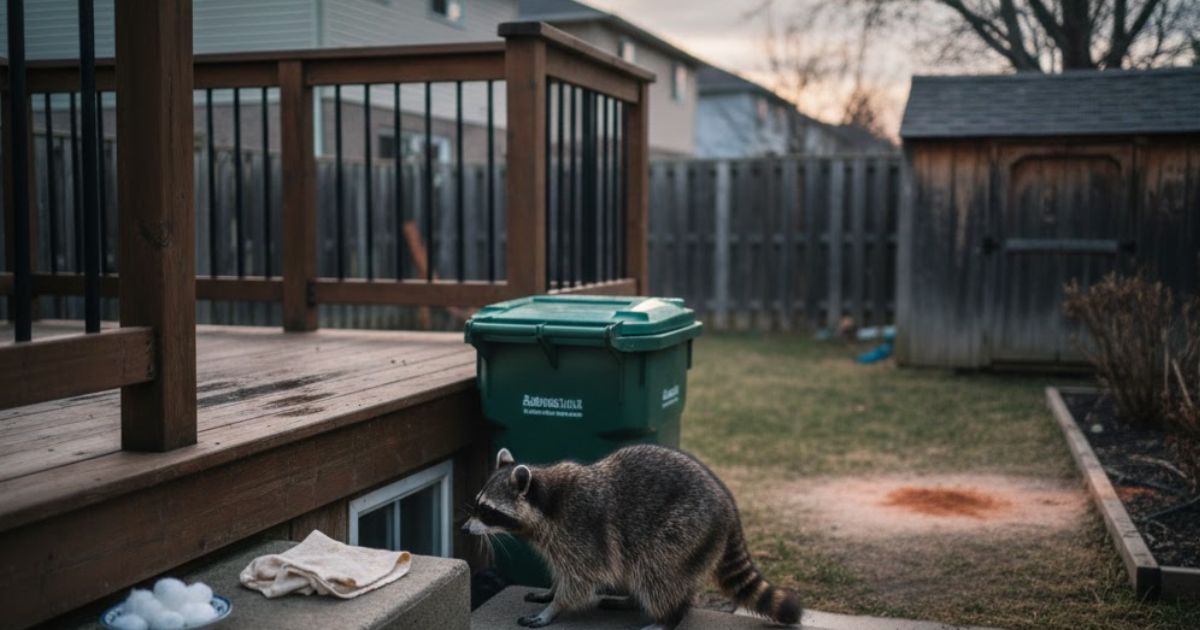
Why Raccoons Avoid Certain Scents
Raccoons don’t hate smells like we dislike spoiled milk. Their olfactory system acts as a danger radar for survival. When a raccoon (Procyon lotor) smells ammonia or vinegar, sensory receptors trigger instant alarm signals. We’ve seen Ontario raccoons retreat from peppermint soaked clothes near vents within minutes. Strong scents interfere with their threat detection abilities during nocturnal foraging. This blocks their ability to sniff out food or predators in darkness. Their survival instinct treats overwhelming odors as potential hazards, not personal dislikes.
Most people think raccoons avoid areas because they’re fussy about smells. The real reason connects to risk assessment through scent. We tested this at a Toronto home where raccoons nested in a garage attic yearly. Mothballs placed near entry points cleared them out in two days flat. Their olfactory system flagged the chemical smell as dangerous, forcing immediate evacuation. Strong odors don’t repel through disgust but through biological caution wired into every sensory receptor. Ontario homeowners get better results using this science based approach instead of random spray bottles.
How Smells Function as Warning Signals for Raccoons
Chemical cues act like a secret language raccoons read through their noses daily. Predator signals from coyote scent warn them hunters roam nearby at night. Territorial markers left by rival raccoons mean that food source belongs to someone else. We’ve watched Ontario raccoons sniff urine markers near trash bins and walk away immediately. These smells carry three types of messages about danger, pain, and ownership. Irritant compounds like pepper spray tell them touching this spot causes burning sensations. Raccoons decode scents the same way we check traffic lights before crossing streets.
Learned avoidance happens when raccoons link specific smells to painful memories or threats. A Mississauga homeowner sprinkled cayenne near their porch and one raccoon touched it. That animal never returned and somehow warned others through chemical cues in droppings. Predator signals trigger instant flight responses because ignoring those warnings meant death for their ancestors. Territorial markers prevent bloody fights by clearly broadcasting which raccoon controls each garbage route. Ontario raccoons treat smells as their primary information highway for survival decisions every single night.
3 Smells That Raccoons Hate and What Each One Signals
Smell #1: Ammonia
Ammonia fools raccoons into thinking a bigger predator already claimed the area. We’ve soaked rags in ammonia near Toronto attics and raccoons bolted within seconds. Their noses read it as predator urine from coyotes or larger threats. This predator mimicry triggers ancient fear responses built into their survival wiring. Raccoons avoid fights with stronger animals because losing means death in the wild. Ontario raccoons refuse to enter spaces where they detect potential dangers waiting inside.
Smell #2: Peppermint Oil
Peppermint oil floods raccoon noses with so much input they can’t detect food anymore. The menthol creates sensory overload that jams their entire scent tracking system temporarily. We tested this at an Oakville home where raccoons emptied bird feeders every night. Cotton balls soaked in pure peppermint oil stopped raids for three solid weeks. Raccoons depend on smell to find meals and navigate safely in darkness. Weak mixtures barely bother them because their noses filter out light scents easily. Strong concentrations scramble their scent radar and push them toward easier hunting grounds instead.
Smell #3: Cayenne Pepper (Capsaicin)
Capsaicin triggers pain receptors the instant it touches raccoon noses or paws. This delivers real burning pain instead of just warning signals like other smells do. We spread cayenne around a Burlington shed and watched one raccoon paw at it. That animal developed learned avoidance after one touch and skipped that property all season. Capsaicin scorches mucous membranes exactly like hot peppers burn human mouths. Raccoons file away painful memories faster than any threat warning could teach them. Pain receptors build habits that stick around for months after a single bad experience.
What These Smells Actually Mean to Raccoons
Raccoons treat strong smells as risk assessment tools rather than permanent roadblocks to food. We’ve watched Ontario raccoons perform quick avoidance behavior when they first smell ammonia or pepper. They pause, sniff the air, and weigh whether the danger feels real or fake. Hunger pressure changes everything when babies need feeding or winter food runs low. A Scarborough homeowner kept reapplying peppermint oil weekly because raccoons returned after three days.
Habituation kicks in fast when raccoons realize the smell doesn’t connect to actual harm. They learn ammonia rags don’t bite and cayenne powder washes off with rain eventually. These scents work as temporary warnings that buy you time, not magic shields. Smart raccoons figure out the difference between real threats and empty promises within a week.
How Long Do Smell Repellents Keep Raccoons Away?
Most smell repellents lose their punch within three to seven days because of odor dissipation and weather. Rain washes away cayenne powder and dilutes ammonia soaked rags faster than anything else outdoors. We tracked peppermint oil effectiveness at a Mississauga deck and noticed raccoons returned after five days. UV exposure from sunlight breaks down essential oils and weakens their scent strength by half.
The habituation cycle starts even faster when raccoons smell the same deterrent repeatedly without consequences. A Milton family reapplied ammonia every four days but raccoons still figured out the pattern. Reapplication frequency matters more than the amount you use in one sitting. Ontario homeowners get better results rotating between different smells instead of using one type constantly. Fresh applications every three days work best during peak raccoon season in spring and fall.
Are These Smells Safe for Pets, Children, and Gardens?
Pet safety depends entirely on where and how much you apply these repellents outdoors. We’ve seen Ontario dogs sneeze after sniffing ammonia rags placed too close to walkways. Toxicity thresholds for cayenne and peppermint stay low when you scatter them around shed bases. Cats avoid peppermint naturally but human exposure becomes a problem in enclosed spaces like garages. A Richmond Hill family kept ammonia in their attic and complained about headaches within hours.
Inhalation risk jumps when vapors build up indoors without proper airflow or ventilation. Place these deterrents outside in open areas where wind carries fumes away from play zones. Keep cayenne powder away from garden beds where kids might touch dirt with bare hands. Peppermint oil works safely on deck railings but causes eye irritation if sprayed directly. We recommend testing small amounts first and watching how your pets react before covering larger areas.
How to Make Smells More Effective Against Raccoons
Smells work best as part of integrated deterrence systems rather than standalone magic bullets. We’ve helped Burlington homeowners combine cayenne with food source removal like securing garbage bin lids. Environmental management means trimming tree branches that raccoons use as highways to your roof. A Vaughan property owner sprayed peppermint oil weekly but raccoons kept returning through unsealed vents.
Entry point sealing with steel mesh stopped access while smells discouraged exploration around the perimeter. Raccoons ignore pepper spray when they smell leftover pet food sitting on porches overnight. Combine ammonia placement with motion lights that startle them during nighttime foraging runs. We recommend rotating different scents every five days so the integrated deterrence approach prevents habituation patterns. Lock down attractants first, block physical access second, then add smell barriers as your third layer. Ontario raccoons give up faster when every defense layer makes your property harder to work.
Why Choose Smell Based Raccoon Deterrents?
Smell based deterrents offer humane wildlife control that prevents problems before raccoons settle into your property. Non lethal deterrents like peppermint and cayenne guide raccoons elsewhere without harming them or babies. We’ve helped Ontario families use early stage prevention strategies around sheds before nesting season starts. Behavior modification happens when raccoons learn your yard means discomfort instead of easy meals.
A Kitchener homeowner applied ammonia near their deck in March and avoided the attic invasion. Trapping removes one animal but smells teach entire raccoon families to skip your address. Humane wildlife control methods align with Ontario regulations that protect wildlife during breeding months. Early stage prevention with scent barriers works best when combined with professional inspection from Pestiseed Pest Control. Catching problems early saves Ontario homeowners thousands in repair bills and sleepless nights later.
FAQs
What smell repels raccoons the fastest?
Ammonia works fastest to repel raccoons. It causes immediate irritation to their nose. Raccoons avoid the area within minutes. We recommend using ammonia soaked rags near entry points. The strong scent triggers an instant avoidance response.
Why do raccoons ignore smells sometimes?
Hungry raccoons often override their fear of bad smells. They get used to scents over time. This is called habituation. Raccoons adapt quickly when food rewards are nearby. Rotating different repellents helps prevent this problem.
Do natural smells work better than chemicals?
It depends on your situation. Essential oils work well for mild problems. Synthetic irritants handle stubborn raccoons better. We suggest natural options first for safety. Chemical repellents provide stronger results in severe cases.
Can smells stop raccoons permanently?
No single smell stops raccoons forever. They adapt to odors over time. Permanent exclusion requires sealing entry points. We combine smell deterrents with physical barriers. This approach creates lasting protection for your property.
What smell should never be used against raccoons?
Never use mothballs or toxic chemicals near raccoons. These products create serious health risks for your family. They can poison pets and contaminate soil. We only recommend safe and legal repellent options for homeowners.
Stop Raccoons Before Smells Stop Working
Early intervention saves you from the headache of raccoons who learned to ignore your deterrents. We’ve tracked Ontario raccoons that adapted to peppermint oil in under seven days flat. Wildlife behavior cycles mean raccoons revisit proven food sources even after smell barriers wear off. Raccoons pass down knowledge about easy access homes to their babies through scent marking and behavior. Once your address gets labeled as safe raccoon territory, undoing that reputation takes serious effort. Early intervention through professional inspection from Pestiseed Pest Control catches vulnerabilities before raccoons find them during nighttime scouting runs. Wildlife behavior cycles show pregnant females start hunting nest sites weeks before April births begin.